

Security News
The Code You Didn't Write Is Still Yours to Defend
AI agents are pulling packages into environments no scanner is watching, creating exposure before security teams can see it.
By Brad Arkin - Jun 23, 2026
gatsby-source-s3
Advanced tools
A Gatsby plugin to source objects and images from AWS S3.
Install the plugin:
# with npm
npm install gatsby-source-s3
# with yarn
yarn add gatsby-source-s3
Declare it in your gatsby-config.js, making sure to pass your AWS credentials
as
environment variables:
// gatsby-config.js
require("dotenv").config();

module.exports = {
  plugins: [
    {
      resolve: `gatsby-source-s3`,
      options: {
        aws: {
          credentials: {
            accessKeyId: process.env.AWS_ACCESS_KEY_ID,
            secretAccessKey: process.env.AWS_SECRET_ACCESS_KEY,
          },
          region: process.env.AWS_REGION,
        },
        buckets: ["my-bucket", "my-second-bucket"],
        expiration: 120,
      },
    },
  ],
};
The value of expiration specifies the time after which signed requests to S3 will expire. The default value is 15 minutes (the default for AWS pre-signed URL operations). Feel free to increase if you have many or large images and start to see errors similar to "HTTPError: Response code 403 (Forbidden)" during build. This option is not compulsory.
You can use the plugin both with private and public buckets.
We recommend creating an IAM user to use with this plugin, and attach an IAM policy to access specific buckets.
The policy needs to allow ListBucket on buckets and GetObject on bucket
contents (/*). For example:
{
  "Version": "2012-10-17",
  "Statement": [
    {
      "Effect": "Allow",
      "Action": ["s3:ListBucket"],
      "Resource": [
        "arn:aws:s3:::gatsby-source-s3-example",
        "arn:aws:s3:::gatsby-source-s3-example-2"
      ]
    },
    {
      "Effect": "Allow",
      "Action": ["s3:GetObject"],
      "Resource": [
        "arn:aws:s3:::gatsby-source-s3-example/*",
        "arn:aws:s3:::gatsby-source-s3-example-2/*"
      ]
    }
  ]
}
S3 objects can be queried in GraphQL as "s3Object" or "allS3Object":
query AllObjectsQuery {
  allS3Object {
    nodes {
      Key # the object's key, i.e. file name
      Bucket # the object's bucket name on S3
      LastModified # the date the object was last modified
      Size # the object's size in bytes
      localFile # the local file node for image objects processed with sharp (see below)
    }
  }
}
Any images in your bucket(s) will be downloaded by the plugin and stored as
local file nodes, to be processed with gatsby-plugin-sharp and
gatsby-transformer-sharp.
If you don't have them yet, you will need to add the sharp plugin and transformer to your Gatsby site:
# with npm
npm install gatsby-plugin-sharp gatsby-transformer-sharp
# with yarn
yarn add gatsby-plugin-sharp gatsby-transformer-sharp
// gatsby-config.js
module.exports = {
  plugins: [
    // ...
    `gatsby-plugin-sharp`,
    `gatsby-transformer-sharp`,
  ],
};
You can then query the processed images with GraphQL:
query AllImagesQuery {
  images: allS3Object {
    nodes {
      Key
      localFile {
        childImageSharp {
          fluid(maxWidth: 1024) {
            ...GatsbyImageSharpFluid
          }
        }
      }
    }
  }
}
And use them with gatsby-image:
import Img from "gatsby-image";

const Image = ({ s3Object }) => <Img fluid={s3Object.localFile.childImageSharp.fluid} />;
This plugin was initially based on Dustin Schau's
gatsby-source-s3 and influenced
by Jesse Stuart's TypeScript
gatsby-source-s3-image.
FAQs
A Gatsby plugin to source objects and images from AWS S3
We found that gatsby-source-s3 demonstrated a healthy version release cadence and project activity because the last version was released less than a year ago. It has 2 open source maintainers collaborating on the project.
Did you know?

Socket for GitHub automatically highlights issues in each pull request and monitors the health of all your open source dependencies. Discover the contents of your packages and block harmful activity before you install or update your dependencies.
Security News
AI agents are pulling packages into environments no scanner is watching, creating exposure before security teams can see it.

Security News
GitHub Actions checkout now blocks risky pull_request_target checkouts by default to help prevent pwn request supply chain attacks.
Product
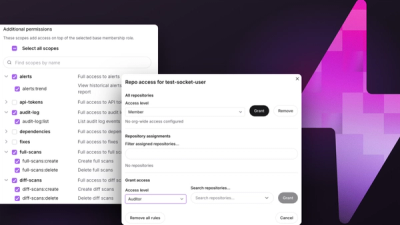
Socket now supports Custom Roles and Repository Access Permissions so organizations can control who can access specific repositories and actions.