
Generate a package.json from a pre-defined or user-defined template. This generator can be used from the command line when globally installed, or as a plugin or sub-generator in your own generator.
generate-package



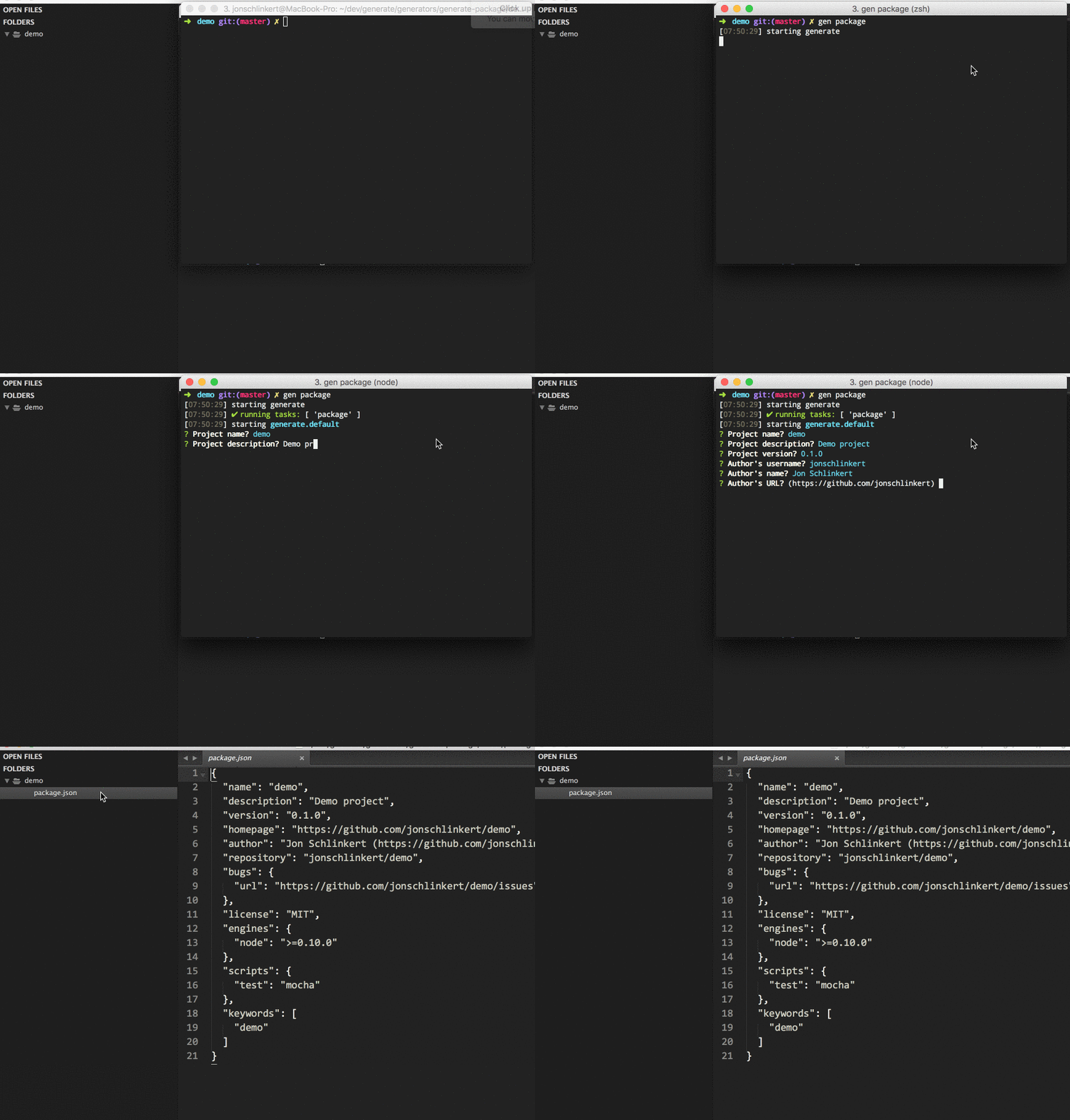
Table of Contents
(TOC generated by verb using markdown-toc)
Quickstart
Install generate and generate-package:
$ npm install --global generate generate-package
Generate a package.json in the current working directory:
$ gen package
What is "Generate"?
Generate is a command line tool and developer framework for scaffolding out new GitHub projects using generators and tasks.
Answers to prompts and the user's environment can be used to determine the templates, directories, files and contents to build. Support for gulp, base and assemble plugins, and much more.
For more information:
Getting started
Install
Installing the CLI
To run the package generator from the command line, you'll need to install Generate globally first. You can do that now with the following command:
$ npm install --global generate
This adds the gen command to your system path, allowing it to be run from any directory.
Install generate-package
Install this module with the following command:
$ npm install --global generate-package
Usage
Run this generator's default task with the following command:
$ gen package
What you should see in the terminal
If completed successfully, you should see both starting and finished events in the terminal, like the following:
[00:44:21] starting ...
...
[00:44:22] finished ✔
If you do not see one or both of those events, please let us know about it.
Help
To see a general help menu and available commands for Generate's CLI, run:
$ gen help
Tasks
All available tasks.
Generate a normalized package.json file in the current working directory.
Example
$ gen package
$ gen package:new
Generate a package.json without normalizing the result.
Example
$ gen package:raw
Generate a minimal package.json file.
Example
$ gen package:min
Generate a package.json or a sub-directory in a project, with only name, description and private fields defined.
Example
$ gen package:sub
Generate a fake package.json file to use for development. All of the fields in this file are pre-populated with fake data.
Example
$ gen package:dev
Prompts the user to choose the template and fields to use for generating a package.json file.
Example
$ gen package:choose
Visit Generate's documentation for tasks.
Next steps
Running unit tests
It's never too early to begin running unit tests. When you're ready to get started, the following command will ensure the project's dependencies are installed then run all of the unit tests:
$ npm install && test
Publishing your generator
If you're tests are passing and you're ready to publish your generator to npm, you can do that now with the following command:
Are you sure you're ready?!
Let's go!
$ npm publish
About
Related projects
- generate-gitignore: Generate any local or global .gitignore file from the github/gitignore repository. Use from the command… more | homepage
- generate-license: Generate a license file for a GitHub project. | homepage
- generate-readme: Generate a README.md using answers to prompts and data from the environment, like
package.json, .git… [more](https://github.com/generate/generate-readme) | [homepage](https://github.com/generate/generate-readme "Generate a README.md using answers to prompts and data from the environment, likepackage.json,.git` config, etc. This generator can be run by command line if Generate is installed globally, or you can use this as a plugin or sub-generator in your own")
Are you using Generate in your project? Have you published a generator and want to share your project with the world?
Here are some suggestions!
- If you get like Generate and want to tweet about it, please feel free to mention
@generatejs or use the #generatejs hashtag
- Show your love by starring Generate and
generate-package
- Get implementation help on StackOverflow (please use the
generatejs tag in questions)
- Gitter Discuss Generate with us on Gitter
- If you publish an generator, thank you! To make your project as discoverable as possible, please add the keyword
generategenerator to package.json.
Contributing
Pull requests and stars are always welcome. For bugs and feature requests, please create an issue.
Running tests
Install dev dependencies:
$ npm install -d && npm test
Author
Jon Schlinkert
License
Copyright © 2016, Jon Schlinkert.
Released under the MIT license.
This file was generated by verb-generate-readme, v0.1.31, on September 18, 2016.