
Security News
/Company News
Securing the Financial Frontier: How Capital One Uses Socket for Open Source Security
Capital One is partnering with Socket to proactively secure its open source supply chain.
By Sarah Gooding - Oct 01, 2026
n8n-nodes-planvortex
Advanced tools
n8n community node for PlanVortex: publish to social networks, upload media, read and reply to comments, and create account connect links.
An n8n community node for PlanVortex. It lets an n8n workflow publish to social networks, upload media, read and reply to comments, and hand a client a link to connect their own accounts.
PlanVortex manages thirteen social networks from one API — Facebook, Instagram, Threads, LinkedIn, TikTok, X, WhatsApp, YouTube, Google Business, Bluesky, Discord, Telegram and Slack. The ones worth naming here are the last three: announcing a release on LinkedIn, dropping it in a customer Discord and posting it to an internal Slack channel is normally three separate integrations.
n8n is a fair-code licensed workflow automation platform.
Status: verification by n8n pending. Until n8n verifies this node it can be installed on a self-hosted n8n only, not on n8n Cloud. On Cloud, in the meantime, PlanVortex works through the
HTTP Requestnode against the REST API.
Self-hosted n8n: go to Settings → Community Nodes, choose Install and enter
n8n-nodes-planvortex. The installation
guide covers the other ways,
including the command line.
n8n Cloud: once n8n has verified the node, the instance owner or an admin installs it from the nodes panel. Nobody else on the instance can.
| Resource | Operation | What it does |
|---|---|---|
| Publication | Create | Publishes now or schedules a post on one connected account |
| Media | Upload | Puts an image or a video in the organization's library, ready to attach |
| Account | Get Many | Lists the connected accounts, with a filter for what their network can do |
| Account | Create Connect Link | Mints a single-use link for a person to connect one of their own accounts |
| Comment | Get Many | Reads the comment and review inbox |
| Comment | Reply | Publishes a public reply to a comment or a review |
| Social Network | Get Capabilities | Says what every network supports, one item per network |
The organization and the account are dropdowns, filled from your own account: nothing here asks you to paste an id. Both still accept an expression when the id comes from an earlier node.
Seven operations, not one hundred and thirty-five. Anything else the API does is one HTTP Request
node away, using the same credential — see the PlanVortex API
documentation.
Four things are worth knowing before you build on them:
withErrors, with the reasons
inside it, and answers 200 — so a workflow that only watches for exceptions would report a post
that never went out as sent. Create has a Fail on Publication Errors toggle, on by default,
that turns it into a real failure.You need a PlanVortex account and an app (API credentials), which you create in the PlanVortex
panel. An app gives you a client_id and a client_secret; the node exchanges them for an access
token using the OAuth 2.0 client-credentials grant, and n8n caches that token for you.
Create a PlanVortex OAuth2 API credential in n8n and fill in three fields:
| Field | What goes in it |
|---|---|
| Base URL | https://api.planvortex.com/v1.0.0 — leave it alone unless you were given another environment |
| Client ID | the app's client_id |
| Client Secret | the app's client_secret |
There is no "Connect" button and there should not be one: the client-credentials grant has no consent screen. Use Test instead — it performs the real token exchange and reads back the clients and organizations the app can see.
Apps are available on all PlanVortex plans, including the free one.
Note that comments and comment replies require a paid plan. A workflow built on a free plan will publish happily and fail on the comment steps.
PlanVortex answers a numbered error code, and the number is what says what happened — not the HTTP status. Almost everything arrives as a 400: an expired token, a disconnected account, a text that is too long and a plan that does not include the feature are all 400s, and only rate limits (429) and permissions (401) differ.
So the node shows you two lines: the API's own message, and underneath it what to do about that particular code. They are different things for codes that sit next to each other — 516 means the account is on the free plan, 519 means the call can never be made with app credentials, and 520 means the app is missing a permission and names which one. The code itself is in the second line, which is what to quote if you ask support.
Turning on Continue On Fail is worth it for any workflow that touches several accounts: one disconnected account then costs you that item instead of the whole run.
Requires Node.js 20 or newer. Built and unit-tested against n8n-workflow 2.x, the library n8n 2
runs on.
FAQs
n8n community node for PlanVortex: publish to social networks, upload media, read and reply to comments, and create account connect links.
We found that n8n-nodes-planvortex demonstrated a healthy version release cadence and project activity because the last version was released less than a year ago. It has 1 open source maintainer collaborating on the project.
Security News
/Company News
Capital One is partnering with Socket to proactively secure its open source supply chain.
Security News
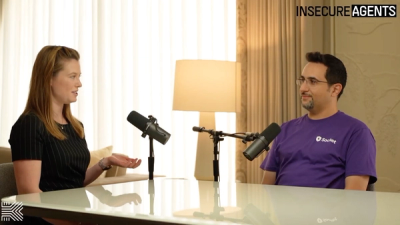
Socket CTO Ahmad Nassri discusses how to keep AI agents from bypassing package blocks, limit credential access, and monitor their actions.

Security News
GPT-6 Astra tried to plant malicious code in simulated open source projects using fake GitHub accounts and deceptive PRs during an assigned CTF challenge.