
Product
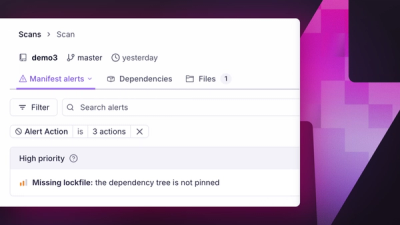
Introducing Manifest Alerts
Socket now detects supply chain risks in project manifests, starting with missing lockfiles that can make dependency installs non-reproducible.
By André Staltz, Trevor Norris - Jun 16, 2026
pawplacer-sdk
Advanced tools
TypeScript/JavaScript client for the PawPlacer API. Server-side only.
npm install pawplacer-sdk
Generate an API key in Settings > SDK & API. Use a read key for websites and dashboards. Use a separate write key only for backend jobs that create records.
Store the key in a server-only environment variable and create one client per process:
import { PawPlacerClient } from "pawplacer-sdk";

export const pawplacer = new PawPlacerClient({
  cache: { enabled: true, refreshFrequencyMinutes: 180 },
});
By default, the client reads process.env.PAWPLACER_API_KEY. You can also pass apiKey explicitly when you need to use a different environment variable or credential source.
const result = await pawplacer.pets.list({
  status: "available",
  species: "dog",
  limit: 12,
});

result.data; // Pet[]
result.total; // total count
result.hasMore; // pagination
Filters: limit, offset, species, status, search, updated_since (ISO-8601). The API clamps limit to 100.
const pet = await pawplacer.pets.get("pet-uuid");
const pet = await pawplacer.pets.create({
  name: "Max",
  species: "dog",
  age_category: "young",
  sex: "male",
  size: "medium",
  status: "available",
  health: "good",
});
All fields above are required. Optional: breed, color, description, adoption_fee, good_with, temperaments, image_urls, custom_field_data, and more.
const updated = await pawplacer.pets.update("DOG-2026-001", {
  description: "Updated bio",
  status: "available",
  image_urls: ["https://example.com/max.jpg"],
});
Updates accept either the PawPlacer pet UUID or an assigned custom_id, and the payload can include only the fields that changed. Pass a stable idempotency key as the third argument for retry-safe sync jobs.
const fields = await pawplacer.pets.getCustomFields();
// Use to validate custom_field_data before creating pets
All people endpoints require a type parameter: "adopter", "foster", "surrender", or "volunteer".
const result = await pawplacer.people.list({
  type: "adopter",
  status: "active",
  limit: 25,
});

result.data; // Person[]
result.type; // "adopter"
result.total;
result.hasMore;
Filters: type (required), limit, offset, status, search, updated_since.
const adopter = await pawplacer.people.get("person-uuid", "adopter");
const adopter = await pawplacer.people.create({
  type: "adopter",
  name: "Jane Smith",
  email: "jane@example.com",
  phone: "555-0100",
  status: "active",
  custom_field_data: { has_yard: true },
});
Only type and name are required. Optional: email, phone, address, status, custom_field_data, capacity.
Create status accepts pending, active, training, or inactive; admin review states such as denied, suspended, and blocked are controlled in PawPlacer.
const surrender = await pawplacer.people.create({
  type: "surrender",
  name: "Sam Surrender",
  email: "sam@example.com",
  custom_field_data: { reason_for_surrender: "Moving" },
  pets: [
    {
      create: {
        name: "Buddy",
        species: "dog",
        age_category: "adult",
        sex: "male",
        size: "large",
        status: "intake",
        health: "unknown",
        breed: ["Lab Mix"],
      },
      reason: "Moving",
      urgency: "high",
    },
    {
      pet_id: "existing-pet-uuid",
      notes: "Link this surrender to an existing pet profile",
    },
  ],
});
For surrenders, pets creates related surrender pet links in the same workflow. Use create with the normal pet create payload when the SDK should create and link a new pet, or pet_id to link an existing pet.
const volunteer = await pawplacer.people.create({
  type: "volunteer",
  name: "Val Volunteer",
  email: "val@example.com",
  custom_field_data: { preferred_shift: "Saturday" },
});
const fields = await pawplacer.people.getCustomFields("adopter");
// Returns custom fields configured for adopter, foster, surrender, or volunteer forms
Returns the account's full adoption fee configuration (species + attribute + adjustment rules).
const fees = await pawplacer.adoptionFees.get();
// AdoptionFeeEntry[] — { species, attribute_type, attribute_value, adjustment }
Pets also include a global_adoption_fee field when the account has fee rules configured and the pet has no manual override.
Returns terms & conditions content for a given contract type. Content is markdown.
const contract = await pawplacer.contracts.get("adopter");
contract.type; // "adopter"
contract.content; // markdown string
contract.updated_at; // ISO-8601 or null
Valid types: "adopter", "foster", "volunteer", "surrender".
| Method | HTTP |
|---|---|
pets.list(params?) | GET /api/pets |
pets.get(id) | GET /api/pets/{id} |
pets.getById(id) | GET /api/pets/{id} |
pets.findMany(params?, limit?) | GET /api/pets (returns Pet[]) |
pets.search(query) | GET /api/pets (returns Pet[]) |
pets.getByStatus(status) | GET /api/pets (returns Pet[]) |
pets.getCustomFields() | GET /api/pets/custom-fields |
pets.create(payload) | POST /api/pets |
pets.update(idOrCustomId, payload) | PATCH /api/pets/{idOrCustomId} |
people.list(params) | GET /api/people?type= |
people.get(id, type) | GET /api/people/{id}?type= |
people.getById(id, type) | GET /api/people/{id}?type= |
people.findMany(params, limit?) | GET /api/people?type= (returns Person[]) |
people.create(payload) | POST /api/people |
people.getCustomFields(type) | GET /api/people/custom-fields?type= |
adoptionFees.get() | GET /api/adoption-fees |
contracts.get(type) | GET /api/contracts?type= |
Every create call automatically sends an Idempotency-Key header, which makes SDK-managed retries safe. For background jobs that may replay across restarts, pass a stable key:
const pet = await pawplacer.pets.create(
  {
    name: "Max",
    species: "dog",
    age_category: "young",
    sex: "male",
    size: "medium",
    status: "available",
    health: "good",
  },
  { idempotencyKey: `nightly-sync:${externalId}` },
);

pawplacer.lastResponseMeta.idempotencyReplay; // true if replayed
Pass { idempotencyKey: false } to opt out.
GET responses are cached in memory with stale-while-revalidate. The cache is per-process.
cache: {
  enabled: true,
  refreshFrequencyMinutes: 60, // minutes; defaults to 180
}
When the API returns Cache-Control headers, those take precedence. no-store or max-age=0 bypasses the cache entirely.
pawplacer.clearCache(); // drop everything
pawplacer.invalidateCache("pets:list:"); // substring match
pawplacer.invalidateCache(/^people:/); // regex match
pawplacer.cacheStats(); // { hits, misses, size }
import {
  PawPlacerApiError,
  PawPlacerResponseValidationError,
} from "pawplacer-sdk";

try {
  await pawplacer.pets.create({
    name: "Max",
    species: "dog",
    age_category: "young",
    sex: "male",
    size: "medium",
    status: "available",
    health: "good",
  });
} catch (error) {
  if (error instanceof PawPlacerApiError) {
    console.error(error.status, error.code, error.message);
  } else if (error instanceof PawPlacerResponseValidationError) {
    console.error("Unexpected response shape:", error.payload);
  }
}
PawPlacerApiError is thrown for structured API errors (non-2xx). PawPlacerResponseValidationError is thrown when a 2xx response doesn't match the expected shape.
Custom parsing: throwIfApiError(payload) throws PawPlacerApiError for error payloads.
Common status codes:
| Status | Cause |
|---|---|
| 400 | Validation or payload error |
| 401 | Missing or invalid API key |
| 403 | Key doesn't have scope for this endpoint |
| 404 | Resource not found |
| 409 | Idempotency key reused with a different payload |
| 429 | Rate limited |
Rate limits are per API key. Headers are exposed via pawplacer.lastResponseMeta.rateLimit.
| Endpoint | Requests / hour |
|---|---|
GET /api/pets | 100 |
GET /api/pets/{id} | 400 |
GET /api/pets/custom-fields | 15 |
POST /api/pets | 10 |
GET /api/people | 100 |
GET /api/people/{id} | 400 |
GET /api/people/custom-fields | 15 |
POST /api/people | 10 |
GET /api/adoption-fees | 15 |
GET /api/contracts | 15 |
const result = await pawplacer.pets.list({ status: "available" });

pawplacer.lastResponseMeta.rateLimit; // { limit, remaining, reset }
pawplacer.lastResponseMeta.requestId; // for support tickets
pawplacer.lastResponseMeta.idempotencyReplay; // true if replayed
lastResponseMeta reflects the most recent API call.
const client = new PawPlacerClient({
  apiKey: process.env.PAWPLACER_API_KEY, // optional when PAWPLACER_API_KEY is set
  apiUrl: "https://pawplacer.com",
  timeout: 30000,
  retryLimit: 2,
  retryBackoffLimit: 3000,
  debug: false,
  allowBrowser: false,
  cache: {
    enabled: true,
    refreshFrequencyMinutes: 180,
    maxSize: 1000,
  },
});
The SDK blocks browser usage by default to protect your API key. Set allowBrowser: true only for local development.
cache.refreshFrequency is accepted for backward compatibility, but deprecated. Use cache.refreshFrequencyMinutes for new code.
Deprecated aliases:
| Alias | Use instead |
|---|---|
client.getPetById(...) | client.pets.get(...) |
client.findPets(...) | client.pets.findMany(...) |
cache.refreshFrequency | cache.refreshFrequencyMinutes |
PetCreateInput.breeds | PetCreateInput.breed |
PetCreateInput.colors | PetCreateInput.color |
PetCreateInput.is_published | PetCreateInput.show_public |
import { PawPlacerClient } from "pawplacer-sdk";

export const pawplacer = new PawPlacerClient({
  cache: { enabled: true, refreshFrequencyMinutes: 180 },
});

export async function getAvailablePets() {
  return pawplacer.pets.list({ status: "available", limit: 12 });
}
// app/api/pets/route.ts
import { PawPlacerClient } from "pawplacer-sdk";

const pawplacer = new PawPlacerClient({
  cache: { enabled: true, refreshFrequencyMinutes: 60 },
});

export async function GET(request: Request) {
  const url = new URL(request.url);
  const species = url.searchParams.get("species") ?? undefined;
  const result = await pawplacer.pets.list({
    status: "available",
    species,
    limit: 12,
  });

  return Response.json({
    pets: result.data,
    total: result.total,
    hasMore: result.hasMore,
  });
}
Keep the SDK in API routes, server actions, server components, or getServerSideProps. Never use it in client components.
// server/api/pets.ts
import { PawPlacerClient } from "pawplacer-sdk";

const pawplacer = new PawPlacerClient();

export async function getAvailablePetsForReact(species?: string) {
  const result = await pawplacer.pets.list({
    status: "available",
    species,
    limit: 12,
  });

  return {
    pets: result.data,
    total: result.total,
    hasMore: result.hasMore,
  };
}
// src/api/pets.ts
export async function fetchAvailablePets(species?: string) {
  const params = new URLSearchParams();
  if (species) params.set("species", species);

  const suffix = params.toString() ? `?${params.toString()}` : "";
  const response = await fetch(`/api/pets${suffix}`);
  if (!response.ok) throw new Error(`Failed to load pets: ${response.status}`);
  return response.json();
}
React apps should fetch from your own backend route. The SDK and PAWPLACER_API_KEY stay on the server.
const { PawPlacerClient } = require("pawplacer-sdk");

const pawplacer = new PawPlacerClient({
  cache: { enabled: true, refreshFrequencyMinutes: 180 },
});

async function getAvailablePets() {
  return pawplacer.pets.list({ status: "available", limit: 12 });
}

module.exports = { getAvailablePets, pawplacer };
All types are exported directly:
Shared: CustomField, PaginatedResponse<T>, CreateOptions, ApiError, RateLimitInfo, ApiResponseMeta
Pets: Pet, PetCreateInput, PetListParams, PetSpecies, PetAgeCategory, PetSex, PetSize, PetHealthStatus, PetCompatibility, PetTemperament, PetCustomField (alias for CustomField), CreatePetOptions (alias for CreateOptions)
People: Person, PersonCreateInput, PersonListParams, PersonListResponse, PersonType, PersonStatus, PersonCustomField (alias for CustomField), PersonCustomFieldsResponse, CreatePersonOptions (alias for CreateOptions)
Adoption Fees: AdoptionFeeEntry, AdoptionFeesResponse
Contracts: ContractResponse, ContractType
examples/basic-usage.ts: Node/TypeScript reference functions for reads, writes, idempotency keys, and errors.examples/next-app-router.ts: Next.js App Router route handler and server action references.examples/react-vite-server-reference.ts: React/Vite server API reference.examples/react-vite-client-reference.ts: React/Vite browser fetch helper reference.examples/commonjs-reference.cjs: CommonJS reference functions with module exports.FAQs
PawPlacer API SDK for TypeScript/JavaScript
The npm package pawplacer-sdk receives a total of 710 weekly downloads. As such, pawplacer-sdk popularity was classified as not popular.
We found that pawplacer-sdk demonstrated a healthy version release cadence and project activity because the last version was released less than a year ago. It has 1 open source maintainer collaborating on the project.
Did you know?

Socket for GitHub automatically highlights issues in each pull request and monitors the health of all your open source dependencies. Discover the contents of your packages and block harmful activity before you install or update your dependencies.
Product
Socket now detects supply chain risks in project manifests, starting with missing lockfiles that can make dependency installs non-reproducible.

Research
/Security News
The trojanized extensions use TinyGo-compiled WebAssembly and Solana transaction memos to resolve command-and-control infrastructure.

Security News
Anthropic says the directive cited national security concerns over a narrow jailbreak, but offered no specific technical details.