

Security News
The Code You Didn't Write Is Still Yours to Defend
AI agents are pulling packages into environments no scanner is watching, creating exposure before security teams can see it.
By Brad Arkin - Jun 23, 2026





npm i resy
# yarn add resy
# pnpm add resy
import React from "react";
import { defineStore } from "resy";

const useStore = defineStore({
  count: 0,
  increase() {
    this.count++;
  },
});

const App = () => {
  const { count, increase } = useStore();

  return (
    <>
      <p>count:{count}</p>
      <button onClick={increase}>increase</button>
    </>
  );
};
import React from "react";
import { createStore, useStore, ComponentWithStore } from "resy";

const store = createStore({ count: 0 });

// for hook component
function App() {
  const { count } = useStore(store);  // or store.useStore();
  return (
    <>
      {count}
      <button onClick={() => store.count++}>increase</button>
    </>
  );
}

// for class component
class AppClass extends ComponentWithStore {

  store = this.connectStore(store);

  render() {
    const { count } = this.store;
    return (
      <>
        {count}
        <button onClick={() => { store.count++; }}>increase</button>
      </>
    );
  }
}

resy requires the version of React v >= 16.8
| API | Description |
|---|---|
| defineStore | The macro definition method for createStore |
| createStore | Create a store container for state |
| useStore | Use state from the store container generated by createStore |
| setState | Update data |
| syncUpdate | Synchronously update data |
const useUserStore = defineStore({
  userId: 666,
  username: "wenmu",
  updateUserInfo() {
    this.username = "Shanbao Liu";
  },
});
const useThemeStore = defineStore({
  themeStyle: "dark",
  changeTheme() {
    this.themeStyle = "light";
  },
});

function App() {
  const { username, updateUserInfo } = useUserStore();
  const { themeStyle, changeTheme } = useThemeStore();

  return (
    <>
      <p onClick={updateUserInfo}>name:{username}</p>
      <p onClick={changeTheme}>theme:{themeStyle}</p>
    </>
  );
}
const useStore = defineStore({
  count: 0,
  increase() {
    this.count++;
  },
});

function App() {
  const {
    count, increase, store, useSubscription,
  } = useStore();

  useSubscription(({ effectState }) => {
    console.log(effectState);
  }, ["count"]);

  return (
    <>
      <p onClick={increase}>count:{count}</p>
      <button onClick={() => store.count++}>
        updateCount
      </button>
    </>
  );
}
const demoStore1 = createStore({
  count: 0,
  text: "hello",
});
type DemoStateType = { count: number; text?: number | string };
// In this way, the type of text can be
// more accurately identified as number or string or undefined
const demoStore2 = createStore<DemoStateType>({
  count: 0,
});
// This is a very important feature for retrieving the latest time or other data.
const demoStore3 = createStore(() => {
  return {
    count: 0,
    time: Date.now(),
  };
});
const demoStore4 = createStore({
  count: 0,
  increase() {
    // this point store object, as follows example
    // The updates and usage of these APIs will be detailed in subsequent chapters
    this.count++;
    // this.setState({ count: this.count + 1 });
    // this.restore();

    // demoStore4.count++;
    // demoStore4.setState({ count: demoStore3.count + 1 });
  },
});
import { createStore } from "resy";

type StateType = {
  count: number;
  text: string;
  info: { name: string };
  ageList: { age: number }[];
  increase(): void;
  inputValue?: string;
};

// The generated store can be shared globally
const store = createStore<StateType>({
  count: 0,
  text: "hello",
  info: { name: "Jack" },
  ageList: [{age: 12}, { age: 16 }],
  increase() {
    this.count++;
  },
});
// Store such as login and theme can set unmountRestore to false
// so that it will not be reset globally.
const userStore = createStore<{ userName: string; userId: number }>(
  {
    userName: "wenmu",
    userId: 0,
  },
  {
    unmountRestore: false,
  },
);
const themeStore = createStore<{ themeStyle: "dark" | "light" }>(
  {
    themeStyle: "dark",
  },
  {
    unmountRestore: false,
  },
);
import { useStore } from "resy";

function App() {
  const { count, text } = useStore(store);
  // or
  // const { count, text } = store.useStore();

  return (
    <>
      <p>{count}</p>
      <p>{text}</p>
    </>
  );
}
import { useStore } from "resy";

function App() {
  const { userName } = userStore.useStore();
  const { themeStyle } = themeStore.useStore();

  return (
    <>
      <p>{userName}</p>
      <p>{themeStyle}</p>
      <button onClick={() => { userStore.userName = "LF" }}>nameChange</button>
      <button onClick={() => { themeStore.setState({ themeStyle: "light" }) }}>themeChange</button>
    </>
  );
}
import { useStore } from "resy";

function App() {
  const state = store.useStore();

  return (
    <>
      <p>{state.count}</p>
      <p>{state.text}</p>
    </>
  );
}
import { useStore } from "resy";

function App() {
  const {
    count, text,
    // The use of these api will be described in detail later.
    setState, syncUpdate, restore, subscribe,
  } = store.useStore();

  return (
    <>
      <p>{count}</p>
      <p>{text}</p>
    </>
  );
}
import { useStore } from "resy";

function App() {
  const { count, text } = store.useStore();

  // Updates can be assigned directly
  function btn2() {
    store.count++;
    store.text = "456asd";
  }

  return (
    <>
      <p>{count}</p>
      <p>{text}</p>
    </>
  );
}
import { ComponentWithStore, PureComponentWithStore } from "resy";

/**
 * @description ComponentWithStore is inherited from React Component,
 * PureComponentWithStore is inherited from React PureComponent;
 */
class AppClass extends ComponentWithStore {

  store = this.connectStore(store);

  render() {
    const { count } = this.store;
    return (
      <>
        {count}
        <button onClick={() => { store.count++; }}>button +</button>
      </>
    );
  }
}

class PureAppClass extends PureComponentWithStore {
  store = this.connectStore(store);

  render() {
    const { count } = this.store;
    return (
      <>
        {count}
        <button onClick={() => { store.count++; }}>button +</button>
      </>
    );
  }
}
import { ComponentWithStore, createStore } from "resy";

/**
 * @description The update methods of internal "this.userStore" and "this.themeStore"
 * are the same as those of the connected store itself, and can be called directly.
 */
class AppClass extends ComponentWithStore {

  userStore = this.connectStore(userStore);

  themeStore = this.connectStore(themeStore);

  render() {
    const { userName } = this.userStore;
    const { theme } = this.themeStore;
    return (
        <>
          <span>{userName}</span>
          <span>{theme}</span>
          <button onClick={() => { userStore.userName = "LD" }}>
            nameChange
          </button>
          <button onClick={() => { themeStore.setState({ theme: "light" }) }}>
            themeChange
          </button>
        </>
    );
  }
}
import { useStore } from "resy";

function App() {
  const {
    info: { name }, ageList, inputValue,
  } = store.useStore();

  function btn2() {
    // store.info.name = "Jack";   // Invalid update
    // store.ageList[0] = { age: 7 };   // Invalid update

    store.info = { name: "Jack" }; // Effective update
    store.ageList = [{age: 7}];   // Effective update
  }

  return (
    <>
      <p>{name}</p>
      {ageList.map(item => `Age:${item}`)}<br/>
      <button onClick={btn2}>btn2</button>
    </>
  );
}
import { createStore } from "resy";

const store = createStore({
  count: 0,
  text: "ok",
  getTextPro(str?: number | string) {
    /**
     * @description Here, using `useStore` works fine even in class components,
     * as we have made it compatible.
     * In fact, if it's needed only in class components,
     * you can directly use `this` to achieve the purpose of referencing data internally within the function for rendering.
     * 🌟 The reason for using `this.useStore()` within `getTextPro` is because,
     * in the demo below, the `App` component doesn't reference the `text` data within `store.useStore()`.
     * Therefore, when updating the `text` state, if `useStore` isn't called inside `getTextPro`,
     * it won't be possible to track the reference to the data for updates. Of course,
     * this example is specific to hook components. As mentioned earlier,
     * in class components, `this.useStore()` isn't actually necessary; you could directly use `this`.
     * However, the usage of `this.useStore()` within `getTextPro` remains compatible even if `getTextPro` is placed inside a class component.
     */
    const { text } = this.useStore();
    // Returns the final result for rendering.
    return `${str ?? ""}_${text}_world`;
  },
});

const App = () => {
  const { count, getTextPro } = store.useStore();

  return (
    <div>
      <div>count:{count}</div>
      <div>textPro:{getTextPro("none")}</div>
      <button
        onClick={() => {
          store.count++;
        }}
      >
        countChange
      </button>
      <button
        onClick={() => {
          store.text = "hello";
        }}
      >
        textChange
      </button>
    </div>
  );
};
import { createStore, ComponentWithStore } from "resy";

class App extends ComponentWithStore {
  store = this.connectStore(store);

  render() {
    const { count, getTextPro } = this.store;
    return (
      <div>
        <div>count:{count}</div>
        <div>textPro:{getTextPro("none")}</div>
        <button onClick={() => store.count++}>
          countChange
        </button>
        <button onClick={() => store.text = "hello"}>
          textChange
        </button>
      </div>
    );
  }
}
import { useStore } from "resy";

function App() {
  const { count, text } = store.useStore();

  return (
    <>
      <div>{count}</div>
      <div>{text}</div>
      <button
        onClick={() => {
          store.setState({
            text: "demo-setState",
            count: count + 1,
          });
        }}
      >
        btn
      </button>
    </>
  );
}
import { useStore } from "resy";

function App() {
  const { text } = store.useStore();

  return (
    <button
      onClick={() => {
        store.setState({
          text: "cur-text",
        }, nextState => {
          console.log(nextState.text === "cur-text"); // true
        });
      }}
    >
      {text}
    </button>
  );
}
the difference between the callback of setState and the callback of this.setState of class components
import { Component } from "react";

class TestClassX extends Component {
  constructor() {
    super();
    this.state = { count: 0, text: "class-x" };
  }

  render() {
    const { count, text } = this.state;
    return (
      <>
        {count},{text}
        <button
          onClick={() => {
            this.setState({
              text: "Try",
            }, () => {
              console.log(this.state.count === 9);  // true
            });
            this.setState({ count: 9 });
          }}
        >
          btn
        </button>
      </>
    );
  }
}
import { useStore, createStore } from "resy";

const store = createStore({count: 0, text: "hello"});

function App() {
  const { text } = store.useStore();

  return (
    <button
      onClick={() => {
        store.setState({
          text: "cur-text",
        }, nextState => {
          console.log(nextState.text === "cur-text"); // true
          console.log(nextState.count === 0); // true
          console.log(store.count === 9); // true
        });
        store.setState({count: 9});
      }}
    >
      {text}
    </button>
  );
}
import { useStore } from "resy";

const store = createStore({count: 0, text: "hello"});

function App() {
  const { count, text } = store.useStore();

  function btnClick1() {
    store.setState(() => {
      // Returns the object that will eventually be updated
      // through the calculation of complex business logic
      return {
        count: count + 1,
        text: "B-Way-setState-with-function",
      };
    });
  }

  function btnClick2() {
    store.count = 9;
    // The prevState parameter of the function
    store.setState(prevState => {
      console.log(prevState.count === 9);  // true
      console.log(store.count === 9);  // true
      return {
        text: "ok",
      };
    });
  }

  return (
    <>
      <div>{count}</div>
      <div>{text}</div>
      <button onClick={btnClick1}>btn-1</button>
      <button onClick={btnClick2}>btn-2</button>
    </>
  );
}
import { useStore, syncUpdate } from "resy";

/**
 * @description 🌟 The main purpose of syncUpdate is to solve the problem
 * that input box updates such as input cannot be updated in an asynchronous environment.
 */
function App() {
  const { inputValue } = store.useStore();

  function inputChange(event: React.ChangeEvent<HTMLInputElement>) {
    store.syncUpdate({
      inputValue: event.target.value,
    });
    // @example B
    // store.syncUpdate(prevState => {
    //   // prevState is same as setState's prevState.
    //   return {
    //     inputValue: event.target.value,
    //   };
    // });
    // @example C
    // You can also use the callback function
    // store.syncUpdate({
    //   inputValue: event.target.value,
    // }, nextState => {
    //   console.log(nextState);
    // });
  }

  return (
    <input value={inputValue} onChange={inputChange}/>
  );
}
import { useStore } from "resy";

// Updates to count data will not cause Text components to re-render
function Text() {
  const { text } = store.useStore();
  return <p>{text}</p>;
}

// Updates to text data will not cause Count components to re-render
function Count() {
  const { count } = store.useStore();
  return <p>{count}</p>;
}

function App() {
  const { increase, name } = store.useStore();

  return (
    <>
      <Text/>
      <Count/>
      <div>{name}</div>
      <button onClick={() => { store.name = "app"; }}>btn-name</button>
      <button onClick={increase}>btn+</button>
      <button onClick={() => { store.count-- }}>btn-</button>
    </>
  );
}
import { useStore, ComponentWithStore } from "resy";

// Updates to count data will not cause Text components to re-render
class TextClass extends ComponentWithStore {

  store = this.connectStore(store);

  render() {
    const { text } = this.store;
    return (
      <p>{text}</p>
    );
  }
}

// Updates to text data will not cause Count components to re-render
class CountClass extends ComponentWithStore {

  store = this.connectStore(store);

  render() {
    const { count } = this.store;
    return (
      <p>{count}</p>
    );
  }
}

class AppClass extends ComponentWithStore {

  store = this.connectStore(store);

  render() {
    const { increase, name } = this.store;
    return (
      <>
        <Text/>
        <Count/>
        <div>{name}</div>
        <button onClick={() => { store.name = "app" }}>btn-name</button>
        <button onClick={increase}>btn+</button>
        <button onClick={() => { store.count-- }}>btn-</button>
      </>
    );
  }
}
| API | Description |
|---|---|
| useConciseState | Concise version of useState |
| subscribe | Subscribe for changes in store data generated by createStore |
| useSubscription | Hook of subscribe |
| restore | Restore data of store, with re-render effect |
| setOptions | Set the options parameter of createStore |
| getOptions | Get the options parameter of createStore |
The functionality of useConciseState is not limited to just a concise syntax on the surface. Its deeper capability is to deconstruct the store and provide sub-components with a doorway that allows for comprehensive control over the store's data, rendering, updates, and subscriptions.
import { useConciseState } from "resy";

const initialState = {
  count: 123,
  text: "hello-consice",
};

function App() {
  const { count, text, store, setState } = useConciseState(initialState);

  return (
    <>
      <div
        onClick={() => {
          setState({
             count: count + 1,
             text: "ASD",
          });
          // or
          // store.count++;
          // store.text = "ASD";
          // or
          // store.setState({
          //   count: count + 1,
          //   text: "ASD",
          // });
          // store has all the data of useConciseState
          // and the restore, syncUpdate, and subscribe methods
        }}
      >
        {count}
      </div>
      <div>{text}</div>
    </>
  );
}
restore、syncUpdate、subscribe these api can also be deconstructed and used directly.
import { useEffect } from "react";
import { useConciseState } from "resy";

function App() {
  const { count, text, restore, syncUpdate, subscribe } = useConciseState(initialState);

  useEffect(() => {
    return subscribe(({ effectState }) => {
      console.log(effectState);
    }, ["text"]);
  }, []);

  return (
    <>
      <input
        value={text}
        onChange={(event: React.ChangeEvent<HTMLInputElement>) => {
          syncUpdate({text: event.target.value});
        }}
      />
      <div onClick={() => restore()}>reset-btn</div>
      <div>{text}</div>
    </>
  );
}
import { useConciseState, StoreType } from "resy";

type State = {
  count: number;
  text: string;
};

function ChildOne(props: StoreType<State>) {
  const { store } = props;
  const { count, text } = useStore(store);

  return (
    <>
      <p>ChildOne-count:{count}</p>
      <p>ChildOne-text:{text}</p>
      <button
        onClick={() => {
          store.setState({
            count: 999,
            text: "ChildOneSetStateNewText",
          });
        }}
      >
        childOneBtn
      </button>
    </>
  );
}

function ChildTwo(props: StoreType<State>) {
  const { store } = props;
  const [data, setData] = useState({ count: 0, text: "hello" });

  store.useSubscription(({ nextState }) => {
    setData(nextState);
  });

  return (
    <>
      <p>ChildTwo-count:{data.count}</p>
      <p>ChildTwo-text:{data.text}</p>
    </>
  );
}

const App = () => {
  const { count, text, store } = useConciseState<State>({
    count: 0,
    text: "hello",
  });

  return (
    <>
      <p>{count}</p>
      <p>{text}</p>
      <ChildOne store={store} />
      <ChildTwo store={store} />
      <button onClick={() => {
        store.setState({
          count: 1,
          text: "world",
        });
      }}>change</button>
    </>
  );
};
// You can also subscribe to a non-lifecycle data monitor directly.
const unsub = store.subscribe(() => {
  // ... to do anything
}, ["count", "text"]);

// cancel subscirbe
// unsub();
store.subscribe(() => {
  // ... to do anything
}, []);
// [] or no state keys is equal
// no state keys
store.subscribe(() => {
  // ... to do anything
});
import { useEffect } from "react";
import { useStore } from "resy";

function App() {
  const { count } = store.useStore();

  // Here is an example of a function component.
  // If it is a class component, it can be used in componentDidMount.
  useEffect(() => {
    /**
     * @param listener: subscription monitoring callback function
     * @param stateKeys: subscription listens for changes in certain data fields of a specific store.
     * If empty, default listens for changes in any one of the data in store.
     * @return Unsubscribe: unsubscribe to the function of listening
     */
    const unsubscribe = store.subscribe(({
      effectState, prevState, nextState,
    }) => {
      /**
       * effectState:Currently changing data
       *   nextState:Data after change
       *   prevState:Data before change
       */
      console.log(effectState, prevState, nextState);
    }, ["count", "text"]);

    // unsubscribe();
    return () => {
      unsubscribe();
      // ... to do else anything
    };
  }, []);

  function btnClickA() {
    store.count++;
  }

  function btnClickB() {
    store.text = "control btn-b click update text state value";
  }

  function btnClickC() {
    store.setState({
      count: count + 1,
      text: "control btn-c click update text state value",
    });
  }

  return (
    <>
      <p>{count}</p>
      <button onClick={btnClickA}>btn-A</button><br/>
      <button onClick={btnClickB}>btn-B</button><br/>
      <button onClick={btnClickC}>btn-C</button>
    </>
  );
}
import { useEffect } from "react";
import { useStore, useSubscription } from "resy";

function App() {
  const { count } = store.useStore();

  useSubscription(store, ({
    effectState, prevState, nextState,
  }) => {
    console.log(effectState, prevState, nextState);
  }, ["count"]);

  function btnClick() {
    store.count++;
  }

  return (
    <>
      <p>{count}</p>
      <button onClick={btnClick}>btn</button><br/>
    </>
  );
}
import { useEffect } from "react";
import { useStore } from "resy";

function App() {
  const { count } = store.useStore();

  store.useSubscription(({
    effectState, prevState, nextState,
  }) => {
    console.log(effectState, prevState, nextState);
  }, ["count"]);

  function btnClick() {
    store.count++;
  }

  return (
    <>
      <p>{count}</p>
      <button onClick={btnClick}>btn</button><br/>
    </>
  );
}
import { useStore } from "resy";

function App() {
  const { count, text } = store.useStore();

  return (
    <>
      <div>{count}-{text}</div>
      <div
        onClick={() => {
          // data recover initial
          store.restore();
          // You can also add callback functions in the restore function
          // store.restore(nextState => {
          //   console.log(nextState);
          // });
        }}
      >
        reset-btn
      </div>
    </>
  );
}
import { createStore, useStore } from "resy";

const timeStore = createStore(() => {
  return {
    now: Date.now(),
  };
});

function App() {
  const { now } = useStore(timeStore);

  return (
    <>
      <div>now:{now}</div>
      <div
        onClick={() => {
          // time data now recover and also changed initial,
          // because of initialState is function return.
          store.restore();
        }}
      >
        reset-btn
      </div>
    </>
  );
}
function App() {
  return (
    <button
      onClick={() => {
        // Use less scenes, use it with caution
        // You can change the unmountRestore parameter setting of createStore
        store.setOptions({ unmountRestore: false });
      }}
    >
      btn
    </button>
  );
}
function App() {
  return (
    <button
      onClick={() => {
        /**
         * @description When executed in conjunction with "setOptions",
         * it allows users to make different coding decisions based on various configurations,
         * while being aware of the current settings.
         * 🌟 Different from the considerations for the parameter types of "setOptions",
         * "getOptions" returns a configuration object for all settings.
         * This is because these read-only settings do not affect code security,
         * and the parameters for "setOptions" are only aimed at the "unmountRestore" configuration item.
         * Providing all configuration items may also be for the convenience of subsequent internal coding considerations.
         */
        const currentOptions = store.getOptions();
      }}
    >
      btn
    </button>
  );
}
MIT License (c) 刘善保
FAQs
React State Easy
We found that resy demonstrated a not healthy version release cadence and project activity because the last version was released a year ago. It has 1 open source maintainer collaborating on the project.
Did you know?

Socket for GitHub automatically highlights issues in each pull request and monitors the health of all your open source dependencies. Discover the contents of your packages and block harmful activity before you install or update your dependencies.
Security News
AI agents are pulling packages into environments no scanner is watching, creating exposure before security teams can see it.

Security News
GitHub Actions checkout now blocks risky pull_request_target checkouts by default to help prevent pwn request supply chain attacks.
Product
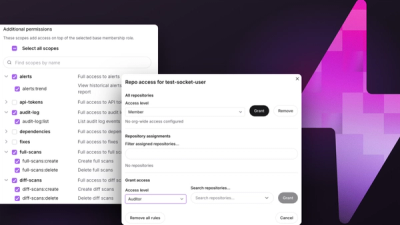
Socket now supports Custom Roles and Repository Access Permissions so organizations can control who can access specific repositories and actions.