

Security News
US Government Forces Anthropic to Pull Claude Fable Days After Launch
Anthropic says the directive cited national security concerns over a narrow jailbreak, but offered no specific technical details.
By Sarah Gooding - Jun 13, 2026
shipsafe-sentinel
Advanced tools
Security assessment CLI for Next.js + Supabase codebases — the scanner behind ShipSafe coaching
Security assessment CLI for Next.js + Supabase codebases. The scanner behind ShipSafe coaching.
npx shipsafe-sentinel scan .
Runs on your machine. No code leaves your box unless you --format json and pipe it somewhere yourself.
app/api/**).parse() on POST/PUT handlers)next.config.*.limit(), .range())=== / !==)Full rule catalog: shipsafe-sentinel scan --list-rules.
[CRITICAL] app/api/generate-caption/route.ts:14
  OpenAI API key hardcoded in client-rendered route (SECRETS-001)
  Fix: move to process.env.OPENAI_API_KEY, rotate the current key.

  → ShipSafe Week 2 walks this end-to-end:
    https://shipsafe-web-eight.vercel.app/dashboard/coaching/week/2

[LOW] src/layout.tsx:8
  No error boundary in root layout
Critical and High findings link to the matching week of the 12-week coaching curriculum. Medium/Low/Info stay quiet — no link spam.
# Run without installing
npx shipsafe-sentinel scan .

# Or install globally
npm i -g shipsafe-sentinel
shipsafe-sentinel scan .
Requires Node 20+.
Optional .sentinelrc.json in your repo root:
{
  "ignore": ["test/", "scripts/", "supabase/migrations/"],
  "failOn": "high",
  "ai": {
    "enabled": true,
    "provider": "anthropic"
  }
}
AI-layer checks require ANTHROPIC_API_KEY or OPENAI_API_KEY in env. The deterministic rule layer runs without any API key.
shipsafe-sentinel scan . --format terminal   # default, colored
shipsafe-sentinel scan . --format json       # CI-friendly
shipsafe-sentinel scan . --format html       # static report
Exit codes: 0 = no findings at or above failOn, 1 = findings present, 2 = scanner error.
Sentinel can run as a Model Context Protocol server so an AI agent (Claude Code, Cursor, VS Code) can invoke the scanner as a tool. At-keystroke security feedback while you code.
Add this to your project's .mcp.json for Claude Code:
{
  "mcpServers": {
    "shipsafe-sentinel": {
      "command": "npx",
      "args": ["shipsafe-sentinel", "mcp"]
    }
  }
}
The agent then has a scan_project tool that returns the same JSON report sentinel scan --format json produces.
Cursor and VS Code both support MCP servers as well; see the Cursor MCP docs and the VS Code MCP extension for setup.
Sentinel reads your codebase, infers the dominant auth helper per route group, and flags new code that deviates. This catches the specific failure mode of AI-generated routes silently skipping the project's established auth pattern.
shipsafe-sentinel patterns .             # show what was inferred
shipsafe-sentinel patterns . --init      # write to .sentinelrc.json
After --init, deviations get flagged as CONVENTION-001 (precise) instead of PATTERN-001 (heuristic).
The scanner is free forever and works standalone. If you want a human to walk the findings with you — strip anything sensitive, prioritize what actually matters for your stack, teach you the pattern so it doesn't recur — that's ShipSafe coaching. Members-only, tied to the Early AI-dopters community.
You don't need to enroll to use this tool. Scan your repo, fix what's critical, move on.
A reusable GitHub Action ships with this repo so any project can wire shipsafe-sentinel into pull requests in under a minute. Drop it in your workflow, set fail-on: critical, and the build fails the moment a critical finding lands on a PR.
- name: ShipSafe Sentinel scan
  uses: gtsbahamas/sentinel/.github/actions/scan@master
  with:
    path: "."
    fail-on: "critical"
fail-on: critical is the recommended default for CI gates. It blocks the obvious foot-guns (hardcoded secrets, missing auth, RLS leaks) without drowning the build in lower-severity noise. Tighten to high once your team is keeping critical at zero.
Full input reference: .github/actions/scan/action.yml.
New rules live in src/layers/rules/. Each rule is a TypeScript module that exports a Rule object with id, severity, detect(context), and describe(finding). PRs welcome.
Reporting a false positive or a gap: open an issue with the file pattern and expected behavior.
Apache 2.0. See LICENSE and NOTICE.
Copyright 2026 Ty Wells / Frank Labs.
FAQs
Security assessment CLI for Next.js + Supabase codebases — the scanner behind ShipSafe coaching
We found that shipsafe-sentinel demonstrated a healthy version release cadence and project activity because the last version was released less than a year ago. It has 1 open source maintainer collaborating on the project.
Did you know?

Socket for GitHub automatically highlights issues in each pull request and monitors the health of all your open source dependencies. Discover the contents of your packages and block harmful activity before you install or update your dependencies.
Security News
Anthropic says the directive cited national security concerns over a narrow jailbreak, but offered no specific technical details.

Security News
A network of 152 Chrome live wallpaper extensions hid ad tracking and made extension-driven traffic look like Google search clicks.
Company News
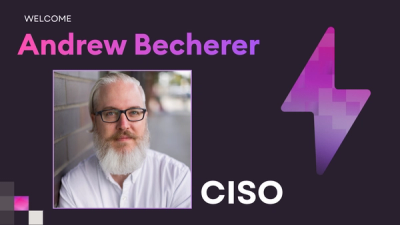
Socket’s first CISO brings deep experience securing high-growth SaaS companies as open source supply chain threats accelerate.