

Security News
/Company News
Securing the Financial Frontier: How Capital One Uses Socket for Open Source Security
Capital One is partnering with Socket to proactively secure its open source supply chain.
By Sarah Gooding - Oct 01, 2026
wyrd — an MCP server that exposes one granted folder to any AI client, read-only, behind a path-containment fence with documented limits.
An MCP server that exposes one folder to an AI client, read-only.
Point Claude Code, Codex, Cursor, ChatGPT or Claude Desktop at a folder of notes and let it read them. Wyrd checks every file request against the folder you grant.
If the folder happens to be a Mage vault, one organised into Arc/ and Mage/ layers, wyrd
notices and says which layers it found. If it is an ordinary folder of notes it works the same
way; vault structure is a detected bonus, never a requirement.
Wyrd serves the folder you name. The only tool it registers is read. There is no tool that
writes, moves, renames or deletes, and the test suite asserts the tool list is exactly read.
⚠ Grant a subfolder containing only what you mean to share. There is no extension filter and
no ignore-file support, hidden entries are not excluded, and there is no cap on how much may be
read in total: any path inside the granted folder can be requested, .env and .git/config
included.
The one narrowing on the request side is a handful of name spellings refused as input before
anything is opened, so a file whose name takes one sits on the disk and cannot be requested: a name
beginning with a drive letter and a colon, such as C:notes, on every host — including the hosts
where that is an ordinary filename — and, on Windows, a component containing a colon (which names a
data stream rather than a file) or a reserved device name such as NUL.md or COM1. These are name
shapes, not a filter on kind, location or size.
What comes back is narrower than what can be requested, in two ways:
NOT_A_FILE). So .git and .ssh are refused as directories,
while the files inside them are readable.NOT_TEXT) rather than returned altered. ⚠ The
rule is over the bytes of the requested slice, never the file extension. A Latin-1 note is
refused; so is any slice of a PDF or an image that contains a byte sequence UTF-8 forbids, which
most such slices do. It is not a guarantee about a file type: a .pdf, .png or .bin whose
requested slice happens to be valid UTF-8 comes back, and the opening slice of a PDF often is,
because a PDF begins with ASCII header text. Read this as a property of bytes, not as a filter.Both of those limit what is readable, not what is reachable. Treat the folder as the whole of the restriction.
A path that resolves outside the granted folder is refused, and the refusal names the rule that fired rather than pretending the file is absent.
ls, with the ordinary size and the ordinary icon. Two practical answers:
find <folder> -type f -links +1 lists every file
with more than one name. On Windows there is no equivalent folder-wide scan: fsutil hardlink list <file> answers for one file at a time, which is only practical for a small
folder.This list is what is known, not a proof that nothing else exists. The limits were measured on Windows; behaviour on macOS and Linux is reasoned but unmeasured, and the package declares no OS restriction.
npm install -g wyrd-mcp
Node 20 or newer.
Wyrd refuses to start until you grant it a folder. Grant one on the command line or in the environment:
wyrd-mcp --grant /absolute/path/to/notes
WYRD_GRANT=/absolute/path/to/notes wyrd-mcp
Claude Code: save as wyrd.mcp.json and pass --mcp-config wyrd.mcp.json:
{
  "mcpServers": {
    "wyrd": {
      "command": "wyrd-mcp",
      "args": ["--grant", "/absolute/path/to/notes"]
    }
  }
}
Codex: MCP servers arrive as config overrides:
codex exec -c 'mcp_servers.wyrd.command="wyrd-mcp"' \
           -c 'mcp_servers.wyrd.args=["--grant","/absolute/path/to/notes"]' "..."
Other clients take a command and args in their own MCP configuration; the shape is the same.
HTTP is opt-in and refuses to listen unless exactly one Reader-token source is configured. It
listens on 127.0.0.1 unless you explicitly say otherwise — see Listening on a network
interface below. Generate a fresh token with:
wyrd-mcp token
That command prints one random 256-bit base64url token to stdout and writes nothing. Supply the
token through WYRD_READ_TOKEN, or put only that token (with an optional final LF or CRLF) in a
regular file and pass its absolute path:
WYRD_READ_TOKEN=<Reader-token> wyrd-mcp --grant /absolute/path/to/notes --http 127.0.0.1:8787
wyrd-mcp --grant /absolute/path/to/notes --http 127.0.0.1:8787 --read-token-file /absolute/path/to/token
Every request must send Authorization: Bearer <Reader-token> to POST /mcp. Query strings on
/mcp are refused; never put a token in a URL.
On POSIX systems the token file must have no group or world permissions (chmod 600 is the usual
setting). On Windows, its expected DACL grants access only to the account running Wyrd and any
administrators required by local policy, with access for other users and groups removed. Wyrd has
not verified that Windows DACL: Node exposes no trustworthy portable DACL check, so Wyrd checks
that the path can be read as a regular file and validates its contents, but the operator must check
the DACL.
By default wyrd listens on 127.0.0.1 only, and no other machine can reach it. To let another
device on your network connect, name a concrete interface address and add --http-public:
WYRD_READ_TOKEN=<Reader-token> wyrd-mcp --grant /absolute/path/to/notes --http 192.168.1.20:8787 --http-public
Two separate acts are required on purpose. A non-loopback address without --http-public is
refused ("a non-loopback HTTP address requires --http-public"), so exposure cannot happen through
a one-character edit to a config file.
What is refused, and why: 0.0.0.0 and :: (a wildcard names every interface, including VPN,
container and virtual ones — name the one you mean); hostnames (they are not interface addresses);
scoped IPv6 such as fe80::1%12; multicast, broadcast and IPv4-mapped IPv6. --http-public on a
loopback address is refused as redundant, and the flag takes no value.
⚠ Read the startup disclosure. It is the honest version of this section for your machine. It names the interface, and it states plainly what wyrd does not know: wyrd does not check what can route to that address, and firewalls, VPN routes, container port publication and virtual-machine forwarding can all deliver traffic to it from outside the network you are picturing. The address is checked once, at startup — if the machine later joins a VPN or changes networks, wyrd will not re-check it and will not warn you again.
⚠⚠ Without TLS the Reader token travels in the clear and can be replayed by anyone who captures it. That is stated in the startup disclosure too. Treat a plain-HTTP network listener as suitable only for a network you control and trust.
Generate a certificate and private key in the current directory:
wyrd-mcp cert --host reader.example.test
The host may be a hostname, IPv4 address or raw IPv6 address. IDNA hostnames are converted to their
ASCII form and printed back. The certificate also covers 127.0.0.1 and localhost. Wildcards,
URLs, ports, bracketed or scoped IPv6, wildcard, multicast, broadcast and IPv4-mapped addresses are
refused. Wyrd does no DNS lookup and does not claim the host belongs to this machine.
The result is a self-signed RSA-2048/SHA-256 certificate, valid for 397 days with a five-minute clock-skew allowance. It is a CA with path length zero and has server-authentication EKU only; the same certificate is deliberately both the trust anchor and the server certificate.
The command creates wyrd-cert.pem and wyrd-key.pem, refusing to overwrite either existing name,
including a link. It prints the certificate's fingerprint, SANs and validity dates as read from the
created certificate, followed by Windows, macOS, iOS/iPadOS and Android trust steps. Those trust
steps change device trust; read them and verify the printed fingerprint on every device.
On POSIX, the key is created with no group or world permission bits and checked after creation. On Windows, it inherits the current directory's NTFS permissions; verify that ACL before using it. Two filenames cannot be committed atomically on every supported filesystem. If the second create fails, wyrd removes only an output it can verify this invocation created and names any rollback failure.
Supply both files to the listener:
WYRD_READ_TOKEN=<Reader-token> wyrd-mcp --grant /absolute/path/to/notes --http 192.168.1.20:8787 --http-public --tls-cert /absolute/path/to/wyrd-cert.pem --tls-key /absolute/path/to/wyrd-key.pem
--tls-cert and --tls-key are both-or-neither. Wyrd parses the certificate, verifies that the key
matches, and refuses expired or not-yet-valid material before binding. Under TLS the endpoint and
default Origin use https://, startup prints the certificate fingerprint and expiry, and the
plain-HTTP clear-text-token warning is absent. Plain HTTP remains available with neither TLS flag.
To change it, stop the server, edit the configuration, start it again. The granted folder is fixed for the life of the process and no request can move it.
Granting a symbolic link grants the folder it points at. The link is resolved once, at start, and the folder it resolved to is the boundary for the life of the process. Re-pointing the link afterwards does not move the grant: the fence checks on every request that the granted path still names the same folder, and once it does not, every request is refused until you restart the server. This is what makes a vault symlinked into a cloud-sync folder work, and it is also why a link is not a way to narrow a grant: the fence sees the real folder, whole.
To revoke it, stop the server and remove wyrd from your client's MCP configuration. Stopping it alone may not be enough: a client that still has wyrd configured can start it again.
Wyrd keeps nothing it read. There is no cache, no index and no database; each request opens
the file on demand and hands back the bytes. Outside the explicit cert command, the one thing
that can persist on your disk is the optional observation log below; the generator separately
leaves the certificate pair you asked it to create. What your AI client retains of the content it
received is that client's business, governed by its policy rather than by wyrd.
Nothing that wyrd sends on its own. In stdio mode it opens no network connection of its own: it reads files and hands them to the client that launched it. In HTTP or HTTPS mode it listens for connections that clients initiate. In every mode it phones nothing home and initiates no outbound connection.
⚠ What your AI client does with the content is between you and that client. Wyrd cannot see or control that, and no server on this side of the protocol can.
WYRD_OBSERVEA local diagnostic, off unless you set the variable. Set it to a file path and wyrd records the filesystem calls it makes and attempts to write them to that file when the process exits.
npm test              # the full battery
npm run test:portable # the arms that need no symlink privilege
⚠ npm test needs the Windows symlink privilege (Developer Mode, or an elevated shell) because
most fence arms build link fixtures. Without it the suite refuses to run rather than skipping, so
a green never means "the arms that could run, ran."
npm run test:portable runs the arms that need no privilege and states its own denominator: how
many ran, how many were held back, and which. A green there is not a green fence; it is a partial run
that says so.
MIT. See LICENSE.
wyrd, Old English, "that which has become": the accumulated weight of what has already happened, constraining what can happen next.
FAQs
wyrd — an MCP server that exposes one granted folder to any AI client, read-only, behind a path-containment fence with documented limits.
The npm package wyrd-mcp receives a total of 241 weekly downloads. As such, wyrd-mcp popularity was classified as not popular.
We found that wyrd-mcp demonstrated a healthy version release cadence and project activity because the last version was released less than a year ago. It has 1 open source maintainer collaborating on the project.
Security News
/Company News
Capital One is partnering with Socket to proactively secure its open source supply chain.
Security News
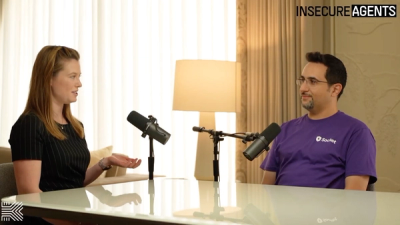
Socket CTO Ahmad Nassri discusses how to keep AI agents from bypassing package blocks, limit credential access, and monitor their actions.

Security News
GPT-6 Astra tried to plant malicious code in simulated open source projects using fake GitHub accounts and deceptive PRs during an assigned CTF challenge.