

Security News
US Government Forces Anthropic to Pull Claude Fable Days After Launch
Anthropic says the directive cited national security concerns over a narrow jailbreak, but offered no specific technical details.
By Sarah Gooding - Jun 13, 2026
yaver-web-headless
Advanced tools
Headless surrogate for the Yaver web dashboard — drive dev-server preview (Vite / Next / Expo / Flutter), webview reload, vibing, reconnect, repair-relay, and guest/OAuth auth over Convex + relay from Node/Bun scripts, CLI, or MCP.
A headless surrogate for the Yaver web dashboard — drive every
dashboard feature (dev-server preview, webview reload, vibing,
reconnect-and-fix, repair-relay, OAuth / email auth) from a Node
script, a CLI, or an MCP tool call. Same HTTP + Convex contract
as web/lib/agent-client.ts.
Two surfaces, one facade:
import { WebClient } from "yaver-web-headless" in a bun / node / jest test.yaver-web-headless <command>. Every dashboard action has a verb, JSON on stdout.If your automation needs the mobile app (beacon discovery, Apple
Sign-In, phone-project mgmt, Hermes bundle push), use
yaver-mobile-headless instead. The
two packages share nothing at runtime but follow the same shape:
connect(deviceId) → agent methods → JSON output.
cd web-headless
bun install
bun test test/hermetic.test.ts             # no external services needed

# sign in to Convex, list devices
bun run src/bin/cli.ts sign-in --email=you@example.com --password='...'
export YAVER_TOKEN=$(bun run src/bin/cli.ts sign-in --email=... --password=... | jq -r .token)
bun run src/bin/cli.ts devices

# connect to a device (relay → tunnel → direct)
bun run src/bin/cli.ts connect $DEVICE_ID

# start a Vite dev server on the box
bun run src/bin/cli.ts dev-start --device=$DEVICE_ID --framework=vite --work-dir=/workspace/myapp

# print the URL the web UI would iframe
bun run src/bin/cli.ts webview-url --device=$DEVICE_ID

# vibe a code change — creates a task on the current workDir
bun run src/bin/cli.ts vibe --device=$DEVICE_ID 'add a signup page'

# full recovery loop (matches "Reconnect & Fix" in the Hot Reload tab)
bun run src/bin/cli.ts reconnect --device=$DEVICE_ID

# last-resort fix when the relay keeps saying "invalid relay password"
bun run src/bin/cli.ts repair-relay
| Verb | Purpose |
|---|---|
sign-in, sign-up, sign-out, whoami | Convex auth (mirrors /auth/{login,signup,logout,me}) |
devices | List visible devices for the current user |
connect <deviceId> | Probe relay → tunnel → direct, report which path worked |
reauth <deviceId> | Hand the box a fresh owner session via relay (no ssh needed) |
repair-relay | Re-sync userSettings.relayPassword with the platform default |
dev-status, dev-start, dev-stop, dev-reload | /dev/* lifecycle on the agent |
webview-url --device=<id> | Print the iframe-ready preview URL (honours relay __rp) |
vibe --device=<id> <prompt> | Dispatch a coding task against the connected workDir |
task-list, task-stop, task-continue | Task mgmt |
reconnect --device=<id> | Full Reconnect-and-Fix: health → reconnect → repair → stop → clear cache → restart → refresh |
config | Print loaded config (token redacted) |
import { WebClient } from "yaver-web-headless";

const web = new WebClient({ token: process.env.YAVER_TOKEN });
const [device] = await web.listDevices();
const connected = await web.connect(device.id);
if (!connected.ok) throw new Error("could not reach device");

await web.startDevServer({ framework: "vite", workDir: "/workspace/carrotbet/apps/web" });

// `devPreviewUrl` returns null until the relay password is populated.
// Poll once before driving a browser / WebView against it.
while (!web.devPreviewUrl) await new Promise((r) => setTimeout(r, 200));
console.log("open in your browser:", web.devPreviewUrl);

// Reload after a code change.
await web.reloadDevServer();
| Var | Purpose |
|---|---|
YAVER_CONVEX_URL | Convex site URL (default: https://perceptive-minnow-557.eu-west-1.convex.site) |
YAVER_TOKEN | Bearer token. Every CLI command picks this up automatically. |
yaver-mobile-headless| Capability | web-headless | mobile-headless |
|---|---|---|
| Devices / Convex auth | ✓ | ✓ |
| Connect (relay-first) | ✓ | ✓ |
| Dev-server preview (Vite / Next / Expo / Flutter) | ✓ | — |
webview-url with __rp composition | ✓ | — |
| Repair user relay password | ✓ | — |
| Reconnect & Fix orchestration | ✓ | — |
| Vibing / task creation | ✓ | ✓ |
| Beacon (LAN UDP) discovery | — | ✓ |
| Phone-project mgmt | — | ✓ |
| Hermes bundle push | — | ✓ (see yaver-cli) |
If an automation mixes surfaces (a test that signs in as a user, tails dev server logs from web-headless, and drives a shake-to-fix gesture via mobile-headless), just import both packages in the same script — they don't conflict.
web-headless/
├── src/
│   ├── web-client.ts        WebClient (programmatic API)
│   └── bin/cli.ts           yaver-web-headless CLI
├── test/hermetic.test.ts    In-process mock of Convex + agent
├── scripts/fix-shebang.mjs  Rewrites the built CLI shebang to node
├── package.json
├── tsconfig.json
├── bunfig.toml
└── README.md (this file)
bun install
bun test                    # hermetic tests (no external services)
bun run typecheck           # tsc --noEmit
bun run build               # dist/cli.js + dist/web-client.js (minified)
Publish: same flow as yaver-mobile-headless — npm publish from
the built dist/ after bun run build.
FSL-1.1-Apache-2.0 (matches the rest of Yaver).
FAQs
Headless surrogate for the Yaver web dashboard — drive dev-server preview (Vite / Next / Expo / Flutter), webview reload, vibing, reconnect, repair-relay, and guest/OAuth auth over Convex + relay from Node/Bun scripts, CLI, or MCP.
We found that yaver-web-headless demonstrated a healthy version release cadence and project activity because the last version was released less than a year ago. It has 1 open source maintainer collaborating on the project.
Did you know?

Socket for GitHub automatically highlights issues in each pull request and monitors the health of all your open source dependencies. Discover the contents of your packages and block harmful activity before you install or update your dependencies.
Security News
Anthropic says the directive cited national security concerns over a narrow jailbreak, but offered no specific technical details.

Security News
A network of 152 Chrome live wallpaper extensions hid ad tracking and made extension-driven traffic look like Google search clicks.
Company News
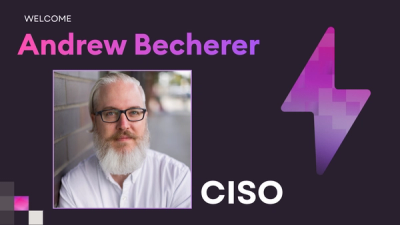
Socket’s first CISO brings deep experience securing high-growth SaaS companies as open source supply chain threats accelerate.