

Security News
/Company News
Securing the Financial Frontier: How Capital One Uses Socket for Open Source Security
Capital One is partnering with Socket to proactively secure its open source supply chain.
By Sarah Gooding - Oct 01, 2026
labmcp-epics
Advanced tools
MCP server for EPICS Channel Access (accelerators, synchrotrons, neutron sources, telescopes, physics labs): read, monitor and (guarded) write process variables via caproto.
Let an AI agent read, monitor and, when you allow it, carefully write EPICS process variables (PVs) over Channel Access. EPICS is the control system behind most particle accelerators, synchrotron and neutron beamlines, large telescopes, fusion experiments and many physics labs. The server uses caproto, a pure-Python CA implementation, so there is nothing to compile and no libca to install.
⚠️ Facility control systems are safety-critical. Writing a PV can move motors and sample stages, open shutters, ramp magnets or high voltage, and change cryogenic or vacuum systems. Follow your facility's rules. Get authorisation from the responsible scientist or control-room staff before enabling writes, and run with
--read-onlyunless writes are explicitly authorised. This server is not an interlock or a personnel-protection system and never replaces them. Where possible, connect through the facility's CA gateway with its access-security rules, and limit writes with--option put_allowlist=.
| Package | labmcp-epics |
| Instruments | Any EPICS IOC serving Channel Access: EPICS Base 3.14–7.x soft/hard IOCs, areaDetector, motor, asyn, StreamDevice, caproto/pythonSoftIOC IOCs, CA gateways |
| Interfaces | Ethernet: CA search on UDP 5064, circuits on TCP 5064, repeater on UDP 5065 |
| Protocol | EPICS Channel Access v4.13 (protocol specification, ao record: DRVH/DRVL, caproto threading client) |
| Status | 🧪 simulated: tested against an in-process caproto IOC (real CA over localhost), not yet verified at a facility. Report a hardware test |
uvx labmcp-epics --simulate --check
The simulator is a real Channel Access server running in-process. It is bound to 127.0.0.1 on random free ports, and the client is pointed only at that address (auto address list off), so it neither broadcasts on nor answers your network. It serves SIM:TEMP (°C, with alarm limits, following SIM:TEMP:SP while SIM:HEATER is On), SIM:MTR (a motor whose put-callback completes only when the move is done, with SIM:MTR:RBV, :DMOV, :STOP and :VELO), SIM:DET:FRAMES, SIM:SAMPLE (string), SIM:SPECTRUM (a 512-point waveform), SIM:BEAM:CURRENT and SIM:STATUS.
EPICS_CA_ADDR_LIST, EPICS_CA_AUTO_ADDR_LIST), or pass it explicitly:
uvx labmcp-epics --read-only --address 10.0.1.20 --option check_pv=SR:CURRENT --check   # one IOC / gateway
uvx labmcp-epics --read-only --option ca_addr_list="gw1.facility.org 10.0.1.21:5064" --option check_pv=BL7:RING:I --check
uvx labmcp-epics --read-only --option check_pv=BL7:RING:I --check                        # use the environment as-is
--option auto_addr_list=yes. With --option check_pv=<a PV you know exists>, --check reads that PV and prints its value, or the reason it can't be reached. Without it, --check only confirms that the CA client starts.Claude Code (read-only, recommended)
claude mcp add epics -- uvx labmcp-epics --read-only --address gw1.facility.org
Claude Desktop / Cursor / Windsurf (claude_desktop_config.json, .cursor/mcp.json, …)
{
  "mcpServers": {
    "epics": {
      "command": "uvx",
      "args": ["labmcp-epics", "--read-only", "--address", "gw1.facility.org"]
    }
  }
}
Authorised writes (example: a beamline scientist lets the agent move only the sample stage and the filter wheel, and configures an emergency safe state):
uvx labmcp-epics --address 10.0.7.10 \
  --option put_allowlist='BL7:(SAMPLE:(X|Y)|FILTER:POS)' \
  --option require_ctrl_limits=true \
  --option safe_state='BL7:SAMPLE:X.STOP=1;BL7:SAMPLE:Y.STOP=1;BL7:SHUTTER:CMD=Close'
| Tool | Kind | Description |
|---|---|---|
apply_safe_state | 🛑 safety | Emergency action: write the scientist-configured safe-state PVs (--option safe_state, e.g. motor STOP fields, shutter close, HV off), all of them even if one fails. Available in read-only mode. It does not replace the facility's own interlocks and stop buttons. |
get_command_log | 👁 read | Return the most recent raw commands sent to / replies received from the instrument (newest last). Useful for debugging and for recording what was done. |
get_connection_info | 👁 read | Report which instrument is connected (identity, address, simulated or real), whether the server is read-only, and the active safety limits. Call this first. |
get_pv | 👁 read | Read one PV with its metadata: value, units, precision, alarm severity/status, IOC timestamp and age, display/alarm/warning/control limits and enum state names. Waveforms come back downsampled with min/max/mean statistics. |
get_pvs | 👁 read | Read many PVs at once (e.g. all motors or vacuum gauges of a beamline). PVs that cannot be reached are listed in errors instead of failing the whole call. |
monitor_pv | 👁 read | Subscribe to a PV and collect every value change for duration_s seconds (or until max_updates), then return statistics (min/max/mean/std, drift rate) and the updates. |
put_pv | ⚠️ hazard | Write a PV. This can move motors, open shutters, change magnet or high-voltage setpoints and heat or cool samples: tell the user exactly what will change first. The write is refused unless the PV matches the put allow-list, the IOC grants write access, and the value has the right type and lies within the PV's control limits (DRVL/DRVH). Returns the read-back value. |
put_pvs | ⚠️ hazard | Write several PVs in order (e.g. set both slit blades). Every write is validated first (allow- list, access rights, type, control limits); if any is invalid nothing is written. Writing stops at the first failure and the rest are reported as not written. The whole batch must finish within an hour: writes that would start later are not sent. |
pv_info | 👁 read | Connection details of a PV: serving IOC host:port, native type, element count, and whether this client has read/write access (EPICS access security) and passes the put allow-list. |
reconnect | 🛑 safety | Close and re-open the connection to the instrument (e.g. after it was power cycled or a cable was re-plugged). |
| Limit | Default | Meaning |
|---|---|---|
max_monitor_duration_s | 60 s | Longest monitor_pv collection |
max_put_batch | 10 PVs | Most PVs one put_pvs call may write |
max_put_wait_s | 60 s | Longest wait for one put-callback (completion) |
Override at launch, e.g. --limit max_put_batch=4. The main write guards are options, not numeric limits:
| Guard | How |
|---|---|
| Read-only mode | --read-only hides put_pv and put_pvs entirely |
| Allow-list | --option put_allowlist=<regex>: a PV name must fully match it to be written. Prefer patterns that exclude record fields (BL7:SAMPLE:[^.]* rather than BL7:SAMPLE:.*) |
| Limit fields | writes to the fields that set the limits (.DRVH, .DRVL, .HOPR, .LOPR, and the motor record's .HLM, .LLM, .DHLM, .DLLM) are refused, so a write can't raise a limit and then pass it. --option allow_limit_field_writes=true permits them |
| EPICS access security | writes are refused up front if the IOC or gateway grants this client read-only access |
| Control limits | numeric writes outside the PV's control limits are refused. For output records these are DRVL/DRVH, which the IOC would otherwise silently clip to. A NaN limit means no limit on that side |
| No limits configured | allowed with a warning, or refused with --option require_ctrl_limits=true |
| Type checks | enum states must be valid names or indices, integers must be integral and in range, 32-bit FLOAT values must fit, strings are at most 39 latin-1 characters, arrays must fit the element count |
| PV names | no whitespace or quotes, and record names of at most 59 characters (EPICS 3.14+); anything else is refused before a search is sent |
| Batches | put_pvs validates every write before sending any, stops at the first failure, and sends no write once its one-hour budget (inside the tool timeout) is used up |
| Put-completion | put_pv waits for the IOC's put-callback. On timeout it says the IOC may still be processing and not to repeat blindly |
| Safe state | apply_safe_state (SAFETY, available even in read-only mode) writes only the PVs the scientist configured with --option safe_state |
NAME (VAL) is the target and NAME.RBV is the actual position. put_pv returns the value read back from the PV you wrote, so read the readback PV separately to confirm physical motion.DBR_CTRL response. EPICS convention treats equal low and high limits (normally 0/0) as "not configured", and those PVs are only type-checked."nan", "inf" or "-inf", array elements as null, a limit that is NaN (EPICS 3.16+ reports unset alarm limits that way) as null, and waveform and monitor statistics leave such values out and count them (non_finite, non_finite_updates).NO_ALARM, MINOR_ALARM, MAJOR_ALARM, INVALID_ALARM), status (HIHI, LOLO, UDF, COMM, …) and age_s, the time since the IOC timestamp, so stale values stand out.max_elements, with min/max/mean/argmax statistics. CHAR waveforms are also decoded to text (as_string), the usual EPICS long-string convention. When writing, a text value is accepted for CHAR waveforms.EPICS_CA_* environment variables, as in EPICS Base. The server sets them for its own process from --address/--option and restores them on disconnect. If put_allowlist holds a comma, pass it on the command line or give LABMCP_OPTIONS in its JSON form ({"put_allowlist": "BL7:(A|B){1,2}"}), because the a=1,b=2 form splits on commas.get_command_log records every write (caput -c NAME value) and its read-back.| Facility / IOC | EPICS version | Interface | Verified by | Date |
|---|---|---|---|---|
| none yet: be the first |
FAQs
MCP server for EPICS Channel Access (accelerators, synchrotrons, neutron sources, telescopes, physics labs): read, monitor and (guarded) write process variables via caproto.
We found that labmcp-epics demonstrated a healthy version release cadence and project activity because the last version was released less than a year ago. It has 1 open source maintainer collaborating on the project.
Security News
/Company News
Capital One is partnering with Socket to proactively secure its open source supply chain.
Security News
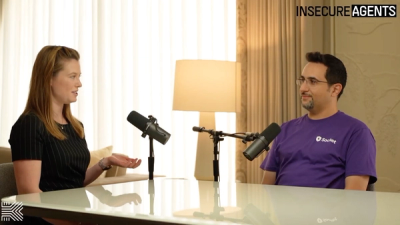
Socket CTO Ahmad Nassri discusses how to keep AI agents from bypassing package blocks, limit credential access, and monitor their actions.

Security News
GPT-6 Astra tried to plant malicious code in simulated open source projects using fake GitHub accounts and deceptive PRs during an assigned CTF challenge.