English | 简体中文
mcp-for-maya
MCP server giving AI agents spatial awareness of Autodesk Maya scenes



What Is This
mcp-for-maya is a Model Context Protocol (MCP) server that lets LLM agents (Codex, Claude, etc.) directly drive Autodesk Maya for 3D modeling, scene planning, and engineering-grade delivery.
Forked from chadrik/maya-mcp-server, it adds a scene-intelligence layer on top of the upstream connection stack: spatial awareness, deterministic auditing, transactional safety, and a visual loop.
Key capability: the agent stops "writing blind" — it can perceive spatial state, materials, and object relationships, then verify changes against engineering rules.
[!WARNING]
This server executes arbitrary Python inside Maya — that is a designed capability, not a bug. The built-in validation / rate-limit / audit pipeline is a safety net for accidents and injected instructions, not a boundary against a malicious client; the connected agent is trusted. See docs/threat-model.md.

Every asset below is a real capture produced by this project's own tool chain — no mockups: scenes were built procedurally through execute_code / write_module (plus one live asset_import), frames rendered through scene_render_preview, the audit pair via scene_review + scene_viewport_snapshot, and the orbit sequence captured frame-by-frame with playblast (Maya 2024 GUI session).
write_module → t20_movement.build() — "parametric involute gear train caliber: true involute teeth, Geneva-striped plates, blue-steel screws, ruby jewels, spiral hairspring" | 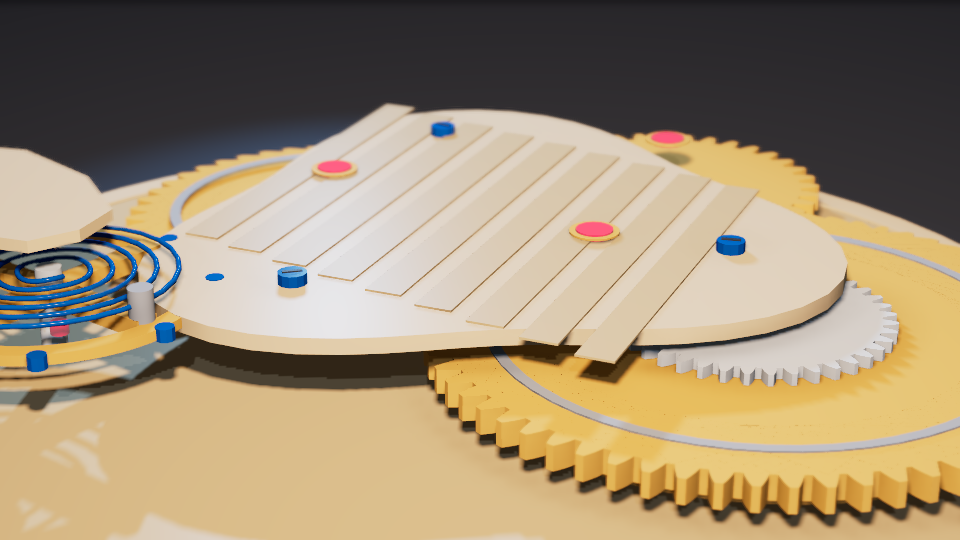 |
write_module → t20_bonsai.build() — "low-poly L-system bonsai: recursive branching, faceted foliage pads, pot + moss + stones" | 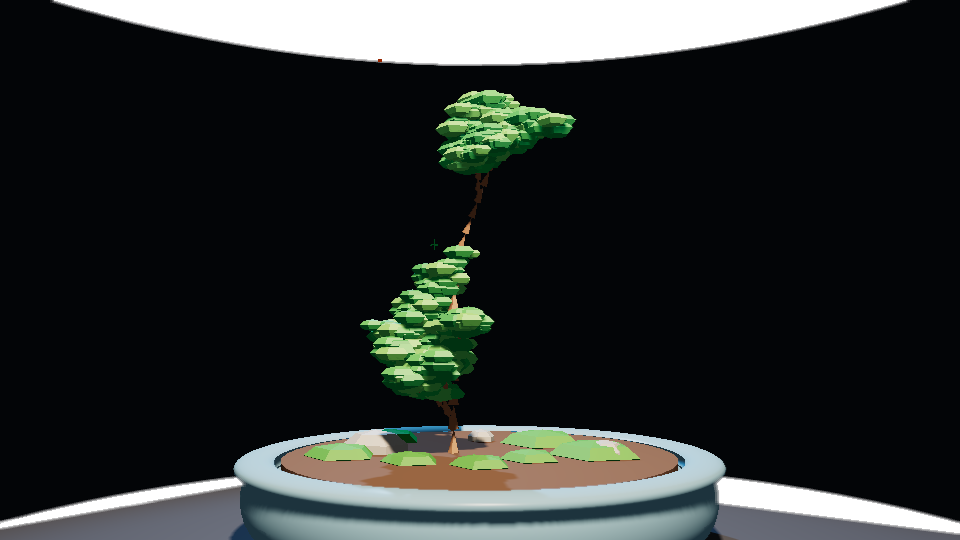 |
asset_import("vintage_pocket_watch") + asset_import("metal_tool_chest") → t20_workbench.build() — "horologist's workbench: imported assets with textures wired, procedural involute spares" | 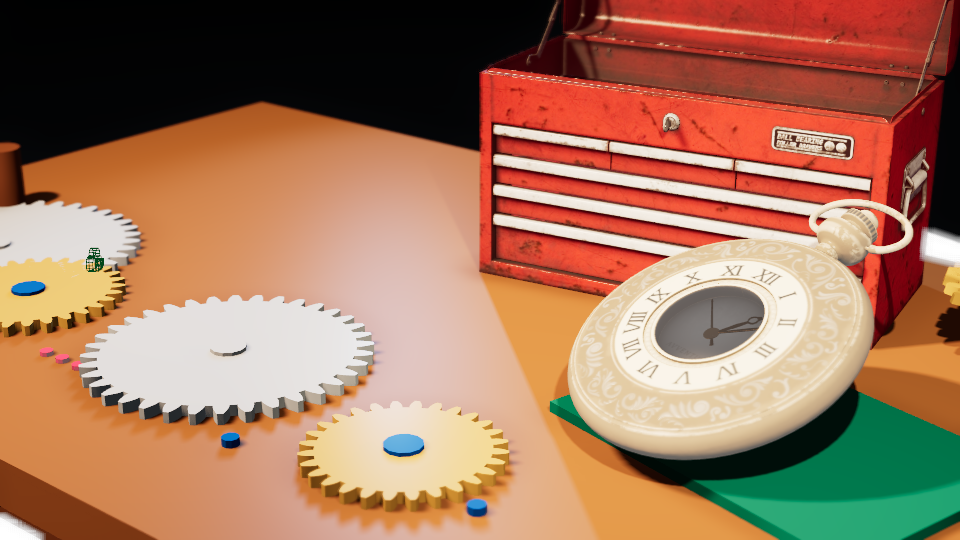 |
write_module → t20_street.build() — "low-poly corner block: 11 parametric buildings, gable roofs, awnings, street furniture, parked vans" | 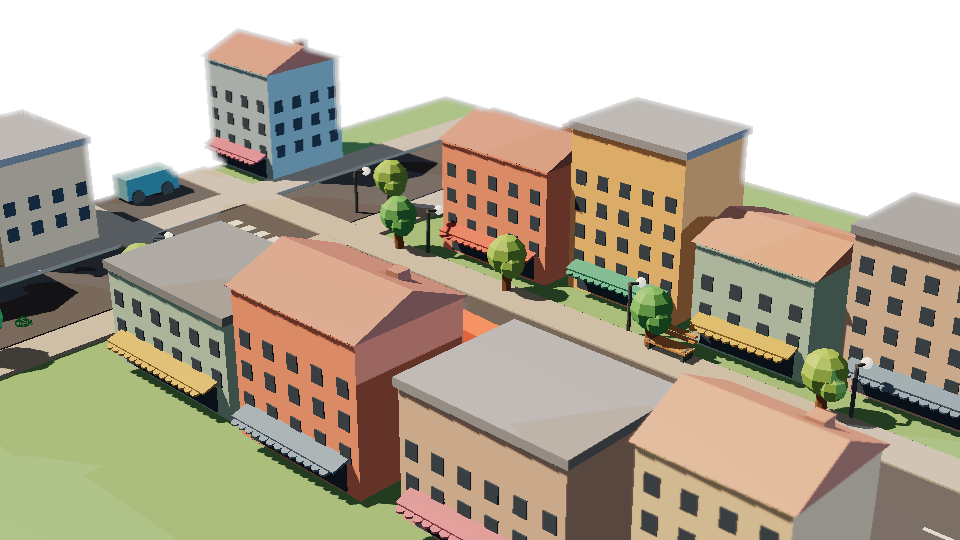 |
write_module → t20_teapot.build() — "Utah teapot recreation: revolve-profile body, Bezier tapered spout, ear handle, checkered floor" | 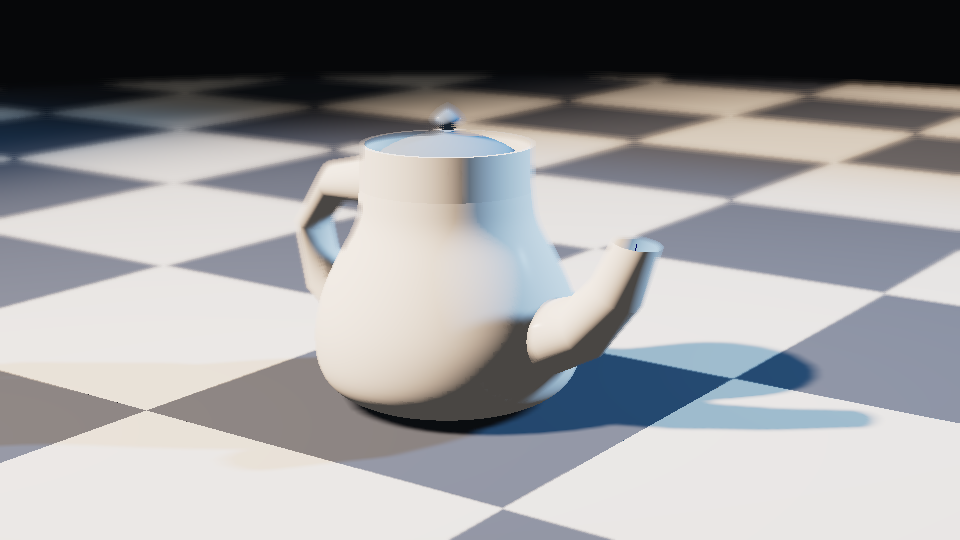 |
scene_review() on a bench littered with junk → scene_plan(auto_fix=True) + cleanup → scene_review() again — score 53.7 → 64.2 | 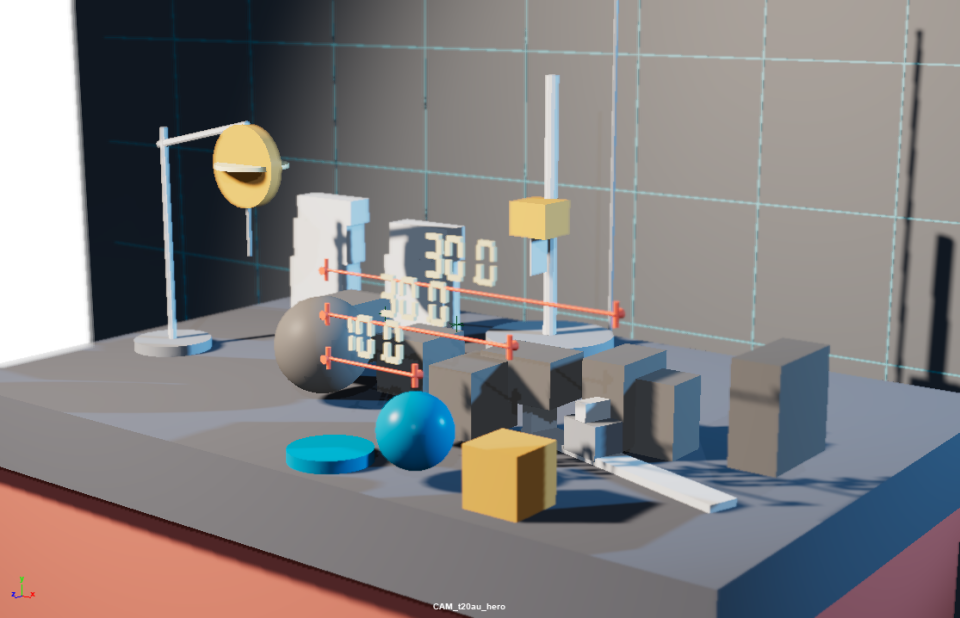 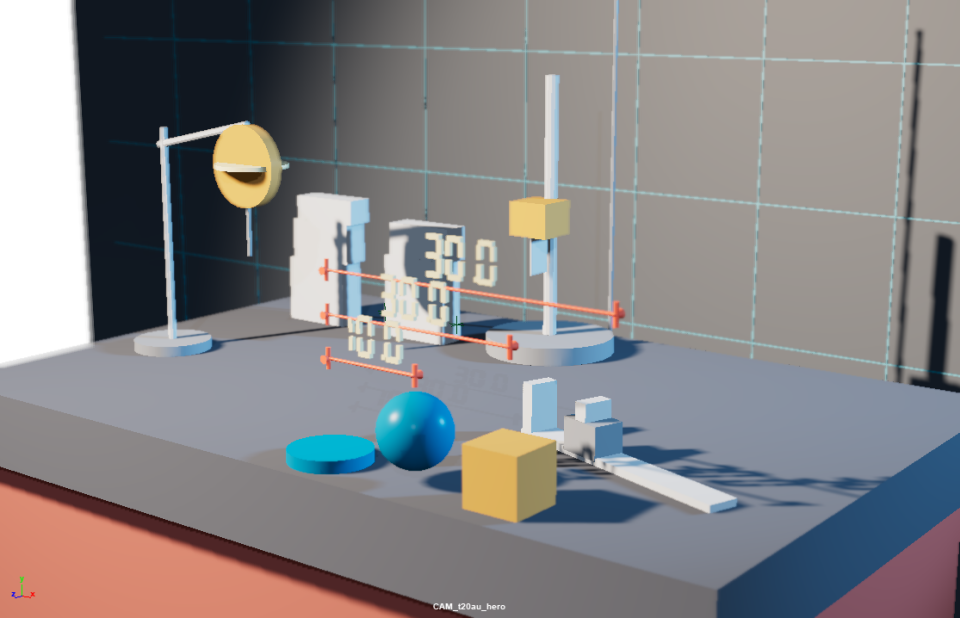 |
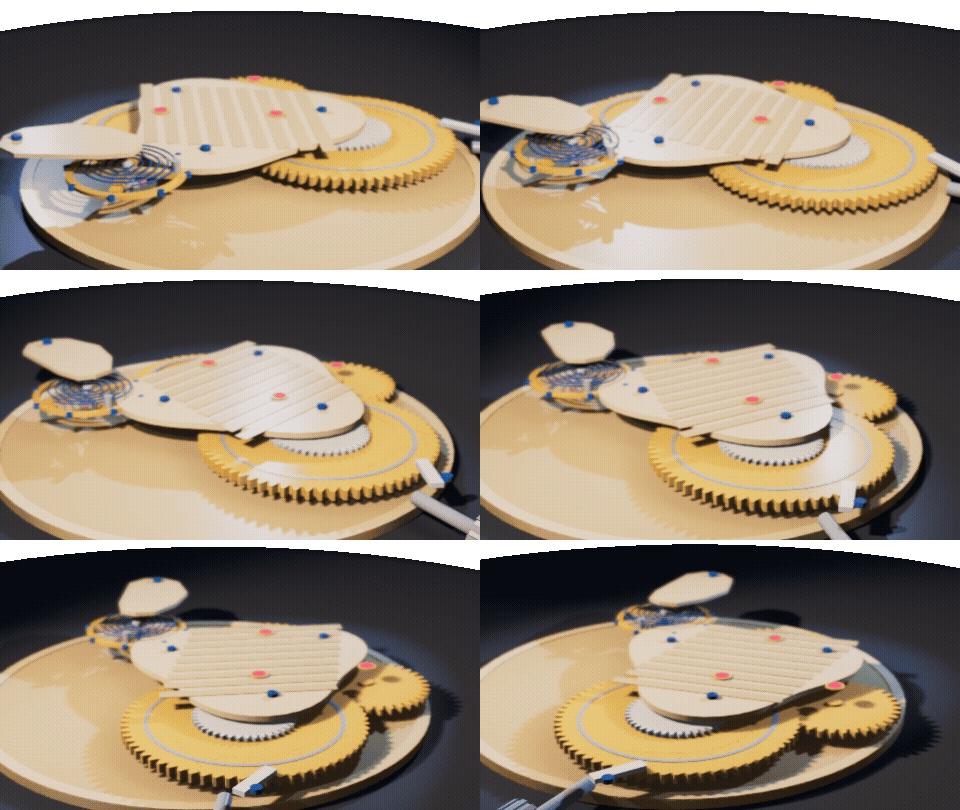
Reproduce every frame with the scripts in .github/assets-src/.
vs blender-mcp
An honest three-tier comparison with ahujasid/mcp-for-blender (measured 2026-09):
| Unique to this project | ICEV enforced workflow (in server instructions), CoS notation output, checkpoint/rollback transactional safety, scene_plan holistic planning (zone mapping + layout suggestions), multi-session management, 11 deterministic audit checks, playblast render preview with metadata |
| Unique to blender-mcp | Asset ecosystem breadth (Sketchfab/Hyper3D/Hunyuan3D), first-class object CRUD tools, AI-generated-model integrations, community scale |
| Shared | MCP tool surface, Poly Haven asset source, viewport screenshot feedback, arbitrary Python execution, local socket connection |
Poly Haven model search + import shipped in 0.2.0 (issue #2 thin slice: FBX + texture wiring; HDRIs and texture packs remain roadmap). AI generation and first-class object CRUD are explicitly out of scope — the latter is already covered by execute_code.
On the shared asset-download path, this project's controls are enforced in code rather than conventional: downloads happen host-side only — https + host allowlist, per-file md5, size caps, filenames sanitized from the URL's last segment (polyhaven.py) — and Maya itself never touches the network. Enforcement detail: docs/threat-model.md.

| 🧊 Spatial awareness | scene_snapshot scene_inspect scene_measure | One-call full-scene spatial model; precise distance/overlap/gap measurement |
| 🎨 Aesthetic analysis | scene_aesthetics | 5 dimensions: color theory (60-30-10), spatial composition (golden ratio / rule of thirds), proportion & scale (ergonomics), lighting quality (three-point / fill ratio / temperature / decay), visual flow |
| 🎬 Camera planning | camera_create camera_orbit | 8 industry-standard shot types + orbit animation |
| 🛡️ Disaster recovery | scene_checkpoint scene_rollback scene_checkpoint_list | exportAll in-memory snapshots; rollback explicitly rebinds the original path |
| 🧠 Scene planning | scene_plan | Organization health, zone balance, layout suggestions, conflict prevention, natural-language planning |
| 📋 Engineering audit | scene_review scene_validate scene_assert | 11 deterministic checks (0-100 score) + custom constraint validation + state assertions |
| ⚡ Code execution | execute_code write_module | Run arbitrary Python in Maya / inject reusable modules |
| 👁️ Visual loop | scene_viewport_snapshot scene_render_preview | WYSIWYG viewport capture + single-frame playblast preview (GUI sessions only) |
| 🔌 Session management | list_sessions add_session maya_setup_guide | Multi-session discovery/attach + connection diagnosis/install/fallback guidance |
| 📦 Asset library | asset_search asset_import | Poly Haven CC0 models — host-side HTTPS download (host allowlist, md5 verify, size caps, platformdirs cache), Maya-side FBX import with texture wiring, polycount/dims guards, GRP_asset_<id> dedup |
| 📤 Scene export | scene_export | FBX/OBJ/USD export — whole scene or named objects; format inferred from extension (conflict is an error, never a guess), parent dirs auto-created, overwrite opt-in, selection restored |
| 🔎 Scene-graph introspection | scene_describe scene_nodes | API-level node self-description (exact type, per-attribute metadata: keyable/connectable/enum/ranges, connection wiring — size-bounded, *_truncated disclosure, limit up to 1000) + bounded enumeration incl. non-DAG nodes (materials/tool nodes) with has_more/next_cursor pagination |
25 MCP tools in total.

1. Install
pip install mcp-for-maya
uvx mcp-for-maya
uv tool install git+https://github.com/Xxx91n/mcp-for-maya.git
git clone https://github.com/Xxx91n/mcp-for-maya.git
cd mcp-for-maya
pip install -e .
[!NOTE]
Three-layer naming: dist name mcp-for-maya (PyPI shelf name) → installs import package maya_mcp_server (kept from upstream); script name mcp-for-maya (old name maya-mcp-server remains as a compat alias). uvx mcp-for-maya resolves precisely because the command name matches the dist name.
2. Connect Maya
Option A: automatic (recommended)
With the MCP server running, the agent calls maya_setup_guide to walk the connection:
- Make sure Maya is running
- Give the agent any instruction (e.g. "look at my Maya scene")
- If unconnected, the agent runs diagnostics and can install
userSetup.py (idempotent marker-block merge, timestamped backup before writing)
- After restarting Maya, the command port opens automatically
Option B: manual
In Maya's Script Editor (Python mode, not MEL):
import maya.cmds as cmds

cmds.commandPort(name=":7001", sourceType="python")
Option C: persistent auto-connect
Save this as userSetup.py in your Maya scripts directory:
| Windows | %MAYA_APP_DIR%\<version>\scripts\ |
| Linux | ~/maya/<version>/scripts/ |
| macOS | ~/Library/Preferences/Autodesk/maya/<version>/scripts/ |
import maya.cmds as cmds

cmds.evalDeferred('cmds.commandPort(name=":7001", sourceType="python")', lowestPriority=True)
Multiple Maya instances
A commandPort is a single listening socket bound to one host:port — a second instance fails to bind the same port, so each Maya instance needs its own port. Typical topology:
| Instance A | :7001 python | primary |
| Instance B | :7002 python | second instance |
| Instance A | :7011 mel | MEL port (auto-detected and exempted — no error spam) |
Run cmds.commandPort(name=":<port>", sourceType="python") inside each instance (its Script Editor or its own userSetup.py). Auto-scan is the primary path — the server periodically enumerates listening Maya ports and bootstraps them; if a session is missed, add_session(host, port) is the manual fallback. If scanning probes a non-Maya TCP service on the box, bound the probe set with MAYA_MCP_INCLUDE_PORTS=7001,7002 (comma-separated, 7005-7010 ranges allowed) or exclude offenders via MAYA_MCP_EXCLUDE_PORTS=<port>.
Note: a commandPort does not persist across sessions — it dies with Maya; for persistence write it into userSetup.py (Option C).
Troubleshooting
list_sessions returns empty | call maya_setup_guide(action="diagnose") |
| Port in use | close other Maya instances or pick another port |
| userSetup.py not loading | check it sits in the right scripts dir, restart Maya |
| Firewall blocks | ensure localhost:7001 is reachable |
| Second Maya instance not listed | each instance needs its own commandPort (same port = bind conflict); if scanning still misses it, call add_session(host, port) |
| Script Editor spams syntax errors | legacy symptom of probing a MEL port — current versions auto-exempt non-Python ports; if it persists, exclude the port via MAYA_MCP_EXCLUDE_PORTS |
3. Configure the MCP client
Codex ~/.codex/config.toml:
[mcp_servers.maya]
command = "uvx"
args = ["mcp-for-maya"]
tool_timeout_sec = 120
For the git source use args = ["--from", "git+https://github.com/Xxx91n/mcp-for-maya.git", "mcp-for-maya"]; for a source checkout use command = "python", args = ["-m", "maya_mcp_server"], and point PYTHONPATH at <repo>/src under env.
4. Use it
Talk naturally:
"Look at what's in my Maya scene, then create a display shelf at the entrance"
The agent calls scene_snapshot() → understands the scene → models → scene_review() audits the result.

Every scene modification follows the ICEV loop (also shipped as an agent process card, see skills/icev-workflow):
┌──────────┐     ┌──────────┐     ┌──────────┐     ┌──────────┐
│ INSPECT  │ ──→ │ COMPUTE  │ ──→ │ EXECUTE  │ ──→ │ VERIFY   │
│ snapshot │     │  plan    │     │  apply   │     │  audit   │
└──────────┘     └──────────┘     └──────────┘     └──────────┘
- INSPECT:
scene_snapshot() for full-scene spatial data
- COMPUTE: plan positions, sizes, clearances from that data
- EXECUTE:
execute_code() applies Maya Python
- VERIFY:
scene_assert() + scene_review() confirm the result; on GUI sessions the visual tools give pixel-level confirmation
Tools Reference
Spatial
scene_snapshot(detail="compact", format="cos")
scene_inspect(target="wall_entrance", include_neighbors=True)
scene_measure(obj_a="wall_north", obj_b="counter_A", mode="clearance")
scene_assert(expectations='{"wall": {"exists": true, "position": [0,0,500]}}')
Audit
scene_review()
scene_validate(rules='[{"type": "min_clearance", "value": 180}]')
Cameras
camera_create(target="product_display", shot_type="medium", azimuth=30, elevation=15)
camera_orbit(center=[0, 100, 0], radius=500, frames=120)
Disaster recovery
scene_checkpoint(name="before_renovation")
scene_checkpoint_list()
scene_rollback(filename="cp_before_renovation.ma")
Assets (Poly Haven, host-side download)
asset_search(query="camera", asset_type="models", limit=20)
asset_import(asset_id="Camera_01", resolution="1k")
Scene export
scene_export(path="D:/out/scene.fbx")
scene_export(path="/tmp/kit", format="obj")
scene_export(path="D:/out/kit.usd", objects=["GEO_box"])
Visual loop (GUI sessions only)
scene_viewport_snapshot(
max_size=800, format="jpeg"
)
scene_render_preview(camera="CAM_hero", width=640, height=360)
CoS Notation
Default output uses Chain-of-Symbol notation to compress scene data. The format's paper reports ~65% token savings vs JSON on its demo scenes (arXiv:2305.10276, −65.8%) — this project implements the notation; that figure is the paper's measurement, not a benchmark of this project.
SCENE[164obj, 5zones] UNIT=cm UP=y
shell (23obj) @(-11.8,178.8,145.7)
  GRP_floor[mesh]@(0,0,0) 1121.5x20x1530.5
Agent Skills
Two Experimental process cards ship in skills/:
skills/icev-workflow | ICEV discipline: every scene mutation goes through Inspect→Compute→Execute→Verify |
skills/scene-review-playbook | Audit playbook: what the 11 checks weigh and how to map findings to fixes |
Evaluated on Claude Code only; untested on Codex/Gemini CLI/Cursor. Cross-model evaluation is tracked in issue #3.

scene_review() provides 11 universal checks (score normalized to 0-100):
| spatial | 10 | object/camera/light presence |
| overlaps | 10 | bbox collisions (parent-child excluded) |
| conflicts | 10 | penetration between unrelated objects |
| zones | 5 | naming-rule zone coverage |
| naming | 5 | production naming convention |
| components | 10 | GRP_ grouping + nesting depth ≤ 4 |
| orphans | 5 | empty groups / default names |
| aesthetics | 15 | 5-dimension aesthetics (color/composition/scale/lighting/flow) |
| lighting | 10 | three-point setup, fill ratio, decay |
| organization | 10 | overall hierarchy health |
| constraints | 5 | custom rule violations |
Trust & Privacy
- Zero telemetry: no phone-home — the project ships no telemetry or unsolicited outbound traffic; verify in source. The ONLY outbound calls are the two asset tools: HTTPS to
api.polyhaven.com / dl.polyhaven.org|.com (host allowlist + md5 + size caps in polyhaven.py), and only when you call them.
- Local, single-user: the command port binds localhost only; the connected MCP client is trusted.
- Safety net: a unified pipeline (
pipeline.py + security.py) validates arguments + token-bucket rate limits (~100/60s reads, ~20/60s writes, per session) + pattern scan (warn-only by default) + an independent JSONL audit log across all 25 tools. It catches accidents, not malicious clients — full model in docs/threat-model.md.
- Transactional safety:
scene_checkpoint/scene_rollback give in-memory snapshots and explicit rollback (no undo history; references flattened).
- Vulnerability reporting: SECURITY.md.
Versioning
This project follows Semantic Versioning:
- 0.x (through 0.3.x, Alpha): the tool surface could still change; minor bumps carried features, no compatibility freeze.
- Beta (0.4.0): feature-complete tier — external testing begins here (classifier
4 - Beta).
- 1.0.0: public API freeze — tool surface and output schemas stable per semver; breaking changes require 2.0.0. Promoted together with the
5 - Production/Stable classifier in one commit; gated by the #7 real-machine checklist (Pass-set green + explicit waived items with owner/expiry — three-state gate, D-163).
The public API is the MCP tool surface: tool names, their input/output shapes, the two-layer error contract (host isError failures vs {error:{code,message,suggestion}} domain results), and tool-annotation semantics (docs/threat-model.md §5). Additive changes (new tools, new optional response fields) ship as minor releases; breaking changes ship as a major bump. 1.0.0 is a freeze commitment on this surface — not a quality certification: the remaining real-machine verification surface is tracked explicitly in #7 rather than implied away.
Releases are milestone-driven — no fixed cadence promised. Roadmap lives in GitHub issues: #2 Poly Haven integration (model slice shipped in 0.2.0; scene_plan recommendation residual split to #31), #3 Skills program (v1.x), #4 security & permission model (v1.x), #5 scene export + introspection (scene_export shipped in 0.3.0: FBX/OBJ/USD; scene_describe/scene_nodes introspection shipped in the same 0.3.0), #6 more asset sources (exploratory), #7 real-machine checklist + v1.0 feedback (pinned).
Requirements
| Host (runs the MCP server) | Python >= 3.10 (requires-python); Windows / Linux / macOS |
| Injected helper (runs inside Maya) | Maya >= 2023 (bundled Python >= 3.9; relies on ast.unparse — older versions get an explicit refusal at injection) |
| Verified against | Maya 2024 GUI |
The two visual-loop tools need a GUI session (headless/mayapy returns a structured capability error). On the first capture the server probes the VP2 readback direction per-session (a disposable scene probe, net-zero side effects); MAYA_MCP_VP2_BOTTOM_UP=0|1 forces it when a driver misreports.
Development
uv sync --frozen
python -m pytest tests/ -q
ruff check src tests
mypy src
python -m maya_mcp_server -vv
See CONTRIBUTING.md for the PR flow and CHANGELOG.md for the change log.
Credits
Forked from chadrik/maya-mcp-server — upstream MIT copyright retained (see LICENSE); this project adds the scene-intelligence layer on top of its connection stack.
How each upstream open issue maps to a disposition and release version in this fork: docs/upstream-issue-status.md.