rubit-mcp-mail




A read-only MCP server for reading your mail. Provider-agnostic: it speaks IMAP,
so it works with Outlook.com, Gmail, Fastmail, iCloud, or a self-hosted server —
the provider is a line of config, not a code change.
Read-only by construction. Folders are opened with EXAMINE, never SELECT,
and bodies are fetched with BODY.PEEK, so reading a message does not even mark
it as read. There are no send, move, delete, or flag code paths, and a test
asserts none are ever added.
📖 Full documentation: https://bgalmes.github.io/rubit-mcp-mail/
Quick install
Download the installer for your system from the
latest release and run it:
| Windows | rubit-mcp-mail-setup-windows.exe |
| Linux | rubit-mcp-mail-setup-linux — chmod +x it first |
Nothing needs to be installed beforehand: Python and every dependency are inside
that one file. A window asks for your provider and email address, signs you in,
and registers the mail server with Claude Desktop and Claude Code if it finds
them — restart Claude Desktop afterwards and your mail is there. It also leaves
you a rubit-mcp-mail Settings shortcut for everything you want to change
later. No terminal, at any point.
There is no macOS installer; on a Mac, install from source (below).
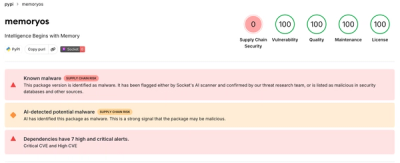
A note on antivirus warnings. Windows Defender or Avast may flag this .exe.
This is a known false positive common to unsigned PyInstaller-built applications,
not anything this project's code does — see
the install guide
for what to do about it. Every published SHA-256 is listed on
the changelog.
Tools
list_accounts | Configured accounts and whether each is authenticated |
list_folders | Folders with normalized roles and unread counts |
list_messages | Browse a folder, newest first, paginated |
search_messages | Server-side search by text, sender, subject, date range, unread |
read_message | Full headers, body text, attachment metadata |
get_attachment | Save one attachment into the download directory |
Folders are addressed by role — inbox, sent, drafts, junk, trash,
archive — so you never need to know that Outlook calls it Junk Email while
Gmail calls it [Gmail]/Spam. Raw folder names work too.
Full arguments and return shapes:
Tools reference.
Install with pip
If you already have Python 3.11+ and would rather not run an installer:
pip install rubit-mcp-mail
rubit-mcp-mail install
Install from source
cd /path/to/rubit-mcp-mail
conda create -p ./.venv python=3.12 pip -y
./.venv/bin/python -m pip install -e .
Then configure an account, rubit-mcp-mail auth <account>, and
rubit-mcp-mail doctor. The Windows variant and the full walkthrough are in
Install from source.
Setting up a mailbox
Microsoft has retired basic auth for Outlook.com, so Outlook needs a free
Azure app registration — seven steps, done once, written out in
Setting up Outlook.
Everything else takes an app password:
[accounts.personal]
provider = "generic"
email    = "you@fastmail.com"
host     = "imap.fastmail.com"
Known hosts: Gmail imap.gmail.com, Fastmail imap.fastmail.com,
iCloud imap.mail.me.com, Yahoo imap.mail.yahoo.com. Gmail and iCloud require
an app-specific password, not your login password.
Can't register your own Azure app?
If your Microsoft account genuinely can't register one, you can use the public
client ID that other open-source mail tools already share for this purpose —
Thunderbird's, 9e5f94bc-e8a4-4e73-b8be-63364c29d753. Paste it in as
client_id. The consent screen will say "Thunderbird", and because the ID is
outside our control Microsoft could rotate it. Details and caveats:
Can't register your own app?.
Permissions
Any account-scoped tool can be forbidden for a given account with
disabled_tools in config.toml, or by unticking a box on the settings
window's Permissions tab. A blocked call returns a plain Error: ... string to
the model rather than failing silently. See
Permissions.
Registering with Claude
claude mcp add rubit-mail --scope user -- "$(pwd)/.venv/bin/rubit-mcp-mail" serve
Claude Desktop needs a JSON entry instead, and on Linux it needs the session
environment passed explicitly or the keyring is unreachable —
Register with Claude
has both, and
Troubleshooting
has the logs.
Development
ruff check .
ruff format --check .
pyright
pytest -q
Those are the same checks CI runs. Commit messages follow
Conventional Commits and drive automatic
versioning — see CONTRIBUTING.md
and AGENTS.md. Building the installers and adding a provider are covered
in Contributing.
The website
website/ holds the documentation site (Nuxt), deployed to GitHub Pages by
.github/workflows/deploy-website.yml. It is the source of truth for the docs;
this README is deliberately the short version.
[!IMPORTANT]
Website commits must not use feat: or fix:. python-semantic-release
parses the commit type, not the scope, so feat(site): … would bump the
Python package and cut an installer release. Use docs(site):,
chore(site): or ci(site):.
Layout
src/rubit_mcp_mail/
  server.py        MCP tool definitions
  __main__.py      CLI: serve | install | auth | doctor | gui
  installer.py     setup wizard: writes config, signs in, registers with Claude
  installer_gui.py the setup window (tkinter), falling back to the terminal
  shortcuts.py     Start Menu / Desktop / .desktop entries for the GUI
  claude_registration.py  claude_desktop_config.json / `claude mcp add`
  session.py       wires config + auth + backend; attachment path safety
  config.py        TOML config -> Account models
  diagnostics.py   the doctor checks, as data (shared by the CLI and the GUI)
  permissions.py   registry of per-account-toggleable tool names
  config_editor.py every write to config.toml: comment-preserving, validated
  config_gui.py    the settings window (tkinter): accounts, permissions, doctor
  providers.py     provider profile registry
  secrets.py       keyring with 0600-file fallback
  models.py        pydantic models + message handles
  mime.py          BODYSTRUCTURE walking, decoding, HTML->text
  backends/
    base.py        MailBackend protocol
    imap.py        the IMAP implementation
  auth/
    password.py         app passwords
    oauth_microsoft.py  MSAL device-code flow
website/           the documentation site (Nuxt); see "The website" above
Releasing
Every merge to main prepares a release PR carrying only the pyproject.toml
and CHANGELOG.md diff; a maintainer merges it by hand, which publishes the
prerelease and builds the installers; promote-release.yml is dispatched
manually to drop the -rc.N suffix. The human merge is load-bearing — GitHub
raises no events for anything GITHUB_TOKEN does. Full flow:
CONTRIBUTING.md
and How releases work.
Notes and limits
IMAP search is substring-based, bodies are truncated at 20,000 characters, only
text parts are downloaded, and Microsoft is actively tightening third-party mail
access. The details are in
Notes and limits.