
Product
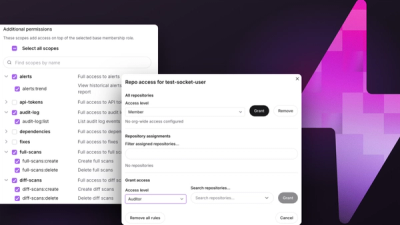
Introducing Repository Access Permissions and Custom Roles
Socket now supports Custom Roles and Repository Access Permissions so organizations can control who can access specific repositories and actions.
By Joe Werle - Jun 19, 2026
boltuix/EntityBERT
Advanced tools
.jpg)
The boltuix/EntityBERT model is a lightweight, fine-tuned transformer for Named Entity Recognition (NER), built on the boltuix/bert-mini base model. Optimized for efficiency, it identifies 36 entity types (e.g., people, organizations, locations, dates) in English text, making it perfect for applications like information extraction, chatbots, and search enhancement.
boltuix/bert-miniboltuix/conll2025-ner, which may favor news and formal text, potentially weaker on informal or social media content..jpg)
Run NER with the following Python code:
from transformers import AutoTokenizer, AutoModelForTokenClassification
import torch

# Load model and tokenizer
tokenizer = AutoTokenizer.from_pretrained("boltuix/EntityBERT")
model = AutoModelForTokenClassification.from_pretrained("boltuix/EntityBERT")

# Input text
text = "Elon Musk launched Tesla in California on March 2025."
inputs = tokenizer(text, return_tensors="pt")

# Run inference
with torch.no_grad():
    outputs = model(**inputs)
predictions = outputs.logits.argmax(dim=-1)

# Map predictions to labels
tokens = tokenizer.convert_ids_to_tokens(inputs["input_ids"][0])
label_map = model.config.id2label
labels = [label_map[p.item()] for p in predictions[0]]

# Print results
for token, label in zip(tokens, labels):
    if token not in tokenizer.all_special_tokens:
        print(f"{token:15} → {label}")
Elon            → B-PERSON
Musk            → I-PERSON
launched        → O
Tesla           → B-ORG
in              → O
California      → B-GPE
on              → O
March           → B-DATE
2025            → I-DATE
.               → O
pip install transformers torch pandas pyarrow
seqeval for evaluation, cuda for GPU accelerationThe model supports 36 NER tags from the boltuix/conll2025-ner dataset, using the BIO tagging scheme:
| Tag Name | Purpose | Emoji |
|---|---|---|
| O | Outside of any named entity (e.g., "the", "is") | 🚫 |
| B-CARDINAL | Beginning of a cardinal number (e.g., "1000") | 🔢 |
| B-DATE | Beginning of a date (e.g., "January") | 🗓️ |
| B-EVENT | Beginning of an event (e.g., "Olympics") | 🎉 |
| B-FAC | Beginning of a facility (e.g., "Eiffel Tower") | 🏛️ |
| B-GPE | Beginning of a geopolitical entity (e.g., "Tokyo") | 🌍 |
| B-LANGUAGE | Beginning of a language (e.g., "Spanish") | 🗣️ |
| B-LAW | Beginning of a law or legal document (e.g., "Constitution") | 📜 |
| B-LOC | Beginning of a non-GPE location (e.g., "Pacific Ocean") | 🗺️ |
| B-MONEY | Beginning of a monetary value (e.g., "$100") | 💸 |
| B-NORP | Beginning of a nationality/religious/political group (e.g., "Democrat") | 🏳️ |
| B-ORDINAL | Beginning of an ordinal number (e.g., "first") | 🥇 |
| B-ORG | Beginning of an organization (e.g., "Microsoft") | 🏢 |
| B-PERCENT | Beginning of a percentage (e.g., "50%") | 📊 |
| B-PERSON | Beginning of a person’s name (e.g., "Elon Musk") | 👤 |
| B-PRODUCT | Beginning of a product (e.g., "iPhone") | 📱 |
| B-QUANTITY | Beginning of a quantity (e.g., "two liters") | ⚖️ |
| B-TIME | Beginning of a time (e.g., "noon") | ⏰ |
| B-WORK_OF_ART | Beginning of a work of art (e.g., "Mona Lisa") | 🎨 |
| I-CARDINAL | Inside of a cardinal number | 🔢 |
| I-DATE | Inside of a date (e.g., "2025" in "January 2025") | 🗓️ |
| I-EVENT | Inside of an event name | 🎉 |
| I-FAC | Inside of a facility name | 🏛️ |
| I-GPE | Inside of a geopolitical entity | 🌍 |
| I-LANGUAGE | Inside of a language name | 🗣️ |
| I-LAW | Inside of a legal document title | 📜 |
| I-LOC | Inside of a location | 🗺️ |
| I-MONEY | Inside of a monetary value | 💸 |
| I-NORP | Inside of a NORP entity | 🏳️ |
| I-ORDINAL | Inside of an ordinal number | 🥇 |
| I-ORG | Inside of an organization name | 🏢 |
| I-PERCENT | Inside of a percentage | 📊 |
| I-PERSON | Inside of a person’s name | 👤 |
| I-PRODUCT | Inside of a product name | 📱 |
| I-QUANTITY | Inside of a quantity | ⚖️ |
| I-TIME | Inside of a time phrase | ⏰ |
| I-WORK_OF_ART | Inside of a work of art title | 🎨 |
Example:
Text: "Tesla opened in Shanghai on April 2025"
Tags: [B-ORG, O, O, B-GPE, O, B-DATE, I-DATE]
Evaluated on the boltuix/conll2025-ner test split (~12,217 examples) using seqeval:
| Metric | Score |
|---|---|
| 🎯 Precision | 0.84 |
| 🕸️ Recall | 0.86 |
| 🎶 F1 Score | 0.85 |
| ✅ Accuracy | 0.91 |
Note: Performance may vary on different domains or text types.
Fine-tune boltuix/bert-mini on the boltuix/conll2025-ner dataset to replicate or extend EntityBERT. Below is a simplified training script:
# 🛠️ Step 1: Install required libraries quietly
!pip install evaluate transformers datasets tokenizers seqeval pandas pyarrow -q

# 🚫 Step 2: Disable Weights & Biases (WandB)
import os
os.environ["WANDB_MODE"] = "disabled"

# 📚 Step 2: Import necessary libraries
import pandas as pd
import datasets
import numpy as np
from transformers import BertTokenizerFast
from transformers import DataCollatorForTokenClassification
from transformers import AutoModelForTokenClassification
from transformers import TrainingArguments, Trainer
import evaluate
from transformers import pipeline
from collections import defaultdict
import json

# 📥 Step 3: Load the CoNLL-2025 NER dataset from Parquet
# Download : https://huggingface.co/datasets/boltuix/conll2025-ner/blob/main/conll2025_ner.parquet
parquet_file = "conll2025_ner.parquet"
df = pd.read_parquet(parquet_file)

# 🔍 Step 4: Convert pandas DataFrame to Hugging Face Dataset
conll2025 = datasets.Dataset.from_pandas(df)

# 🔎 Step 5: Inspect the dataset structure
print("Dataset structure:", conll2025)
print("Dataset features:", conll2025.features)
print("First example:", conll2025[0])

# 🏷️ Step 6: Extract unique tags and create mappings
# Since ner_tags are strings, collect all unique tags
all_tags = set()
for example in conll2025:
    all_tags.update(example["ner_tags"])
unique_tags = sorted(list(all_tags))  # Sort for consistency
num_tags = len(unique_tags)
tag2id = {tag: i for i, tag in enumerate(unique_tags)}
id2tag = {i: tag for i, tag in enumerate(unique_tags)}
print("Number of unique tags:", num_tags)
print("Unique tags:", unique_tags)

# 🔧 Step 7: Convert string ner_tags to indices
def convert_tags_to_ids(example):
    example["ner_tags"] = [tag2id[tag] for tag in example["ner_tags"]]
    return example

conll2025 = conll2025.map(convert_tags_to_ids)

# 📊 Step 8: Split dataset based on 'split' column
dataset_dict = {
    "train": conll2025.filter(lambda x: x["split"] == "train"),
    "validation": conll2025.filter(lambda x: x["split"] == "validation"),
    "test": conll2025.filter(lambda x: x["split"] == "test")
}
conll2025 = datasets.DatasetDict(dataset_dict)
print("Split dataset structure:", conll2025)

# 🪙 Step 9: Initialize the tokenizer
tokenizer = BertTokenizerFast.from_pretrained("boltuix/bert-mini")

# 📝 Step 10: Tokenize an example text and inspect
example_text = conll2025["train"][0]
tokenized_input = tokenizer(example_text["tokens"], is_split_into_words=True)
tokens = tokenizer.convert_ids_to_tokens(tokenized_input["input_ids"])
word_ids = tokenized_input.word_ids()
print("Word IDs:", word_ids)
print("Tokenized input:", tokenized_input)
print("Length of ner_tags vs input IDs:", len(example_text["ner_tags"]), len(tokenized_input["input_ids"]))

# 🔄 Step 11: Define function to tokenize and align labels
def tokenize_and_align_labels(examples, label_all_tokens=True):
    """
    Tokenize inputs and align labels for NER tasks.

    Args:
        examples (dict): Dictionary with tokens and ner_tags.
        label_all_tokens (bool): Whether to label all subword tokens.

    Returns:
        dict: Tokenized inputs with aligned labels.
    """
    tokenized_inputs = tokenizer(examples["tokens"], truncation=True, is_split_into_words=True)
    labels = []
    for i, label in enumerate(examples["ner_tags"]):
        word_ids = tokenized_inputs.word_ids(batch_index=i)
        previous_word_idx = None
        label_ids = []
        for word_idx in word_ids:
            if word_idx is None:
                label_ids.append(-100)  # Special tokens get -100
            elif word_idx != previous_word_idx:
                label_ids.append(label[word_idx])  # First token of word gets label
            else:
                label_ids.append(label[word_idx] if label_all_tokens else -100)  # Subwords get label or -100
            previous_word_idx = word_idx
        labels.append(label_ids)
    tokenized_inputs["labels"] = labels
    return tokenized_inputs

# 🧪 Step 12: Test the tokenization and label alignment
q = tokenize_and_align_labels(conll2025["train"][0:1])
print("Tokenized and aligned example:", q)

# 📋 Step 13: Print tokens and their corresponding labels
for token, label in zip(tokenizer.convert_ids_to_tokens(q["input_ids"][0]), q["labels"][0]):
    print(f"{token:_<40} {label}")

# 🔧 Step 14: Apply tokenization to the entire dataset
tokenized_datasets = conll2025.map(tokenize_and_align_labels, batched=True)

# 🤖 Step 15: Initialize the model with the correct number of labels
model = AutoModelForTokenClassification.from_pretrained("boltuix/bert-mini", num_labels=num_tags)

# ⚙️ Step 16: Set up training arguments
args = TrainingArguments(
    "boltuix/bert-ner",
    eval_strategy="epoch", # Changed evaluation_strategy to eval_strategy
    learning_rate=2e-5,
    per_device_train_batch_size=16,
    per_device_eval_batch_size=16,
    num_train_epochs=1,
    weight_decay=0.01,
    report_to="none"
)
# 📊 Step 17: Initialize data collator for dynamic padding
data_collator = DataCollatorForTokenClassification(tokenizer)

# 📈 Step 18: Load evaluation metric
metric = evaluate.load("seqeval")

# 🏷️ Step 19: Set label list and test metric computation
label_list = unique_tags
print("Label list:", label_list)
example = conll2025["train"][0]
labels = [label_list[i] for i in example["ner_tags"]]
print("Metric test:", metric.compute(predictions=[labels], references=[labels]))

# 📉 Step 20: Define function to compute evaluation metrics
def compute_metrics(eval_preds):
    """
    Compute precision, recall, F1, and accuracy for NER.

    Args:
        eval_preds (tuple): Predicted logits and true labels.

    Returns:
        dict: Evaluation metrics.
    """
    pred_logits, labels = eval_preds
    pred_logits = np.argmax(pred_logits, axis=2)
    predictions = [
        [label_list[p] for (p, l) in zip(prediction, label) if l != -100]
        for prediction, label in zip(pred_logits, labels)
    ]
    true_labels = [
        [label_list[l] for (p, l) in zip(prediction, label) if l != -100]
        for prediction, label in zip(pred_logits, labels)
    ]
    results = metric.compute(predictions=predictions, references=true_labels)
    return {
        "precision": results["overall_precision"],
        "recall": results["overall_recall"],
        "f1": results["overall_f1"],
        "accuracy": results["overall_accuracy"],
    }

# 🚀 Step 21: Initialize and train the trainer
trainer = Trainer(
    model,
    args,
    train_dataset=tokenized_datasets["train"],
    eval_dataset=tokenized_datasets["validation"],
    data_collator=data_collator,
    tokenizer=tokenizer,
    compute_metrics=compute_metrics
)
trainer.train()

# 💾 Step 22: Save the fine-tuned model
model.save_pretrained("boltuix/bert-ner")
tokenizer.save_pretrained("tokenizer")

# 🔗 Step 23: Update model configuration with label mappings
id2label = {str(i): label for i, label in enumerate(label_list)}
label2id = {label: str(i) for i, label in enumerate(label_list)}
config = json.load(open("boltuix/bert-ner/config.json"))
config["id2label"] = id2label
config["label2id"] = label2id
json.dump(config, open("boltuix/bert-ner/config.json", "w"))

# 🔄 Step 24: Load the fine-tuned model
model_fine_tuned = AutoModelForTokenClassification.from_pretrained("boltuix/bert-ner")

# 🛠️ Step 25: Create a pipeline for NER inference
nlp = pipeline("token-classification", model=model_fine_tuned, tokenizer=tokenizer)

# 📝 Step 26: Perform NER on an example sentence
example = "On July 4th, 2023, President Joe Biden visited the United Nations headquarters in New York to deliver a speech about international law and donated $5 million to relief efforts."
ner_results = nlp(example)
print("NER results for first example:", ner_results)

# 📍 Step 27: Perform NER on a property address and format output
example = "This page contains information about the property located at 1275 Kinnear Rd, Columbus, OH, 43212."
ner_results = nlp(example)

# 🧹 Step 28: Process NER results into structured entities
entities = defaultdict(list)
current_entity = ""
current_type = ""

for item in ner_results:
    entity = item["entity"]
    word = item["word"]
    if word.startswith("##"):
        current_entity += word[2:]  # Handle subword tokens
    elif entity.startswith("B-"):
        if current_entity and current_type:
            entities[current_type].append(current_entity.strip())
        current_type = entity[2:].lower()
        current_entity = word
    elif entity.startswith("I-") and entity[2:].lower() == current_type:
        current_entity += " " + word  # Continue same entity
    else:
        if current_entity and current_type:
            entities[current_type].append(current_entity.strip())
        current_entity = ""
        current_type = ""

# Append final entity if exists
if current_entity and current_type:
    entities[current_type].append(current_entity.strip())

# 📤 Step 29: Output the final JSON
final_json = dict(entities)
print("Structured NER output:")
print(json.dumps(final_json, indent=2))
learning_rate (1e-5 to 5e-5) or num_train_epochs (2-5).fp16=True for faster training.pip install transformers torch pandas pyarrow seqeval
Evaluate on custom data:
from transformers import AutoTokenizer, AutoModelForTokenClassification
from seqeval.metrics import classification_report
import torch

# Load model and tokenizer
tokenizer = AutoTokenizer.from_pretrained("boltuix/EntityBERT")
model = AutoModelForTokenClassification.from_pretrained("boltuix/EntityBERT")

# Test data
texts = ["Elon Musk launched Tesla in California on March 2025."]
true_labels = [["B-PERSON", "I-PERSON", "O", "B-ORG", "O", "B-GPE", "O", "B-DATE", "I-DATE", "O"]]

pred_labels = []
for text in texts:
    inputs = tokenizer(text, return_tensors="pt")
    with torch.no_grad():
        outputs = model(**inputs)
    predictions = outputs.logits.argmax(dim=-1)[0].cpu().numpy()
    tokens = tokenizer.convert_ids_to_tokens(inputs["input_ids"][0])
    word_ids = inputs.word_ids(batch_index=0)
    word_preds = []
    previous_word_idx = None
    for idx, word_idx in enumerate(word_ids):
        if word_idx is None or word_idx == previous_word_idx:
            continue
        label = model.config.id2label[predictions[idx]]
        word_preds.append(label)
        previous_word_idx = word_idx
    pred_labels.append(word_preds)

# Evaluate
print("Predicted:", pred_labels)
print("True     :", true_labels)
print("\n📊 Evaluation Report:\n")
print(classification_report(true_labels, pred_labels))
split, tokens, ner_tagsCompute tag distribution with:
import pandas as pd
from collections import Counter
import matplotlib.pyplot as plt

# Load dataset
df = pd.read_parquet("conll2025_ner.parquet")
all_tags = [tag for tags in df["ner_tags"] for tag in tags]
tag_counts = Counter(all_tags)

# Plot
plt.figure(figsize=(12, 7))
plt.bar(tag_counts.keys(), tag_counts.values(), color="#36A2EB")
plt.title("CoNLL 2025 NER: Tag Distribution", fontsize=16)
plt.xlabel("NER Tag", fontsize=12)
plt.ylabel("Count", fontsize=12)
plt.xticks(rotation=45, ha="right", fontsize=10)
plt.grid(axis="y", linestyle="--", alpha=0.7)
plt.tight_layout()
plt.savefig("ner_tag_distribution.png")
plt.show()
| Model | Dataset | Parameters | F1 Score | Size |
|---|---|---|---|---|
| EntityBERT | conll2025-ner | ~4.4M | 0.85 | ~15 MB |
| NeuroBERT-NER | conll2025-ner | ~11M | 0.86 | ~50 MB |
| BERT-base-NER | CoNLL-2003 | ~110M | ~0.89 | ~400 MB |
| DistilBERT-NER | CoNLL-2003 | ~66M | ~0.85 | ~200 MB |
Advantages:
June 11, 2025 — Released v1.0 with fine-tuning on boltuix/conll2025-ner.
Update README.md
Update README.md
2025-06-30 · by boltuix · 152e6bc
Update README.md
2025-06-11 · by boltuix · 2bc8d66
Update README.md
2025-06-11 · by boltuix · 5738331
Upload EntityBERT.ipynb
2025-06-11 · by boltuix · 28f82f6
Upload 6 files
2025-06-11 · by boltuix · 9dddb2c
Delete config.json
2025-06-11 · by boltuix · 8fb7599
Delete model.safetensors
2025-06-11 · by boltuix · 09e2225
Delete special_tokens_map.json
2025-06-11 · by boltuix · 1329a26
Delete tokenizer.json
2025-06-11 · by boltuix · 9d67714
Delete tokenizer_config.json
2025-06-11 · by boltuix · 6a66aba
Delete vocab.txt
2025-06-11 · by boltuix · 452be43
Update README.md
2025-06-10 · by boltuix · 7d47c04
Upload 6 files
2025-06-10 · by boltuix · 2ed5136
Delete config.json
2025-06-10 · by boltuix · f587310
Delete model.safetensors
2025-06-10 · by boltuix · b92085b
Delete special_tokens_map.json
2025-06-10 · by boltuix · d5a39d0
Delete tokenizer.json
2025-06-10 · by boltuix · 24eaa80
Delete tokenizer_config.json
2025-06-10 · by boltuix · 9ee1500
Delete vocab.txt
2025-06-10 · by boltuix · 2d1ce46
Update config.json
2025-06-10 · by boltuix · 93ebbfb
Upload 6 files
2025-06-10 · by boltuix · ed474ce
Delete special_tokens_map.json
2025-06-10 · by boltuix · b65bf6e
Delete vocab.txt
2025-06-10 · by boltuix · 5c8efd1
Delete tokenizer_config.json
2025-06-10 · by boltuix · 85135b9
Delete tokenizer.json
2025-06-10 · by boltuix · 57ab266
Delete model.safetensors
2025-06-10 · by boltuix · c59a959
Delete config.json
2025-06-10 · by boltuix · 37b4cfe
Update config.json
2025-06-10 · by boltuix · e0e120e
Update config.json
2025-06-10 · by boltuix · 143c764
Update config.json
2025-06-10 · by boltuix · 900a8b1
Update config.json
2025-06-10 · by boltuix · 8afa662
Update config.json
2025-06-10 · by boltuix · e49a20a
Update config.json
2025-06-10 · by boltuix · f09dd13
Update config.json
2025-06-10 · by boltuix · a25f8a1
Update config.json
2025-06-10 · by boltuix · 886ee4d
Update config.json
2025-06-10 · by boltuix · 3f7706f
Update config.json
2025-06-10 · by boltuix · 3c51371
Update config.json
2025-06-10 · by boltuix · cc7b9ac
Update config.json
2025-06-10 · by boltuix · 2d1f257
Update README.md
2025-06-10 · by boltuix · 66a984f
Update README.md
2025-06-10 · by boltuix · 9b52f2a
Update config.json
2025-06-10 · by boltuix · 4bc4181
Update config.json
2025-06-10 · by boltuix · 45a3be9
Update config.json
2025-06-10 · by boltuix · 9b2a77e
Update config.json
2025-06-10 · by boltuix · aceb034
Update config.json
2025-06-10 · by boltuix · 9515173
Update config.json
2025-06-10 · by boltuix · 9444900
Update config.json
2025-06-10 · by boltuix · a4091b4
Update config.json
2025-06-10 · by boltuix · a47ac63
Update config.json
2025-06-10 · by boltuix · eb16402
FAQs
Unknown package
We found that boltuix/entitybert demonstrated a not healthy version release cadence and project activity because the last version was released a year ago. It has 1 open source maintainer collaborating on the project.
Did you know?

Socket for GitHub automatically highlights issues in each pull request and monitors the health of all your open source dependencies. Discover the contents of your packages and block harmful activity before you install or update your dependencies.
Product
Socket now supports Custom Roles and Repository Access Permissions so organizations can control who can access specific repositories and actions.
Product
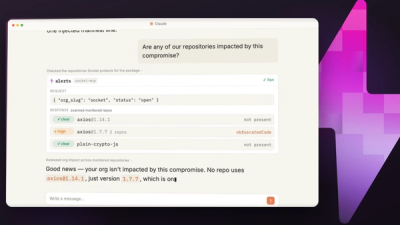
Socket MCP now lets AI assistants review org alerts, investigate threats using the Socket threat feed, and inspect package files in addition to dependency scoring.
Product
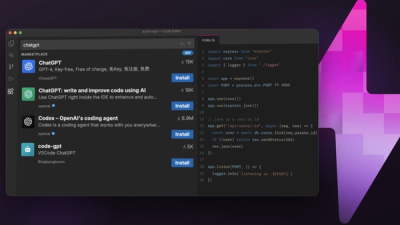
Socket Firewall blocks malicious VS Code and Open VSX extensions before install, protecting developers from compromised editor marketplaces.