
Product
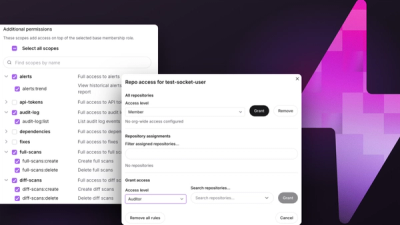
Introducing Repository Access Permissions and Custom Roles
Socket now supports Custom Roles and Repository Access Permissions so organizations can control who can access specific repositories and actions.
By Joe Werle - Jun 19, 2026
@drawcall/market
Advanced tools
Typed client, dependency resolver, and CLI for the [Drawcall Market](https://market.drawcall.ai) — an asset marketplace for 3D models, textures, animations, audio, environments, flipbooks, and templates.
Typed client, dependency resolver, and CLI for the Drawcall Market — an asset marketplace for 3D models, textures, animations, audio, environments, flipbooks, and templates.
This package is the single source of truth for the Market API surface: the oRPC contract, Zod schemas, and TypeScript types. It ships both a programmatic API and the market CLI.
npm install @drawcall/market
createMarketClient is the one API. It returns a fully-typed oRPC client where every procedure — search, exact, downloadZip, downloadPreviewImage, uploadZip, generate, postInstallMessages — is type-checked end-to-end against the contract.
import { createMarketClient } from '@drawcall/market'

const client = createMarketClient()
// createMarketClient({ baseUrl, fetch, authToken }) to override the API host,
// supply a custom fetch, or authenticate reads/writes.

const asset = await client.asset.exact({ name: 'my-model', includeUnapproved: false })
const zip = await client.asset.downloadZip({ name: 'my-model', version: asset.latestVersion })
Reads (search, exact, downloadZip, downloadPreviewImage, postInstallMessages) are public. uploadZip and generate require an authToken.
client.asset.search takes a query plus paging/sorting and returns a paginated list:
const page = await client.asset.search({
  query: 'robot',
  type: 'model',         // optional AssetType; omit to search every type
  page: 1,
  limit: 12,
  includeUnapproved: false,
  sort: 'relevance',     // 'relevance' | 'newest' | 'alphabetical'
})
search resolves to a PaginatedList<AssetSearchResult>:
{
  items: AssetSearchResult[]
  total: number        // total matches across all pages
  page: number
  limit: number
  totalPages: number
}
Each AssetSearchResult is:
{
  id: string
  name: string                  // globally unique, install by this name
  type: string                  // AssetType, e.g. 'model'
  description: string | null
  ownerId: string
  createdAt: Date
  updatedAt: Date
  latestVersion: string         // semver of the latest published version
  approved: boolean
  npmDependencies: string       // JSON-encoded Record<string, string>
  assetDependencies: string     // JSON-encoded Record<string, string>
  skillDependencies: string     // JSON-encoded Record<string, string>
  previewUrl: string | null     // image URL for an <img>, or null
}
The three *Dependencies fields are JSON strings (parse with JSON.parse); everything else is ready to use.
previewUrl is the image URL for a result, or null for types without a preview (only model, humanoid-model, texture, environment, and flipbook have one). It is a plain WebP URL served directly from object storage, so drop it straight into an <img src> and the browser fetches, caches, and lazy-loads it:
import { createMarketClient } from '@drawcall/market'

const client = createMarketClient()
const { items } = await client.asset.search({
  query: 'robot',
  type: 'model',
  page: 1,
  limit: 12,
  includeUnapproved: false,
  sort: 'relevance',
})

for (const item of items) {
  if (!item.previewUrl) continue
  // <img src={item.previewUrl} loading="lazy">
}
Preview keys are random and unguessable, so the URLs are safe to serve even for unapproved assets. The runnable examples/market-ui Vite app renders results immediately and lets the browser load previews from these URLs.
resolve — dependency resolutionResolve a set of assets (and their transitive asset/npm/skill dependencies) to a concrete, installable plan. The CLI and any server-side caller share this resolver:
import { createMarketClient, resolve } from '@drawcall/market'

const client = createMarketClient()
const plan = await resolve(client.asset, [{ name: 'my-model', range: '^1.0.0' }])

plan.assets            // resolved name@version per asset (with its type)
plan.npmDependencies   // merged npm ranges
plan.skillDependencies // merged skill sources
The Node-only filesystem install (download + write + package.json merge + skills add) is available from the @drawcall/market/install entry point and is used by the CLI.
npx @drawcall/market install my-model        # resolve + install by name
npx @drawcall/market search robot --type model
npx @drawcall/market preview my-model        # save the preview image
npx @drawcall/market upload my-model ./my-model.zip "A robot" --type model
npx @drawcall/market login                   # device-authorization sign-in
Reads (install, search, preview) work without auth; upload and generate require market login. After an install, the CLI prints each asset's type-specific post-install note beneath that asset.
Run npx @drawcall/market skill to print the agent workflow guidance, or npx @drawcall/market --help for the full command list.
FAQs
Typed client, dependency resolver, and CLI for the [Drawcall Market](https://market.drawcall.ai) — an asset marketplace for 3D models, textures, animations, audio, environments, flipbooks, and templates.
We found that @drawcall/market demonstrated a healthy version release cadence and project activity because the last version was released less than a year ago. It has 1 open source maintainer collaborating on the project.
Did you know?

Socket for GitHub automatically highlights issues in each pull request and monitors the health of all your open source dependencies. Discover the contents of your packages and block harmful activity before you install or update your dependencies.
Product
Socket now supports Custom Roles and Repository Access Permissions so organizations can control who can access specific repositories and actions.
Product
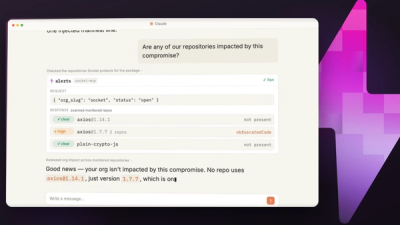
Socket MCP now lets AI assistants review org alerts, investigate threats using the Socket threat feed, and inspect package files in addition to dependency scoring.
Product
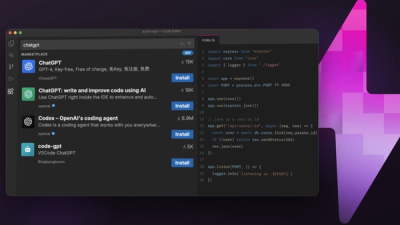
Socket Firewall blocks malicious VS Code and Open VSX extensions before install, protecting developers from compromised editor marketplaces.