

Product
Introducing Repository Access Permissions and Custom Roles
Socket now supports Custom Roles and Repository Access Permissions so organizations can control who can access specific repositories and actions.
By Joe Werle - Jun 19, 2026
@workerhive/flow-provider
Advanced tools
Connecting all the pipes together to make a big beautiful graph that can be searched with graphql
 Workhub Flow Provider
Connecting all the pipes together to make a big beautiful graph that can be searched with graphql
The following snippet generates an apollo-server configured with a SensitiveType and a Hash no resolvers are set up for the hash but the SensitiveType will now have resolvers for
these will be routed by default to the app store provided, if the configurable directive has been set the user can choose which store they would like to use
const Flow = require('@workerhive/flow-provider')
const typeDefs = `
type MergedType @crud @configurable{
id: ID
name: String @input
description: String @input
applicationField: String
}
type SensitiveType @crud @configurable{
id: ID
name: String @input
description: String @input
sensitiveKey: Int
}
`
let flowDefs = {
MergedType: {
id: "app:MergedTypes:_id",
name: "app:MergedTypes:JobName",
description: "app:MergedType:description",
applicationField: "app:MergedType:applicationField",
refs: {
"id": ["app:MergedType:_id"],
}
},
SensitiveType: {
name: "app:Sensitive:name",
sensitiveKey: "app:Sensitive:key",
refs: {
"id": ["app:Sensitive:_id"],
}
}
}
let resolvers = {
}
let server = Flow(typeDefs, flowDefs, resolvers)
server.listen({port: 4001}).then((conn) => {
const {url} = conn;
console.log(`🚀 Server ready at ${url}`);
})
Type definitions follow normal GraphQL syntax with the addition of a few directives baked into the flow-provider
The crud directive informs the flow provider to set up routes for CRUD operations following the naming convention $operation$TypeName and to setup input types based on the keys in the type with the @input directive
Lets the flow provider know it should allow these types to be configured by flow definitions
Signals relevant fields to be used for input type setup
Flow definitions are a JSON description of where a model is storing key values and how it should go about retrieving them
Example
{
    $TypeName: {
        $modelKey: "$store:$pathway:$key",
        $otherKey: "$otherstore:$pathway:$key2"
    }
}
FAQs
Connecting all the pipes together to make a big beautiful graph that can be searched with graphql
The npm package @workerhive/flow-provider receives a total of 11 weekly downloads. As such, @workerhive/flow-provider popularity was classified as not popular.
We found that @workerhive/flow-provider demonstrated a not healthy version release cadence and project activity because the last version was released a year ago. It has 1 open source maintainer collaborating on the project.
Did you know?

Socket for GitHub automatically highlights issues in each pull request and monitors the health of all your open source dependencies. Discover the contents of your packages and block harmful activity before you install or update your dependencies.
Product
Socket now supports Custom Roles and Repository Access Permissions so organizations can control who can access specific repositories and actions.

Product
Socket MCP now lets AI assistants review org alerts, investigate threats using the Socket threat feed, and inspect package files in addition to dependency scoring.
Product
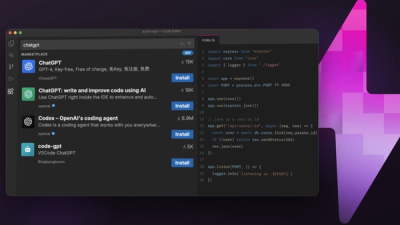
Socket Firewall blocks malicious VS Code and Open VSX extensions before install, protecting developers from compromised editor marketplaces.