Research
/Security News
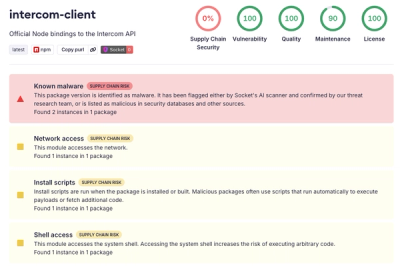
Intercom’s npm Package Compromised in Ongoing Mini Shai-Hulud Worm Attack
Compromised intercom-client@7.0.4 npm package is tied to the ongoing Mini Shai-Hulud worm attack targeting developer and CI/CD secrets.
@agoric/base-zone
Advanced tools
Each Zone provides an API that allows the allocation of Exo objects and Stores (object collections) which use the same underlying persistence mechanism. This allows library code to be agnostic to whether its objects are backed purely by the JS heap (ephemeral), pageable out to disk (virtual) or can be revived after a vat upgrade (durable).
This library is used internally by @agoric/zone; refer to it for more details. Unless you are an author of a new Zone backing store type, or want to use makeHeapZone without introducing build dependencies on @agoric/vat-data, you should instead use @agoric/zone.
Be aware that both this package @agoric/base-zone and @agoric/store will move from the agoric-sdk repository to the endo repository and likely renamed @endo/zone and @endo/store. At that time, we will first deprecate the versions here, then replace them with deprecated stubs that reexport from their new home. We hope to eventually remove even these stubs, depending on the compat cost at that time.

FAQs
Allocation zone abstraction library and heap implementation
The npm package @agoric/base-zone receives a total of 10,936 weekly downloads. As such, @agoric/base-zone popularity was classified as popular.
We found that @agoric/base-zone demonstrated a healthy version release cadence and project activity because the last version was released less than a year ago. It has 10 open source maintainers collaborating on the project.
Did you know?

Socket for GitHub automatically highlights issues in each pull request and monitors the health of all your open source dependencies. Discover the contents of your packages and block harmful activity before you install or update your dependencies.

Research
/Security News
Compromised intercom-client@7.0.4 npm package is tied to the ongoing Mini Shai-Hulud worm attack targeting developer and CI/CD secrets.

Research
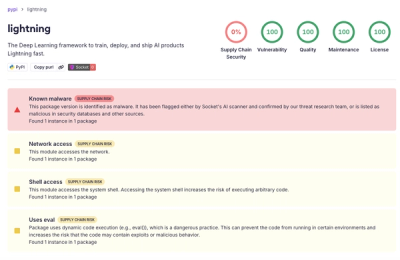
Socket detected a malicious supply chain attack on PyPI package lightning versions 2.6.2 and 2.6.3, which execute credential-stealing malware on import.

Research
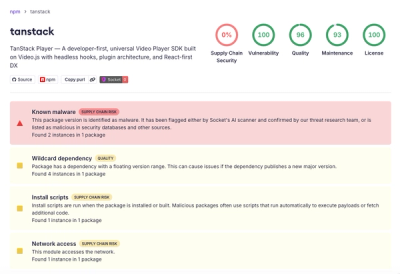
A brand-squatted TanStack npm package used postinstall scripts to steal .env files and exfiltrate developer secrets to an attacker-controlled endpoint.