
Security News
The Code You Didn't Write Is Still Yours to Defend
AI agents are pulling packages into environments no scanner is watching, creating exposure before security teams can see it.
By Brad Arkin - Jun 23, 2026
@beyond-js/widgets-bundle
Advanced tools
The BeyondJS Widgets Bundle allows developers to create and manage UI components like pages and layouts using a widget system. Widgets are self-contained, reusable components that can be rendered in various parts of the application, providing a flexible and modular approach to building user interfaces.
module.json file.Widgets in BeyondJS are configured in the module.json file and processed to create reusable UI components. The widgets
can be registered, customized, and used throughout the application. The bundle handles the processing and registration
of these widgets, ensuring they are ready for use in the application.
To configure a widget bundle, you need to define it in your module's module.json file. Below is an example
configuration:
{
	"name": "my-widget-bundle",
	"platforms": ["web"],
	"widget": {
		"element": {
			"name": "my-widget",
			"attrs": ["attr1", "attr2"]
		},
		"is": "page",
		"route": "/my-route",
		"render": {
			"csr": true,
			"ssr": false
		}
	}
}
name: The name of the bundle.platforms: Specifies the platforms the bundle supports.widget: Contains configuration details specific to the widget.
element: Defines the element name and attributes for the widget.
name: The name of the custom element.attrs: An array of attributes that the element can accept.is: Specifies the type of widget, such as layout or page.route: Defines the route for page widgets.render: Specifies rendering options.
csr: Client-side rendering (default is true).ssr: Server-side rendering (default is false).Layout widgets define the overall structure of the application. They are used to create reusable layouts that can be applied to different parts of the application.
Example configuration for a layout widget:
{
	"name": "my-layout-bundle",
	"type": "widget",
	"platforms": ["web"],
	"widget": {
		"element": {
			"name": "my-layout",
			"attrs": ["attr1", "attr2"]
		},
		"is": "layout"
	}
}
Page widgets represent specific views or pages within the application. They can define their own routes and be rendered independently.
Example configuration for a page widget:
{
	"name": "my-page-bundle",
	"type": "widget",
	"platforms": ["web"],
	"widget": {
		"is": "page",
		"route": "/my-page"
        "element": {
			"name": "my-page",
			"attrs": ["attr1", "attr2"]
		}

	}
}
module.json file for better
readability and ease of maintenance.FAQs
Texts bundle and processor for BeyondJS
The npm package @beyond-js/widgets-bundle receives a total of 4 weekly downloads. As such, @beyond-js/widgets-bundle popularity was classified as not popular.
We found that @beyond-js/widgets-bundle demonstrated a not healthy version release cadence and project activity because the last version was released a year ago. It has 3 open source maintainers collaborating on the project.
Did you know?

Socket for GitHub automatically highlights issues in each pull request and monitors the health of all your open source dependencies. Discover the contents of your packages and block harmful activity before you install or update your dependencies.
Security News
AI agents are pulling packages into environments no scanner is watching, creating exposure before security teams can see it.

Security News
GitHub Actions checkout now blocks risky pull_request_target checkouts by default to help prevent pwn request supply chain attacks.
Product
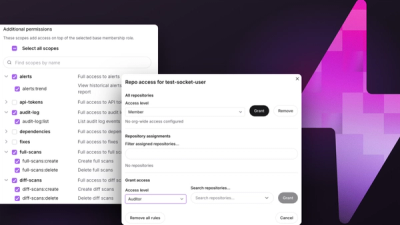
Socket now supports Custom Roles and Repository Access Permissions so organizations can control who can access specific repositories and actions.