


Security News
US Government Forces Anthropic to Pull Claude Fable Days After Launch
Anthropic says the directive cited national security concerns over a narrow jailbreak, but offered no specific technical details.
By Sarah Gooding - Jun 13, 2026
@blockdance-lab/blockspec
Advanced tools
BlockSpec — AI-native spec-driven development workflow for the Block team, based on OpenSpec
BlockSpec — A spec-driven AI workflow tool for the Block team, based on OpenSpec.
Install BlockSpec from npm
npm install -g @blockdance-lab/blockspec # global CLI (command: blockspec)
npm install @blockdance-lab/blockspec # add as a project dependency
Run blockspec init in your repo, then use the same /opsx:… slash commands as upstream OpenSpec. The rest of this README still documents the OpenSpec-style workflow and CLI unless noted here.
tdd schema)Start a change with /opsx:tdd "<name>" (or blockspec new change "<name>" --schema tdd). Artifact order: proposal → specs → test-plan → design → tasks, then /opsx:apply. The tdd schema adds a test-plan phase before design so verification strategy is explicit.
Preferring human / visual work over automated tests
BlockSpec does not force everything through unit tests. The pipeline is controlled by how you (or the AI) write three layers:
Specs (specs/**/spec.md) — For behavior you cannot express as a single deterministic assertion (visual polish, motion, device-specific behavior), put <!-- manual-verify --> immediately after the scenario heading. That marks the scenario as not a default auto-test target.
test-plan.md — Each scenario becomes a verification item. Classify as auto-test only when you will actually write and maintain an automated test with Setup / Action / Assert. Use visual when “looks right” is the pass condition (browser, Storybook, screenshots). Use manual when a human must follow steps on a device or environment. When in doubt and you do not want automation, bias toward visual or manual instead of auto-test.
tasks.md — Task labels drive apply behavior. [RED] / [GREEN] / [REFACTOR] mean strict test-first discipline for that slice of work. [UI] is for styling and layout without an automated assertion. [VERIFY] is an explicit human checkpoint (describe what to check). To run a change mostly by human review, tell the model clearly—for example: “Put all scenarios under manual-verify where needed; make test-plan mostly visual/manual; use [UI] and [VERIFY] tasks and avoid [RED]/[GREEN] except for core logic.” Only [RED]/[GREEN] tasks require failing tests before implementation; [UI] and [VERIFY] do not.
/opsx:propose "<name>" — proposal → specs → design → tasks (no required test-plan). Same slash command works under OpenSpec or after blockspec init.
→ More on slash workflows: docs/opsx.md


→ fluid not rigid
→ iterative not waterfall
→ easy not complex
→ built for brownfield not just greenfield
→ scalable from personal projects to enterprises
Follow @0xTab on X for updates · Join the OpenSpec Discord for help and questions.
Using OpenSpec in a team? Email here for access to our Slack channel.
TDD workflow (tdd): proposal → specs → test-plan → design → tasks
You: /opsx:tdd add-payment-validation
AI:  Created openspec/changes/add-payment-validation/
     ✓ proposal.md  — why we're doing this, what's changing
     ✓ specs/       — GIVEN/WHEN/THEN scenarios, manual-verify markers
     ✓ test-plan.md — auto-test / visual / manual classification
     ✓ design.md    — technical approach + test strategy
     ✓ tasks.md     — [RED]/[GREEN]/[REFACTOR]/[UI]/[VERIFY] labeled tasks
     Ready for test-driven implementation!

You: /opsx:apply
AI:  [RED]    Write failing test: validateCard returns error on invalid number
     [GREEN]  Implement validateCard
     [RED]    Write failing test: validateCard accepts Visa/Mastercard
     [GREEN]  Handle card type check
     [REFACTOR] Extract card type constants
     [UI]     Style error message component  ← visual inspection
     [VERIFY] Manual: test on real device   ← manual checkpoint
     All tasks complete!
Default workflow (spec-driven): proposal → specs → design → tasks
You: /opsx:propose add-dark-mode
AI:  Created openspec/changes/add-dark-mode/
     ✓ proposal.md — why we're doing this, what's changing
     ✓ specs/       — requirements and scenarios
     ✓ design.md    — technical approach
     ✓ tasks.md     — implementation checklist
     Ready for implementation!

You: /opsx:apply
AI:  Implementing tasks...
     ✓ 1.1 Add theme context provider
     ✓ 1.2 Create toggle component
     ✓ 2.1 Add CSS variables
     ✓ 2.2 Wire up localStorage
     All tasks complete!

You: /opsx:archive
AI:  Archived to openspec/changes/archive/2025-01-23-add-dark-mode/
     Specs updated. Ready for the next feature.

Requires Node.js 20.19.0 or higher.
Install OpenSpec globally:
npm install -g @fission-ai/openspec@latest
Then navigate to your project directory and initialize:
cd your-project
openspec init
Tell your AI: /opsx:tdd <what-you-want-to-build> for test-driven development (adds test-plan and [RED]/[GREEN]/[REFACTOR] discipline), or /opsx:propose <what-you-want-to-build> for the default lighter workflow.
If you want the expanded workflow (/opsx:new, /opsx:continue, /opsx:ff, /opsx:verify, /opsx:sync, /opsx:bulk-archive, /opsx:onboard), select it with openspec config profile and apply with openspec update.
[!NOTE] Not sure if your tool is supported? View the full list – we support 25+ tools and growing.
Also works with pnpm, yarn, bun, and nix. See installation options.
→ Getting Started: first steps
→ Workflows: combos and patterns
→ Commands: slash commands & skills
→ CLI: terminal reference
→ Supported Tools: tool integrations & install paths
→ Concepts: how it all fits
→ Multi-Language: multi-language support
→ Customization: make it yours
AI coding assistants are powerful but unpredictable when requirements live only in chat history. OpenSpec adds a lightweight spec layer so you agree on what to build before any code is written.
tdd for test-first engineering (test-plan + task labels), spec-driven for lightweight iterationvs. Spec Kit (GitHub) — Thorough but heavyweight. Rigid phase gates, lots of Markdown, Python setup. OpenSpec is lighter and lets you iterate freely.
vs. Kiro (AWS) — Powerful but you're locked into their IDE and limited to Claude models. OpenSpec works with the tools you already use.
vs. nothing — AI coding without specs means vague prompts and unpredictable results. OpenSpec brings predictability without the ceremony.
Upgrade the package
npm install -g @fission-ai/openspec@latest
Refresh agent instructions
Run this inside each project to regenerate AI guidance and ensure the latest slash commands are active:
openspec update
Model selection: OpenSpec works best with high-reasoning models. We recommend Opus 4.5 and GPT 5.2 for both planning and implementation.
Context hygiene: OpenSpec benefits from a clean context window. Clear your context before starting implementation and maintain good context hygiene throughout your session.
Small fixes — Bug fixes, typo corrections, and minor improvements can be submitted directly as PRs.
Larger changes — For new features, significant refactors, or architectural changes, please submit an OpenSpec change proposal first so we can align on intent and goals before implementation begins.
When writing proposals, keep the OpenSpec philosophy in mind: we serve a wide variety of users across different coding agents, models, and use cases. Changes should work well for everyone.
AI-generated code is welcome — as long as it's been tested and verified. PRs containing AI-generated code should mention the coding agent and model used (e.g., "Generated with Claude Code using claude-opus-4-5-20251101").
pnpm installpnpm run buildpnpm testpnpm run dev or pnpm run dev:clitype(scope): subjectOpenSpec collects anonymous usage stats.
We collect only command names and version to understand usage patterns. No arguments, paths, content, or PII. Automatically disabled in CI.
Opt-out: export OPENSPEC_TELEMETRY=0 or export DO_NOT_TRACK=1
See MAINTAINERS.md for the list of core maintainers and advisors who help guide the project.
MIT
FAQs
BlockSpec — AI-native spec-driven development workflow for the Block team, based on OpenSpec
The npm package @blockdance-lab/blockspec receives a total of 4 weekly downloads. As such, @blockdance-lab/blockspec popularity was classified as not popular.
We found that @blockdance-lab/blockspec demonstrated a healthy version release cadence and project activity because the last version was released less than a year ago. It has 1 open source maintainer collaborating on the project.
Did you know?

Socket for GitHub automatically highlights issues in each pull request and monitors the health of all your open source dependencies. Discover the contents of your packages and block harmful activity before you install or update your dependencies.
Security News
Anthropic says the directive cited national security concerns over a narrow jailbreak, but offered no specific technical details.

Security News
A network of 152 Chrome live wallpaper extensions hid ad tracking and made extension-driven traffic look like Google search clicks.
Company News
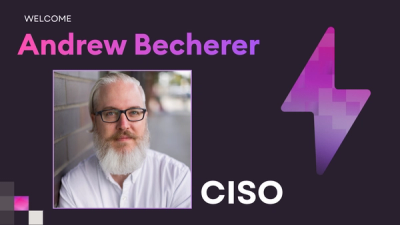
Socket’s first CISO brings deep experience securing high-growth SaaS companies as open source supply chain threats accelerate.