Security News
pnpm 11.5 Adds Support for Recognizing npm Staged Publishes
pnpm 11.5 now recognizes npm staged publish approvals in release metadata, preventing those releases from being mistaken for lower-trust package publishes.
@botpress/ratelimit
Advanced tools
A rate limiting library for Botpress services and integrations.
npm install @botpress/ratelimit
pnpm install @botpress/ratelimit
bun install @botpress/ratelimit
Create a client, define policies, and use them to limit requests:
import * as ratelimit from '@botpress/ratelimit'
// Create a client with a prefix (e.g., your integration name)
const client = new ratelimit.RateLimit({
baseUrl: process.env.RATE_LIMIT_API_URL,
apiKey: process.env.RATE_LIMIT_API_KEY,
endpoint: process.env.RATE_LIMIT_API_ENDPOINT,
prefix: 'integration-name', // Client-level prefix
})
// Create policies with their own prefixes
const limit = {
apiCall: ratelimit.policy({
client,
prefix: 'api-call', // Policy-level prefix
requests: 100, // Allow 100 requests
duration: 60, // Per 60 seconds
}),
}
// Use the policy to check and consume a rate limit token
const result = await limit.apiCall('user-123')
if (!result.success) {
console.log(`Rate limit exceeded. Try again in ${result.reset} seconds`)
return
}
// Request is allowed, proceed
console.log(`${result.remaining} requests remaining`)
You can create multiple policies for different rate limits:
const limit = {
apiCall: ratelimit.policy({
client,
prefix: 'api-call', // Policy prefix
requests: 100,
duration: 60,
}),
webhook: ratelimit.policy({
client,
prefix: 'webhook', // Different policy prefix
requests: 10,
duration: 60,
}),
}
// Use different policies for different operations
const apiResult = await limit.apiCall('user-123')
const webhookResult = await limit.webhook('user-123')
Rate limit keys are automatically generated using the format:
${client.prefix}:${policy.prefix}:${hash(userId)}
Where:
client.prefix is the prefix provided when creating the RateLimit clientpolicy.prefix is the prefix provided when creating each policyhash(userId) is the SHA-256 hash of the user identifierThis ensures that rate limits are properly scoped and user IDs are hashed.
All policy functions return the same result format:
interface RateLimitResult {
success: boolean // Whether the request is allowed
limit: number // Maximum requests allowed
remaining: number // Remaining requests in current window
reset: number // Seconds until rate limit resets
}
FAQs
Rate limiting library for Botpress services and integrations
The npm package @botpress/ratelimit receives a total of 15 weekly downloads. As such, @botpress/ratelimit popularity was classified as not popular.
We found that @botpress/ratelimit demonstrated a healthy version release cadence and project activity because the last version was released less than a year ago. It has 6 open source maintainers collaborating on the project.
Did you know?

Socket for GitHub automatically highlights issues in each pull request and monitors the health of all your open source dependencies. Discover the contents of your packages and block harmful activity before you install or update your dependencies.

Security News
pnpm 11.5 now recognizes npm staged publish approvals in release metadata, preventing those releases from being mistaken for lower-trust package publishes.

Security News
Federal audit finds NIST lacked a plan to clear the NVD backlog, wasted funds on duplicate work, and delayed use of CISA data.

Research
/Security News
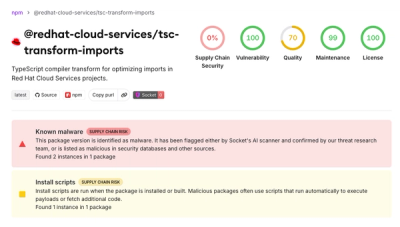
A mini Shai-Hulud campaign compromised Red Hat Cloud Services npm packages to steal developer and CI/CD secrets during installation.