
Company News
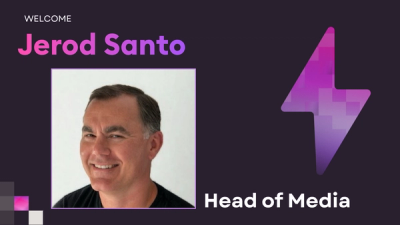
Jerod Santo Joins Socket as Head of Media
Allow myself to introduce... myself.
By Jerod Santo - Sep 14, 2026
@bun-win32/oleacc
Advanced tools
Zero-dependency, zero-overhead Win32 OLEACC (Microsoft Active Accessibility) bindings for Bun (FFI) on Windows.
Zero-dependency, zero-overhead Win32 Oleacc bindings for Bun on Windows.
@bun-win32/oleacc exposes the oleacc.dll exports — Microsoft Active Accessibility (MSAA) — using Bun's FFI. It provides a single class, Oleacc, which lazily binds native symbols on first use. You can optionally preload a subset or all symbols up-front via Preload().
MSAA complements UI Automation: AccessibleObjectFromWindow / AccessibleObjectFromPoint resolve an IAccessible for legacy and modern apps alike — the foundation for UI scraping, RPA, QA automation, and assistive tooling.
The bindings are strongly typed for a smooth DX in TypeScript.
oleacc.dll (IAccessible from a window/point, role & state text decoding, object↔LRESULT marshaling).structs/Oleacc.ts with links to Microsoft Docs.Oleacc.Preload()).ROLE_SYSTEM, STATE_SYSTEM, OBJID enums and the IID_IAccessible GUID (see types/Oleacc.ts).bun add @bun-win32/oleacc
import Oleacc, { IID_IAccessible, OBJID, ROLE_SYSTEM } from '@bun-win32/oleacc';
import User32 from '@bun-win32/user32';

// Build the IID_IAccessible GUID bytes the API expects.
function guidBytes(value: string): Buffer {
  const m = /^([0-9a-f]{8})-([0-9a-f]{4})-([0-9a-f]{4})-([0-9a-f]{4})-([0-9a-f]{12})$/i.exec(value)!;
  const [, d1, d2, d3, d4h, d4l] = m;
  const b = Buffer.alloc(16);
  b.writeUInt32LE(parseInt(d1, 16), 0);
  b.writeUInt16LE(parseInt(d2, 16), 4);
  b.writeUInt16LE(parseInt(d3, 16), 6);
  const tail = `${d4h}${d4l}`;
  for (let i = 0; i < 8; i += 1) b[8 + i] = parseInt(tail.slice(i * 2, i * 2 + 2), 16);
  return b;
}

const iid = guidBytes(IID_IAccessible);
const ppAcc = Buffer.alloc(8);

// Resolve the IAccessible for the foreground window.
const hr = Oleacc.AccessibleObjectFromWindow(User32.GetForegroundWindow(), OBJID.OBJID_WINDOW >>> 0, iid.ptr!, ppAcc.ptr!);
const pAcc = ppAcc.readBigUInt64LE(0); // an IAccessible* token — call its vtable

// Decode any ROLE_SYSTEM_* / STATE_SYSTEM_* value to text.
const roleName = Buffer.alloc(128);
const n = Oleacc.GetRoleTextW(ROLE_SYSTEM.ROLE_SYSTEM_PUSHBUTTON, roleName.ptr!, 64);
console.log(roleName.toString('utf16le', 0, n * 2)); // "push button"
[!NOTE] AI agents: see
AI.mdfor the package binding contract and source-navigation guidance. It explains how to use the package without scanning the entire implementation.
Run the included examples:
bun run example:accessibility-radar
bun run example:ui-tree-inspector
IAccessible under the pointer with AccessibleObjectFromPoint and rendering a scaled screen radar with the focused element's bounding box.IAccessible and recursively walks the whole accessibility tree (name / role / state / rectangle) with a role histogram summary.IAccessible*, IUnknown*) are opaque bigint tokens. Read the address back from the out-buffer and invoke its vtable directly.IAccessible extends IDispatch; its property accessors take a VARIANT varChild by value — on x64 that 24-byte struct is passed as a pointer to a caller-allocated copy.Oleacc.Preload().OPTIONAL<T> (formally optional, SAL _*opt_) and NULLABLE<T> (plain [in]/[out] the docs say can be NULL), the null sentinel derived from T (null for pointers LP*/P*, 0n for handles/by-value addresses); direction is in the parameter name — _out (_Out_), _in_out (_Inout_), _In_ bare. See AI.md and the repo AGENTS.md.FAQs
Zero-dependency, zero-overhead Win32 OLEACC (Microsoft Active Accessibility) bindings for Bun (FFI) on Windows.
The npm package @bun-win32/oleacc receives a total of 58 weekly downloads. As such, @bun-win32/oleacc popularity was classified as not popular.
We found that @bun-win32/oleacc demonstrated a healthy version release cadence and project activity because the last version was released less than a year ago. It has 1 open source maintainer collaborating on the project.
Company News
Allow myself to introduce... myself.

Research
/Security News
A Twitch browser extension on Chrome and Firefox forwards users’ live OAuth session tokens through proxies controlled by a Russian bot service.

Security News
Anthropic found biased reasoning and recklessness drove Claude Mythos 5 to publish malware on PyPI and compromise a security vendor.