
Product
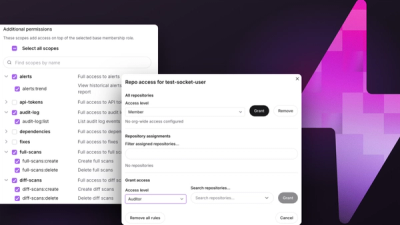
Introducing Repository Access Permissions and Custom Roles
Socket now supports Custom Roles and Repository Access Permissions so organizations can control who can access specific repositories and actions.
By Joe Werle - Jun 19, 2026
@cerios/csv-nested-json
Advanced tools
Parse CSV files into nested JSON objects with support for dot notation, arrays, and complex data structures
A powerful TypeScript CSV parser that transforms flat CSV data into nested JSON objects with support for dot notation, automatic array detection, and complex hierarchical structures.
address.city)npm install @cerios/csv-nested-json
import { CsvParser } from '@cerios/csv-nested-json';

// Parse CSV file
const result = CsvParser.parseFileSync('data.csv');
console.log(result);

// Output:
// [
//   {
//     id: "1",
//     name: "John Doe",
//     address: {
//       street: "123 Main St",
//       city: "New York",
//       zip: "10001"
//     }
//   }
// ]
| Method | Description |
|---|---|
CsvParser.parseFileSync() | Parse CSV file synchronously |
CsvParser.parseFile() | Parse CSV file asynchronously |
CsvParser.parseString() | Parse CSV string content |
CsvParser.parseStream() | Parse CSV from readable stream (buffers full content in memory) |
CsvStreamParser | True streaming parser for very large files |
CsvReader.parse() | Low-level CSV parser that returns flat records |
CsvFileReader.readFile*() | Low-level file/stream text reader |
NestedJsonConverter.convert() | Low-level flat-record to nested JSON converter |
JsonToCsv.stringify() | Convert JSON objects to CSV string |
JsonToCsv.writeFileSync() | Write JSON objects to CSV file (sync) |
JsonToCsv.writeFile() | Write JSON objects to CSV file (async) |
import { CsvParser } from '@cerios/csv-nested-json';

const result = CsvParser.parseFileSync('./data.csv');
When to use: Small to medium files (<10MB), synchronous workflows, simple scripts.
import { CsvParser } from '@cerios/csv-nested-json';

const result = await CsvParser.parseFile('./data.csv');
When to use: Medium to large files, async/await workflows, web servers, non-blocking operations.
import { CsvParser } from '@cerios/csv-nested-json';

const csvString = `id,name,age
1,Alice,30
2,Bob,25`;

const result = CsvParser.parseString(csvString);
When to use: API responses, in-memory CSV data, testing, dynamic CSV generation.
import { CsvParser } from '@cerios/csv-nested-json';
import { createReadStream } from 'node:fs';

const stream = createReadStream('./large-file.csv');
const result = await CsvParser.parseStream(stream);
When to use: CSV input already comes from a readable stream and buffering the full result in memory is acceptable.
Note: CsvParser.parseStream() buffers the entire stream before converting. For true incremental parsing, use CsvStreamParser.
For very large files where you want streaming processing without loading everything into memory (continuation rows are grouped by default):
import { CsvStreamParser } from '@cerios/csv-nested-json';
import { createReadStream } from 'node:fs';

const parser = new CsvStreamParser({
  autoParseNumbers: true,
  autoParseBooleans: true
});

// Using async iteration
const stream = createReadStream('./very-large-file.csv');
for await (const record of stream.pipe(parser)) {
  console.log('Parsed record:', record);
  // Process each record as it's parsed
}

// Or using events
createReadStream('./very-large-file.csv')
  .pipe(new CsvStreamParser())
  .on('data', (record) => {
    console.log('Record:', record);
  })
  .on('end', () => {
    console.log('Done!');
  })
  .on('error', (err) => {
    console.error('Error:', err);
  });
When to use: Files too large to fit in memory, real-time processing, ETL pipelines.
Track parsing progress for large files:
import { CsvStreamParser, ProgressInfo } from '@cerios/csv-nested-json';
import { createReadStream } from 'node:fs';

const parser = new CsvStreamParser({
  progressCallback: (progress: ProgressInfo) => {
    console.log(`Processed ${progress.recordsEmitted} records`);
    console.log(`Bytes: ${progress.bytesProcessed}`);
    console.log(`Elapsed: ${progress.elapsedMs}ms`);
  },
  progressInterval: 1000  // Call every 1000 records (default: 100)
});

for await (const record of createReadStream('./large.csv').pipe(parser)) {
  // Process record
}
The ProgressInfo object contains:
bytesProcessed: Total bytes read so farrecordsEmitted: Number of records emittedheadersProcessed: Whether headers have been parsedelapsedMs: Milliseconds since parsing startedProcess records in batches for memory-efficient streaming:
import { CsvStreamParser } from '@cerios/csv-nested-json';
import { createReadStream } from 'node:fs';

const parser = new CsvStreamParser({
  batchSize: 100  // Emit arrays of 100 records
});

for await (const batch of createReadStream('./large.csv').pipe(parser)) {
  // batch is an array of up to 100 records
  await processBatch(batch);
}

// Note: parseStream() always returns a flat array regardless of batchSize
const allRecords = await CsvStreamParser.parseStream(
  createReadStream('./data.csv'),
  { batchSize: 100 }  // Batching used internally, result is flattened
);
import { JsonToCsv } from '@cerios/csv-nested-json';

const data = [
  {
    id: '1',
    name: 'Alice',
    address: { city: 'NYC', zip: '10001' }
  },
  {
    id: '2',
    name: 'Bob',
    address: { city: 'LA', zip: '90001' }
  }
];

// Convert to CSV string
const csvString = JsonToCsv.stringify(data);
console.log(csvString);
// Output:
// id,name,address.city,address.zip
// 1,Alice,NYC,10001
// 2,Bob,LA,90001

// Write directly to file
JsonToCsv.writeFileSync('./output.csv', data);

// Or async
await JsonToCsv.writeFile('./output.csv', data);
Input CSV:
id,name,email
1,John Doe,john@example.com
2,Jane Smith,jane@example.com
Output JSON:
[
  {
    "id": "1",
    "name": "John Doe",
    "email": "john@example.com"
  },
  {
    "id": "2",
    "name": "Jane Smith",
    "email": "jane@example.com"
  }
]
Input CSV:
id,name,address.street,address.city,address.zip
1,John Doe,123 Main St,New York,10001
Code:
const result = CsvParser.parseFileSync('./nested-data.csv');
Output JSON:
[
  {
    "id": "1",
    "name": "John Doe",
    "address": {
      "street": "123 Main St",
      "city": "New York",
      "zip": "10001"
    }
  }
]
Rows without a value in the first column are treated as continuation rows and automatically create arrays:
Input CSV:
id,name,phones.type,phones.number
1,Alice,mobile,555-0001
,,home,555-0002
,,work,555-0003
Code:
const result = CsvParser.parseFileSync('./grouped-data.csv');
Output JSON:
[
  {
    "id": "1",
    "name": "Alice",
    "phones": [
      { "type": "mobile", "number": "555-0001" },
      { "type": "home", "number": "555-0002" },
      { "type": "work", "number": "555-0003" }
    ]
  }
]
Input CSV:
id,user.name,user.profile.age,user.profile.address.city,user.profile.address.zip
1,Alice,30,New York,10001
Code:
const result = CsvParser.parseString(csvContent);
Output JSON:
[
  {
    "id": "1",
    "user": {
      "name": "Alice",
      "profile": {
        "age": "30",
        "address": {
          "city": "New York",
          "zip": "10001"
        }
      }
    }
  }
]
[] SuffixUse the [] suffix in headers to force a field to always be an array, even with a single value:
Input CSV:
id,name,tags[]
1,Alice,javascript
2,Bob,python
Code:
const result = CsvParser.parseString(csvContent);
Output JSON:
[
  { "id": "1", "name": "Alice", "tags": ["javascript"] },
  { "id": "2", "name": "Bob", "tags": ["python"] }
]
const csvContent = `id,name,age,price,active,verified
1,Alice,30,19.99,true,FALSE
2,Bob,25,29.99,false,TRUE`;

const result = CsvParser.parseString(csvContent, {
  autoParseNumbers: true,
  autoParseBooleans: true
});

// Result:
// [
//   { id: 1, name: "Alice", age: 30, price: 19.99, active: true, verified: false },
//   { id: 2, name: "Bob", age: 25, price: 29.99, active: false, verified: true }
// ]
Note: Strings with leading zeros (like "007") are preserved as strings to avoid data loss.
const csvContent = `id,name,createdAt,updatedAt
1,Alice,2024-01-15,2024-06-30T10:30:00Z`;

const result = CsvParser.parseString(csvContent, {
  autoParseDates: true
});

// Result:
// [
//   {
//     id: "1",
//     name: "Alice",
//     createdAt: Date("2024-01-15"),
//     updatedAt: Date("2024-06-30T10:30:00Z")
//   }
// ]
const csvContent = `id,name,email
1,alice,alice@example.com
2,bob,bob@example.com`;

const result = CsvParser.parseString(csvContent, {
  valueTransformer: (value, header) => {
    // Uppercase names
    if (header === 'name' && typeof value === 'string') {
      return value.toUpperCase();
    }
    return value;
  }
});

// Result:
// [
//   { id: "1", name: "ALICE", email: "alice@example.com" },
//   { id: "2", name: "BOB", email: "bob@example.com" }
// ]
const csvContent = `User ID,First Name,Last Name,Email Address
1,John,Doe,john@example.com`;

const result = CsvParser.parseString(csvContent, {
  // Convert headers to camelCase
  headerTransformer: (header) => {
    return header
      .toLowerCase()
      .replace(/\s+(.)/g, (_, c) => c.toUpperCase());
  }
});

// Result:
// [{ userId: "1", firstName: "John", lastName: "Doe", emailAddress: "john@example.com" }]
const csvContent = `user_id,first_name,last_name
1,John,Doe`;

const result = CsvParser.parseString(csvContent, {
  columnMapping: {
    'user_id': 'id',
    'first_name': 'firstName',
    'last_name': 'lastName'
  }
});

// Result:
// [{ id: "1", firstName: "John", lastName: "Doe" }]
Filter rows during parsing for better memory efficiency:
const csvContent = `id,name,status
1,Alice,active
2,Bob,deleted
3,Charlie,active
4,Diana,pending`;

const result = CsvParser.parseString(csvContent, {
  rowFilter: (record, rowIndex) => {
    // Only include active records
    return record.status === 'active';
  }
});

// Result:
// [
//   { id: "1", name: "Alice", status: "active" },
//   { id: "3", name: "Charlie", status: "active" }
// ]
Include or exclude specific columns during parsing:
const csvContent = `id,name,email,password,role
1,Alice,alice@example.com,secret123,admin
2,Bob,bob@example.com,password456,user`;

// Include only specific columns
const result1 = CsvParser.parseString(csvContent, {
  includeColumns: ['id', 'name', 'email']
});
// Result: [{ id: "1", name: "Alice", email: "alice@example.com" }, ...]

// Exclude sensitive columns
const result2 = CsvParser.parseString(csvContent, {
  excludeColumns: ['password']
});
// Result: [{ id: "1", name: "Alice", email: "alice@example.com", role: "admin" }, ...]
Handle CSV files with duplicate column names:
const csvContent = `id,name,value,value,value
1,Test,A,B,C`;

// Keep first occurrence
const result1 = CsvParser.parseString(csvContent, {
  duplicateHeaders: 'first'
});
// Result: [{ id: "1", name: "Test", value: "A" }]

// Keep last occurrence
const result2 = CsvParser.parseString(csvContent, {
  duplicateHeaders: 'last'
});
// Result: [{ id: "1", name: "Test", value: "C" }]

// Combine into comma-separated string
const result3 = CsvParser.parseString(csvContent, {
  duplicateHeaders: 'combine'
});
// Result: [{ id: "1", name: "Test", value: "A,B,C" }]

// Rename duplicates with suffix
const result4 = CsvParser.parseString(csvContent, {
  duplicateHeaders: 'rename'
});
// Result: [{ id: "1", name: "Test", value: "A", value_1: "B", value_2: "C" }]

// Throw error on duplicates (default)
const result5 = CsvParser.parseString(csvContent, {
  duplicateHeaders: 'error'
});
// Throws CsvDuplicateHeaderError
Limit the number of records parsed (useful for previews or pagination):
const csvContent = `id,name
1,Alice
2,Bob
3,Charlie
4,Diana
5,Eve`;

const result = CsvParser.parseString(csvContent, {
  limit: 3
});
// Result: [{ id: "1", ... }, { id: "2", ... }, { id: "3", ... }]
// Parsing stops after 3 records - efficient for large files
const csvContent = `Report generated on 2024-01-15
Source: Production Database
id,name,email
1,Alice,alice@example.com
2,Bob,bob@example.com`;

const result = CsvParser.parseString(csvContent, {
  skipRows: 2  // Skip the first 2 metadata rows
});

// Result:
// [
//   { id: "1", name: "Alice", email: "alice@example.com" },
//   { id: "2", name: "Bob", email: "bob@example.com" }
// ]
const csvContent = `id,name,status,country
1,Alice,,
2,Bob,active,USA`;

const result = CsvParser.parseString(csvContent, {
  defaultValues: {
    status: 'pending',
    country: 'Unknown'
  }
});

// Result:
// [
//   { id: "1", name: "Alice", status: "pending", country: "Unknown" },
//   { id: "2", name: "Bob", status: "active", country: "USA" }
// ]
By default, unquoted empty values are omitted and explicitly quoted empty values are preserved. You can control each case independently.
const csvContent = `id,emptyColumn,emptyQuoted
1,,""`;

// Preserve only unquoted empties: ,, -> ''
const preserveColumns = CsvParser.parseString(csvContent, {
  preserveEmptyColumnAsEmptyString: true,
  preserveEmptyString: false
});
// [{ id: "1", emptyColumn: "" }]

// Preserve only quoted empties: "" -> ''
const preserveQuoted = CsvParser.parseString(csvContent, {
  preserveEmptyString: true
});
// [{ id: "1", emptyQuoted: "" }]

// Preserve both
const preserveBoth = CsvParser.parseString(csvContent, {
  preserveEmptyColumnAsEmptyString: true,
  preserveEmptyString: true
});
// [{ id: "1", emptyColumn: "", emptyQuoted: "" }]
When multiple options apply, precedence is:
defaultValuesnullValues + nullRepresentationpreserveEmptyColumnAsEmptyString / preserveEmptyStringconst csvContent = `id,name,nickname
1,Alice,N/A
2,Bob,null
3,Charlie,Bobby`;
const result = CsvParser.parseString(csvContent, {
nullValues: ['null', 'NULL', 'N/A', 'n/a', ''],
nullRepresentation: 'null' // or 'undefined', 'empty-string', 'omit'
});
// Result with nullRepresentation: 'null':
// [
// { id: "1", name: "Alice", nickname: null },
// { id: "2", name: "Bob", nickname: null },
// { id: "3", name: "Charlie", nickname: "Bobby" }
// ]
// Result with nullRepresentation: 'omit' (default):
// [
// { id: "1", name: "Alice" },
// { id: "2", name: "Bob" },
// { id: "3", name: "Charlie", nickname: "Bobby" }
// ]
Null conversion is opt-in. Values are only treated as null when nullValues is provided.
The parser automatically strips UTF-8 and UTF-16 BOM by default:
// BOM is automatically handled
const result = CsvParser.parseFileSync('./windows-excel-export.csv');

// Disable BOM stripping if needed
const result2 = CsvParser.parseString(csvContent, {
  stripBom: false
});
Input CSV:
id,username,profile.firstName,profile.lastName,addresses.type,addresses.city
1,johndoe,John,Doe,home,New York
,,,,work,Boston
2,janedoe,Jane,Doe,home,Chicago
Code:
const result = CsvParser.parseFileSync('./complex-data.csv');
Output JSON:
[
  {
    "id": "1",
    "username": "johndoe",
    "profile": {
      "firstName": "John",
      "lastName": "Doe"
    },
    "addresses": [
      { "type": "home", "city": "New York" },
      { "type": "work", "city": "Boston" }
    ]
  },
  {
    "id": "2",
    "username": "janedoe",
    "profile": {
      "firstName": "Jane",
      "lastName": "Doe"
    },
    "addresses": [
      { "type": "home", "city": "Chicago" }
    ]
  }
]
Note: Array shape is normalized across records. If one record needs an array for a path, other records with a single value for that path are represented as single-item arrays.
Semicolon-separated values:
const csvSemicolon = `id;name;city
1;Alice;NYC
2;Bob;LA`;

const result = CsvParser.parseString(csvSemicolon, {
  delimiter: ';'
});
Tab-separated values:
const csvTab = `id\tname\tcity
1\tAlice\tNYC`;

const result = CsvParser.parseString(csvTab, {
  delimiter: '\t'
});
Pipe-separated values:
const csvPipe = `id|name|city
1|Alice|NYC`;

const result = CsvParser.parseString(csvPipe, {
  delimiter: '|'
});
const csvSingleQuote = `id,name,message
1,Alice,'Hello, World'
2,Bob,'It''s working'`;

const result = CsvParser.parseString(csvSingleQuote, {
  quote: "'"
});
// Latin1 encoding
const result = await CsvParser.parseFile('./data-latin1.csv', {
  encoding: 'latin1'
});

// UTF-16LE encoding
const result2 = await CsvParser.parseFile('./data-utf16.csv', {
  encoding: 'utf16le'
});
// Ignore extra columns silently
const result1 = CsvParser.parseString(csvData, {
  validationMode: 'ignore'
});

// Warn about extra columns (default)
const result2 = CsvParser.parseString(csvData, {
  validationMode: 'warn'
});

// Throw error on extra columns
try {
  const result3 = CsvParser.parseString(csvData, {
    validationMode: 'error'
  });
} catch (error) {
  console.error('Validation error:', error.message);
}
async function parseApiCsv() {
  const response = await fetch('https://api.example.com/data.csv');
  const csvString = await response.text();

  const data = CsvParser.parseString(csvString, {
    validationMode: 'ignore'
  });

  return data;
}
import { createReadStream } from 'node:fs';

async function parseLargeFile(filePath: string) {
  const stream = createReadStream(filePath, {
    highWaterMark: 64 * 1024 // 64KB chunks
  });

  const data = await CsvParser.parseStream(stream, {
    validationMode: 'warn',
    encoding: 'utf-8'
  });

  return data;
}
European CSV files typically use semicolon delimiters and comma as decimal separator:
const europeanCsv = `id;name;price;location.city;location.country
1;Product A;12,50;Paris;France
2;Product B;8,99;Berlin;Germany`;

const result = CsvParser.parseString(europeanCsv, {
  delimiter: ';',
  validationMode: 'error'
});

// Result:
// [
//   {
//     id: "1",
//     name: "Product A",
//     price: "12,50",
//     location: { city: "Paris", country: "France" }
//   },
//   ...
// ]
const files = ['data1.csv', 'data2.csv', 'data3.csv'];

const results = await Promise.all(
  files.map(file => CsvParser.parseFile(file))
);
interface CsvParserOptions {
  // Validation
  validationMode?: 'ignore' | 'warn' | 'error';  // Default: 'warn'

  // Parsing
  delimiter?: string;                             // Default: ','
  quote?: string;                                 // Default: '"'

  // File I/O
  encoding?: BufferEncoding;                      // Default: 'utf-8'

  // Row handling
  skipRows?: number;                              // Default: 0
  stripBom?: boolean;                             // Default: true
  rowFilter?: (record, rowIndex) => boolean;      // Filter rows during parsing
  limit?: number;                                 // Max records to parse

  // Column selection
  includeColumns?: string[];                      // Include only these columns (matched against original CSV headers)
  excludeColumns?: string[];                      // Exclude columns after includeColumns is applied

  // Duplicate header handling
  duplicateHeaders?: DuplicateHeaderStrategy;     // Default: 'error'

  // Value transformations
  autoParseNumbers?: boolean;                     // Default: false
  preserveUnsafeIntegersAsString?: boolean;       // Default: false
  autoParseBooleans?: boolean;                    // Default: false
  autoParseDates?: boolean;                       // Default: false
  valueTransformer?: (value, header) => any;      // Custom value transformer

  // Header transformations
  headerTransformer?: (header) => string;         // Transform header names
  columnMapping?: Record<string, string>;         // Rename columns

  // Array handling
  arraySuffixIndicator?: string;                  // Default: '[]'
  emptyArrayBehavior?: 'empty-array' | 'omit';    // Default: 'omit'

  // Null handling
  nullValues?: string[];                          // Values to treat as null
  nullRepresentation?: 'null' | 'undefined' | 'empty-string' | 'omit';  // Default: 'omit'

  // Default values
  defaultValues?: Record<string, string>;         // Default values for empty cells

  // Empty value preservation
  preserveEmptyColumnAsEmptyString?: boolean;     // Preserve unquoted empties: ,,
  preserveEmptyString?: boolean;                  // Preserve quoted empties: ""

  // Row grouping
  identifierColumn?: string;                      // Column for grouping continuation rows
}

// Streaming-specific options (CsvStreamParser)
interface CsvStreamParserOptions extends CsvParserOptions {
  batchSize?: number;                             // Emit records in batches
  maxContinuationGroupSize?: number;              // Max raw rows buffered per continuation group (default: 10000)
  progressCallback?: ProgressCallback;            // Progress tracking callback
  progressInterval?: number;                      // Records between callbacks (default: 100)
}
validationModeControls how the parser handles rows with more values than headers:
'ignore': Silently ignore extra values'warn' (default): Log a warning to console'error': Throw a CsvValidationErrordelimiterField delimiter character. Common values:
',' (default) - Comma-separated values';' - Semicolon-separated values (common in Europe)'\t' - Tab-separated values'|' - Pipe-separated valuesquoteQuote character for escaping fields containing delimiters or newlines:
'"' (default) - Double quotes"'" - Single quotesencodingFile encoding when reading from files or streams:
'utf-8' (default)'utf-16le''latin1''ascii'skipRowsNumber of rows to skip before the header row. Useful for files with metadata at the top.
stripBomAutomatically remove BOM (Byte Order Mark) from the beginning of content. Default: true
autoParseNumbersAutomatically convert numeric strings to numbers. Strings with leading zeros (like "007") are preserved.
Note: JavaScript numbers lose integer precision above Number.MAX_SAFE_INTEGER (9007199254740991).
If you want to prevent precision loss for large integers, enable preserveUnsafeIntegersAsString.
preserveUnsafeIntegersAsStringWhen used with autoParseNumbers, keeps integers outside JavaScript's safe integer range as strings.
const result = CsvParser.parseString(csv, {
  autoParseNumbers: true,
  preserveUnsafeIntegersAsString: true
});

// "9007199254740993" stays a string to avoid precision loss
autoParseBooleansAutomatically convert 'true'/'false' strings to booleans (case-insensitive).
autoParseDatesAutomatically convert date strings to JavaScript Date objects using Date.parse().
valueTransformerCustom function to transform values after parsing. Called after auto-parse options.
valueTransformer: (value, header) => {
  if (header === 'email') return value.toLowerCase();
  return value;
}
headerTransformerTransform header names before processing. Useful for converting to camelCase, lowercase, etc.
headerTransformer: (header) => header.toLowerCase().replace(/\s+/g, '_')
columnMappingMap/rename column headers. Applied after headerTransformer.
columnMapping: { 'user_id': 'id', 'first_name': 'firstName' }
rowFilterFilter rows during parsing. More memory-efficient than filtering after parsing.
rowFilter: (record, rowIndex) => record.status === 'active'
limitMaximum number of records to parse. Parsing stops after this limit is reached, which is efficient for large files when you only need a preview or first N records.
limit: 100 // Stop after 100 records
includeColumnsArray of column names to include. Only these columns will be in the output.
includeColumns: ['id', 'name', 'email'] // Only include these columns
includeColumns and excludeColumns can be combined. Inclusion is applied first, then exclusion.
Column filtering matches original CSV header names before headerTransformer and columnMapping are applied.
excludeColumnsArray of column names to exclude. All other columns will be included.
excludeColumns: ['password', 'secret'] // Exclude sensitive columns
duplicateHeadersStrategy for handling duplicate column names in CSV headers. Default: 'error'
duplicateHeaders: 'rename' // 'error' | 'rename' | 'combine' | 'first' | 'last'
'error' (default): Throw CsvDuplicateHeaderError on duplicates'rename': Rename duplicates with suffix (e.g., value, value_1, value_2)'combine': Combine values into comma-separated string'first': Keep only the first occurrence of duplicate headers'last': Keep only the last occurrenceidentifierColumnColumn to use as the identifier for grouping continuation rows. By default, the first column is used to identify new records. When this column has an empty value, the row is treated as a continuation of the previous record.
The first data row in a group must contain an identifier value. If the first row is a continuation row (empty identifier), parsing throws CsvParseError to avoid ambiguous grouping.
If headerTransformer or columnMapping is used, set identifierColumn to the transformed/mapped header name (not the original CSV header).
// Use 'productId' instead of first column to group rows
identifierColumn: 'productId'
maxContinuationGroupSize (streaming only)Maximum number of raw rows buffered for a single continuation group in CsvStreamParser. This protects against unbounded memory growth when identifier values are missing for long stretches.
10000CsvParseErrormaxContinuationGroupSize: 5000
arraySuffixIndicatorSuffix in headers to force array type. Default: '[]'
emptyArrayBehaviorHow to handle forced array fields with no values:
'omit' (default): Don't include the field'empty-array': Include as []nullValuesStrings to interpret as null values. Null detection is disabled unless this option is provided.
nullRepresentationHow to represent null values in output:
'omit' (default): Remove the field'null': Use JavaScript null'undefined': Use JavaScript undefined'empty-string': Use empty string ''defaultValuesDefault values for columns when cells are empty.
defaultValues: { status: 'pending', country: 'Unknown' }
preserveEmptyColumnAsEmptyStringPreserve unquoted empty columns (for example ,,) as '' in nested output.
falsepreserveEmptyStringPreserve explicitly quoted empty strings (for example "" with the default quote character) as '' in nested output.
trueBoth options work for CsvParser and CsvStreamParser. Set preserveEmptyString: false if you want quoted empties omitted.
const result = await CsvParser.parseFile('./data.csv', {
  // Validation
  validationMode: 'error',

  // Parsing
  delimiter: ',',
  quote: '"',
  encoding: 'utf-8',

  // Row handling
  skipRows: 2,
  stripBom: true,
  rowFilter: (record) => record.status !== 'deleted',
  limit: 1000,

  // Column selection
  excludeColumns: ['password', 'secret'],

  // Duplicate header handling
  duplicateHeaders: 'rename',

  // Value transformations
  autoParseNumbers: true,
  autoParseBooleans: true,
  autoParseDates: true,
  valueTransformer: (value, header) => {
    if (header === 'email') return value.toLowerCase();
    return value;
  },

  // Header transformations
  headerTransformer: (h) => h.toLowerCase().replace(/\s+/g, '_'),
  columnMapping: { 'user_id': 'id' },

  // Row grouping
  identifierColumn: 'id',

  // Array handling
  arraySuffixIndicator: '[]',
  emptyArrayBehavior: 'empty-array',

  // Null handling
  nullValues: ['null', 'N/A', '-'],
  nullRepresentation: 'null',

  // Defaults
  defaultValues: { status: 'pending' },

  // Empty value preservation
  preserveEmptyColumnAsEmptyString: true,
  preserveEmptyString: true
});
parseFileSync<T>(filePath: string, options?: CsvParserOptions): T[]Parses a CSV file synchronously and returns an array of nested JSON objects.
parseFile<T>(filePath: string, options?: CsvParserOptions): Promise<T[]>Parses a CSV file asynchronously.
parseString<T>(csvContent: string, options?: CsvParserOptions): T[]Parses CSV string content.
parseStream<T>(stream: Readable, options?: CsvParserOptions): Promise<T[]>Parses CSV from a readable stream and returns all records. This method buffers the full stream in memory before conversion.
A Transform stream that parses CSV data chunk by chunk, emitting records as they become available.
import { CsvStreamParser, ProgressInfo } from '@cerios/csv-nested-json';

const parser = new CsvStreamParser({
  autoParseNumbers: true,
  limit: 1000,            // Stop after 1000 records
  batchSize: 100,         // Emit in batches of 100
  maxContinuationGroupSize: 10000, // Safety guard for continuation buffering
  progressCallback: (info: ProgressInfo) => {
    console.log(`Progress: ${info.recordsEmitted} records, ${info.elapsedMs}ms`);
  },
  progressInterval: 500,  // Call progress every 500 records
  // ... other CsvParserOptions
});

createReadStream('./large.csv')
  .pipe(parser)
  .on('data', (record) => console.log(record))
  .on('end', () => console.log('Done'));
// Parse stream and collect all records
const records = await CsvStreamParser.parseStream(
  createReadStream('./data.csv'),
  { autoParseNumbers: true, limit: 100 }
);
stringify(data: object[], options?: JsonToCsvOptions): stringConvert array of objects to CSV string.
writeFileSync(filePath: string, data: object[], options?: JsonToCsvOptions): voidWrite objects to CSV file synchronously.
writeFile(filePath: string, data: object[], options?: JsonToCsvOptions): Promise<void>Write objects to CSV file asynchronously.
import { JsonToCsv } from '@cerios/csv-nested-json';

const data = [
  { id: 1, user: { name: 'Alice', age: 30 }, tags: ['js', 'ts'] }
];

const csv = JsonToCsv.stringify(data, {
  delimiter: ',',
  quote: '"',
  arrayMode: 'rows'  // 'rows' (continuation rows) or 'json' (stringify arrays)
});
The library provides custom error classes for better error handling:
import {
  CsvParseError,
  CsvFileNotFoundError,
  CsvValidationError,
  CsvEncodingError,
  CsvDuplicateHeaderError
} from '@cerios/csv-nested-json';

try {
  const result = CsvParser.parseFileSync('./data.csv', {
    validationMode: 'error'
  });
} catch (error) {
  if (error instanceof CsvFileNotFoundError) {
    console.error(`File not found: ${error.filePath}`);
  } else if (error instanceof CsvDuplicateHeaderError) {
    console.error(`Duplicate headers: ${error.duplicateHeaders.join(', ')}`);
  } else if (error instanceof CsvValidationError) {
    console.error(`Validation error at row ${error.row}`);
    console.error(`Expected ${error.expectedColumns}, got ${error.actualColumns}`);
  } else if (error instanceof CsvEncodingError) {
    console.error(`Encoding error: ${error.encoding}`);
  } else if (error instanceof CsvParseError) {
    console.error(`Parse error at row ${error.row}, column ${error.column}`);
  }
}
Records are grouped by the first column (identifier) by default, or by the column specified in identifierColumn. When this column is empty, the row is treated as a continuation of the previous group:
id,name,item
1,Alice,Book
,,Pen
,,Notebook
2,Bob,Laptop
Groups:
id=1 and the two continuation rowsid=2Column headers with dots create nested object structures:
user.profile.name,user.profile.age
Alice,30
Creates:
{
  "user": {
    "profile": {
      "name": "Alice",
      "age": "30"
    }
  }
}
When the same key path appears multiple times within a group, an array is automatically created:
id,contact.type,contact.value
1,email,alice@example.com
,,phone,555-1234
Creates:
{
  "id": "1",
  "contact": [
    { "type": "email", "value": "alice@example.com" },
    { "type": "phone", "value": "555-1234" }
  ]
}
Empty or null values are omitted from the output:
id,name,optional
1,Alice,
2,Bob,Value
Creates:
[
  { "id": "1", "name": "Alice" },
  { "id": "2", "name": "Bob", "optional": "Value" }
]
| Method | Best For | File Size | Blocking |
|---|---|---|---|
parseFileSync() | Scripts, small files | <10MB | Yes |
parseFile() | Web servers, medium files | 10MB-100MB | No |
parseString() | API responses, testing | Any (in-memory) | Yes |
parseStream() | Readable stream inputs with buffered output | Any (buffered in memory) | No |
CsvStreamParser | Large/very large files, ETL pipelines | Any size | No |
// ❌ Manual parsing - tedious and error-prone
const fs = require('fs');
const data = fs.readFileSync('data.csv', 'utf-8');
const lines = data.split('\n');
const headers = lines[0].split(',');
const result = [];

for (let i = 1; i < lines.length; i++) {
  const values = lines[i].split(',');
  const obj = {};

  for (let j = 0; j < headers.length; j++) {
    const keys = headers[j].split('.');
    let current = obj;

    // Manually handle nesting...
    // ... complex nested object logic
  }

  result.push(obj);
}
// ✅ Simple, type-safe, and powerful
const result = CsvParser.parseFileSync('data.csv');

// ✅ Automatic nested object creation
// ✅ Automatic array detection
// ✅ RFC 4180 compliant parsing
// ✅ Flexible configuration options
The library is fully RFC 4180 compliant and supports:
"value, with, commas""He said ""Hello""" → He said "Hello"id,name,description
1,Alice,"Product with, comma"
2,Bob,"Product with ""quotes"""
3,Charlie,"Multi-line
description here"
All of these are correctly parsed!
Full TypeScript support with comprehensive type definitions:
import {
  CsvParser,
  CsvStreamParser,
  JsonToCsv,
  CsvParserOptions,
  CsvStreamParserOptions,
  CsvParseError,
  CsvValidationError,
  NestedObject,
  ProgressInfo,
  ProgressCallback,
  DuplicateHeaderOptions
} from '@cerios/csv-nested-json';

// Generic type support
interface Person {
  id: number;
  name: string;
  address: {
    city: string;
    zip: string;
  };
}

const result = CsvParser.parseFileSync<Person>('people.csv', {
  autoParseNumbers: true
});

// result is typed as Person[]
console.log(result[0].address.city);
// Options
type ValidationMode = 'ignore' | 'warn' | 'error';
type EmptyArrayBehavior = 'empty-array' | 'omit';
type NullRepresentation = 'null' | 'undefined' | 'empty-string' | 'omit';
type ArrayMode = 'rows' | 'json';
type DuplicateHeaderStrategy = 'error' | 'rename' | 'combine' | 'first' | 'last';

// Function types
type ValueTransformer = (value: unknown, header: string) => unknown;
type HeaderTransformer = (header: string) => string;
type RowFilter = (record: CsvRecord, rowIndex: number) => boolean;
type ProgressCallback = (info: ProgressInfo) => void | Promise<void>;

// Progress tracking
interface ProgressInfo {
  bytesProcessed: number;    // Total bytes read
  recordsEmitted: number;    // Records emitted so far
  headersProcessed: boolean; // Whether headers have been parsed
  elapsedMs: number;         // Milliseconds since start
}

// Data types
type CsvRecord = Record<string, string>;
type NestedObject = { [key: string]: NestedValue };
type NestedValue = string | number | boolean | Date | null | NestedObject | NestedValue[];

// Options interfaces
interface CsvParserOptions { /* ... */ }
interface CsvStreamParserOptions extends CsvParserOptions { /* ... */ }
parseFileSync() for small files in scriptsparseFile() for web servers and async workflowsparseString() for API responses and testingparseStream() when your source is a readable stream and buffering all content is acceptableCsvStreamParser for large/very large files or incremental processing; it groups continuation rows to match CsvParser continuation semanticsUse Appropriate Validation Mode:
'ignore' when you trust the data source'warn' (default) during development'error' for strict validation in productionEnable Auto-Parsing When Appropriate:
const result = CsvParser.parseFileSync('./data.csv', {
  autoParseNumbers: true,
  autoParseBooleans: true,
  autoParseDates: true
});
Handle Errors Gracefully:
import { CsvParseError, CsvValidationError } from '@cerios/csv-nested-json';

try {
  const result = CsvParser.parseFileSync('./data.csv', {
    validationMode: 'error'
  });
} catch (error) {
  if (error instanceof CsvValidationError) {
    console.error(`Row ${error.row}: expected ${error.expectedColumns} columns`);
  } else {
    throw error;
  }
}
Use Streaming for Large Files:
// ✅ Good for very large files
const parser = new CsvStreamParser({ autoParseNumbers: true });
for await (const record of createReadStream('./huge.csv').pipe(parser)) {
  await processRecord(record);
}

// ❌ May cause memory issues with large files
const result = CsvParser.parseFileSync('./huge.csv');
Use Row Filtering for Memory Efficiency:
// ✅ Filter during parsing - uses less memory
const result = CsvParser.parseFileSync('./data.csv', {
  rowFilter: (record) => record.status === 'active'
});

// ❌ Filter after parsing - loads everything into memory first
const all = CsvParser.parseFileSync('./data.csv');
const filtered = all.filter(r => r.status === 'active');
Specify Encoding for Non-UTF8 Files:
const result = await CsvParser.parseFile('./data.csv', {
  encoding: 'latin1'
});
Use Consistent Column Headers:
headerTransformer for normalizationContributions are welcome! Please feel free to submit a Pull Request.
MIT © Ronald Veth - Cerios
FAQs
Parse CSV files into nested JSON objects with support for dot notation, arrays, and complex data structures
The npm package @cerios/csv-nested-json receives a total of 25 weekly downloads. As such, @cerios/csv-nested-json popularity was classified as not popular.
We found that @cerios/csv-nested-json demonstrated a healthy version release cadence and project activity because the last version was released less than a year ago. It has 2 open source maintainers collaborating on the project.
Did you know?

Socket for GitHub automatically highlights issues in each pull request and monitors the health of all your open source dependencies. Discover the contents of your packages and block harmful activity before you install or update your dependencies.
Product
Socket now supports Custom Roles and Repository Access Permissions so organizations can control who can access specific repositories and actions.
Product
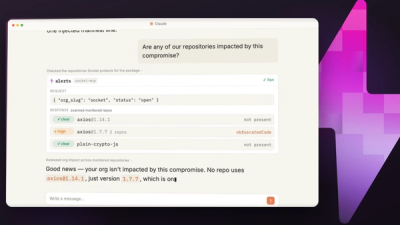
Socket MCP now lets AI assistants review org alerts, investigate threats using the Socket threat feed, and inspect package files in addition to dependency scoring.
Product
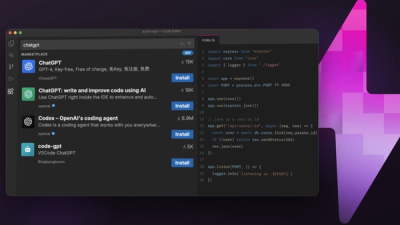
Socket Firewall blocks malicious VS Code and Open VSX extensions before install, protecting developers from compromised editor marketplaces.