
Company News
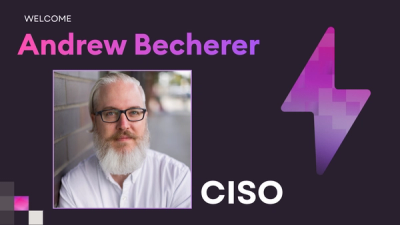
Andrew Becherer Joins Socket as Chief Information Security Officer
Socket’s first CISO brings deep experience securing high-growth SaaS companies as open source supply chain threats accelerate.
By Sarah Gooding - Jun 11, 2026
@dewtech/dare-cli
Advanced tools
DARE Framework - CLI, GraphRAG engine, MCP server and shared types in a single package
CLI tool for the DARE Framework — Design, Architect, Review, Execute.
A structured methodology for AI-assisted software development with mandatory human-in-the-loop reviews and parallel task execution.


dare init scaffolds a project (v3.2)dare init writes a complete, DARE-shaped project from generators
internalized in this package — no shell-out to the framework's official CLI
during init. Each backend + MCP stack lays down its full source tree
(Layered Design, OpenAPI, JWT auth, rate limit, .env.example,
.dare/skills.yml, CI gates), then prints the install/build steps to run next.
| Stack | What dare init writes |
|---|---|
ruby-rails-8 | Rails 8 + Layered Design + Action Cable + LLM + RSpec |
node-nestjs | NestJS 10 + Prisma + Swagger + Throttler + JWT |
python-fastapi | FastAPI + Pydantic v2 + SQLAlchemy + Alembic + slowapi |
php-laravel | Laravel 11 + Sanctum + FormRequest + Reverb + l5-swagger |
rust-axum | Axum + Tower + utoipa + jsonwebtoken + argon2 + sqlx |
go-gin | Gin + sqlc + swag + golang-jwt + gorilla/websocket |
go-stdlib | net/http 1.22 (no framework) + sqlc + coder/websocket |
mcp-node-ts | MCP server (@modelcontextprotocol/sdk) — stdio/sse/http |
mcp-python | MCP server (mcp[cli] / FastMCP) — stdio/sse/http |
mcp-rust (beta) | MCP server (rmcp) — stdio/sse/http |
mcp-go (beta) | MCP server (mark3labs/mcp-go) — stdio/sse/http |
react, vue | Vite scaffold + DARE overlay |
rust-leptos / -csr | Cargo workspace (Axum server + Leptos web) |
Non-interactive: dare init <name> --stack <id> or dare init <name> --mcp <lang> [--transport stdio\|sse\|http].
Generation itself needs no toolchain. To build/run the generated project
afterwards you need that stack's ruby / composer / npm / cargo / python / go
somewhere. There are three ways to provide it — you pick at init time
(prompt below), and the choice is saved in dare.config.json so
dare bootstrap reuses it later.
? Toolchain for scaffolding (composer / npm / cargo / python / go):
  ❯ 🤖 Auto — use native if on PATH, else Docker (recommended)
    🔧 Native only — require the CLI on PATH (faster, no Docker pulls)
    🐳 Docker only — always use the official image (hermetic, no host install)
Tries the native CLI first. If missing, falls back to the official Docker image automatically. If neither is present, fails fast with both install links.
which composer  → ✓ found?  use native
                → ✗ missing? which docker
                              → ✓ found?  docker run composer:latest …
                              → ✗ missing? error: install Composer or Docker
When: you don't know exactly what's installed; mixed teams (some
machines have the toolchain, some only have Docker). The same project
config (dare.config.json with toolchain: auto) works on every machine.
Requires the CLI on PATH. Fails immediately if missing — no Docker fallback even if Docker is available.
which composer → ✓ found?  use native
                → ✗ missing? error: "Install Composer: https://getcomposer.org/"
When: you already have the toolchain and want maximum speed (no
docker pull, no bind-mount overhead, no container startup); you're in CI
with the toolchain pre-installed; you want to avoid Docker Desktop edge
cases (Windows volume throttling, Linux uid/gid issues, etc.).
Always runs the scaffold inside the official Docker image — even if the native CLI is on PATH. Fails if Docker isn't installed.
which docker → ✓ found?  docker run --rm -v ".:/app" composer:latest create-project …
              → ✗ missing? error: "Install Docker Desktop"
When: you don't want to install PHP / Cargo / Python / Go on the host (keep host clean); you want hermetic, reproducible builds (every dev uses the exact toolchain version baked into the image); you want to mirror your CI locally.
| Your situation | Pick |
|---|---|
| Already have the toolchain installed, want speed | 🔧 Native |
| Don't want to install PHP/Cargo/Python/Go on the host | 🐳 Docker |
| Mixed team, varying setups | 🤖 Auto |
| Just want it to work | 🤖 Auto |
| Want bit-for-bit toolchain reproducibility | 🐳 Docker |
| Solo dev with everything installed | 🔧 Native |
dare bootstrap --toolchain docker          # rerun scaffold inside Docker
dare bootstrap --toolchain native --force  # rerun native, overwriting framework files
dare bootstrap --toolchain auto            # back to auto-detect
dare execute --complete runs the stack's quality gates
(composer dump-autoload, php artisan test, cargo build, etc.)
directly on the host — it does not automatically wrap them in
Docker even if you picked docker only at init time.
If you don't have the native toolchain installed, the agent should run
the gates inside the container created by task-001 (the Containerize
task), e.g. docker compose exec app php artisan test. The skills
shipped with dare init already nudge the agent toward that pattern.
| Tool | Why | Install |
|---|---|---|
| Node.js 18+ | runs dare, dare-mcp-server and the bundled GraphRAG engine | https://nodejs.org/ |
dare init itself needs no stack toolchain — it writes the project from
internalized templates. To build and run what it generates, you need that
stack's toolchain (composer/npm/cargo/go/python/ruby). If you don't
have it natively but have Docker, run the build steps inside the stack's
official image (the .github/workflows/dare-ci.yml the project ships shows the
exact commands).
Pick one of the two paths per stack:
| Stack | Native toolchain | Docker fallback (used if native missing) |
|---|---|---|
ruby-rails-8 | Ruby 3.3+ · Bundler 2+ · Rails 8 — https://www.ruby-lang.org/ | ruby:3.3-slim |
php-laravel | PHP 8.2+ · Composer 2+ — https://getcomposer.org/ | composer:latest |
node-nestjs | Node 18+ (bundles npx) | node:20-alpine |
python-fastapi | Python 3.11+ — https://www.python.org/downloads/ | python:3.12-slim |
rust-axum | Rust 1.83+ (rustup) — https://www.rust-lang.org/tools/install | rust:1.83 |
go-gin | Go 1.25+ — https://go.dev/dl/ | golang:1.25 |
go-stdlib | Go 1.22+ — https://go.dev/dl/ | golang:1.25 |
react, vue | Node 18+ (bundles npm) | node:20-alpine |
rust-leptos | Rust 1.83+ (rustup) + cargo-leptos 0.2.22 — cargo install cargo-leptos --version 0.2.22 | ghcr.io/dewtech-technologies/dare-rust-leptos:1 |
rust-leptos-csr | Rust 1.83+ (rustup) + trunk — cargo install trunk | ghcr.io/dewtech-technologies/dare-rust-leptos:1 |
mcp-node-ts | Node 18+ | node:20-alpine |
mcp-python | Python 3.11+ | python:3.12-slim |
mcp-rust (beta) | Rust 1.78+ (rustup) | rust:1.83 |
mcp-go (beta) | Go 1.23+ — https://go.dev/dl/ | golang:1.25 |
v3.8.1–3.8.2 (manutenção):
dare updatepassa a entregar os skills/comandos/config das v3.4→v3.8 a projetos existentes (backfill doUPDATE-MANIFEST, 3.8.1). O CI ganha um gate de cobertura de docs + redeploy automático da documentação a cada release (3.8.2).
v3.10.0: Drift Gate —
dare graph drift(exit 7 com--strict). Local Semantic Search — retrieval híbrido RRF,graphrag.semanticopt-in,@xenova/transformersoptionalDep lazy,dare graph query --semantic, indexação incremental porcontentHash. v3.9.0: Secure Autonomous Executor + Agentic-chain Security Gate —dare execute --agent(driver plugável, SDK comooptionalDependencylazy;--budget-tokens,--require-approval rank|none,--on-fail replan|escalate|stop,--dry-run; telemetria de custo no GraphRAG; gateno-llm-in-core) +dare guard(unicode-audit + scan heurístico + proveniência Ed25519/minisign-compat + trust boundaries control/data; exit code 6 em FAIL; pré-flight dodare execute --agent; blocoguardemdare.config.json, opt-inenabled:false). v3.8.0: Formal Verification Gate — opt-in strict aspectverification.formal(enabled/backend/modules/maxRepairIterations/proofTimeoutSeconds/antiBypass) plus flags--formal/--no-formal/--formal-backend <dafny|verus|lean>. Proves marked critical modules against external Dafny/Verus/Lean toolchain (not an npm dep); exit 5 when toolchain missing on a marked module; anti-bypass rejectsassume(false)/ensures true/leaks even on solver exit 0; telemetry edgeproven_by→formal-gate.
v3.7.0: Brownfield Discovery — deterministic auto-discovery of codebase patterns/conventions (
dare patterns, read-only) fed into the dual graph + steering, plus lightweight planning personas (Analyst/PM/Architect) at planning time only (no runtime swarm). Extendsdare reverse/dna.
v3.6.0: Agent Hooks + Steering Files — event-triggered automation (Claude Code hooks + git pre-commit) over a closed action allowlist (
spawn, no shell), and steering files (project standards reusing PROJECT-DNA) injected to all three IDEs via the MCP server.
v3.5.0: Dual Graph (Requirement↔Code) — links spec/task nodes to code symbols in the GraphRAG; adds
dare graph owners|impact|trace|locateand graph-guided localization; fixes the Neo4j backend (real Cypher reads, gated experimental).
v3.4.0: Security Hardening — MCP server bound to 127.0.0.1 with auth + CORS allowlist + helmet;
dare initpath validation; CI publish with provenance, real eslint + coverage gates.
v3.3.0: Reliable Verification Core (opt-in via
dare.config.json#verification) — turns the Ralph Loop's "tests pass" gate into "correct & robust": mutation testing, fail-to-pass specs, anti-tamper, a decay-aware loop policy, best-of-N candidate selection over git worktrees, and adare benchregression harness (solve-rate + Fix·Rate). Absent theverificationblock, behavior is unchanged.
v3.2.0: full CLI ↔ IDE parity — every one of the 18 CLI commands is invocable as
/dare-<cmd>across all three IDEs (Cursor, Claude Code, Antigravity); a parity test fails the build if a command is missing a skill. Brownfield commands now collect real data by default:dare reverse/dnaextract endpoints + entities and render them intoIDEIA.mdand the module specs (no more skeleton-only artifacts).
v3.1.0: all 11 stacks ship a full generator internalized in
@dewtech/dare-cli— 7 backend (ruby-rails-8, node-nestjs, python-fastapi, php-laravel, rust-axum, go-gin, go-stdlib) + 4 MCP (mcp-node-ts, mcp-python, mcp-rust, mcp-go). No isolated stack packages; everything is in one publishable tarball (fixes thenpm install -g404 of earlier releases).dare newwas removed —dare initis the only scaffolding entrypoint.
TL;DR: if you have Docker Desktop installed, you don't strictly need any other toolchain —
dare initwill pull the right image on demand. Native toolchains are faster and don't depend on Docker pulling images.
If neither the native CLI nor Docker is available, dare init fails
fast with a clear error message — it never falls back to a fake template.
The 3 modes (auto / native / docker) are explained in detail at the
top of this README — see ⚠ Read this first.
Quick recap:
| Mode | Behavior |
|---|---|
auto (default) | Native if available, else Docker. Recommended. |
native | Requires the native CLI; fails if missing. |
docker | Always uses the official Docker image. |
The choice is persisted in dare.config.json ("toolchain": "...").
Override at any time:
dare bootstrap --toolchain docker          # rerun scaffold inside Docker
dare bootstrap --toolchain native --force  # rerun native, overwriting
Once the project is scaffolded, every dare execute --complete runs the
stack's gates: build → test → lint. The same toolchain (native or Docker)
that scaffolded the project is needed to run those gates. Plan accordingly:
if you chose php-laravel and only have Docker, dare execute --complete
needs to invoke php artisan test somehow — typically by running it inside
your docker-compose app service (this is the kind of thing the
task-001 = Containerize app task sets up).
npm install -g @dewtech/dare-cli
dare initInteractive project initialization — creates the full project structure with DARE methodology files, IDE rules and stack templates.
dare init my-project
Prompts:
crates/server + crates/web) · Multi-crate ({prefix}-core + {prefix}-server + {prefix}-web + {prefix}-cli) — prefix suggested from project initials (e.g. ai-runtime-securyti-rasp → arsr)Generates:
dare.config.json — project configCLAUDE.md + .claude/commands/ + .claude/settings.json — Claude Code rules and slash commands (includes /dare-security).cursorrules / .antigravityrules — Cursor / Antigravity rules.cursor/rules/*.mdc — stack-specific skills.cursor/commands/ — Cursor slash commands.agents/skills/ — Antigravity agent skillsDARE/ — methodology directory (DESIGN, BLUEPRINT, TASKS, dag)dare discover ← new in v0.3.0Detects an existing project's stack automatically and installs DARE files without touching your source code.
# Run inside an existing project
cd my-existing-project
dare discover

# Inspect only, no changes
dare discover --check

# Target a specific directory
dare discover --dir ./path/to/project
Auto-detects from: package.json, Cargo.toml, requirements.txt, pyproject.toml, composer.json.
Recognizes: NestJS · React · Vue · Nuxt · Rust/Axum · FastAPI · Laravel · MCP Server (@modelcontextprotocol/sdk, FastMCP).
dare reverse ← brownfield (Phase 0)Reverse-engineer an existing codebase into a Phase-0 understanding without touching the source. Deterministically detects module boundaries, sizes them by LOC and infers the dependency graph.
cd my-legacy-project
dare reverse                 # → DARE/IDEIA.md + REVERSE/module-*.md + reverse-facts.json + architecture.excalidraw
dare reverse --check         # detection only, no files
dare reverse --modules api,auth
dare reverse --no-excalidraw
Confidence & traceability. The /dare-reverse skill marks each claim 🟢 CONFIRMED (with
file:line evidence) · 🟡 INFERRED · 🔴 GAP. Then:
dare reverse --report # deterministic confidence index from the markers (not LLM self-scored)
→ confidence-report.md + traceability/code-spec-matrix.md; the 🔴 become gaps.md + questions.md.
Deep extraction (framework-agnostic per language):
dare reverse --deep # + ERD, API surface, C4, domain-rules, state-machines, permissions
The CLI extracts the data model (erd.md) and endpoints (api-surface.md) deterministically from
SQL inline (DDL + query tables), Prisma, ORMs and plain types/classes/structs — so it works on
legacy projects with or without a framework (e.g. raw-PDO PHP without Laravel). Routes cover
multiple dialects per language (Express/Nest/Fastify, Laravel/Slim/Symfony, FastAPI/Flask/Django,
Rails/Sinatra, Gin/stdlib, Axum).
dare dna ← brownfieldExtract the legacy codebase's conventions so the agent follows the house style instead of generic defaults — for legacy you can't rewrite.
cd my-legacy-project
dare dna                     # → DARE/PROJECT-DNA.md + dna-facts.json
dare dna --check
Detects lint/format tooling, naming conventions, architecture layers, test framework, key libraries
(ORM/HTTP/auth/validation) and commit convention. The /dare-dna skill turns the facts into
actionable rules. Reuses reverse-facts.json if dare reverse already ran.
dare migrate ← brownfield (Phase 2)Plan a safe migration to a target stack, with Gherkin parity scenarios that guarantee
behavior is preserved. Requires dare reverse first.
cd my-legacy-project
dare migrate --to go-gin     # or rust-axum, node-nestjs, python-fastapi, php-laravel, ruby-rails-8…
dare migrate --check
Consumes IDEIA + DNA, inherits the blocking gaps (🔴) as risks, and generates
DARE/MIGRATION/MIGRATION.md (paradigm, strategy, risk register, target architecture, cutover) +
parity/<module>.feature (the behavioral acceptance contract). The /dare-migrate skill fills the
strategy and the real parity scenarios.
Brownfield loop:
reverse(the what) →dna(the how) →migrate(reimplement with parity) →design/blueprint/executeon the target stack.
dare designGenerate DARE/DESIGN.md from a project description.
dare design "Build a REST API for user authentication with JWT"
dare blueprintGenerate DARE/BLUEPRINT.md from DESIGN.md. Stops here — requires human review and approval before tasks are created.
dare blueprint
dare tasksGenerate DARE/TASKS.md, DARE/dare-dag.yaml and all DARE/EXECUTION/task-*.md specs from an approved BLUEPRINT.md. Run this only after reviewing and approving the blueprint.
dare tasks
dare executeOrchestrate DAG execution. The IDE is the executor (Cursor / Antigravity
/ Claude Code) — dare execute only coordinates state, composes prompts
with parent context, updates the live canvas at DARE/.canvas.md, and
ingests finished tasks into the knowledge graph.
No API keys, no extra token costs. You use the plan of the IDE you're already logged into.
# Print next executable tasks (with composed prompts)
dare execute --next

# Mark a task DONE after the agent finishes it
dare execute --complete task-001 --output "Created src/auth.ts and tests/auth.test.ts; all tests green."

# Mark a task FAILED — descendants are cascade-skipped automatically
dare execute --fail task-002 --reason "Schema migration conflict in users table"

# Reset a task back to PENDING (for retry)
dare execute --reset task-002

# Show snapshot of canvas + summary (default action)
dare execute --status
dare execute --next                                # → tasks ready in current rank
# (agent executes each task: code, build, test, lint)
dare execute --complete task-001 --output "…"
dare execute --complete task-002 --output "…"
dare execute --next                                # → next rank
# (repeat until "✅ All tasks resolved")
The skills shipped by dare init (.cursor/rules/skill-dag-runner.mdc,
.agents/skills/dare-dag-runner/SKILL.md, .claude/commands/dare-dag-run.md)
guide the IDE agent through this loop.
--agent)dare execute --agent --dry-run --dag DARE/dare-dag.yaml --require-approval none
dare execute --agent --budget-tokens 50000 --best-of 3
| Flag | Default | Description |
|---|---|---|
--agent | off | Driver executa cada task (mock/claude) |
--budget-tokens <n> | unlimited | Teto de tokens (soma best-of-N) |
--require-approval | rank | rank pausa entre ranks; none autônomo |
--on-fail | escalate | replan | escalate | stop |
--dry-run | off | Usa mockDriver sem rede |
Exit codes: 6 quando o guard bloqueia no pré-flight (guard.enabled).
dare init also ships skills focused on architectural decisions for
specific stacks. As of v2.15.0:
skill-rust-workspace.mdc (Cursor) /
dare-rust-workspace/SKILL.md (Antigravity) /
/dare-rust-workspace (Claude command) — guides the agent on
whether a Rust project should start single-crate or as a Cargo
workspace, and gives a step-by-step PR-by-PR migration plan when an
existing single-crate project has outgrown its layout. Active during
/dare-design and /dare-blueprint for rust-axum projects, plus on
demand for migration analysis.
skill-rust-leptos.mdc (Cursor) /
dare-rust-leptos/SKILL.md (Antigravity) /
/dare-rust-leptos (Claude command) — full guide for Leptos
development: CSR vs fullstack decision table, Leptos 0.7 idioms
(signals, Resource, Action, Show, For, #[server]), shared types with
cfg_attr, mixed workspace configuration (WASM + native crates), and
antipatterns to avoid (cargo leptos test does not exist; no global
[build] target in .cargo/config.toml). Ships 3 ready-to-use DARE
task templates for Leptos projects.
dare bootstrapLay down a stack's DARE-shaped source on an existing project (created in
older versions or with --skip-bootstrap). Reads dare.config.json and runs
the internalized generator for the configured stack — the same one dare init
uses. Frontend stacks (react / vue / rust-leptos) still use their Vite /
Cargo scaffold.
dare bootstrap          # refuses if vendor/ or node_modules/ already exist
dare bootstrap --force  # runs anyway (may overwrite framework files)
Your DARE artifacts (.cursor/, DARE/, dare.config.json, dare-graph.yml)
are preserved.
dare infoRead-only diagnostic of the current project: CLI version, platform, presence of each canonical DARE artifact, active GraphRAG backend, and task progress.
dare info
dare review ← new in v2.17.0Anti-stub gate. Audita os arquivos que uma task tocou e detecta padrões de "fake completeness": TODO/FIXME, stubs (throw new Error('not implemented'), todo!(), NotImplementedError), funções vazias, retorno-fantasma (return null como única statement), mocks fora de testes (jest.fn, vi.mock, sinon.stub, MagicMock), comentários-placeholder (// implement later).
A camada estática (regex, determinística) é só metade. A IDE agent pode rodar a skill dare-review / review-task para validar critério-a-critério se a implementação atende a spec, emitir um SemanticVerdict JSON, e o CLI funde os dois numa única decisão.
# Audita os arquivos listados em DARE/EXECUTION/task-034.md
dare review task-034

# Em CI:
dare review task-034 --strict --format json

# Lista explícita de arquivos:
dare review task-034 --files src/auth/login.ts src/auth/register.ts

# Funde com verdito semântico do agente:
dare review task-034 --from-agent .dare/verdict-task-034.json
Gate opt-in no Ralph Loop: com review.onComplete: true em dare.config.json, dare execute --complete <id> bloqueia DONE se a review falhar. Para projetos novos (dare init v2.17+) já vem ligado; projetos legados permanecem off até o dev flipar.
dare refine ← new in v2.17.0Anti-monstro. Mede complexidade de uma task e, opcionalmente, propõe quebra em sub-tasks menores. Heurística determinística pesa # arquivos, # funções/endpoints, # testes, # dependências, keywords "pesadas" (refactor/migrate/integrate/multiple) — produz um score em LOW (0–5) / MED (6–12) / HIGH (13–20) / CRITICAL (21+).
# Apenas mede e reporta:
dare refine task-034

# Mede + propõe quebra em sub-tasks (task-034a, task-034b, ...):
dare refine task-034 --split

# Anota TASKS.md marcando a task para split (o agente regenera as specs):
dare refine task-034 --split --apply

# Em CI: exit code 2 se HIGH/CRITICAL:
dare refine task-034 --strict
A camada determinística agrupa arquivos por diretório raiz. A IDE agent (skills dare-refine / refine-task) refina o split semanticamente — por camada (Model/Controller/Service), por endpoint, por feature, refactor-then-feature, migration-then-code.
Thresholds configuráveis em dare.config.json:
{
  "refine": {
    "thresholds": { "low": 5, "med": 12, "high": 20 }
  }
}
dare update ← new in v2.17.0Sync the project's DARE setup (templates, slash commands, skills, schema)
with the version of the CLI currently installed. Useful when you upgrade the
CLI globally (npm install -g @dewtech/dare-cli@latest) and want a previous
project to pick up the new improvements — without touching your DESIGN /
BLUEPRINT / TASKS / dare-dag.yaml artifacts.
Different from upgrading the CLI itself: npm update -g @dewtech/dare-cli
changes the binary on your machine; dare update changes the project files
on disk to match what that binary now ships.
dare update                  # interactive (recommended)
dare update --dry-run        # preview: shows changelog + affected files, writes nothing
dare update --yes            # CI: apply, preserve customizations, no prompts
dare update --force          # also overwrite files the dev customized (dangerous)
dare update --target 2.17.0  # update to a specific release instead of the installed CLI
What it does:
version from dare.config.json (the project's last-known DARE version).templates/UPDATE-MANIFEST.json (ships with the CLI) and lists every
release between the project's version and the CLI's version.keep / replace) unless --yes (keep) or --force (replace)..dare/backup-<from-version>/ before
writing.version and updatedAt in dare.config.json.Adding entries when you cut a release: each new CLI version that ships
template changes needs a corresponding entry in templates/UPDATE-MANIFEST.json
listing changes (added / modified / removed / renamed) and optional
migrations. The applier filters changes by appliesTo: [ide], so a
template that's cursor-only won't be installed in a Claude Code project and
vice versa.
dare validateStatic checks on dare-dag.yaml — ideal for pre-commit hooks and CI.
Verifies unique kebab-case ids, valid depends_on, absence of cycles,
non-empty prompts, and parallelism (warning when only one task at rank 0).
dare validate                # errors fail; warnings printed
dare validate --strict       # warnings also fail (CI-friendly)
A pre-commit hook template is shipped at
templates/hooks/pre-commit-dare-validate — copy to .git/hooks/pre-commit
(or use with husky) to validate the DAG before every commit.
dare execute --watchInteractive loop: the CLI watches .dare/state.json and re-prints the next
ready tasks every time the state changes. Pair with the IDE agent firing
--complete/--fail from another terminal.
dare execute --watch
dare dagInspect and visualize the static task DAG declared in dare-dag.yaml —
distinct from dare graph, which inspects the populated knowledge graph
(only contains tasks already executed).
dare dag viz                              # Mermaid to stdout
dare dag viz -o DARE/dag-graph.mmd        # Mermaid file
dare dag viz -f dot -o DARE/dag-graph.dot # DOT (Graphviz)
The Mermaid output groups tasks into rank subgraphs and colors nodes by
status (PENDING / RUNNING / DONE / FAILED / SKIPPED), so you can
see the execution plan before running any task.
dare taskswritesDARE/dag-graph.mmdautomatically — open it in your editor with a Mermaid preview to see the static graph immediately.
dare graphInspect the project's knowledge graph. The graph is populated automatically
by dare execute --complete/--fail (task nodes, file nodes, depends_on and
implements edges). Backend is whatever dare-graph.yml declares
(sqlite default, json available, neo4j planned).
dare graph stats                       # totals + breakdown by type
dare graph query auth                  # search nodes by label/description
dare graph query auth --limit 20

dare graph viz                         # Mermaid to stdout
dare graph viz -f dot                  # DOT for Graphviz
dare graph viz -o docs/graph.mmd       # write to file

dare graph ingest                      # re-sync from dare-dag.yaml + state
# New project
dare init my-project
cd my-project
dare design "Describe what you're building"
dare blueprint
dare execute --parallel

# Existing project
cd my-existing-project
dare discover
dare design "Describe what you're building"
dare blueprint
dare execute --parallel
dare init my-project
# → IDE: Claude Code
# → Structure: Backend / Frontend / MCP Server

cd my-project
# Claude Code slash commands available:
# /dare-design   → generates DARE/DESIGN.md
# /dare-blueprint → generates BLUEPRINT.md + DAG
# /dare-execute task-001 → implements with Ralph Loop
# /dare-tasks    → shows task status table
Files generated for Claude Code:
CLAUDE.md                    ← main context (stack rules + DARE methodology)
.claude/
  settings.json              ← permissions + Ralph Loop hook
  commands/
    dare-design.md           ← /dare-design
    dare-blueprint.md        ← /dare-blueprint
    dare-execute.md          ← /dare-execute
    dare-tasks.md            ← /dare-tasks
dare init my-mcp-server
# → Structure: MCP Server
# → Language: TypeScript
# → Transport: stdio
# → Capabilities: Tools, Resources

cd my-mcp-server
npm install
dare design "MCP server that exposes ZIP code lookup tools"
dare blueprint
dare execute --parallel

# Test with MCP Inspector
npm run inspect
| Mode | Estimated Time |
|---|---|
| Sequential | ~280 minutes |
| Parallel DAG | ~70 minutes |
| Improvement | 75% faster |
| Type | Options |
|---|---|
| Backend | Ruby on Rails 8 · Rust/Axum · Node.js/NestJS · Python/FastAPI · PHP/Laravel · Go/Gin · Go/stdlib |
| Frontend | React 18+ · Vue 3+ · Leptos fullstack (Rust SSR+WASM) · Leptos CSR (Rust WASM) |
| MCP Server | TypeScript/Node.js · Python — stdio / SSE / HTTP Stream |
| IDE / Agent | Claude Code · Cursor · Antigravity · Hybrid |
32 skills em paridade total nas 3 IDEs (Antigravity, Claude Code, Cursor). Cada skill existe em formato nativo de cada uma e é entregue por dare init / dare update.
| Categoria | Skills | Exemplos |
|---|---|---|
| Método DARE | 6 | dare-design, dare-blueprint, dare-tasks, dare-execute, dare-review, dare-refine |
| DAG runner | 4 | dare-dag-build, dare-dag-run, dare-dag-runner, dare-dag-viz |
| Transversais | 6 | dare-ax, dare-layered-design, dare-llm-integration, dare-frontend-design, dare-realtime, dare-quality-telemetry |
| Stack / Tools | 8 | dare-docker, dare-security, dare-telemetry, dare-bugfix-design, dare-feature-design, dare-rust-workspace, dare-rust-leptos, dare-laravel-api |
| Stacks novas v3.0.0 | 5 | dare-nestjs-api, dare-fastapi-api, dare-go-gin-api, dare-mcp-server, dare-rails-api |
| Brownfield | 3 | dare-reverse, dare-dna, dare-migrate |
Ver tabela cruzada completa em docs/skills/INDEX.md.
A partir da v2.0 o @dewtech/dare-cli é um pacote único que inclui todas as
funcionalidades do framework DARE. Você não precisa instalar nada além dele:
npm install -g @dewtech/dare-cli
Isso já dá:
| Componente | O que é |
|---|---|
CLI dare | init, design, blueprint, execute, discover, reverse, dna, migrate |
CLI dare-mcp-server | Servidor MCP local de contexto (~95% economia de tokens) |
| Engine GraphRAG | Grafo de conhecimento com SQLite + FTS5 |
| DAG Task Runner | Execução paralela de tasks com Kahn's algorithm |
| Tipos e templates | Tudo embutido — sem dependências externas do @dewtech/* |
Histórico (v1.x): os pacotes
@dewtech/dare-core,@dewtech/dare-graphrage@dewtech/dare-mcp-serverforam consolidados em@dewtech/dare-clie estão deprecated no npm. Não há mais subpacotes para gerenciar.
FAQs
DARE Framework - CLI, GraphRAG engine, MCP server and shared types in a single package
The npm package @dewtech/dare-cli receives a total of 1,312 weekly downloads. As such, @dewtech/dare-cli popularity was classified as popular.
We found that @dewtech/dare-cli demonstrated a healthy version release cadence and project activity because the last version was released less than a year ago. It has 1 open source maintainer collaborating on the project.
Did you know?

Socket for GitHub automatically highlights issues in each pull request and monitors the health of all your open source dependencies. Discover the contents of your packages and block harmful activity before you install or update your dependencies.
Company News
Socket’s first CISO brings deep experience securing high-growth SaaS companies as open source supply chain threats accelerate.
Company News
Replit is integrating Socket Firewall into its AI-powered development experience to help protect builders from malicious open source packages.
Security News
npm confirmed a tooling bug incorrectly marked several one-character packages as security holders and said it was working on a rollback.