

Security News
US Government Forces Anthropic to Pull Claude Fable Days After Launch
Anthropic says the directive cited national security concerns over a narrow jailbreak, but offered no specific technical details.
By Sarah Gooding - Jun 13, 2026
@dotcontext/cli
Advanced tools
Harness engineering runtime for AI-assisted software delivery, with CLI and MCP surfaces



Formerly
@ai-coders/context. Renamed to avoid confusion with Context7 and other "context" tools in the AI space. The.context/directory standard is unchanged. See Migration Guide.
Dotcontext is a harness engineering runtime for AI-assisted software delivery.
It gives coding agents a real operating environment instead of a loose prompt and a pile of conventions. Dotcontext combines shared project context, workflow structure, policies, sensors, task contracts, replayable execution history, and MCP access into one system.
The point is not just to "give the model more context". The point is to make agent execution legible, constrained, reusable, and auditable.
Dotcontext is three things at once:
.context/ convention for durable project knowledgePREVC remains the default execution model for structured work: Planning, Review, Execution, Validation, and Confirmation.
Most agent workflows break down for the same reasons:
Dotcontext exists to solve that layer, not just the prompt layer.
Dotcontext is now organized around an explicit harness runtime:
cli -> harness <- mcp
@dotcontext/cli is the operator-facing surfacedotcontext/harness is the reusable runtime and domain layerdotcontext/mcp is the MCP transport adapterThe main architecture reference, with Mermaid diagrams for runtime flow, boundaries, and packaging, lives in ARCHITECTURE.md.
Every AI coding tool now has a primary surface plus older compatibility paths that still show up in the wild. Dotcontext keeps track of both so teams can write against the current surface without losing legacy imports.
| Tool | Primary surface | Legacy / compatibility surface |
|---|---|---|
| Cursor | .cursor/rules/*.mdc, AGENTS.md-scoped instructions | .cursorrules, .cursor/rules/*.md |
| Claude Code | CLAUDE.md, .claude/agents, .claude/skills | older memory-style files under .claude/ |
| GitHub Copilot | .github/copilot-instructions.md, .github/instructions/*.instructions.md, .github/agents/*.agent.md, .github/skills | .github/copilot/* and .github/.copilot/* |
| Windsurf | AGENTS.md, .windsurf/rules, .windsurf/skills | .windsurfrules, older .windsurf/ rule files |
| Gemini | GEMINI.md, .gemini/commands, .gemini/settings.json, .gemini/skills | older .gemini/ config layouts |
| Codex | AGENTS.md, .codex/skills, .codex/config.toml | .codex/instructions.md |
| Google Antigravity | .agents/rules, .agents/workflows | older .agent/ layouts |
| Trae AI | .trae/rules, .trae/agents | older .trae/ rule files |
Using multiple tools means duplicating rules, playbooks, and documentation across incompatible formats.
Most agent setups still rely on:
That is not enough for production-grade behavior. You need runtime controls such as policies, sensors, contracts, and backpressure.
Without sessions, traces, artifacts, and replay:
Dotcontext consolidates those concerns into one operating model.
One .context/ directory. Works everywhere.
.context/
├── docs/           # Your documentation (architecture, patterns, decisions)
├── agents/         # Agent playbooks (code-reviewer, feature-developer, etc.)
├── plans/          # Work plans linked to PREVC workflow
└── skills/         # On-demand expertise (commit-message, pr-review, etc.)
Export to any tool. Write once. Use anywhere. No boilerplate.
The runtime adds execution controls on top of the shared context:
The same runtime is exposed through:
@dotcontext/cli for operator workflowsdotcontext/mcp for AI toolsdotcontext/harness as the reusable domain/runtime boundaryAt runtime, both the CLI and the MCP server delegate to the same harness services. The harness is responsible for:
flowchart LR
    CLI["CLI"] --> H["Harness Runtime"]
    MCP["MCP Server"] --> H

    H --> S["Sessions + State"]
    H --> Q["Sensors + Backpressure"]
    H --> T["Task Contracts + Handoffs"]
    H --> P["Policy Engine"]
    H --> R["Replay + Datasets"]
For the full system view, see ARCHITECTURE.md.
Using GitHub Copilot, Cursor, Claude, or another AI tool? Just run
npx @dotcontext/mcp install— no API key needed!Usando GitHub Copilot, Cursor, Claude ou outra ferramenta de IA? Execute
npx @dotcontext/mcp install— sem necessidade de API key!
Note / Nota Standalone CLI generation is no longer supported. Use MCP-enabled AI tools to create, fill, or refresh context. A geração na CLI standalone não é mais suportada. Use ferramentas com MCP para criar, preencher ou atualizar o contexto.
npx @dotcontext/mcp installinit the contextplan [YOUR TASK] using dotcontextstart the workflowNo API key needed. Your AI tool provides the LLM.
npx @dotcontext/mcp installinit the contextplan [SUA TAREFA] using dotcontextstart the workflowSem necessidade de API key. Sua ferramenta de IA fornece o LLM.
npx -y @dotcontext/cli@latestnpx -y @dotcontext/cli@latestThis package includes an MCP (Model Context Protocol) server that provides AI coding assistants with powerful tools to analyze and document your codebase.
Use the installer. It is the source of truth for supported tools and config formats:
npx @dotcontext/mcp install
If you already have the MCP package installed globally, dotcontext-mcp install works too. The legacy dotcontext mcp:install CLI flow still works as a compatibility path.
The installer:
dotcontext MCP server in each tool--dry-run and --verbose modesExamples:
# Interactive install for detected tools
npx @dotcontext/mcp install

# Install for a specific tool
npx @dotcontext/mcp install codex

# Install in the current project instead of your home directory
npx @dotcontext/mcp install cursor --local

# Preview without writing files
npx @dotcontext/mcp install claude --dry-run --verbose
install currently supports these tool ids:
| Tool ID | Tool | Config Shape |
|---|---|---|
claude | Claude Code | mcpServers JSON |
cursor | Cursor AI | mcpServers JSON with type: "stdio" |
windsurf | Windsurf | mcpServers JSON |
continue | Continue.dev | standalone .continue/mcpServers/dotcontext.json |
claude-desktop | Claude Desktop | mcpServers JSON |
vscode | VS Code (GitHub Copilot) | servers JSON |
roo | Roo Code | mcpServers JSON |
amazonq | Amazon Q Developer CLI | mcpServers JSON |
gemini-cli | Gemini CLI | mcpServers JSON |
codex | Codex CLI | TOML [mcp_servers.dotcontext] |
kiro | Kiro | mcpServers JSON |
zed | Zed Editor | context_servers JSON |
jetbrains | JetBrains IDEs | servers array |
trae | Trae AI | mcpServers JSON |
kilo | Kilo Code | mcp JSON |
copilot-cli | GitHub Copilot CLI | mcpServers JSON |
Use manual configuration only when you cannot use @dotcontext/mcp install. The exact file format depends on the client.
Dotcontext writes this command into client configs:
command: npx
args: ["-y", "@dotcontext/mcp@latest"]
mcpServers JSONUsed by tools such as Claude Code, Windsurf, Claude Desktop, Roo Code, Amazon Q Developer CLI, Gemini CLI, Trae AI, and GitHub Copilot CLI.
{
  "mcpServers": {
    "dotcontext": {
      "command": "npx",
      "args": ["-y", "@dotcontext/mcp@latest"]
    }
  }
}
Cursor expects type: "stdio":
{
  "mcpServers": {
    "dotcontext": {
      "type": "stdio",
      "command": "npx",
      "args": ["-y", "@dotcontext/mcp@latest"]
    }
  }
}
Continue uses a standalone per-server file:
{
  "command": "npx",
  "args": ["-y", "@dotcontext/mcp@latest"],
  "env": {}
}
VS Code uses servers instead of mcpServers:
{
  "servers": {
    "dotcontext": {
      "type": "stdio",
      "command": "npx",
      "args": ["-y", "@dotcontext/mcp@latest"]
    }
  }
}
Zed uses context_servers:
{
  "context_servers": {
    "dotcontext": {
      "command": "npx",
      "args": ["-y", "@dotcontext/mcp@latest"],
      "env": {}
    }
  }
}
JetBrains uses a servers array:
{
  "servers": [
    {
      "name": "dotcontext",
      "command": "npx",
      "args": ["-y", "@dotcontext/mcp@latest"],
      "env": {}
    }
  ]
}
Kilo uses mcp.dotcontext with a command array:
{
  "mcp": {
    "dotcontext": {
      "type": "local",
      "command": ["npx", "-y", "@dotcontext/mcp@latest"],
      "enabled": true
    }
  }
}
Codex uses TOML:
[mcp_servers.dotcontext]
command = "npx"
args = ["-y", "@dotcontext/mcp@latest"]
For local development, point directly to the dedicated MCP binary after npm run build:
{
  "mcpServers": {
    "dotcontext-dev": {
      "command": "node",
      "args": ["/absolute/path/to/this-repo/dist/mcp/bin.js"]
    }
  }
}

Built by AI Coders Academy — Learn AI-assisted development and become a more productive developer.
LLMs produce better results when they follow a structured process instead of generating code blindly. PREVC ensures:
LLMs produzem melhores resultados quando seguem um processo estruturado em vez de gerar código cegamente. PREVC garante:
PT-BR Tutorial https://www.youtube.com/watch?v=5BPrfZAModk
A universal 5-phase process designed to improve LLM output quality through structured, spec-driven development:
| Phase | Name | Purpose |
|---|---|---|
| P | Planning | Define what to build. Gather requirements, write specs, identify scope. No code yet. |
| R | Review | Validate the approach. Architecture decisions, technical design, risk assessment. |
| E | Execution | Build it. Implementation follows the approved specs and design. |
| V | Validation | Verify it works. Tests, QA, code review against original specs. |
| C | Confirmation | Ship it. Documentation, deployment, stakeholder handoff. |
Most AI coding workflows look like this:
User: "Add authentication"
AI: *generates 500 lines of code*
User: "That's not what I wanted..."
PREVC fixes this:
P: What type of auth? OAuth, JWT, session? What providers?
R: Here's the architecture. Dependencies: X, Y. Risks: Z. Approve?
E: Implementing approved design...
V: All 15 tests pass. Security audit complete.
C: Deployed. Docs updated. Ready for review.
The system automatically detects your project type and generates only relevant scaffolds:
| Project Type | Detected By | Docs | Agents |
|---|---|---|---|
| CLI | bin field, commander/yargs | Core docs | Core agents |
| Web Frontend | React, Vue, Angular, Svelte | + architecture, security | + frontend, devops |
| Web Backend | Express, NestJS, FastAPI | + architecture, data-flow, security | + backend, database, devops |
| Full Stack | Both frontend + backend | All docs | All agents |
| Mobile | React Native, Flutter | + architecture, security | + mobile, devops |
| Library | main/exports without bin | Core docs | Core agents |
| Monorepo | Lerna, Nx, Turborepo | All docs | All agents |
Core scaffolds (always included):
The system automatically detects project scale and adjusts the workflow:
| Scale | Phases | Use Case |
|---|---|---|
| QUICK | E → V | Bug fixes, small tweaks |
| SMALL | P → E → V | Simple features |
| MEDIUM | P → R → E → V | Regular features |
| LARGE | P → R → E → V → C | Complex systems, compliance |
Context creation, AI generation, and refresh are MCP-only. Use npx @dotcontext/mcp install and let your AI tool use its own LLM.
Once configured, your AI assistant will have access to 9 gateway tools with action-based dispatching:
| Gateway | Description | Actions |
|---|---|---|
| explore | File and code exploration | read, list, analyze, search, getStructure |
| context | Context scaffolding, semantic context, and optional Q&A/flow helpers | check, bootstrapStatus, init, fill, fillSingle, listToFill, getMap, buildSemantic, scaffoldPlan, searchQA, generateQA, getFlow, detectPatterns |
| plan | Plan management and execution tracking | link, getLinked, getDetails, getForPhase, updatePhase, recordDecision, updateStep, getStatus, syncMarkdown, commitPhase |
| agent | Agent orchestration and discovery | discover, getInfo, orchestrate, getSequence, getDocs, getPhaseDocs, listTypes |
| skill | Skill management for on-demand expertise | list, getContent, getForPhase, scaffold, export, fill |
| sync | Import/export synchronization with AI tools | exportRules, exportDocs, exportAgents, exportContext, exportSkills, reverseSync, importDocs, importAgents, importSkills |
context init also bootstraps .context/harness/sensors.json. While that catalog is still in bootstrap form, context listToFill/fill can return it so the AI can customize project-specific quality sensors.
searchQA ranks generated .context/docs/qa/*.md helper docs by keyword match. It is a lightweight shortcut, not embedding-based semantic retrieval, and generateQA is opt-in.
| Tool | Description |
|---|---|
| workflow-init | Initialize a PREVC workflow with scale detection, gates, and autonomous mode |
| workflow-status | Get current workflow status, phases, and execution history |
| workflow-advance | Advance to the next PREVC phase with gate checking |
| workflow-manage | Manage handoffs, collaboration, documents, gates, and approvals |
updateStep, getStatus, syncMarkdown actionscommitPhase action for creating commits on phase completion.context/workflow/actions.jsonlSkills are task-specific procedures that AI agents activate when needed:
| Skill | Description | Phases |
|---|---|---|
commit-message | Generate conventional commits | E, C |
pr-review | Review PRs against standards | R, V |
code-review | Code quality review | R, V |
test-generation | Generate test cases | E, V |
documentation | Generate/update docs | P, C |
refactoring | Safe refactoring steps | E |
bug-investigation | Bug investigation flow | E, V |
feature-breakdown | Break features into tasks | P |
api-design | Design RESTful APIs | P, R |
security-audit | Security review checklist | R, V |
npx -y @dotcontext/cli@latest admin skill list   # List available skills
npx -y @dotcontext/cli@latest admin skill export # Export to AI tools
Use MCP tools from your AI assistant to scaffold, fill, or refresh skills and other context files.
The orchestration system maps tasks to specialized agents:
| Agent | Focus |
|---|---|
architect-specialist | System architecture and patterns |
feature-developer | New feature implementation |
bug-fixer | Bug identification and fixes |
test-writer | Test suites and coverage |
code-reviewer | Code quality and best practices |
security-auditor | Security vulnerabilities |
performance-optimizer | Performance bottlenecks |
documentation-writer | Technical documentation |
backend-specialist | Server-side logic and APIs |
frontend-specialist | User interfaces |
database-specialist | Database solutions |
devops-specialist | CI/CD and deployment |
mobile-specialist | Mobile applications |
refactoring-specialist | Code structure improvements |
The previous name @ai-coders/context caused frequent confusion with Context7 and other tools that use "context" in their name. In the AI/LLM tooling space, "context" is too generic. The new name dotcontext is unique, searchable, and directly references the .context/ directory convention at the core of this tool.
| Before | After |
|---|---|
npm install @ai-coders/context | npm install @dotcontext/cli |
npx @ai-coders/context | npx -y @dotcontext/cli@latest |
CLI command: ai-context | CLI command: dotcontext |
MCP server name: "ai-context" | MCP server name: "dotcontext" |
Env var: AI_CONTEXT_LANG | Env var: DOTCONTEXT_LANG |
.context/ directory structure and all its contentsUpdate your global install (if applicable):
npm uninstall -g @ai-coders/context
npm install -g @dotcontext/cli
Update MCP configurations -- re-run the installer:
npx @dotcontext/mcp install
Or manually replace "ai-context" with "dotcontext" and "@ai-coders/context" with "@dotcontext/mcp" in your MCP JSON configs.
Update shell aliases -- replace ai-context with dotcontext in your .bashrc, .zshrc, or equivalent.
Update environment variables -- rename AI_CONTEXT_LANG to DOTCONTEXT_LANG if you set it.
No changes to .context/ needed -- the directory, files, and frontmatter are all unchanged.
MIT © Vinícius Lana
FAQs
Operator-facing package for dotcontext
The npm package @dotcontext/cli receives a total of 29 weekly downloads. As such, @dotcontext/cli popularity was classified as not popular.
We found that @dotcontext/cli demonstrated a healthy version release cadence and project activity because the last version was released less than a year ago. It has 1 open source maintainer collaborating on the project.
Did you know?

Socket for GitHub automatically highlights issues in each pull request and monitors the health of all your open source dependencies. Discover the contents of your packages and block harmful activity before you install or update your dependencies.
Security News
Anthropic says the directive cited national security concerns over a narrow jailbreak, but offered no specific technical details.

Security News
A network of 152 Chrome live wallpaper extensions hid ad tracking and made extension-driven traffic look like Google search clicks.
Company News
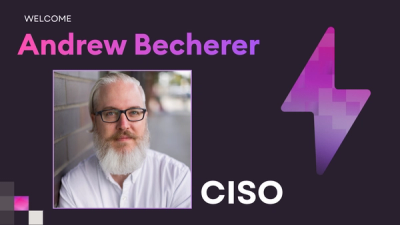
Socket’s first CISO brings deep experience securing high-growth SaaS companies as open source supply chain threats accelerate.