
Research
/Security News
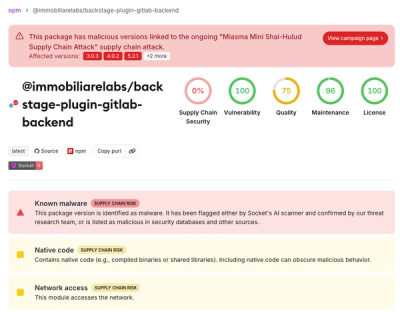
Miasma Mini Shai-Hulud Hits ImmobiliareLabs npm Packages
Miasma Mini Shai-Hulud hits @immobiliarelabs Backstage plugins, targeting GitLab and LDAP auth packages on npm.
By Socket Research Team - Jun 26, 2026
@eggjs/utils
Advanced tools



Utils for all egg projects.
npm i @eggjs/utils
getPlugins(options)getLoadUnits(options)getConfig(options)getFrameworkPath(options)setBundleModuleLoader(loader)Register a module loader hook for bundled Egg apps. The hook runs before the
normal importModule() resolution path.
filepath argument passed to importModule() after POSIX separator
normalization, or a virtual specifier. It does not receive the resolved
absolute file path from importResolve(). Return undefined to fall back to
the normal import path.The bundle loader is stored on globalThis, so bundled and external copies of
@eggjs/utils share the same loader. Non-undefined results follow the same
default export unwrapping rules as importModule(), including
importDefaultOnly.
importModule() resolves a module through the following hooks, in order. The
first one that produces a value wins; otherwise it falls back to the native
import() / require() path:
globalThis.__EGG_BUNDLE_MODULE_LOADER__ — set via
setBundleModuleLoader(). Looks up a module already inlined into the bundle
(typically a static bundle map emitted by egg-bundler). Runs before on-disk
resolution and receives the POSIX-normalized importModule() filepath or a
virtual specifier. Return undefined to fall through.setSnapshotModuleLoader(). This is a
module-local hook (not a globalThis global) used by the V8 snapshot entry
generator to serve pre-bundled modules synchronously, keyed by the resolved
path. Once registered it handles every load that reaches it, so the importer
below is not consulted while it is active.globalThis.__EGG_MODULE_IMPORTER__ — an async (or sync, since the value
is awaited) importer that receives the resolved file path (the
importResolve() result, with OS-native separators — not normalized). When
set, and the two hooks above did not resolve the module, it replaces the
native await import(filePath).The bundle loader and importer globals are typed in @eggjs/typings
(BundleModuleLoader / ModuleImporter); import @eggjs/typings/global to pick
up the declare global augmentation. These hooks are the contract that
egg-bundler's generated entry relies on. @eggjs/core's ManifestLoaderFS
consults __EGG_BUNDLE_MODULE_LOADER__ directly; its importer/native fallback is
reached through @eggjs/loader-fs, which calls back into importModule(). The
tegg loader (LoaderUtil.loadFile) consults both globals directly, passing the
loader filepath with separators normalized to POSIX.
__EGG_MODULE_IMPORTER__ has two main uses:
ctx.getEggObject(ClassRef) fails with
"can not get proto").import() throws. The snapshot entry
installs a synchronous require()-based importer (createRequire() over the
bundle output dir); require() can load ESM on Node >= 22, so modules resolve
without dynamic import.Made with contributors-img.
FAQs
Utils for all egg projects
The npm package @eggjs/utils receives a total of 15,610 weekly downloads. As such, @eggjs/utils popularity was classified as popular.
We found that @eggjs/utils demonstrated a healthy version release cadence and project activity because the last version was released less than a year ago. It has 8 open source maintainers collaborating on the project.
Did you know?

Socket for GitHub automatically highlights issues in each pull request and monitors the health of all your open source dependencies. Discover the contents of your packages and block harmful activity before you install or update your dependencies.
Research
/Security News
Miasma Mini Shai-Hulud hits @immobiliarelabs Backstage plugins, targeting GitLab and LDAP auth packages on npm.

Security News
Rolldown paused Rust React Compiler integration after a 5MB binary size increase raised concerns about shipping React-specific code to all Vite users.

Security News
/Research
Mini Shai-Hulud expands into the Go ecosystem after hitting LeoPlatform npm packages and targeting GitHub Actions workflows.