
Product
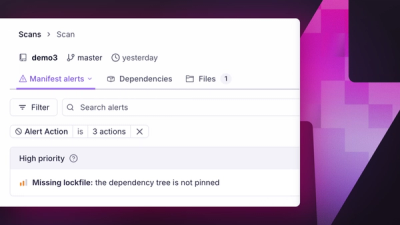
Introducing Manifest Alerts
Socket now detects supply chain risks in project manifests, starting with missing lockfiles that can make dependency installs non-reproducible.
By André Staltz, Trevor Norris - Jun 16, 2026
@evidence-dev/preprocess
Advanced tools
This package is responsible for transforming Evidence Markdown files into Svelte Components / Pages.
The basic pipeline looks something like this:
---
title: Evidence Preprocess Steps
---
flowchart TD
A(["At Runtime *1"])
B["At Preprocess"]
Content[Markdown File]
ExtractQueries([Discover Queries for Page])
ExecuteQueries([Execute Queries for Page *2 *3])
MarkdownToSvelte["Convert Markdown to Svelte"]
AddScriptTags["Ensure script tags exist"]
InjectFrontmatter[Inject Frontmatter Tags]
Content --> A
A --> ExtractQueries
ExtractQueries --> ExecuteQueries
Content --> B
B --> MarkdownToSvelte
MarkdownToSvelte --> AddScriptTags
AddScriptTags --> InjectFrontmatter
*1 Evidence will render with the static adapter by default; which means that "runtime" becomes "buildtime".
*2 This is handled by the db-orchestrator package, not preprocess - but it is an important step.
*3 This occurs in /pages/api/[route].json. The Svelte Static Adapter pre-renders the result JSON files.
FAQs
Markdown preprocessor for evidence.dev projects
The npm package @evidence-dev/preprocess receives a total of 17,844 weekly downloads. As such, @evidence-dev/preprocess popularity was classified as popular.
We found that @evidence-dev/preprocess demonstrated a healthy version release cadence and project activity because the last version was released less than a year ago. It has 4 open source maintainers collaborating on the project.
Did you know?

Socket for GitHub automatically highlights issues in each pull request and monitors the health of all your open source dependencies. Discover the contents of your packages and block harmful activity before you install or update your dependencies.
Product
Socket now detects supply chain risks in project manifests, starting with missing lockfiles that can make dependency installs non-reproducible.

Research
/Security News
The trojanized extensions use TinyGo-compiled WebAssembly and Solana transaction memos to resolve command-and-control infrastructure.

Security News
Anthropic says the directive cited national security concerns over a narrow jailbreak, but offered no specific technical details.