Research
/Security News
npm Package Uses Prompt Injection and Token Flooding to Disrupt AI Malware Scanners
A new npm package tests AI malware scanners with prompt injection, safety-triggering comments, context flooding, and obfuscated JavaScript.
@fedify/h3
Advanced tools
This package provides a simple way to integrate Fedify with h3, an HTTP server framework behind Nitro, Analog, Vinxi, SolidStart, TanStack Start, and other many web frameworks.
The integration code looks like this:
import { createApp, createRouter } from "h3";
import { integrateFederation, onError } from "@fedify/h3";
import { federation } from "./federation"; // Your `Federation` instance
export const app = createApp({ onError });
app.use(
integrateFederation(
federation,
(event, request) => "context data goes here"
)
);
const router = createRouter();
app.use(router);
[!NOTE] Your app has to configure
onErrorto let Fedify negotiate content types. If you don't do this, Fedify will not be able to respond with a proper error status code when a content negotiation fails.
FAQs
Integrate Fedify with h3
The npm package @fedify/h3 receives a total of 1,638 weekly downloads. As such, @fedify/h3 popularity was classified as popular.
We found that @fedify/h3 demonstrated a healthy version release cadence and project activity because the last version was released less than a year ago. It has 1 open source maintainer collaborating on the project.
Did you know?

Socket for GitHub automatically highlights issues in each pull request and monitors the health of all your open source dependencies. Discover the contents of your packages and block harmful activity before you install or update your dependencies.

Research
/Security News
A new npm package tests AI malware scanners with prompt injection, safety-triggering comments, context flooding, and obfuscated JavaScript.

Product
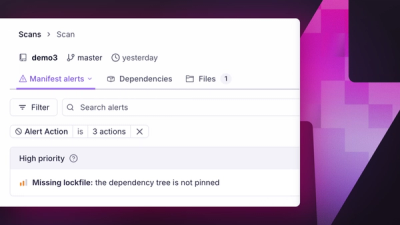
Socket now detects supply chain risks in project manifests, starting with missing lockfiles that can make dependency installs non-reproducible.

Research
/Security News
The trojanized extensions use TinyGo-compiled WebAssembly and Solana transaction memos to resolve command-and-control infrastructure.