


Security News
The Code You Didn't Write Is Still Yours to Defend
AI agents are pulling packages into environments no scanner is watching, creating exposure before security teams can see it.
By Brad Arkin - Jun 23, 2026
@fiado/gateway-adapter
Advanced tools
Facilita la comunicación e integración entre AWS Lambda y API Gateway , sqs y Event Bridge



@fiado/gateway-adapter es la libreria core del ecosistema Fiado que actua como router central para todos los eventos que recibe una funcion Lambda. Proporciona:
En el modelo de desarrollo Fiado, cada Lambda recibe multiples tipos de eventos:
Esta libreria unifica el manejo de todos estos eventos en un unico punto de entrada.
                              LAMBDA HANDLER
                                index.ts
                                   |
                                   v
                          +---------------+
                          | GatewayAdapter | <-- Router Principal
                          +-------+-------+
                                  |
              +-------------------+-------------------+
              v                   v                   v
     +-----------------+ +-----------------+ +-----------------+
     |ApiGatewayAdapter| |QueueGatewayAdapter| |EventBridgeAdapter|
     +--------+--------+ +--------+--------+ +--------+--------+
              |                   |                   |
              v                   v                   v
     +-----------------+ +-----------------+ +-----------------+
     |   Controllers   | | SQS Subscriber  | |  EB Subscriber  |
     | Public/Private/ | |IMessageSubscriber| |IEventBridgeSub |
     |   Backoffice    | |                 | |                 |
     +-----------------+ +-----------------+ +-----------------+
El GatewayAdapter detecta automaticamente el tipo de evento:
event.httpMethod existeevent.Records[0].eventSource === 'aws:sqs'event.source === 'EVENT_BRIDGE'npm install @fiado/gateway-adapter
{
  "@fiado/logger": "^1.0.2",
  "@fiado/type-kit": "^2.1.35",
  "inversify": "^6.2.2",
  "reflect-metadata": "^0.2.2"
}
import { Container } from "inversify";
import {
    gatewayAdapterBindings,
    TypeQueue,
    TypeEventBridge,
    IController,
    IMessageSubscriber,
    IEventBridgeMessageSubscriber
} from "@fiado/gateway-adapter";

const container = new Container();

// Cargar bindings del gateway adapter
container.load(gatewayAdapterBindings);

// Registrar controladores del proyecto
container.bind<IController>('PublicController').to(PublicController);
container.bind<IController>('PrivateController').to(PrivateController);
container.bind<IController>('BackofficeController').to(BackofficeController);

// Registrar subscriber de SQS (si aplica)
container.bind<IMessageSubscriber<any>>("SQSMessageSubscriber").to(MySqsSubscriber);
container.bind<() => IMessageSubscriber<any>>(TypeQueue.SQSMessageSubscriberFactory)
    .toAutoFactory("SQSMessageSubscriber");

// Registrar subscriber de EventBridge (si aplica)
container.bind<IEventBridgeMessageSubscriber<any>>("EventBridgeMessageSubscriber")
    .to(MyEventBridgeSubscriber);
container.bind<() => IEventBridgeMessageSubscriber<any>>(
    TypeEventBridge.EventBridgeMessageSubscriberFactory
).toAutoFactory("EventBridgeMessageSubscriber");

export { container };
import 'reflect-metadata';
import warmer from "lambda-warmer";
import { container } from './container.config';
import { GatewayAdapter, TypeGateway } from '@fiado/gateway-adapter';
import { log } from "@fiado/logger";

export const handler = async (event: any, context: any) => {

    // Soporte para lambda warming
    if (await warmer(event)) {
        return 'warmed';
    }

    log.info(`Event received: ${JSON.stringify(event)}`);

    // Obtener el router y ejecutar
    const gatewayAdapter = container.get<GatewayAdapter>(TypeGateway.GatewayAdapter);
    return await gatewayAdapter.execute(event);
}
El GatewayAdapter es el componente central que detecta el tipo de evento y lo enruta al adaptador correspondiente.
| Tipo | Deteccion | Adaptador |
|---|---|---|
| API Gateway | event.httpMethod existe | ApiGatewayAdapter |
| SQS | event.Records[0].eventSource === 'aws:sqs' | QueueGatewayAdapter |
| EventBridge | event.source === 'EVENT_BRIDGE' | EventBridgeGatewayAdapter |
import { GatewayAdapter, TypeGateway } from '@fiado/gateway-adapter';

const gatewayAdapter = container.get<GatewayAdapter>(TypeGateway.GatewayAdapter);

// El adapter detecta automaticamente el tipo de evento
const result = await gatewayAdapter.execute(event);
Interface tipada que representa una peticion HTTP transformada:
interface ApiGatewayRequest<TBody> {
    body: TBody | null;                                    // Body parseado
    headers: { [key: string]: string | undefined };        // Headers HTTP
    method: string;                                        // GET, POST, PUT, DELETE
    pathParameter: { [key: string]: string | undefined };  // Path params (/users/:id)
    queryStringParameters: { [key: string]: string };      // Query params (?key=value)
    multiValueQueryStringParameters: { [key: string]: string[] }; // Arrays
    token: TokenPayload | undefined | null;                // Token JWT decodificado
    operationName: string | null;                          // Nombre de la operacion
    base64EncodedFile?: string;                            // Archivos en base64
    requestContext: { identity?: { sourceIp?: string } };  // Contexto de request
}
Los controladores se identifican por prefijo en el operationName:
| Prefijo | Controlador | Uso |
|---|---|---|
public* | PublicController | Endpoints publicos (internet) |
private* | PrivateController | Endpoints privados (VPC) |
backoffice* | BackofficeController | Endpoints administrativos |
agent* / agents* | AgentController | Endpoints de agentes |
import { injectable, inject } from 'inversify';
import {
    IController,
    ApiGatewayRequest,
    ApiResponse,
    AuthorizedFeatures,
    Feature,
    Endpoint,
    HttpMethod,
    SecurityType
} from '@fiado/gateway-adapter';

@injectable()
export class PublicController implements IController {

    constructor(
        @inject("IUserManager") private userManager: IUserManager
    ) {}

    @AuthorizedFeatures(Feature.ANONIMUS)
    @Endpoint({
        method: HttpMethod.GET,
        path: '/users/:id',
        summary: 'Obtener usuario por ID',
        tags: ['PublicController'],
        security: SecurityType.CognitoAppAuthorizer
    })
    async getUser(request: ApiGatewayRequest<void>): Promise<any> {
        const userId = request.pathParameter?.id;
        const user = await this.userManager.getById(userId);
        return ApiResponse.success({ data: user });
    }

    @AuthorizedFeatures(Feature.ANONIMUS)
    @Endpoint({
        method: HttpMethod.POST,
        path: '/users',
        summary: 'Crear usuario',
        tags: ['PublicController'],
        security: SecurityType.CognitoAppAuthorizer
    })
    async createUser(request: ApiGatewayRequest<CreateUserDto>): Promise<any> {
        const user = await this.userManager.create(request.body);
        return ApiResponse.created({ data: user });
    }
}
Servicio para decodificar tokens JWT de Cognito:
import { TokenService } from '@fiado/gateway-adapter';

const tokenService = new TokenService();
const payload = tokenService.decodeToken(bearerToken);

// payload contiene:
// - sub: ID del usuario
// - email: Email del usuario
// - permissions: Array de permisos/features
// - cognito:groups: Grupos de Cognito
Interface para procesar mensajes de SQS:
export interface IMessageSubscriber<T> {
    handle(messageBody: T, receiptHandle: string): Promise<void>;
    deleteMessage(queueUrl: string, receiptHandle: string): Promise<void>;
}
import { injectable } from 'inversify';
import { IMessageSubscriber } from '@fiado/gateway-adapter';
import { log } from '@fiado/logger';

@injectable()
export class OrderMessageSubscriber implements IMessageSubscriber<OrderMessage> {

    async handle(messageBody: OrderMessage, receiptHandle: string): Promise<void> {
        log.info('Processing order message', { orderId: messageBody.orderId });
        await this.processOrder(messageBody);
    }

    async deleteMessage(queueUrl: string, receiptHandle: string): Promise<void> {
        // Implementar si se necesita borrado manual
    }

    private async processOrder(order: OrderMessage): Promise<void> {
        // Logica de procesamiento
    }
}
Interface para publicar mensajes a SQS:
export interface IMessagePublisher<T> {
    publish(messageBody: T, options?: PublishOptions): Promise<void>;
}
Interface para procesar eventos de EventBridge:
import { EventBridgeMessageRequest } from "@fiado/type-kit";

export interface IEventBridgeMessageSubscriber<TPayload> {
    handle(message: EventBridgeMessageRequest<TPayload>): Promise<void>;
}
import { injectable } from 'inversify';
import { IEventBridgeMessageSubscriber } from '@fiado/gateway-adapter';
import { EventBridgeMessageRequest } from '@fiado/type-kit';

@injectable()
export class PaymentEventSubscriber implements IEventBridgeMessageSubscriber<PaymentEvent> {

    async handle(message: EventBridgeMessageRequest<PaymentEvent>): Promise<void> {
        const { payload, eventType } = message;

        switch (eventType) {
            case 'PAYMENT_COMPLETED':
                await this.handlePaymentCompleted(payload);
                break;
            case 'PAYMENT_FAILED':
                await this.handlePaymentFailed(payload);
                break;
        }
    }
}
Decorador para definir que features/permisos pueden acceder a un metodo:
import { AuthorizedFeatures, Feature } from '@fiado/gateway-adapter';

// Acceso anonimo (sin token)
@AuthorizedFeatures(Feature.ANONIMUS)
async publicEndpoint(request: ApiGatewayRequest<any>): Promise<any> { }

// Requiere feature especifico en el token
@AuthorizedFeatures(Feature.PAYROLL)
async payrollEndpoint(request: ApiGatewayRequest<any>): Promise<any> { }

// Multiples features (OR - cualquiera autoriza)
@AuthorizedFeatures(Feature.ADMIN, Feature.MANAGER)
async adminEndpoint(request: ApiGatewayRequest<any>): Promise<any> { }
export enum Feature {
    ANONIMUS = "ANONIMUS",  // Acceso publico sin autenticacion
    TEST = "test",
    FEATURE1 = "feature1",
    PAYROLL = "PAYROLL"
}
Decorador para definir metadata del endpoint (usado para generacion OpenAPI):
import { Endpoint, HttpMethod, SecurityType } from '@fiado/gateway-adapter';

@Endpoint({
    method: HttpMethod.POST,
    path: '/payments',
    summary: 'Procesar pago',
    tags: ['PaymentController'],
    security: SecurityType.CognitoAppAuthorizer,
    queryParams: ['currency'],
    pathParams: ['id']
})
async processPayment(request: ApiGatewayRequest<PaymentDto>): Promise<any> { }
export enum HttpMethod {
    GET = 'get',
    POST = 'post',
    PUT = 'put',
    DELETE = 'delete'
}
export enum SecurityType {
    CognitoAppAuthorizer = 'CognitoAppAuthorizer',           // Usuarios de la app
    CognitoBackofficeAuthorizer = 'CognitoBackofficeAuthorizer', // Administradores
    CognitoCombinedAuthorizer = 'CognitoCombinedAuthorizer',     // Ambos pools
    CognitoAgentAuthorizer = 'CognitoAgentAuthorizer'            // Agentes
}
Clase estatica para construir respuestas HTTP estandarizadas:
import { ApiResponse } from '@fiado/gateway-adapter';

// 200 OK
return ApiResponse.success({ data: result, msg: 'Operacion exitosa' });

// 201 Created
return ApiResponse.created({ data: newResource });

// 400 Bad Request
return ApiResponse.badRequest({ code: 'VALIDATION_ERROR', msg: 'Campo requerido' });

// 401 Unauthorized
return ApiResponse.unauthorized({ msg: 'Token invalido' });

// 403 Forbidden
return ApiResponse.forbidden({ msg: 'Acceso denegado' });

// 404 Not Found
return ApiResponse.notFound({ msg: 'Recurso no encontrado' });

// 425 Too Early
return ApiResponse.tooEarly({ msg: 'Intente mas tarde' });

// 500 Internal Server Error
return ApiResponse.internalServerError({ msg: 'Error interno' });

// 302 Redirect
return ApiResponse.redirect({ data: { url: 'https://...' } });

// Redireccion real con header Location
return ApiResponse.redirectTo('https://example.com/callback', 302);
Todas las respuestas siguen el formato estandar:
{
    statusCode: 200,
    headers: {
        "Access-Control-Allow-Origin": "*",
        "Access-Control-Allow-Headers": "*",
        "Access-Control-Allow-Methods": "*",
        "Content-Type": "application/json"
    },
    body: {
        code: "PROCESS_OK",      // Codigo de respuesta
        date: "2024-01-15T...",  // Timestamp ISO
        data: { ... },           // Datos de respuesta
        description: null,       // Descripcion opcional
        msg: null,               // Mensaje opcional
        encrypted: false         // Flag de encriptacion (opcional)
    }
}
interface ResponseOptions<T> {
    data?: T;              // Datos a retornar
    code?: string;         // Codigo personalizado
    msg?: string;          // Mensaje
    description?: string;  // Descripcion
    encrypted?: boolean;   // Flag de encriptacion
}
Servicio para encriptar respuestas sensibles usando JWE (JSON Web Encryption):
Variables de entorno para habilitar encriptacion:
Environment:
  Variables:
    # Encriptar TODOS los endpoints de app
    JWE_ENCRYPTION_APP: "true"

    # O encriptar endpoints especificos
    JWE_ENCRYPTION_APP_ENDPOINTS: "publicGetBalance,publicGetTransactions"

    # Para backoffice
    JWE_ENCRYPTION_BACKOFFICE: "true"
    JWE_ENCRYPTION_BACKOFFICE_ENDPOINTS: "backofficeGetUserData"
x-session-key con session key encriptada (JWE con llave publica RSA)data se encripta con AES-256-GCM usando session keyLa encriptacion se aplica automaticamente si:
x-session-key// La respuesta se encripta automaticamente
return ApiResponse.success({ data: sensitiveData });
// Respuesta encriptada:
{
code: "PROCESS_OK",
data: "eyJhbGciOiJkaXIiLCJlbmMiOiJBMjU2R0NNIn0...", // JWE
encrypted: true
}
src/
├── index.ts                    # Exportaciones publicas
├── container.config.ts         # ContainerModule con bindings
├── GatewayAdapter.ts           # Router principal
│
├── apigateway/                 # Modulo API Gateway
│   ├── abstractions/
│   │   ├── ApiGatewayRequest.ts
│   │   ├── ApiGatewayResponse.ts
│   │   ├── FeatureEnum.ts
│   │   ├── IController.ts
│   │   ├── ResponseOptions.ts
│   │   ├── StandardResponse.ts
│   │   └── TypeGateway.ts
│   ├── decorators/
│   │   └── AuthorizedFeatures.ts
│   └── services/
│       ├── ActivitySessionService.ts
│       ├── ApiGatewayAdapter.ts
│       ├── ApiResponse.ts
│       ├── JweEncryptionService.ts
│       └── TokenService.ts
│
├── queue/                      # Modulo SQS
│   ├── abstractions/
│   │   ├── IMessagePublisher.ts
│   │   ├── IMessageSubscriber.ts
│   │   ├── IPublishOptions.ts
│   │   └── TypeQueue.ts
│   ├── decorators/
│   └── services/
│       └── QueueGatewayAdapter.ts
│
├── eventBridge/                # Modulo EventBridge
│   ├── abstractions/
│   │   ├── IEventBridgeMessageSubscriber.ts
│   │   └── TypeEventBridge.ts
│   └── service/
│       └── EventBridgeGatewayAdapter.ts
│
└── endpoint/                   # Decorador @Endpoint
    └── endpointDecorator.ts
| Dependencia | Version | Proposito |
|---|---|---|
@fiado/api-invoker | ^1.4.6 | Invocacion de APIs internas |
@fiado/logger | ^1.0.2 | Logging estructurado |
@fiado/type-kit | ^2.1.35 | DTOs y tipos compartidos |
aws-lambda | ^1.0.7 | Tipos de AWS Lambda |
inversify | ^6.2.2 | Inyeccion de dependencias |
jose | ^4.15.5 | Encriptacion JWE |
jsonwebtoken | ^9.0.2 | Decodificacion JWT |
reflect-metadata | ^0.2.2 | Metadatos para decoradores |
uuid | ^9.0.1 | Generacion de UUIDs |
| Dependencia | Version | Proposito |
|---|---|---|
@types/jsonwebtoken | ^9.0.6 | Tipos de jsonwebtoken |
npm run build
Genera archivos .js y .d.ts en el directorio bin/.
npm version patch|minor|major
npm publish
Fiado Inc. | @fiado/gateway-adapter v1.1.59
FAQs
Facilita la comunicación e integración entre AWS Lambda y API Gateway , sqs y Event Bridge
We found that @fiado/gateway-adapter demonstrated a healthy version release cadence and project activity because the last version was released less than a year ago. It has 1 open source maintainer collaborating on the project.
Did you know?

Socket for GitHub automatically highlights issues in each pull request and monitors the health of all your open source dependencies. Discover the contents of your packages and block harmful activity before you install or update your dependencies.
Security News
AI agents are pulling packages into environments no scanner is watching, creating exposure before security teams can see it.

Security News
GitHub Actions checkout now blocks risky pull_request_target checkouts by default to help prevent pwn request supply chain attacks.
Product
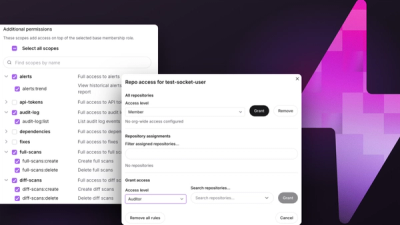
Socket now supports Custom Roles and Repository Access Permissions so organizations can control who can access specific repositories and actions.