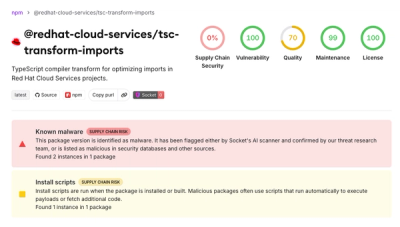
Disclaimer
Early release — API may change between minor versions.
React Outlet Router




React Outlet Router is a declarative client-side router, built with maintainability in mind.
Why use React Outlet Router?
- React Outlet Router is only 5kb minified and g-zipped.
- Declarative, everything can be defined in a single object, which provides a clear overview of the entire app.
- Flexible enough to use string matching, params and even regex patterns.
- Typesafe - 100% written in TypeScript
Simple example
View more complex example here
import {
RouterOutlet,
useInitRouter,
router,
} from "@flemminghansen/react-outlet-router";
import React from "react";
import ReactDOM from "react-dom/client";
function MockPage({ text }: {text: string}) {
return <div>{text}</div>
}
function App() {
const [isLoggedIn, setIsLoggedIn] = React.useState(false);
useInitRouter(
{
defaultPageTitle: "My simple router",
default404Title: "404 - Page not found",
defaultNotFoundComponent: () => <div>404 - Page not found</div>,
fallback: <MockPage text="Please wait while we load your page dynamically..." />,
routeTree: {
"/": {
component: MainPage,
},
"/loggedin": {
removedIf: !isLoggedIn,
title: "Page one",
component: () => <MockPage text="Welcome!!" />,
children: {
"/user": {
title: "User page",
component: () => <MockPage text="You are awesome!" />,
},
},
},
},
},
[isLoggedIn]
);
const handleLogin = () => {
setIsLoggedIn(!isLoggedIn);
if (!isLoggedIn) {
router.replace('/loggedin')
}
}
return (
<>
<button onClick={handleLogin}>
{isLoggedIn ? "Log out" : "Log in"}
</button>
<RouterOutlet />
</>
);
}
const root = ReactDOM.createRoot(document.getElementById("app"));
root.render(
<React.StrictMode>
<App />
</React.StrictMode>
);
Installation
Installation is fairly simple using Node's package manager.
In your cli, run:
npm install @flemminghansen/react-outlet-router
What does React Outlet Router contain?
- useInitRouter - A hook that allows you to initialize and reinitialize your router based on dependencies.
- router - The Router object that's available after initialization. This will provide use with a range of utilities.
- RouterOutlet - Where your best Route Match will be rendered.
- Link component - Allows you to navigate React Outlet Router without reloading the entire page.
- Redirect component - Can be used in the routeTree or as a component in your code to redirect your users on given criterias.
useInitRouter
useInitRouter takes one object with the following keys as defined by the interface IRemappedInitRouterProps.
interface IRemappedInitRouterProps {
prefix?: string;
defaultPageTitle: string;
default404Title?: string;
routeTree: Record<string, ILimitedRoute>;
fallback: React.ReactNode;
defaultNotFoundComponent: React.ComponentType<object>;
}
interface ILimitedRoute {
component: React.ComponentType<object>;
title?: string;
fallback?: React.ReactNode;
removedIf?: boolean;
pattern?: RegExp;
children?: Record<string, ILimitedRoute>;
}
defaultPageTitle(required)
Sets the document.title unless the routes specify something else
default404Title(optional)
Defaults to: "404 - Page not found"
defaultNotFoundComponent(required)
The component the router will render if there are no matches in the route tree.
fallback(required)
The RouterOuter output is wrapped in a React Suspense Component. The fallback is shown while a dynamically loaded page is loaded.
prefix(optional)
Defaults to "/"
A part that will we prefixed to the pathname. This can be used if your domain hold multiple apps that lives under prefixes, such as:
- mydomain.com/myapp
- mydomain.com/mysecondapp
Then you can prefix each app with "/myapp" or "mysecondapp", and each app will prefix every route with that prefix, thereby keeping the scope.
routeTree(required)
The routeTree is of type Record<string, ILimitedRoute>;, where the string is the path.
Each path must be prefixed with "/" e.g. "/user" or "/blog"
You can then use children to expand paths as in this example where the path to SettingsPage will be /user/settings.
        "/user": {
          title: "User Page",
          component: UserPage,
          children: {
            "/settings": {
              title: "Settings page",
              component: SettingsPage,
            },
          },
        },
It's also possible to add params as a wildcard. These params can use used with the router.getParams method to allow the component to handle further rendering.
But is can also be used to create custom 404 pages, or automatically redirect the user to a different path.
Currently redirect is done with the Redirect component, but this may be added as an option to the route in the future. See example:
        "/user": {
          title: "User Page",
          component: UserPage,
          children: {
            "/settings": {
              title: "User settings",
              component: SettingsPage,
            },
            "/:invalid": {
              component: () => <Redirect to="/user">, // This could also be a custom 404 page
            },
          },
        },
Properties
component: React.ComponentType - (required)
Sets the component that will be rendered at the RouterOutput if route is match.
pattern: RegExp - (optional)
Pattern overrides the given path for the route. It is recommended to use with a param e.g. /:userid, so that the value can be read with the router.getParams method.
"/user": {
component: ParentPage,
children: {
"/:userid": {
pattern: new RegExp(/^\d+$/),
component: UserPageForId,
},
},
},
In the above example, the userid must be an integer in order to match the pattern.
/user/1234 == match/user/1234s == nomatch
Then in the UserPageForId component we use the router.getParams method to get the value.
import React from "react";
import { router } from "@flemminghansen/react-outlet-router";
export function UserPageForId() {
const { userid } = router.getParams();
...
}
children: Record<string, ILimitedRoute> - (optional)
children is an object from which you can expand the route as described under routeTree
title: string - (optional)
Sets document.title for the given route
fallback: React.ReactNode - (optional)
Sets a fallback for the given route. If no component is passed, it defaults to the fallback you've set for the router.
Route to 1.0
Get test coverage and harden code. Done — 42 tests via Vitest.Clean up, and make it more readable. Done — bug fixes, type safety improvements.Optimize. Done — synchronous route resolution, O(1) exact-match lookup.Add CI pipeline. Done — GitHub Actions, Node 20.x, 22.x, 24.x matrix.- Finish documentation.
- JSDoc documentation in code for better developer experience.