
Company News
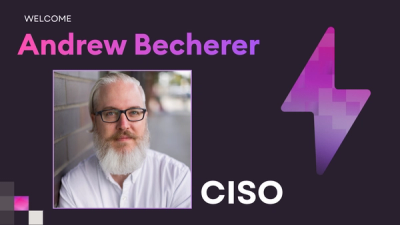
Andrew Becherer Joins Socket as Chief Information Security Officer
Socket’s first CISO brings deep experience securing high-growth SaaS companies as open source supply chain threats accelerate.
By Sarah Gooding - Jun 11, 2026
@forwardimpact/libeval
Advanced tools
Agent evaluation framework — prove whether agent changes improved outcomes with reproducible evidence.
Agent evaluation framework — prove whether agent changes improved outcomes with reproducible evidence.
libeval provides the runtime and tool surface for multi-LLM
coordination: an agent talks to a supervisor, a facilitator chairs a
team meeting, or a lead drives an asynchronous discussion across a
human channel. Every conversation produces a structured NDJSON trace
for analysis.
| Mode | Lead | Participants | Terminal tool |
|---|---|---|---|
run | (none) | one agent | task completion |
supervise | supervisor | one agent | Conclude |
facilitate | facilitator | N named | Conclude |
discuss | lead | N named | Adjourn or Recess |
judge | judge | (none) | Conclude |
Every mode except run and judge shares one orchestration loop
(OrchestrationLoop) and one tool surface (Ask / Answer /
Announce / RollCall, plus a mode-specific terminal tool). The
loop fires the lead's LLM, fans messages out to participants over an
in-memory bus, wakes them when something lands, and emits the
universal {source, seq, event} NDJSON envelope for every line.
Coordination uses one async request/reply pattern with one piece of
state per question — the askId. Every Ask returns immediately; the
reply arrives later on the asker's inbox.
Ask({ question, to? }) → { askIds: [N, …] }
The handler registers a pending entry per addressee, posts the
question on the bus, and returns immediately. Each pending entry is
keyed by a numeric askId. Two Asks to the same addressee each get
their own id, so they coexist without overwriting.
Broadcast: omit to on a multi-participant lead's Ask to fan out to
every other participant — the result askIds array has one entry
per addressee.
Answer({ message, askId? }) → routed to the asker
The reply lands in the asker's bus inbox as
[answer#N] <participant>: <text> on a later turn. askId is
optional and the handler is forgiving:
isError with a
pointed message. The caller tried to specify; we tell them why.Announce({ message }) → broadcast, no reply expected
Lands on every other participant's queue as [shared] <from>: <text>.
Every line a participant reads on a resume is one bus message rendered with its tag:
[ask#42]     facilitator: What is your current condition?
[answer#41]  agent-1:     We're at 7 out of 10.
[shared]     agent-2:     FYI I'm switching to Bun 1.2.
[system]     @orchestrator: You have an unanswered ask from facilitator (askId=42)…
The [ask#N] tag is what the participant quotes back in Answer's
askId field.
The lead can issue Asks, end its turn, and use the gap between turns for planning, reflection, or follow-up Asks while participants work in parallel. Nothing blocks the LLM thread waiting on a reply. The orchestrator wakes the lead whenever the inbox has new content.
OrchestrationLoop runs one outer pattern for both the lead and each
participant:
protocol_violation event and cancel the
pending entry with a synthetic null answer so the asker unblocks.The lead's first turn starts with the task as its initial prompt; participants' first runs are triggered by their first inbound message.
Termination flips two flags:
ctx.concluded — explicit Conclude / Adjourn / Recess. The
handler also cancels any in-flight Asks with a synthetic null so
askers see why their question won't be answered.stopped — broader: also true on a lead error, an agent crash, or
any abort path. Loops watch stopped; ctx.concluded is only used
for the summary's success / verdict.| Role | Ask | Answer | Announce | RollCall | Conclude | Other |
|---|---|---|---|---|---|---|
| Facilitator | ✓ | ✓ | ✓ | ✓ | ✓ | |
| Fac. agent | ✓ | ✓ | ✓ | ✓ | ||
| Supervisor | ✓ | ✓ | ✓ | ✓ | ✓ | |
| Sup. agent | ✓ | ✓ | ✓ | ✓ | ||
| Discuss lead | ✓ | ✓ | ✓ | ✓ | RequestForComment, Recess, Adjourn | |
| Discuss agt | ✓ | ✓ | ✓ | ✓ | ||
| Judge | ✓ |
Ask's to accepts a participant name on multi-participant roles
(facilitator, discuss lead, all participants); supervise's
supervisor / agent pair don't accept to because there's only
one possible target.
import { createFacilitator, createRedactor } from "@forwardimpact/libeval";
import { query } from "@anthropic-ai/claude-agent-sdk";

const facilitator = createFacilitator({
  facilitatorCwd: process.cwd(),
  agentConfigs: [
    { name: "alice", role: "explorer", agentProfile: "alice" },
    { name: "bob",   role: "tester",   agentProfile: "bob" },
  ],
  query,
  output: process.stdout,
  redactor: createRedactor(),
  facilitatorProfile: "improvement-coach",
});

const result = await facilitator.run("Run a kata storyboard meeting.");
// result.success / result.turns / NDJSON trace on process.stdout
The facilitator's LLM, started with that task, has access to Ask,
Answer, Announce, RollCall, and Conclude. Alice and Bob each
get Ask, Answer, Announce, RollCall. Every tool call, every
message routed through the bus, and every orchestrator event becomes a
line in the trace.
Every line is one JSON object with three fields:
{ "source": "facilitator", "seq": 42, "event": { … } }
source — the participant whose LLM produced the line, or
orchestrator for loop-level events (session_start, agent_start,
protocol_violation, lead_turn_limit, summary).seq — monotonically increasing across the whole trace; useful for
reconstructing the wall-clock order across concurrent participants.event — the SDK event verbatim, or the orchestrator event payload.fit-trace consumes this format. See the trace analysis guide for the
full schema.
fit-eval run, fit-eval supervise, and fit-eval facilitate redact
secrets in trace artifacts before they reach disk. Two layers compose:
ANTHROPIC_API_KEY, GH_TOKEN,
GITHUB_TOKEN. The runtime values of these vars are replaced with
[REDACTED:env:NAME] wherever they appear in tool inputs, tool
outputs, assistant text, or orchestrator summaries. Override the
list with LIBEVAL_REDACTION_ENV_VARS=NAME1,NAME2,… (replaces, not
extends).sk-ant-), GitHub PATs (ghp_), installation tokens (ghs_),
OAuth tokens (gho_), and fine-grained PATs (github_pat_).
Pattern hits become [REDACTED:pattern:KIND].Redaction is on by default. To disable, set
LIBEVAL_REDACTION_DISABLED=1 — a stderr warning fires once per run.
Never set this in CI on a public repository: workflow artifacts there
are downloadable through the retention window.
| Module | Purpose |
|---|---|
agent-runner.js | One Claude Agent SDK session; emits NDJSON via the redactor. |
message-bus.js | In-memory per-participant queues + waitForMessages Promise wakeup. |
orchestration-toolkit.js | Shared Ask / Answer / Announce / Conclude / RollCall handlers + builders. |
orchestration-loop.js | Unified lead+participant loop; reminder/violation handling. |
facilitator.js | Facilitator class + factory + system prompts. |
supervisor.js | Supervisor class + factory + system prompts. |
discuss-tools.js | Discuss-only RequestForComment / Recess / Adjourn handlers + tool servers. |
discusser.js | Discusser class + factory + system prompt + resume hydration. |
judge.js | One-shot post-hoc verdict via Conclude. |
trace-collector.js / trace-query.js / trace-github.js | Trace ingestion / querying / GitHub-attachment helpers. |
redaction.js | Env-var allowlist + credential-shape pattern redaction. |
fit-trace.FAQs
Agent evaluation framework — prove whether agent changes improved outcomes with reproducible evidence.
The npm package @forwardimpact/libeval receives a total of 1,010 weekly downloads. As such, @forwardimpact/libeval popularity was classified as popular.
We found that @forwardimpact/libeval demonstrated a healthy version release cadence and project activity because the last version was released less than a year ago. It has 1 open source maintainer collaborating on the project.
Did you know?

Socket for GitHub automatically highlights issues in each pull request and monitors the health of all your open source dependencies. Discover the contents of your packages and block harmful activity before you install or update your dependencies.
Company News
Socket’s first CISO brings deep experience securing high-growth SaaS companies as open source supply chain threats accelerate.
Company News
Replit is integrating Socket Firewall into its AI-powered development experience to help protect builders from malicious open source packages.

Security News
npm confirmed a tooling bug incorrectly marked several one-character packages as security holders and said it was working on a rollback.