
Product
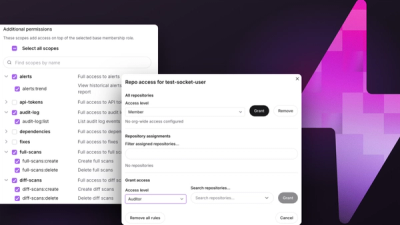
Introducing Repository Access Permissions and Custom Roles
Socket now supports Custom Roles and Repository Access Permissions so organizations can control who can access specific repositories and actions.
By Joe Werle - Jun 19, 2026
@jhonsfran/zod-bird
Advanced tools
import { Tinybird } from "@chronark/zod-bird";
import { z } from "zod";
const tb = new Tinybird({ token: "token" });
export const getEvents = tb.buildPipe({
pipe: "get_events__v1",
parameters: z.object({
tenantId: z.string(),
}),
data: z.object({
event: z.string(),
time: z.number().transform((t) => new Date(t)),
}),
});
const res = await getEvents({ tenantId: "chronark" })
// res.data = {event: string, time: Date}[]
// if no rows found, res.data will be an empty array
npm i @chronark/zod-bird
// lib/tinybird.ts
import { Tinybird } from "./client";
import { z } from "zod";

const tb = new Tinybird({ token: process.env.TINYBIRD_TOKEN! });

export const publishEvent = tb.buildIngestEndpoint({
  datasource: "events__v1",
  event: z.object({
    id: z.string(),
    tenantId: z.string(),
    channelId: z.string(),
    time: z.number().int(),
    event: z.string(),
    content: z.string().optional().default(""),
    metadata: z.string().optional().default(""),
  }),
});
// somewhere.ts
import { publishEvent } from "./lib/tinybird";

await publishEvent({
  id: "1",
  tenantId: "1",
  channelId: "1",
  time: Date.now(),
  event: "test",
  content: "test",
  metadata: JSON.stringify({ test: "test" }),
});
Or multiple events in bulk, using a single request to Tinybird.
// somewhere.ts
import { publishEvent } from "./lib/tinybird";

await publishEvent([
  {
    id: "1",
    tenantId: "1",
    channelId: "1",
    time: Date.now(),
    event: "test",
    content: "test",
    metadata: JSON.stringify({ test: "test" }),
  },
  {
    id: "2",
    tenantId: "2",
    channelId: "2",
    time: Date.now(),
    event: "test2",
    content: "test2",
    metadata: JSON.stringify({ test2: "test2" }),
  },
]);
// lib/tinybird.ts
import { Tinybird } from "./client";
import { z } from "zod";

const tb = new Tinybird({ token: process.env.TINYBIRD_TOKEN! });

export const getChannelActivity = tb.buildPipe({
  pipe: "get_channel_activity__v1",
  parameters: z.object({
    tenantId: z.string(),
    channelId: z.string().optional(),
    start: z.number(),
    end: z.number().optional(),
    granularity: z.enum(["1m", "1h", "1d", "1w", "1M"]),
  }),
  data: z.object({
    time: z.string().transform((t) => new Date(t).getTime()),
    count: z
      .number()
      .nullable()
      .optional()
      .transform((v) => (typeof v === "number" ? v : 0)),
  }),
});
// somewhere.ts
import { getChannelActivity } from "./lib/tinybird";


const res = await getChannelActivity({
   tenantId: "1",
   channelId: "1",
   start: 123,
   end: 1234,
   granularity: "1h"
})
res is the response from the tinybird endpoint, but now fully typed and the data has been parsed according to the schema defined in data.
For 429 (rate limit exceeded) and 500 errors, zod-bird automatically retries them (source code).
All other errors will throw an Exception, so you should catch it via a try catch:
try {
    const res = await getEvents({ tenantId: "chronark" })
    return res.data
} catch (e) {
    console.error(e)
    return e.messsage
}
You can add cache directives to each pipe.
tb.buildPipe({
  pipe: "some_pipe__v1",
  parameters: z.object({
   hello: z.string()
  }),
  data: z.object({
    response: z.string()
  }),
   opts: {
      cache: "no-store" // <-------- Add this
   };
});
tb.buildPipe({
  pipe: "some_pipe__v1",
  parameters: z.object({
   hello: z.string()
  }),
  data: z.object({
    response: z.string()
  }),
   opts: {
      next: {
        revalidate: 900 ;// <-------- Add this
      }
    };
});
FAQs
@chronark/zod-bird Fully typed Tinybird pipes using zod
We found that @jhonsfran/zod-bird demonstrated a healthy version release cadence and project activity because the last version was released less than a year ago. It has 1 open source maintainer collaborating on the project.
Did you know?

Socket for GitHub automatically highlights issues in each pull request and monitors the health of all your open source dependencies. Discover the contents of your packages and block harmful activity before you install or update your dependencies.
Product
Socket now supports Custom Roles and Repository Access Permissions so organizations can control who can access specific repositories and actions.
Product
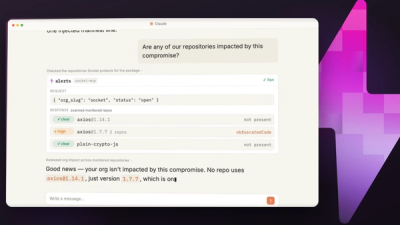
Socket MCP now lets AI assistants review org alerts, investigate threats using the Socket threat feed, and inspect package files in addition to dependency scoring.
Product
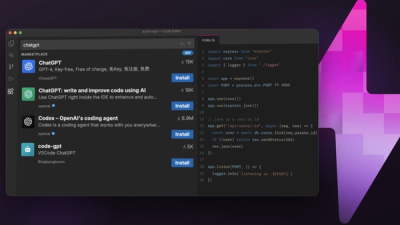
Socket Firewall blocks malicious VS Code and Open VSX extensions before install, protecting developers from compromised editor marketplaces.