
Product
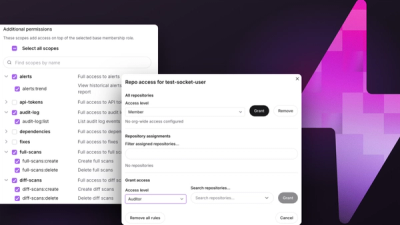
Introducing Repository Access Permissions and Custom Roles
Socket now supports Custom Roles and Repository Access Permissions so organizations can control who can access specific repositories and actions.
By Joe Werle - Jun 19, 2026
@kepler-insights/sdk
Advanced tools
Official TypeScript SDK for the Kepler Insights API — curated company-scoring intelligence over a 67-signal engine.
Official TypeScript / JavaScript SDK for the Kepler Insights API — curated company-scoring intelligence over a 67-signal engine.
npm install @kepler-insights/sdk
# or
pnpm add @kepler-insights/sdk
# or
yarn add @kepler-insights/sdk
Requires Node 18+. Native fetch is the only network dep — no axios, no node-fetch polyfill needed. Works in Node, Deno, Bun, and Cloudflare Workers.
import { Kepler } from "@kepler-insights/sdk";

const client = new Kepler({ apiKey: "ki_live_..." });

const score = await client.score("stripe.com");
console.log(`${score.domain}: ${score.ki_rating} (${score.composite_score.toFixed(1)})`);
console.log(`  team: ${score.buckets.team_structure.toFixed(1)}`);
console.log(`  market: ${score.buckets.market_position.toFixed(1)}`);
Sandbox keys (ki_test_...) accept only the 4 canned domains — acme.test, unicorn.test, struggling.test, cohort.test. See the Sandbox guide.
| Method | Endpoint | Returns |
|---|---|---|
client.score(domain) | POST /v1/score | Score |
client.getScore(domain) | GET /v1/score/{domain} | Score |
client.startScore(domain) | POST /v1/score?wait=false | Job (Growth+) |
client.getJob(jobId) | GET /v1/jobs/{job_id} | JobResponse |
client.history(domain, { limit, cursor }) | GET /v1/score/{domain}/history | HistoryPage |
client.iterHistory(domain, { maxRecords }) | (auto-paginates) | AsyncIterable<HistoryRecord> |
client.cohort(domain) | GET /v1/company/{domain}/cohort | Cohort |
client.confidence(domain) | GET /v1/company/{domain}/confidence | Confidence |
client.distribution() | GET /v1/distribution | Distribution |
client.movers(window) | GET /v1/movers | Movers |
client.signals() | GET /v1/signals | SignalsManifest |
client.usage() | GET /v1/usage | Usage |
Every response shape is exported as a TypeScript type from the package root.
Cold scoring takes 30–60 seconds. On Growth and above, you can start a job and poll without holding an HTTP connection open:
const job = await client.startScore("stripe.com");
const score = await job.wait({ timeoutMs: 180_000 });
console.log(score.composite_score);
If the API short-circuits to a cached-fresh response (no cold work needed), startScore returns a Job already in the complete state — wait() returns instantly. This mirrors Stripe's payment_intent "no action needed" pattern.
Every error inherits from KeplerError. Branch with instanceof:
import {
  Kepler,
  AuthError,
  ColdBudgetExhausted,
  FreeTierSandboxOnly,
  NotFound,
  RateLimitError,
  ScoringTimeout,
} from "@kepler-insights/sdk";

try {
  const score = await client.score("stripe.com");
} catch (err) {
  if (err instanceof FreeTierSandboxOnly) {
    console.log("Upgrade to Starter for live scoring.");
  } else if (err instanceof ColdBudgetExhausted) {
    console.log(`Monthly cap hit. Resets in ${err.retryAfter}s.`);
  } else if (err instanceof RateLimitError) {
    console.log(`Rate limited. Retry in ${err.retryAfter}s.`);
  } else if (err instanceof ScoringTimeout) {
    console.log("Cold scoring exceeded sync budget — use startScore() for async.");
  } else if (err instanceof NotFound) {
    console.log("Never scored. Trigger one with score(domain).");
  } else if (err instanceof AuthError) {
    console.log("Invalid or revoked API key.");
  } else {
    throw err;
  }
}
The SDK auto-retries 5xx and network errors with exponential backoff (3 attempts default). It never retries 4xx — those are caller errors.
const client = new Kepler({
  apiKey: "ki_live_...",
  baseUrl: "https://api.keplerinsights.us", // override only for testing
  timeoutMs: 70_000,                          // per-request timeout
  retries: 3,                                 // 5xx retry attempts
});
For custom transports (proxies, mTLS, etc.) pass your own fetch:
import { Kepler } from "@kepler-insights/sdk";
import { ProxyAgent } from "undici";

const dispatcher = new ProxyAgent("http://proxy.local:8080");
const customFetch: typeof fetch = (input, init) =>
  fetch(input, { ...init, dispatcher } as RequestInit);

const client = new Kepler({ apiKey: "ki_live_...", fetchImpl: customFetch });
Dual ESM + CJS published. Use whichever your project prefers:
// ESM
import { Kepler } from "@kepler-insights/sdk";
// CommonJS
const { Kepler } = require("@kepler-insights/sdk");
TypeScript declarations ship in both flavors (.d.ts and .d.cts).
git clone <repo>
cd Ki_dev/sdk-typescript
npm install
npm test                                                   # vitest
npm run typecheck                                          # tsc --noEmit
npm run build                                              # tsup → dist/
MIT. The API itself is proprietary; the SDK wrapper is MIT-licensed so you can vendor it freely.
FAQs
Official TypeScript SDK for the Kepler Insights API — curated company-scoring intelligence over a 67-signal engine.
We found that @kepler-insights/sdk demonstrated a healthy version release cadence and project activity because the last version was released less than a year ago. It has 1 open source maintainer collaborating on the project.
Did you know?

Socket for GitHub automatically highlights issues in each pull request and monitors the health of all your open source dependencies. Discover the contents of your packages and block harmful activity before you install or update your dependencies.
Product
Socket now supports Custom Roles and Repository Access Permissions so organizations can control who can access specific repositories and actions.
Product
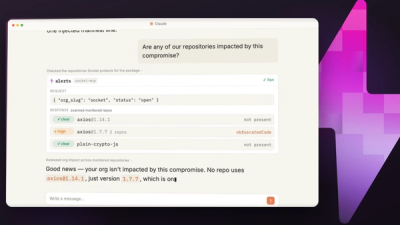
Socket MCP now lets AI assistants review org alerts, investigate threats using the Socket threat feed, and inspect package files in addition to dependency scoring.
Product
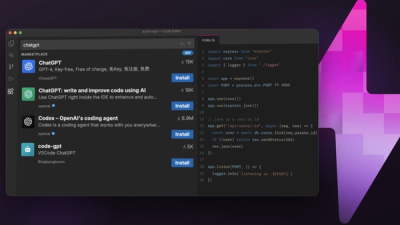
Socket Firewall blocks malicious VS Code and Open VSX extensions before install, protecting developers from compromised editor marketplaces.