

Security News
US Government Forces Anthropic to Pull Claude Fable Days After Launch
Anthropic says the directive cited national security concerns over a narrow jailbreak, but offered no specific technical details.
By Sarah Gooding - Jun 13, 2026
@lacrypta/gateway
Advanced tools
This is [La Crypta](jttps://www.lacrypta.com.ar)'s _feeless payment gateway_. It provides the building blocks for constructing a MATIC-less payment infrastructure via the usage of _vouchers_.
This is La Crypta's feeless payment gateway. It provides the building blocks for constructing a MATIC-less payment infrastructure via the usage of vouchers.
A voucher is nothing more than a signed request, from an owner, to the infrastructure, of a method call.
Thus, a voucher may indicate something along the lines of "please transfer this many tokens from this address to this recipient". The infrastructure should then make this voucher public and have someone pay the MATIC cost of serving said voucher.
Of course, one can do this out of the goodness of one's heart, or some form of incentive may be provided.
The current implementation is agnostic to these details, but provides a metadata field specifically to separate the voucher serving data (ie. the payload field) from the infrastructure policies.
A voucher consists of the following fields:
tag: a 32-bit number identifying what kind of voucher this is (it is constructed by truncating the keccak of the voucher's type).nonce: a random 256-bit value, used for collision avoidance and tracking only.deadline: a point in time up to which this voucher will be considered valid.payload: an abi.encode()-ed payload data, opaque to the main dispatch mechanism, used for serving the call proper.metadata: an abi.encode()-ed metadata data, opaque to the main dispatch mechanism, used for applying policies on the actual serving of the call.Upon serving a voucher, the tag is used by the main gateway implementation to dispatch the call to the actual handler, who's free to interpret the payload and metadata fields as they see fit.
The current implementation consists of:
IGateway.sol/Gateway.sol: the abstract base contract for all Gateways, it implements a crude form of voucher dynamic dispatch by abi.encode()-ing and abi.decode()-ing the voucher's payload, dispatching based off of the voucher's tag.IERC20Gateway.sol/ERC20Gateway.sol: an abstract contract serving the voucher for an ERC20 transferFrom() call.IERC20PermitGateway.sol/ERC20PermitGateway.sol: an abstract contract serving the voucher for an ERC20 permit() call (with embedded v/r/s signature).Creating a new Gateway capable of dealing with a new voucher type is extremely simple, you merely need to:
uint32(bytes4(keccak256(bytes("...")))), where "..." will be something along the lines of "MyVoucher(primitiveType1 fieldName1,primitiveType2 fieldName2,...,primitiveTypeN fieldNameN)".constructor call the _addHandler() method to register the tag you generated as being handled by using the given methods (three are needed: one to extract a user-readable string from the voucher, another one to determine the signer from the voucher's payload, and yet another one to actually execute the call).As many tags as desired can be handled within the same contract, since each _addHandler call assigns a pair of handling methods to a tag.
FAQs
This is [La Crypta](jttps://www.lacrypta.com.ar)'s _feeless payment gateway_. It provides the building blocks for constructing a MATIC-less payment infrastructure via the usage of _vouchers_.
The npm package @lacrypta/gateway receives a total of 8 weekly downloads. As such, @lacrypta/gateway popularity was classified as not popular.
We found that @lacrypta/gateway demonstrated a not healthy version release cadence and project activity because the last version was released a year ago. It has 2 open source maintainers collaborating on the project.
Did you know?

Socket for GitHub automatically highlights issues in each pull request and monitors the health of all your open source dependencies. Discover the contents of your packages and block harmful activity before you install or update your dependencies.
Security News
Anthropic says the directive cited national security concerns over a narrow jailbreak, but offered no specific technical details.

Security News
A network of 152 Chrome live wallpaper extensions hid ad tracking and made extension-driven traffic look like Google search clicks.
Company News
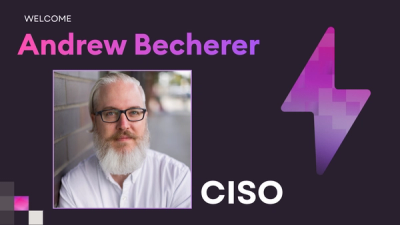
Socket’s first CISO brings deep experience securing high-growth SaaS companies as open source supply chain threats accelerate.