
Product
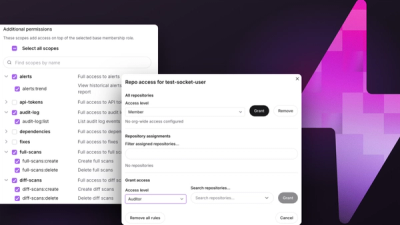
Introducing Repository Access Permissions and Custom Roles
Socket now supports Custom Roles and Repository Access Permissions so organizations can control who can access specific repositories and actions.
By Joe Werle - Jun 19, 2026
@mastra/spanner
Advanced tools
Affected versions:
Google Cloud Spanner provider for Mastra - db storage capabilities (GoogleSQL dialect)
Google Cloud Spanner storage adapter for Mastra. Implements the GoogleSQL dialect.
npm install @mastra/spanner
GOOGLE_APPLICATION_CREDENTIALS).localhost:9010.import { SpannerStore } from '@mastra/spanner';
const store = new SpannerStore({
id: 'spanner-storage',
projectId: 'my-gcp-project',
instanceId: 'my-instance',
databaseId: 'mastra',
});
process.env.SPANNER_EMULATOR_HOST = 'localhost:9010';

const store = new SpannerStore({
  id: 'spanner-storage',
  projectId: 'test-project',
  instanceId: 'test-instance',
  databaseId: 'test-db',
  // Skip auth checks when talking to the emulator
  spannerOptions: { servicePath: 'localhost', port: 9010, sslCreds: undefined },
});
The store automatically detects the SPANNER_EMULATOR_HOST env var and uses
unauthenticated channels when set. You can also create the instance/database
through the emulator using the standard gcloud CLI.
If you already manage a Spanner client elsewhere, pass the database directly:
import { Spanner } from '@google-cloud/spanner';
import { SpannerStore } from '@mastra/spanner';

const spanner = new Spanner({ projectId: 'my-project' });
const database = spanner.instance('my-instance').database('mastra');

const store = new SpannerStore({
  id: 'spanner-storage',
  database,
});
STRING(MAX) for text/JSON
payloads, INT64, FLOAT64, BOOL and TIMESTAMP.database.updateSchema(...) (long-running operation).INSERT OR UPDATE. Deletes use DELETE WHERE TRUE (Spanner has no
TRUNCATE).The adapter implements the following storage domains:
memory: threads, messages, resourcesworkflows: workflow snapshots and run statescores: evaluation scoresbackgroundTasks: background tool execution stateagents: thin agent records and versioned config snapshotsmcpClients: MCP client configurations with version historymcpServers: MCP server configurations with version historyskills: skill records and versioned skill snapshotsblobs: content-addressable blob store (used by the skills domain)promptBlocks: prompt block records and versioned template/rules snapshotsscorerDefinitions: scorer definition records and versioned scoring-config snapshotsschedules: cron-driven workflow schedules and trigger history (consumed by WorkflowScheduler)observability: AI tracing spans (per-trace and per-span records) used by the Studio traces UIStart the emulator:
docker compose up -d
Then run the tests:
ENABLE_TESTS=true pnpm test
FAQs
Google Cloud Spanner provider for Mastra - db storage capabilities (GoogleSQL dialect)
The npm package @mastra/spanner receives a total of 1,478 weekly downloads. As such, @mastra/spanner popularity was classified as popular.
We found that @mastra/spanner demonstrated a healthy version release cadence and project activity because the last version was released less than a year ago. It has 6 open source maintainers collaborating on the project.
Did you know?

Socket for GitHub automatically highlights issues in each pull request and monitors the health of all your open source dependencies. Discover the contents of your packages and block harmful activity before you install or update your dependencies.
Product
Socket now supports Custom Roles and Repository Access Permissions so organizations can control who can access specific repositories and actions.
Product
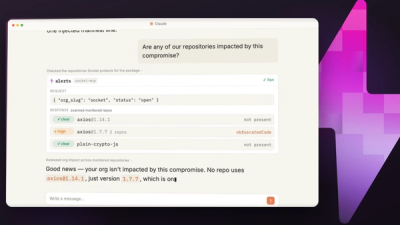
Socket MCP now lets AI assistants review org alerts, investigate threats using the Socket threat feed, and inspect package files in addition to dependency scoring.
Product
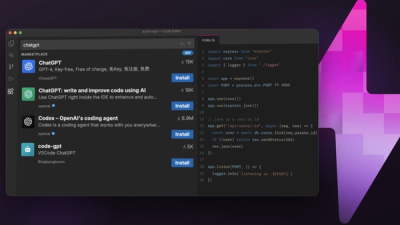
Socket Firewall blocks malicious VS Code and Open VSX extensions before install, protecting developers from compromised editor marketplaces.