
Company News
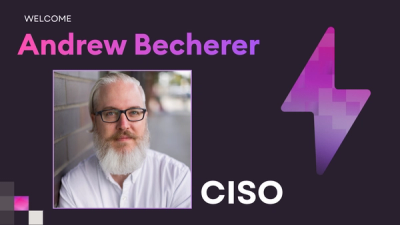
Andrew Becherer Joins Socket as Chief Information Security Officer
Socket’s first CISO brings deep experience securing high-growth SaaS companies as open source supply chain threats accelerate.
By Sarah Gooding - Jun 11, 2026
@mcp-layer/cli
Advanced tools
@mcp-layer/cli is a CLI framework that turns MCP server schemas into a usable command line. It discovers a server from configuration, connects over stdio, extracts the unified schema from @mcp-layer/schema, and renders commands for tools, prompts, resources, and templates. You can also extend it with custom commands.
pnpm add @mcp-layer/cli
Run the CLI against a configured MCP server:
mcp-layer servers list
mcp-layer tools list
mcp-layer tools echo --text "hello"
The CLI exposes the same schema items for tools, prompts, resources, and templates.
mcp-layer servers list
mcp-layer tools list
mcp-layer tools <tool>
mcp-layer prompts list
mcp-layer prompts <prompt>
mcp-layer resources list
mcp-layer resources <uri>
mcp-layer templates list
mcp-layer templates <template>
Shorthand form:
mcp-layer tools:echo --text "hello"
mcp-layer prompts:kickoff --json '{"topic":"launch"}'
Inputs come from the MCP schema. You can supply them three ways:
--json '{"key":"value"}' for inline JSON--input ./payload.json for JSON files--key value for schema properties (flags are generated from input schema fields)Array and object inputs support a few additional forms:
--items one --items two--items '["one","two"]'--meta.tag alpha--meta '{"tag":"alpha"}'--count 5, --enabled true).If a parameter clashes with a CLI flag (like --help), pass tool arguments after --:
mcp-layer tools echo -- --help "not a real help flag"
The CLI formats MCP responses for readability by default:
Use --raw to emit the raw MCP JSON response (or raw binary bytes when a single binary payload is returned). If multiple content items are present, --raw returns JSON. This makes piping to files straightforward:
mcp-layer tools <tool> --raw > output.json
mcp-layer tools <tool> --raw > payload.bin
Disable markdown rendering with --no-markdown.
Server-provided text is sanitized to strip ANSI escape sequences by default. If you trust the server and want to preserve ANSI output, pass --allow-ansi.
Example:
mcp-layer tools <tool> --allow-ansi
Color output is enabled by default when stdout is a TTY. Disable it with --no-color or by setting NO_COLOR=1. You can customize the colors via accent and subtle in cli() options.
Use --help after a command to see its flags and examples:
mcp-layer tools echo --help
mcp-layer prompts kickoff --help
When a server is selected, help output uses the server name/version and lists all discovered tools, prompts, resources, and templates for that server.
List commands support JSON output:
mcp-layer tools list --format json
mcp-layer resources list --format json
Run/read/render commands render formatted output by default. Use --raw for JSON (or binary bytes when a single binary payload is returned).
@mcp-layer/cli uses @mcp-layer/config to discover MCP server definitions. When multiple servers are configured, choose one with --server:
mcp-layer tools list --server demo
You can also point at a specific config file or directory:
mcp-layer tools list --config ./mcp.json
mcp-layer tools list --config ~/configs
You can embed the CLI and add custom commands using the same parser and help renderer.
import { cli } from '@mcp-layer/cli';

/**
 * Render the CLI with a custom command.
 * @returns {Promise<void>}
 */
async function main() {
  await cli({ name: 'acme-mcp', description: 'Acme MCP CLI' })
    .command(
      {
        name: 'status',
        description: 'Report CLI configuration state.'
      },
      async function statusCommand(argv) {
        const verbose = Boolean(argv.verbose);
        process.stdout.write(JSON.stringify({ ok: true, verbose }, null, 2));
      }
    )
    .render();
}

main();
cli(options)Creates a CLI instance.
Options:
name: CLI name displayed in help output.version: CLI version string.description: CLI description for help output.colors: enable or disable color output.accent: hex color for headings (default #FFA500).subtle: hex color for flag names (default #696969).spinner: enable the loading spinner.markdown: enable markdown rendering for text output.ansi: allow ANSI escape sequences in server-provided text.server: default server name.config: default config path.cli().command(options, handler)Registers a custom command.
options.name: command name.options.description: summary for help output.handler(argv): async handler invoked with parsed args.cli().render([argv])Executes the CLI. If argv is omitted, it uses process.argv.
--server <name>: select a configured server.--config <path>: point at a config file or directory.--format <json>: use JSON for list output.--json <string>: supply inline JSON input.--input <path>: supply JSON input from a file.--raw: emit raw JSON (or binary bytes for a single binary payload).--no-markdown: disable markdown rendering.--allow-ansi: preserve ANSI escape sequences from server text.--no-spinner: disable the loading spinner.--no-color: disable color output.pnpm test --filter @mcp-layer/cli
FAQs
CLI framework for interacting with MCP servers using discovered schemas.
The npm package @mcp-layer/cli receives a total of 24 weekly downloads. As such, @mcp-layer/cli popularity was classified as not popular.
We found that @mcp-layer/cli demonstrated a healthy version release cadence and project activity because the last version was released less than a year ago. It has 1 open source maintainer collaborating on the project.
Did you know?

Socket for GitHub automatically highlights issues in each pull request and monitors the health of all your open source dependencies. Discover the contents of your packages and block harmful activity before you install or update your dependencies.
Company News
Socket’s first CISO brings deep experience securing high-growth SaaS companies as open source supply chain threats accelerate.
Company News
Replit is integrating Socket Firewall into its AI-powered development experience to help protect builders from malicious open source packages.

Security News
npm confirmed a tooling bug incorrectly marked several one-character packages as security holders and said it was working on a rollback.