Security News
arXiv Is Rate Limiting Authors Following a Flood of AI Slop Submissions
arXiv now limits authors to two submissions a month as AI slop overwhelms moderators, delays good papers, and sparks debate over applying the limit to everyone.
@modelcontextprotocol/server
Advanced tools
Model Context Protocol implementation for TypeScript - Server package
@modelcontextprotocol/serverThe MCP (Model Context Protocol) TypeScript server SDK. Build MCP servers that expose tools, resources, and prompts.
This is v2 of the MCP TypeScript SDK, the stable release line, implementing the 2026-07-28 MCP spec. It replaces the single
@modelcontextprotocol/sdkpackage from v1. Start with the documentation; coming from v1, see the migration guide. Found a problem? Open an issue.
npm install @modelcontextprotocol/server
TypeScript ≥6.0 no longer auto-includes @types/* — add "types": ["node"] to your tsconfig.json compilerOptions (the published .d.mts references Buffer).
Optional framework adapters: @modelcontextprotocol/express, @modelcontextprotocol/fastify, @modelcontextprotocol/hono,
@modelcontextprotocol/node.
FAQs
Model Context Protocol implementation for TypeScript - Server package
The npm package @modelcontextprotocol/server receives a total of 7,344,334 weekly downloads. As such, @modelcontextprotocol/server popularity was classified as popular.
We found that @modelcontextprotocol/server demonstrated a healthy version release cadence and project activity because the last version was released less than a year ago. It has 6 open source maintainers collaborating on the project.

Security News
arXiv now limits authors to two submissions a month as AI slop overwhelms moderators, delays good papers, and sparks debate over applying the limit to everyone.

Research
/Security News
A new GhostAction wave hits hundreds of GitHub repos, expanding CI/CD secret theft to cloud and AI credentials in source code and git history.

Research
/Security News
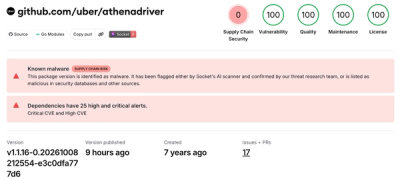
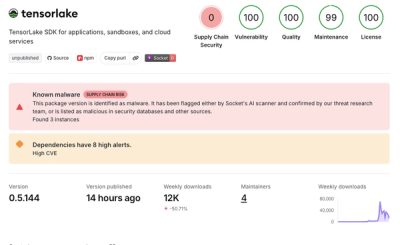
Tensorlake npm SDK version 0.5.144 was compromised in a ChainDrop / Shai-Hulud attack, delivering credential-stealing malware.