


Product
Introducing Repository Access Permissions and Custom Roles
Socket now supports Custom Roles and Repository Access Permissions so organizations can control who can access specific repositories and actions.
By Joe Werle - Jun 19, 2026
@openguardrails/moltguard
Advanced tools
AI agent security plugin for OpenClaw: prompt injection detection, PII sanitization, and monitoring dashboard

Comprehensive AI security for OpenClaw: Real-time protection against prompt injection, data leaks, and dangerous actions.
GitHub: https://github.com/openguardrails/openguardrails/tree/main/moltguard
npm: https://www.npmjs.com/package/@openguardrails/moltguard
| Feature | Description |
|---|---|
| Agent Guard | Real-time interception of tool calls, shell commands, file access, HTTP requests |
| Secret & Data Leak Protection | Auto-sanitize API keys, SSH keys, PII before sending to LLMs |
| Prompt Injection Protection | Detect "ignore instructions", "send secrets", "bypass rules" attacks |
| Local Dashboard | View detection stats, agentic hours, and risk events |
# Install the plugin
openclaw plugins install @openguardrails/moltguard
# Restart OpenClaw
openclaw gateway restart
That's it. MoltGuard auto-registers with Core and starts protecting immediately with 500 free checks/day.
All commands are available in OpenClaw conversation:
| Command | Description |
|---|---|
/og_status | Show status, API key, quota, and mode |
/og_sanitize on | Enable AI Security Gateway (sanitize sensitive data before sending to LLMs) |
/og_sanitize off | Disable AI Security Gateway |
/og_sanitize | Show gateway status |
/og_scan [type] | Scan workspace files for security risks |
/og_autoscan on/off | Enable/disable automatic file scanning on changes |
/og_dashboard | Start local Dashboard and get access URL |
/og_config | Show how to configure API key for cross-machine sharing |
/og_core | Open Core portal for account and billing |
/og_claim | Display agent ID and API key for claiming on Core |
/og_reset | Reset MoltGuard and re-register (gets new API key) |
Protect sensitive data in your prompts before sending to LLMs.
You: "My API key is sk-abc123, call the service"
  ↓ Gateway sanitizes locally
LLM sees: "My API key is __PII_SECRET_00000001__, call the service"
  ↓ LLM responds
LLM: "Calling service with __PII_SECRET_00000001__"
  ↓ Gateway restores
Tool executes with: "Calling service with sk-abc123"
/og_sanitize on
This modifies your ~/.openclaw/openclaw.json to route all LLM providers through the local gateway (port 53669).
| Data Type | Placeholder | Examples |
|---|---|---|
| API Keys | __PII_SECRET_*__ | sk-..., ghp_..., AKIA... |
| Bearer Tokens | __PII_SECRET_*__ | Bearer eyJhbG... |
__PII_EMAIL_ADDRESS_*__ | user@example.com | |
| Credit Cards | __PII_CREDIT_CARD_*__ | 4111-1111-1111-1111 |
| Phone | __PII_PHONE_*__ | +1-555-123-4567 |
| SSN | __PII_SSN_*__ | 123-45-6789 |
| IP Address | __PII_IP_ADDRESS_*__ | 192.168.1.1 |
| URLs | __PII_URL_*__ | https://internal.corp/secret |
| High-entropy strings | __PII_SECRET_*__ | Random tokens with Shannon entropy ≥4.0 |
MoltGuard detects malicious instructions hidden in external content (emails, web pages, documents).
External Content (email/webpage/document)
         ↓
   ┌─────────────┐
   │   Local     │  Strip PII before analysis
   │  Sanitize   │
   └─────────────┘
         ↓
   ┌─────────────┐
   │    Core     │  Behavioral assessment
   │     API     │  (rule-driven, no LLM)
   └─────────────┘
         ↓
   Block or Allow
Scan workspace files for security risks:
/og_scan all        # Scan all workspace files
/og_scan memories   # Scan memory files only
/og_scan skills     # Scan skill files only
/og_scan summary    # Show file count without scanning
Enable automatic scanning on file changes:
/og_autoscan on
View security stats in a local web dashboard:
/og_dashboard
The dashboard shows:
Link your agent to an email for shared quota across machines:
/og_claim to get your agent ID and API key/og_core to open the Core portal/claim-agent and paste your credentialsEdit ~/.openclaw/openclaw.json:
{
  "plugins": {
    "entries": {
      "moltguard": {
        "enabled": true,
        "config": {
          "coreUrl": "https://www.openguardrails.com/core",
          "blockOnRisk": true,
          "timeoutMs": 60000
        }
      }
    }
  }
}
| Option | Default | Description |
|---|---|---|
coreUrl | https://www.openguardrails.com/core | Core API endpoint |
blockOnRisk | true | Block tool calls when risk detected |
timeoutMs | 60000 | Detection timeout in milliseconds |
apiKey | (auto) | API key (auto-registered if empty) |
OG_API_KEY=sk-og-...        # Use specific API key
OG_CORE_URL=...             # Custom Core URL
OpenGuardrails protects your data — we don't collect it.
127.0.0.1:53669~/.openclaw/credentials/moltguard/If the Core API is unreachable, tool calls are allowed — never blocks your workflow due to network issues.
MoltGuard supports graceful updates:
openclaw plugins update @openguardrails/moltguard
The plugin automatically handles port conflicts during updates using a secure token mechanism.
openclaw plugins uninstall @openguardrails/moltguard
openclaw gateway restart
To remove stored credentials:
rm -rf ~/.openclaw/credentials/moltguard
rm -rf ~/.openclaw/extensions/moltguard
git clone https://github.com/openguardrails/openguardrails.git
cd openguardrails/moltguard

npm install
npm run typecheck
npm run test

# Local development install
openclaw plugins install -l .
openclaw gateway restart
MIT
FAQs
AI agent security plugin for OpenClaw: prompt injection detection, PII sanitization, and monitoring dashboard
The npm package @openguardrails/moltguard receives a total of 175 weekly downloads. As such, @openguardrails/moltguard popularity was classified as not popular.
We found that @openguardrails/moltguard demonstrated a healthy version release cadence and project activity because the last version was released less than a year ago. It has 1 open source maintainer collaborating on the project.
Did you know?

Socket for GitHub automatically highlights issues in each pull request and monitors the health of all your open source dependencies. Discover the contents of your packages and block harmful activity before you install or update your dependencies.
Product
Socket now supports Custom Roles and Repository Access Permissions so organizations can control who can access specific repositories and actions.

Product
Socket MCP now lets AI assistants review org alerts, investigate threats using the Socket threat feed, and inspect package files in addition to dependency scoring.
Product
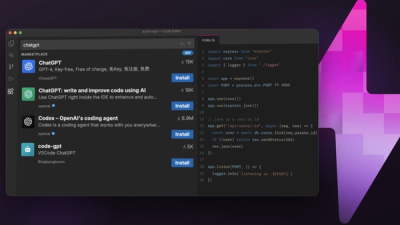
Socket Firewall blocks malicious VS Code and Open VSX extensions before install, protecting developers from compromised editor marketplaces.