

Security News
US Government Forces Anthropic to Pull Claude Fable Days After Launch
Anthropic says the directive cited national security concerns over a narrow jailbreak, but offered no specific technical details.
By Sarah Gooding - Jun 13, 2026
@openparachute/surface-client
Advanced tools
Shared browser-side library for Parachute apps — OAuth (PKCE + DCR), vault REST client, token storage, service-worker reload helper, vault-id + runtime tenancy helpers.
Browser-side library for building a custom surface over a Parachute vault — OAuth (PKCE + Dynamic Client Registration), a typed vault REST client, token storage, and runtime-tenancy helpers. Framework-agnostic core: no React, just fetch + types.
A surface is any UI that talks to a vault — a daily-capture inbox, a project dashboard, a graph explorer. Without this library you re-implement OAuth, the vault client, token storage, and the core types from scratch (the real-world adopter my-vault-ui hand-rolled ~1,300 lines of exactly that). With it, the auth + data layer is one import.
import {
  ParachuteOAuth,
  VaultClient,
  discoverAuthServer, registerClient,
  loadToken, saveToken, clearToken,
  getMountBase, getTenantId, getHubOrigin, getVaultUrl,
  vaultIdFromUrl, normalizeVaultUrl,
} from "@openparachute/surface-client";
| Module | Surface |
|---|---|
oauth | ParachuteOAuth driver class — PKCE + same-hub auto-trust |
discovery | discoverAuthServer (RFC 8414) + registerClient (RFC 7591 DCR) |
vault-client | VaultClient REST client with auto-refresh on 401 + a typed error hierarchy |
subscribe | VaultClient.subscribe() — live-query SSE (snapshot + upsert/remove, auto-reconnect) |
notes-query | NotesQuery typed query builder — buildNotesQuery serializes to vault's exact wire grammar |
token-storage | loadToken / saveToken / clearToken / clearAllTokensForApp |
mount | runtime-tenancy readers — getMountBase / getTenantId / getHubOrigin / getVaultUrl |
sw-reload | reloadAfterServiceWorkerUpdate — PWA-mode SW reload helper |
vault-id | vaultIdFromUrl / normalizeVaultUrl — canonical URL ↔ storage-key mapping |
vault-types | core resource types — Note, NoteSummary, NoteLink, NoteAttachment, TagRecord, … |
Everything is re-exported from the barrel (@openparachute/surface-client) and also available on named subpaths (@openparachute/surface-client/oauth, …/vault-client, …/mount, …) for tree-shaking when you only need one piece.
createVaultSurface (the one-liner path)For the common case, you don't wire OAuth + VaultClient by hand at all. createVaultSurface is a turnkey factory that auto-detects whether you're hosted or standalone (see "Two deployment shapes" below), bakes sane defaults, runs Dynamic Client Registration for you when standalone, and hands back a VaultClient already wired with refresh-on-401:
import { createVaultSurface } from "@openparachute/surface-client";

// One call. clientName is the only required field — it's shown on the hub
// consent screen the first time the operator approves your surface.
const surface = createVaultSurface({ clientName: "My Vault UI" });

// On your callback route (default redirect URI: `${origin}/oauth/callback`):
if (location.pathname === "/oauth/callback") {
  await surface.handleCallback();      // exchanges code → token, persists it
  location.replace("/");
}

// Anywhere: get a ready VaultClient, or null if not signed in.
const vault = surface.getClient();
if (vault) {
  const notes = await vault.queryNotes({ tag: "x" });
} else {
  await surface.login();               // DCR-registers (standalone) + redirects to consent
}
The factory figures out the deployment shape, hub URL, redirect URI, scopes, and app name. Override any of them:
const surface = createVaultSurface({
  clientName: "My Vault UI",
  hubUrl: "https://my-hub.example.com", // default: parachute-hub meta tag, else window.location.origin
  vaultName: "default",                  // default: "default"
  scope: "vault:read vault:write",       // default
  redirectUri: `${origin}/oauth/callback`, // default per deployment shape
  bootstrap: "auto",                     // "hosted" | "dcr" | "auto" (default: detect from parachute-mount meta tag)
});
The returned VaultSurface is { oauth, bootstrap, hubUrl, vaultName, login(), handleCallback(), getClient(), logout() }. oauth is the underlying ParachuteOAuth if you need to drop down to the low-level dance. Everything below this section is that low-level layer — reach for it when the factory's defaults don't fit.
Session resilience (return visits just work). Hub access tokens live ~15 minutes, so every return visit starts with an expired-but-refreshable token. Two behaviors make that path safe without app-side workarounds:
getClient()'s refresh seam re-seeds the DCR client_id from the factory's durable cache (parachute_surface_dcr:<appName> in localStorage) before exchanging the refresh token, so the first 401 on a fresh page load refreshes instead of throwing. If the cache is gone (or the hub issuer changed), refresh reports "not possible" and your UI falls back to login() — a fresh registration is never attempted mid-refresh, because the refresh token is bound to the original client_id.How a surface bootstraps OAuth depends on where it runs. This is the single most important thing to get right.
You serve your surface from anywhere — GitHub Pages, Netlify, localhost:5173, an S3 bucket. There is no Parachute host in front of it. This is the shape the build-a-custom-surface onboarding prompt targets, and the one examples/standalone-spa demonstrates end to end.
A standalone surface bootstraps its OAuth client with RFC 7591 Dynamic Client Registration (DCR): it discovers the hub's authorization-server metadata, registers itself as a public (PKCE-only, no-secret) client at runtime with its own URL as the redirect URI, then drives the standard authorization-code + PKCE dance. The operator approves it once on the hub consent screen (or it auto-approves if the operator's hub session cookie is present — "same-hub auto-trust").
import {
  discoverAuthServer,
  registerClient,
  ParachuteOAuth,
} from "@openparachute/surface-client";

const HUB_URL = "https://my-hub.example.com"; // the operator pastes / configures this
const REDIRECT_URI = `${window.location.origin}/oauth/callback`;

// 1. Discover the hub's authorization-server metadata (RFC 8414).
const metadata = await discoverAuthServer(HUB_URL);

// 2. Register as a public client (RFC 7591 DCR). Cache the client_id
//    (e.g. in localStorage keyed by issuer + redirectUri) so you register
//    at most once per browser per hub — re-register only if the redirect
//    URI changes, since the hub binds client_id to redirect_uri.
const { client_id } = await registerClient(metadata.registration_endpoint, {
  clientName: "My Vault UI", // shown on the hub consent screen
  redirectUri: REDIRECT_URI,
});

// 3. Drive the dance with ParachuteOAuth, supplying the DCR client_id.
const oauth = new ParachuteOAuth({ appName: "my-vault-ui", hubUrl: HUB_URL });
oauth.useClientId({ client_id, scopes: ["vault:read", "vault:write"] });

const { authorizeUrl } = await oauth.beginFlow({
  vaultName: "default",
  redirectUri: REDIRECT_URI,
});
window.location.assign(authorizeUrl);

// 4. On the callback page (REDIRECT_URI):
const url = new URL(window.location.href);
await oauth.handleCallback(
  url.searchParams.get("code")!,
  url.searchParams.get("state")!,
  "default", // the storage-key segment for this token
);

// 5. Read the token + build a VaultClient (see "Using the vault" below).
Why not
getClientId()?ParachuteOAuth.getClientId()fetches a hosted-only endpoint (/surface/<name>/oauth-client) that only exists when a Parachute surface-host is serving your bundle. A standalone surface has no such endpoint — it must self-register via DCR as above.useClientId(...)lets you handParachuteOAuththe DCR-registered client sobeginFlow/handleCallback/refreshAccessTokenwork without ever touching the hosted endpoint.
If your bundle is served by @openparachute/surface under /surface/<name>/ (the way @openparachute/notes-ui ships), the host injects runtime-tenancy <meta> tags and exposes a per-surface OAuth-client endpoint. In that case you let ParachuteOAuth fetch the client_id for you — no DCR needed:
const oauth = new ParachuteOAuth({
  appName: "my-app",                 // matches the surface's manifest `name`
  hubUrl: getHubOrigin() ?? window.location.origin,
});

// Boot — read our client_id from the host:
await oauth.getClientId();

const { authorizeUrl } = await oauth.beginFlow({
  vaultName: "default",
  // default redirectUri is `${origin}/surface/<name>/oauth/callback`
});
window.location.assign(authorizeUrl);
// …handleCallback as above.
getClientId() succeeds only when the host endpoint exists. If you're not sure which shape you're in, the presence of a parachute-mount meta tag (see below) is the signal: present → hosted; absent → standalone.
Prefer the
createVaultSurface(...)quick-start above — it collapses both bootstraps into one call with automatic hosted-vs-standalone detection. The hand-wired paths in this section are the low-level escape hatch for when the factory's defaults don't fit.
<meta> tags)A hosted surface-host injects structured environment metadata into every served index.html, and the mount helpers read it. These tags are a hosted-surface feature — a standalone surface has no host to inject them, so the readers return null off-host (by design; they never throw). Configure your vault URL + hub origin explicitly instead (a paste-in screen or build-time config), as the standalone example does.
The canonical injected shape:
<head>
  <base href="/surface/<name>/">
  <meta name="parachute-mount"  content="/surface/<name>">      <!-- mount path -->
  <meta name="parachute-hub"    content="https://hub.example">  <!-- hub origin for OAuth discovery -->
  <meta name="parachute-vault"  content="/vault/<name>">        <!-- when the session is vault-bound -->
  <meta name="parachute-vault-origin" content="https://vault.example"> <!-- cloud / cross-origin only -->
</head>
| Helper | Reads | Returns when absent | Suggested fallback |
|---|---|---|---|
getMountBase() | parachute-mount (trailing slash stripped, bare / rejected) | null | /notes (legacy) or app boot error |
getTenantId() | last segment of parachute-mount (/surface/<slug>) | null | a stable label for storage keys |
getHubOrigin() | parachute-hub | null | window.location.origin |
getVaultUrl() | parachute-vault (+ parachute-vault-origin for cross-origin) | null | an explicit, operator-entered vault URL |
getVaultUrl, notgetVaultPath; tenant-id is derived, not a tag. The code exportsgetVaultUrl(it returns a fully-qualified URL — origin + path — sofetch(getVaultUrl())works directly) andgetTenantIdderives the tenant id from the mount path. There is nogetVaultPathexport and noparachute-tenant-idmeta tag. (Theruntime-tenancy-contract.mdpattern doc previously named those; the code is the source of truth and the pattern doc was reconciled to match in the same change that shipped this README.)
Once you have a stored token, build a VaultClient. Wire onAuthError so a 401 transparently refreshes:
const stored = oauth.getToken("default");
if (stored) {
  const vault = new VaultClient({
    vaultUrl: stored.vault
      ? `${HUB_URL}/vault/${stored.vault}`
      : `${HUB_URL}/vault/default`,
    accessToken: stored.accessToken,
    onAuthError: async () => {
      if (!stored.refreshToken) return null;
      const { token } = await oauth.refreshAccessToken(stored.refreshToken, "default");
      return token.access_token;
    },
  });
  const notes = await vault.queryNotes({ tag: "x" });
}
For scripts (Bun / Node), VaultClient.fromHub({ hubOrigin, vaultName, token }) composes the canonical URL for you.
NotesQueryqueryNotes, queryNotesCursor, and subscribe accept a typed NotesQuery object alongside the raw URLSearchParams | Record<string,string> forms (which remain fully supported — existing callers are untouched). The typed shape covers vault's structured-query grammar so you don't memorize the wire spelling:
const notes = await vault.queryNotes({
  tag: ["#work", "#decision"],          // comma-joined into one param (vault's grammar)
  tagMatch: "any",                       // → tag_match
  expand: "subtypes",                    // | "namespace" | "both" | "exact"
  excludeTag: "#archived",               // → exclude_tag
  pathPrefix: "Work/",                   // → path_prefix
  metadata: {
    status: { in: ["in-progress", "in-review"] },  // operator query → meta[status][in][]
    priority: "now",                               // scalar = shorthand equality → meta[priority]
  },
  date: { field: "updated_at", from: "2026-06-01" }, // half-open: from inclusive, to exclusive
  orderBy: "updated_at",
  sort: "desc",
  limit: 50,
});
Notes on the mapping (all pinned by tests against vault's parser):
priority: "now") is shorthand equality — a JSON scan that works on non-indexed fields. An operator object ({ eq, ne, gt, gte, lt, lte, in, not_in, exists }) routes through the indexed column — vault 400s with FIELD_NOT_INDEXED if the field isn't declared in a tag schema.date serializes to the canonical bracket bridge (meta[updated_at][gte]=…), never the deprecated flat date_field/date_from params. Bounds are half-open: from inclusive, to exclusive.search / near are deliberately not modeled — they're separate query shapes (and invalid for subscriptions). Use the raw forms for them. Unknown keys with string values pass through verbatim, so mixing typed keys with a raw "meta[...]" param also works.buildNotesQuery(q) / toNotesSearchParams(input) are exported if you want the URLSearchParams yourself.subscribe()Any view that polls queryNotes on a timer can subscribe instead. VaultClient.subscribe() opens vault's live-query SSE endpoint (GET /api/subscribe): you get one onSnapshot(notes) with the complete matching set, then onUpsert(note) / onRemove(id) as notes enter, change, or leave the set.
const unsubscribe = vault.subscribe(
  { tag: "#channel-message", "meta[channel][eq]": "general" },
  {
    onSnapshot: (notes) => render(notes),      // replaces your whole set
    onUpsert:   (note)  => upsertRow(note),
    onRemove:   (id)    => dropRow(id),         // idempotent — ignore unknown ids
    onStatus:   (s)     => setLive(s === "open"), // connecting | open | reconnecting | closed
    onError:    (err)   => console.warn(err),
  },
);
// later: unsubscribe();
Things worth knowing:
queryNotes (same server-side parser), except search, near, and cursor aren't live-evaluable — subscribe() throws on them synchronously rather than letting the vault 400.Authorization header, not the URL. The transport is a fetch stream with hand-parsed SSE frames, not EventSource — EventSource can't set headers, which would force the token into a ?key= query param (proxy logs, browser history). This also makes subscribe() work server-side (Bun/Node) where EventSource may not exist.onSnapshot replaces your set, reconciling anything missed while disconnected. Treat every snapshot as the new truth, not a delta.onAuthError refresh seam once and resubscribes with the fresh token. If refresh isn't possible, the subscription terminates: onError(VaultAuthError) then onStatus("closed") — without a "closed", it's still retrying.AbortSignal (subscribe(query, handlers, { signal })).UpdateNotePayload.links mutates typed links: { add?: { target, relationship, metadata? }[], remove?: { target, relationship }[] } (target is a note id or path; missing targets skip silently; vault echoes the hydrated links on the response when you mutate them). CreateNotePayload.links is a flat array — { target, relationship }[], no envelope and no per-link metadata, because that's what vault's POST branch actually reads; create first + updateNote({ links: { add } }) when you need link metadata.
fetchAttachmentBlob()VaultClient.fetchAttachmentBlob(url) GETs an attachment blob with the client's full auth contract (bearer header, refresh-on-401 retry, structured errors). It accepts an absolute URL, a vault-relative /api/storage/<path>, or a bare storage path. surface-render's vaultClientFetchBlob adapter prefers this method, so a plain VaultClient renders auth-gated images/audio with zero extra wiring. By design there is no getAccessToken accessor — the token stays inside the client (the same custody contract surface-host's scoped server-side client relies on).
Note, NoteSummary, NoteLink, NoteAttachment, TagRecord, TagUpsertPayload, UpdateNotePayload, CreateNotePayload, FindPathResult (and more) are exported from the barrel and match vault's wire format byte-for-byte. Import them rather than hand-redeclaring — that drift is exactly what this package exists to kill.
VaultClient rejects with a typed error hierarchy so you can map failures to UI affordances without string-matching messages. All concrete errors extend the abstract VaultError, so catch (e) { if (e instanceof VaultError) … } catches any vault failure.
VaultError                         (abstract base — "any vault error")
├── VaultAuthError                 401 — token dead/missing → start the OAuth flow
│   └── VaultPermissionError       403 — token lacks the scope → ask for a broader grant
├── VaultNotFoundError             404 — note / tag / path doesn't exist
├── VaultConflictError             409 — optimistic-concurrency / tag-in-use (see error.body)
├── VaultTargetExistsError         409 — create-would-clobber an existing path
├── VaultUnreachableError          network down (status 0) → "can't reach your hub" + retry
│   └── VaultServerError           5xx — hub is up but erroring → retry / report
└── VaultUploadError               attachment upload failed
Recommended UI mapping:
| Catch | What happened | Affordance |
|---|---|---|
VaultPermissionError | authed but wrong scope | "This needs more access" → re-run beginFlow with the broader scope |
VaultAuthError | token expired / revoked | bounce to sign-in (beginFlow) |
VaultNotFoundError | resource gone | inline "not found", offer to create |
VaultConflictError | concurrent edit / tag in use | reload + show the conflict; error.body carries referenced_by for tag-in-use |
VaultTargetExistsError | path collision on create | prompt for a new path |
VaultServerError | hub erroring (5xx) | "something went wrong on the hub" + retry |
VaultUnreachableError | network down | "can't reach your hub" + retry |
VaultUploadError | upload failed | retry the upload |
Because VaultPermissionError extends VaultAuthError and VaultServerError extends VaultUnreachableError, order your instanceof checks specific-before-general (check VaultPermissionError before VaultAuthError).
ParachuteOAuth adds three OAuth-flow errors: PendingApprovalError (the hub registered the client but needs operator approval — carries approveUrl for a "approve in your hub" CTA), RefreshHttpError (the hub rejected a refresh token — distinct from a network failure), and InsecureContextError (PKCE can't run outside a secure context — serve over HTTPS or localhost).
examples/standalone-spa — a minimal, framework-free standalone surface that runs the full DCR bootstrap, the OAuth dance, and a vault query. Copy it as a starting point for a custom surface served from GitHub Pages or any static host.AGPL-3.0.
FAQs
Shared browser-side library for Parachute apps — OAuth (PKCE + DCR), vault REST client, token storage, service-worker reload helper, vault-id + runtime tenancy helpers.
We found that @openparachute/surface-client demonstrated a healthy version release cadence and project activity because the last version was released less than a year ago. It has 1 open source maintainer collaborating on the project.
Did you know?

Socket for GitHub automatically highlights issues in each pull request and monitors the health of all your open source dependencies. Discover the contents of your packages and block harmful activity before you install or update your dependencies.
Security News
Anthropic says the directive cited national security concerns over a narrow jailbreak, but offered no specific technical details.

Security News
A network of 152 Chrome live wallpaper extensions hid ad tracking and made extension-driven traffic look like Google search clicks.
Company News
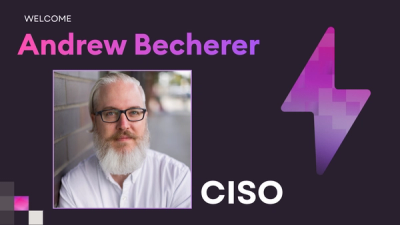
Socket’s first CISO brings deep experience securing high-growth SaaS companies as open source supply chain threats accelerate.