

Security News
US Government Forces Anthropic to Pull Claude Fable Days After Launch
Anthropic says the directive cited national security concerns over a narrow jailbreak, but offered no specific technical details.
By Sarah Gooding - Jun 13, 2026
@openparachute/surface-render
Advanced tools
React rendering primitives for Parachute surfaces — markdown + wikilinks, auth'd vault media (image/audio) embeds, multi-format (csv/json/yaml/code/plain) renderers, a note-format dispatcher, and an MDX-safe-by-default view. Good defaults + per-surface ov
React rendering primitives for Parachute surfaces — the layer a custom
surface otherwise copy-pastes out of Notes. Sibling to
@openparachute/surface-client (which owns the
framework-agnostic auth + data layer: OAuth, VaultClient, token storage,
core types).
This package owns "render a note":
<MarkdownView> (react-markdown + GFM) with a
per-surface [[wikilink]] resolver and link-component hook.<VaultImage> / <VaultAudio> that fetch
/api/storage/… blobs with the surface's authorization.<CsvRenderer> (→ table), <JsonRenderer>
(pretty), <YamlRenderer>, <CodeRenderer>, <PlainRenderer>.<NoteRenderer> picks the renderer from the
note's path; formatForPath is exported standalone.<MdxView> renders .mdx as markdown by default (safe; no
code execution), with an opt-in component-allowlist evaluation seam.It ships primitives + good defaults + override hooks, not a turnkey app shell. The surface owns routing, chrome, and domain components; this package never bakes in a URL space, a router, or an opinionated layout.
Design: parachute.computer/design/2026-06-03-surface-client.md — decisions A–D. This package is Phase 3.
npm add @openparachute/surface-render @openparachute/surface-client react react-dom react-markdown remark-gfm
# optional, for fenced-code-block coloring in markdown:
npm add rehype-highlight
react, react-dom, react-markdown, and remark-gfm are required peer
dependencies (the package doesn't bundle React, and MarkdownView imports
remark-gfm unconditionally). rehype-highlight is an optional peer (only
needed if you pass it for fenced-code-block coloring).
import { MarkdownView, type WikilinkResolver } from "@openparachute/surface-render/markdown";
import { vaultClientFetchBlob } from "@openparachute/surface-render/embed";
import { Link as RouterLink } from "react-router";

// 1. Your surface decides the URL space for wikilinks (decision D):
import { resolvedLink, unresolvedLink } from "@openparachute/surface-render/markdown";

const resolve: WikilinkResolver = (target) => {
  const id = myIndex.lookup(target);
  // Unresolved targets STILL navigate (create-on-navigate) — the common case.
  return id ? resolvedLink(`/n/${id}`) : unresolvedLink(`/n/${target}`);
};

// 2. Adapt your router's <Link> to the link-component shape:
const Link = ({ href, className, children }) => (
  <RouterLink to={href} className={className}>{children}</RouterLink>
);

// 3. Adapt your vault client to the fetch-blob fn (for auth'd media).
//    `vaultClientFetchBlob` is a plain fn — safe at module scope. Inside a
//    component, prefer the memoized `useVaultFetchBlob(client)` hook.
const fetchBlob = vaultClientFetchBlob(client); // client from surface-client

<MarkdownView content={note.content} resolve={resolve} linkComponent={Link} fetchBlob={fetchBlob} />;
Or dispatch by format with <NoteRenderer>:
import { NoteRenderer } from "@openparachute/surface-render/note";

<NoteRenderer note={note} resolve={resolve} linkComponent={Link} fetchBlob={fetchBlob} />;
| Hook | Shape | Why it's a hook |
|---|---|---|
resolve | (target) => { href; exists } | null | The surface owns the URL space (/n/<id>, /entity/<slug>, …). See Resolving wikilinks for the null vs { exists: false } distinction. |
linkComponent | ComponentType<{ href; className?; children }> | The surface injects its router's <Link> without the shared layer importing a router. Defaults to a plain <a>. |
fetchBlob | (url) => Promise<Blob> | The surface supplies the auth. Use the useVaultFetchBlob(client) hook (works with notes-ui's fetchAttachmentBlob subclass or a base VaultClient via storageUrl + token) or a custom function. |
highlight | (code, lang) => string | One syntax-coloring hook for all code paths — code/json/yaml notes and fenced code inside markdown. Defaults to escape-only (inert, no dependency); pass a highlight.js-backed fn for coloring. |
components | react-markdown Components | Per-element overrides merged over the defaults (and over the built-in highlight code renderer). |
overrides | per-format renderer fns | <NoteRenderer> lets a surface swap any format's renderer (e.g. a JSON tree view). The override prop types are exported as named aliases so no as-casts are needed. |
null vs { exists: false })A WikilinkResolver returns one of three things, and the choice between null
and { exists: false } is the single most common source of confusion — they
look interchangeable but render materially differently:
| Return value | Rendered as | Navigable? |
|---|---|---|
{ href, exists: true } | live link, class wikilink wikilink-resolved | ✅ yes |
{ href, exists: false } | dashed "create-on-navigate" link, wikilink wikilink-unresolved | ✅ yes |
null | inert <span>, wikilink wikilink-unresolved, no anchor | ❌ no |
{ exists: false } keeps a working link to a destination that doesn't
exist yet — the canonical "click to create" affordance (notes-ui links an
unresolved [[Foo]] to /n/Foo, where the note is created on navigate).null drops the link entirely — the words render as styled text the
reader can see but cannot click.For most surfaces, "unresolved-but-still-linked" is what you want. Two tiny helpers make the intent obvious at the call site:
import { resolvedLink, unresolvedLink } from "@openparachute/surface-render/markdown";

const resolve: WikilinkResolver = (target) => {
  const id = index.lookup(target);
  return id ? resolvedLink(`/n/${id}`) : unresolvedLink(`/n/${target}`); // still navigates
};
Reach for null (re-exported as the named sentinel INERT) only when an
unresolved target should genuinely have no destination:
import { INERT, resolvedLink } from "@openparachute/surface-render/markdown";
const resolve: WikilinkResolver = (t) => (index.has(t) ? resolvedLink(href(t)) : INERT);
⚠️ Trust boundary: the resolver owns the
hrefit returns — validate the target and mint hrefs you control. Never echo a vault-authored target string straight back as thehref(ajavascript:URI could be injected). The plugin sets the href verbatim and does not sanitize it.
/api/storage/… images and audio need the surface's authorization. Adapt your
vault client to a fetchBlob with the useVaultFetchBlob hook — no more
hand-writing useMemo(() => vaultClientFetchBlob(client) ?? undefined, …):
import { useVaultFetchBlob } from "@openparachute/surface-render/embed";

function NoteBody({ note, client }) {
  const fetchBlob = useVaultFetchBlob(client); // memoized; undefined when signed out
  return <MarkdownView content={note.content} fetchBlob={fetchBlob} />;
}
It accepts any client exposing fetchAttachmentBlob (notes-ui's subclass) or
storageUrl + getAccessToken (a base VaultClient), returns undefined when
the client can't produce blobs, and is memoized on client so the function
identity is stable (important — fetchBlob is an effect dependency downstream).
The lower-level vaultClientFetchBlob(client) adapter is still exported for
non-hook contexts.
There is one highlight hook — (code, lang) => htmlString — and it now
covers both code paths:
```ts … ``` in a .md note).Pass it once to <NoteRenderer> (or <MarkdownView>) and every code path
colors consistently, emitting the same <pre><code class="hljs language-X">
markup so one stylesheet themes them all:
import { NoteRenderer } from "@openparachute/surface-render/note";
<NoteRenderer note={note} resolve={resolve} highlight={highlightAs} />;
// highlightAs is your highlight.js-backed (code, lang) => string
The default (omit highlight) is escape-only — inert, no coloring, no
dependency.
⚠️ Don't combine
highlightwithrehypePlugins={[rehypeHighlight]}. They are two routes to the same fenced-code result; using both double-processes the markup. Pick one:
highlight(recommended) — shares the hook the format renderers use, no extra peer dependency, one mechanism for every code path.rehypePlugins={[rehypeHighlight]}— the older path; needs the optionalrehype-highlightpeer and only colors markdown fences (not code notes).When
highlightis set, the built-in markdowncoderenderer activates; acomponents.codeoverride you pass still wins over both.
remarkWikilinks handles only [[…]] links. Embeds (![[…]]) are not
handled here: the Obsidian import rewrites ![[file]] embeds to standard
markdown images , which the img override routes through
<VaultImage> (auth'd blob). This keeps the renderer's embed handling and the
importer's rewrite as two ends of one contract. A surface with raw,
un-imported ![[…]] embeds can preprocess them into /api/storage/… images
or <VaultAudio> before rendering.
<MdxView> renders .mdx as markdown by default — JSX expressions and
component tags are inert, never executed. Arbitrary vault MDX cannot run
code.
Opting into live MDX is the surface's explicit trust decision: pass an
evaluate runtime (e.g. backed by @mdx-js/mdx) plus a mdxComponents
allowlist. Only then does MDX evaluate, and only the allowlisted components
mount. This package never bundles an MDX runtime.
// safe default — renders as markdown, executes nothing:
<MdxView content={note.content} resolve={resolve} />

// opt-in — YOU are evaluating note content as code; only do this for vaults
// whose authorship you trust:
<MdxView content={note.content} evaluate={myMdxRuntime} mdxComponents={{ Chart }} />
The renderers emit a fixed, styleable class contract. This is the complete
list — every class any renderer can put on the page. Style against these
(override className / components to opt out of any). Most need a surface
theme; the affordance classes (scroll/warning/error/loading/audio) have sane
defaults in the optional baseline stylesheet.
| Class | Emitted by | On | Purpose |
|---|---|---|---|
prose-note | MarkdownView, Csv/Json/Yaml/Code/Plain, MdxView (default className) | container <div> | The typographic prose container. Surface owns the theme. |
wikilink | remarkWikilinks | every wikilink <a> / inert <span> | Base wikilink class (always paired with one below). |
wikilink-resolved | remarkWikilinks | resolved wikilink <a> | Live link to an existing note. |
wikilink-unresolved | remarkWikilinks | unresolved <a> or inert <span> | Dashed "doesn't exist yet" affordance. |
hljs | CodeRenderer, highlighted markdown fences | <code> | highlight.js host class — theme via any highlight.js stylesheet. |
language-<id> | CodeRenderer, markdown fences | <code> | The code language (language-ts, language-json, …). |
csv-scroll | CsvRenderer | wrapper <div> | Horizontal-scroll container for wide tables. |
csv-warning | CsvRenderer | <p> | Malformed-CSV inline warning. |
vault-media-loading | VaultImage, VaultAudio | <span> | Shown while an auth'd blob fetch is in flight. |
vault-media-error | VaultImage, VaultAudio | <span> | Shown when the auth'd fetch fails (renders the message). |
vault-audio | VaultAudio | wrapper <span> | Audio-embed container. |
vault-audio-label | VaultAudio | <span> | Optional caption next to the control. |
Wikilink <a>/<span> also carry data attributes: data-wikilink-target
(the raw [[target]] text) and data-wikilink-resolved ("true"/"false").
So you're not source-spelunking to discover unstyled scroll/warning/error/ loading/audio elements, the package ships an optional baseline stylesheet with sane neutral defaults for those affordance classes:
import "@openparachute/surface-render/styles.css";
Scope, on purpose:
csv-scroll, csv-warning,
vault-media-loading, vault-media-error, vault-audio*, dashed
wikilink-unresolved) and a minimal no-theme .hljs (display block +
overflow)..prose-note typography — that's your design decision.import "highlight.js/styles/github-dark.css").Every value uses a CSS custom property with a neutral fallback
(--sr-warning-fg, --sr-error-fg, --sr-loading-bg, --sr-muted-fg, …) so
you can retheme by setting vars instead of overriding rules.
<NoteRenderer overrides={…}> and <MarkdownView components={…}> accept
per-format / per-element override functions. The override prop types are
re-exported as named aliases from the main entry so you can annotate your
override functions without as-casts or deep imports:
import type {
  WikilinkResolver,
  MarkdownViewProps,
  NoteRendererOverrides,
  MarkdownOverride,        // (props: MarkdownOverrideProps) => ReactNode
  MarkdownOverrideProps,   // === MarkdownViewProps
  CodeOverrideProps,       // { content; language; className?; highlight? }
  HighlightableOverrideProps, // json/yaml: { content; className?; highlight? }
  BasicFormatOverrideProps,   // csv/plain: { content; className? }
} from "@openparachute/surface-render";

const overrides: NoteRendererOverrides = {
  markdown: (props) => <MyMarkdown {...props} />, // props: MarkdownViewProps, no cast
  code: ({ content, language, highlight }) => <MyCode … />,
};
@openparachute/surface-render            barrel (everything)
@openparachute/surface-render/markdown   MarkdownView, remarkWikilinks, resolver/link hooks, resolvedLink/unresolvedLink/INERT
@openparachute/surface-render/embed      VaultImage, VaultAudio, FetchBlob, vaultClientFetchBlob, useVaultFetchBlob
@openparachute/surface-render/formats    Csv/Json/Yaml/Code/Plain renderers, parseCsv, highlight hook
@openparachute/surface-render/note       NoteRenderer, formatForPath, override prop types
@openparachute/surface-render/mdx        MdxView
@openparachute/surface-render/styles.css optional baseline stylesheet (affordance defaults)
AGPL-3.0
FAQs
React rendering primitives for Parachute surfaces — markdown + wikilinks, auth'd vault media (image/audio) embeds, multi-format (csv/json/yaml/code/plain) renderers, a note-format dispatcher, and an MDX-safe-by-default view. Good defaults + per-surface ov
The npm package @openparachute/surface-render receives a total of 7 weekly downloads. As such, @openparachute/surface-render popularity was classified as not popular.
We found that @openparachute/surface-render demonstrated a healthy version release cadence and project activity because the last version was released less than a year ago. It has 1 open source maintainer collaborating on the project.
Did you know?

Socket for GitHub automatically highlights issues in each pull request and monitors the health of all your open source dependencies. Discover the contents of your packages and block harmful activity before you install or update your dependencies.
Security News
Anthropic says the directive cited national security concerns over a narrow jailbreak, but offered no specific technical details.

Security News
A network of 152 Chrome live wallpaper extensions hid ad tracking and made extension-driven traffic look like Google search clicks.
Company News
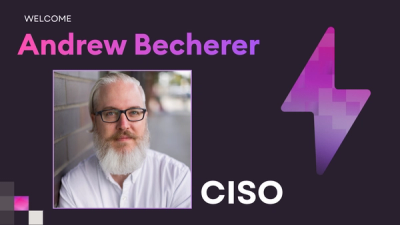
Socket’s first CISO brings deep experience securing high-growth SaaS companies as open source supply chain threats accelerate.