

Security News
US Government Forces Anthropic to Pull Claude Fable Days After Launch
Anthropic says the directive cited national security concerns over a narrow jailbreak, but offered no specific technical details.
By Sarah Gooding - Jun 13, 2026
@openparachute/vault
Advanced tools
Parachute Vault is a self-hosted knowledge graph that any AI can read and write, over the open MCP protocol. Your notes, tags, links, and attachments live on your machine — in plain SQLite databases under ~/.parachute/, not in a vendor's cloud.
Today it works with Claude Code, Codex, Goose, OpenCode, and any other local MCP client — same endpoint, your vault. Claude Code auto-wires on install; for the rest, point them at http://127.0.0.1:1940/vault/default/mcp.
Web AI connectors — claude.ai, ChatGPT, and Gemini — are coming in the next few weeks. Switch tools, keep your knowledge. No vendor lock-in, no re-import step when the next model lands.
Requires Bun (curl -fsSL https://bun.sh/install | bash) and macOS 13+ or Linux. No root needed — see Requirements below for specifics.
# Install globally (registers the `parachute` CLI)
bun add -g @openparachute/vault
parachute-vault init

# Or clone and run directly
git clone https://github.com/ParachuteComputer/parachute-vault
cd parachute-vault
bun install
bun src/cli.ts vault init
vault init creates a vault, generates an API key, starts a background daemon (launchd on Mac, systemd on Linux), and configures Claude Code's MCP — all in one command. Start a new Claude Code session and your vault's tools show up. For other local MCP clients (Codex, Goose, OpenCode, Cursor, Zed, Cline, your own agent), point them at http://127.0.0.1:1940/vault/default/mcp — the API key is printed once at init; save it for anything that isn't Claude Code.
For remote access from Claude Desktop or mobile apps, see Deployment below.
A server on port 1940 with:
[[wikilinks]] in note content automatically create links in the graphEach vault is its own SQLite database. Run multiple vaults on one server.
vault init doesA mental model for "where is my data?" and "what can I poke at?" after the one-command setup.
~/.parachute/~/.parachute/ # ecosystem root — shared with sibling services
services.json # CLI-owned manifest (used by the dispatcher for
# discovery + routing across Parachute services)
well-known/ # CLI-owned (.well-known serving)
vault/ # everything vault owns
config.yaml # global config — port, default_vault, owner password
# hash, TOTP secret, backup-codes hashes, backup
# schedule. 0600.
.env # runtime env vars (PORT=1940 by default; any webhook
# API keys you add later). Sourced by the daemon wrapper.
vault.log # stdout of the running daemon (tail via `parachute-vault logs`)
vault.err # stderr of the running daemon
server-path # text file: absolute path to the repo's src/server.ts —
# how the daemon wrapper finds the source after you move it
start.sh # the wrapper launchd/systemd execs. Knows the absolute
# path to `bun` so a later PATH change doesn't break the daemon
assets/ # legacy top-level uploads dir (attachments now land per-vault)
vaults/ # one subdirectory per vault
default/
vault.db # the SQLite database — notes, tags, links, attachments,
# per-vault tokens, tag schemas (oauth_clients +
# oauth_codes tables persist post-workstream-E but
# are vestigial — no issuer writes to them anymore)
vault.db-wal # WAL journal (write-ahead log) — transient, recreated
# on demand. Carries pending writes between checkpoints.
vault.db-shm # WAL shared-memory index — transient, recreated on demand.
vault.yaml # per-vault config — description (sent as MCP session
# instruction), published_tag override, legacy api_keys
assets/ # per-vault uploaded attachments (audio, images)
~/.parachute/ itself is the ecosystem root shared across sibling services — services.json and well-known/ live at the root and are managed by the top-level CLI. Everything vault owns is scoped under ~/.parachute/vault/. Pre-0.3 installs kept vault state directly at the root; any legacy paths still there are auto-migrated into vault/ on first post-upgrade run (see CHANGELOG).
config.yaml is the one file written at 0600 because it holds the bcrypt owner-password hash and the plaintext TOTP secret (legacy fields kept for hub's expose-posture-check; the standalone consent flow they used to gate was retired in 0.4.x — workstream E). .env is written with your umask default (typically 0644); if you add webhook API keys there, tighten the mode yourself. SQLite DBs follow your umask.
The vault SQLite database runs in WAL (write-ahead logging) journal mode for multi-process concurrent access — the daemon, CLI tools, and out-of-process consumers (e.g. parachute-runner polling tag:job) can read concurrently while the daemon writes, without lock contention. WAL adds two sidecar files alongside vault.db: vault.db-wal (the journal) and vault.db-shm (shared-memory index). Both are recreated on demand; don't back them up separately — parachute-vault backup snapshots only vault.db via VACUUM INTO, which produces a consistent full-DB copy without needing the sidecars. If you copy a vault by hand, vault.db alone is sufficient on a checkpointed database; if you must capture an in-flight write, copy all three files. If WAL can't be enabled (NFS, some FUSE / Docker volume drivers don't support the -shm region), vault logs [vault] WAL mode could not be enabled on startup and falls back to the legacy single-writer mode.
computer.parachute.vault (plus computer.parachute.vault.backup if you ran vault backup --schedule).parachute-vault.service (managed via systemctl --user).vault init prints a reminder to start the server yourself (bun src/server.ts or Docker). No service registration.The daemon binds 0.0.0.0:1940 (or whatever you set in PORT) and serves REST, MCP, and OAuth-discovery routes (the issuer itself lives on the hub — see "OAuth lives on the hub" below). parachute-vault status is the fast check; parachute-vault url prints just the URL for use in scripts.
~/.claude.jsonvault init adds one entry — mcpServers["parachute-vault"] — pointing at http://127.0.0.1:<port>/vault/<default-vault>/mcp with a baked-in Authorization: Bearer <hub-jwt> header (a hub-minted JWT — vault#282 Stage 2). Next Claude Code session picks it up; there's no further wiring. See Connecting a client for rotating that token or pointing it elsewhere.
vault init asks two explicit questions: (1) install vault as an MCP server in ~/.claude.json? (2) also surface the access token so you can paste it into other MCP clients (Codex, Goose, OpenCode, Cursor, Zed, Cline), scripts, or curl? Both default yes. Pass --mcp / --no-mcp and --token / --no-token for non-interactive installs.
If you said yes to (2), the hub-issued JWT is printed prominently at the end — it's the same token baked into ~/.claude.json (if you also said yes to (1)). It's not stored anywhere retrievable — save it if you need it for curl, cron, or any other script. Lost it? Mint a fresh one with parachute auth mint-token --scope vault:<name>:<verb> (or rewire an MCP client with parachute-vault mcp-install, or use the admin SPA Tokens page). As of vault 0.5.0 (vault#282 Stage 2) vault no longer mints its own pvt_* tokens — minting is the hub's job.
Vault is OAuth resource-server-only. The authorization flow — DCR, consent page, code-for-token exchange — lives on the hub. Install it once you want browser-based clients (Claude Desktop, Parachute Daily, etc.) to connect:
parachute install hub
The hub fronts every vault on the host with a single consent surface, signs JWTs that vault validates against the hub's JWKS, and renders the operator UI. Vault still serves OAuth discovery (/.well-known/oauth-*) but the metadata documents forward clients to the hub. See docs/auth-model.md for the validation contract.
Vault shipped its own standalone OAuth issuer through 0.4.7. It was retired in 0.4.x — workstream E. If you're upgrading from a standalone-vault posture, see
UPGRADING.md.
Two ways to authenticate — pick based on the client, not the deployment:
| Path | When to use | User action |
|---|---|---|
| OAuth 2.1 + PKCE (browser flow, via hub) | Claude Desktop, Parachute Daily, any third-party MCP client set up interactively | Click "Add integration", enter the vault MCP URL, a browser opens to the hub's consent page, sign in with hub credentials, done — no token ever touches your clipboard |
| Bearer token (hub JWT) | Claude Code (auto-wired by vault init), CLI scripts, cron jobs, any non-interactive caller | curl -H "Authorization: Bearer <hub-jwt>" — mint one with parachute-vault mcp-install (MCP clients) or parachute auth mint-token --scope vault:<name>:<verb> (scripts) |
As of 0.5.0 (vault#282 Stage 2) vault is a pure hub resource-server: both paths use a hub-signed JWT that vault validates against the hub's JWKS. (The OAuth path is the interactive browser handshake; the bearer path mints the same kind of JWT non-interactively.) The old vault-local pvt_* opaque token was dropped — vault no longer mints or accepts it. The server-wide VAULT_AUTH_TOKEN operator bearer remains for the no-granular-auth / cross-container path.
vault init fully auto-configures ~/.claude.json — there's nothing else to do. The entry it writes bakes in a hub-minted JWT rather than running the interactive OAuth browser flow:
{
  "mcpServers": {
    "parachute-vault": {
      "type": "http",
      "url": "http://127.0.0.1:1940/vault/{name}/mcp",
      "headers": { "Authorization": "Bearer <hub-jwt>" }
    }
  }
}
Where {name} is default on a fresh install, or whatever vault you pointed vault init at. First MCP call after vault init requires no browser handoff — Claude Code uses the baked-in token and the vault's tools show up in your next session. This is intentional: for an owner connecting their own machine's vault to their own Claude Code, the token is already there and the OAuth browser handshake would add friction.
To re-point Claude Code at a different vault, change default_vault in ~/.parachute/vault/config.yaml and re-run parachute-vault init — which re-mints an API token and re-writes the ~/.claude.json entry end-to-end. To rotate the token only, run parachute-vault mcp-install (defaults to --mint, which mints a fresh scope-narrow hub JWT via ~/.parachute/operator.token and writes it into ~/.claude.json with an Authorization: Bearer … header). See the cookbook section below for the full flag surface — token paste, scope narrowing, project-level install, multi-vault.
For Claude Desktop — or any install where the server is on a different machine from the client — use the browser-based OAuth flow. The flow runs against the hub, not vault, so make sure you've run parachute install hub first:
https://vault.yourdomain.com/vault/{name}/mcp (replace {name} with your vault name — e.g. default). Do not paste a bearer token — leave the auth field empty./vault/{name}/.well-known/oauth-protected-resource, which names the hub as the authorization server. It then drives the OAuth flow against the hub: DCR, browser-opened consent page, code exchange.full or read), click Authorize.If you'd rather skip the browser flow — e.g. you're scripting the setup — Claude Desktop also accepts a bearer token via the integration's auth header field. Mint a hub JWT with parachute auth mint-token --scope vault:<name>:<verb> (or the admin SPA Tokens page), or reuse the one from vault init if you still have it. This is the "manual bearer" fallback; the OAuth browser flow is the recommended path.
Daily uses the same OAuth flow (hub-fronted). On first launch: enter the server URL, pick the vault from the drop-down (populated from the public GET /vaults/list endpoint), tap Connect to Vault. The consent handoff runs in your phone's browser against the hub, then redirects back to the app via the parachute://oauth/callback deep link. The app stores the hub-signed JWT in platform secure storage.
One server, many vaults. Each vault is its own SQLite DB with its own MCP endpoint, its own OAuth, and its own tokens.
parachute-vault create work     # new vault named "work"
parachute-vault list            # show all vaults on this server
parachute-vault remove work --yes
The default vault is managed for you. vault init creates default on first install and records it as default_vault in ~/.parachute/config.yaml. vault create <name> promotes the newly-created vault to default when no default exists or when the configured default points at a missing vault. vault remove <name> promotes the sole survivor when you delete the default and one vault remains; if multiple remain after removing the default, it clears the setting and tells you to edit config.yaml yourself. There is no vault set-default subcommand — to point the server at a different existing vault, edit the default_vault: line in ~/.parachute/config.yaml and parachute-vault restart.
URL shape. Every vault-touching route lives under /vault/{name}/...: /vault/{name}/mcp, /vault/{name}/api/notes, /vault/{name}/view/{id}, /vault/{name}/.well-known/oauth-* (discovery forwarders). There is no unscoped fallback — pick the vault in the URL even if you only have one. OAuth tokens are scoped to the vault named in the audience claim (aud=vault.<name>); cross-vault substitution is rejected at the auth layer.
Listing vaults from a client. The authenticated GET /vaults endpoint returns full vault metadata. The public GET /vaults/list endpoint returns names only, no metadata, no auth required — this is what Parachute Daily's vault picker calls before the user authenticates. Operators who want to hide the vault list from unauthenticated callers can set discovery: disabled in ~/.parachute/vault/config.yaml to make /vaults/list return 404.
# Setup
parachute-vault init                       # one-command setup (idempotent — safe to re-run)
parachute-vault status                     # check what's running
parachute-vault doctor                     # diagnose install/config issues (see Troubleshooting)
parachute-vault url                        # print the local server URL (for scripts)
parachute --version                        # print the installed version (aliases: -v, version)
parachute-vault uninstall                  # remove daemon + MCP entry; keeps user data
parachute-vault uninstall --wipe           # ...and also remove vaults, .env, config.yaml, logs
parachute-vault uninstall --yes --wipe     # scripted destructive wipe (prints an audit line)

# Vaults
parachute-vault create work                # create a new vault
parachute-vault list                       # list all vaults (alias: `ls`)
parachute-vault remove work --yes          # delete a vault (alias: `rm`)
parachute-vault mcp-install                # (re)write the MCP client entry; defaults to --mint (hub-issued JWT) at local scope
parachute-vault mcp-install --token <t>    # paste an existing bearer (hub JWT or VAULT_AUTH_TOKEN) instead of minting
parachute-vault mcp-install --install-scope user      # write ~/.claude.json top-level (every project)
parachute-vault mcp-install --install-scope local     # write ~/.claude.json projects[<cwd>] (this directory only — default)
parachute-vault mcp-install --install-scope project   # write ./.mcp.json (checked into the repo)
parachute-vault mcp-install --vault work   # target the "work" vault (keyed as parachute-vault-work)
parachute-vault mcp-install --dry-run      # describe the write without touching disk or the hub
parachute-vault mcp-config gitcoin         # emit JSON for `claude -p --mcp-config "$(...)"`
parachute-vault mcp-config gitcoin --env-vars   # template form with ${PARACHUTE_HUB_URL}/${PARACHUTE_VAULT_TOKEN}

# OAuth — owner password + 2FA (legacy, no longer wired up)
# vault's standalone OAuth consent page was retired in 0.4.x (workstream E);
# OAuth now runs on the hub. These commands still write to config.yaml for
# hub's `expose public` posture-check (which reads the same fields), but
# they don't gate any consent flow inside vault. Set hub credentials with
# `parachute auth set-password` instead.
parachute-vault set-password               # set/change owner password (legacy YAML field)
parachute-vault set-password --clear       # remove the owner password
parachute-vault 2fa status                 # show 2FA state + remaining backup codes
parachute-vault 2fa enroll                 # enroll TOTP (shows QR + prints one-time backup codes)
parachute-vault 2fa disable                # disable 2FA
parachute-vault 2fa backup-codes           # regenerate backup codes

# Tokens — vault#282 Stage 2: vault no longer mints its own tokens. Mint a
# hub JWT with `parachute-vault mcp-install` (MCP clients) or
# `parachute auth mint-token --scope vault:<name>:<verb>` (scripts).
parachute-vault tokens                     # list any vestigial pre-0.5.0 token rows (all vaults)
parachute-vault tokens revoke <token-id>   # revoke a vestigial row (default vault; add --vault to target)

# Obsidian
parachute-vault import ~/Obsidian/MyVault              # import into default vault
parachute-vault import ~/Obsidian/Work --vault work    # import into a specific vault
parachute-vault import <path> --dry-run                # preview without importing
parachute-vault export ./output --vault work           # export a specific vault

# Config
parachute-vault config                     # show current configuration
parachute-vault config set KEY value       # set an env var (e.g. PORT=1940)
parachute-vault config unset KEY           # remove an env var
parachute-vault restart                    # apply config changes (bounces the daemon)
# Env vars live in ~/.parachute/vault/.env. Notable ones:
#   PORT                          — server port (default 1940)
#   PARACHUTE_GITHUB_CLIENT_ID +
#   PARACHUTE_GITHUB_APP_SLUG     — bring-your-own GitHub App for the mirror
#                                   "Back up to GitHub" flow (defaults to the
#                                   shared Parachute app). Set BOTH or NEITHER:
#                                   the pair must name the same app — mixing
#                                   apps breaks the install probe.

# Server
parachute-vault serve                      # run the server in the foreground (no daemon)
parachute-vault logs                       # stream vault.log + vault.err (tail -f)

# Backup
parachute-vault backup                         # one-shot backup to configured destinations
parachute-vault backup --schedule daily        # hourly | daily | weekly | manual (macOS launchd)
parachute-vault backup status                  # schedule, last run, destinations, next run
Notes: query-notes (universal read — single by ID/path, filter, search, graph neighborhood), create-note (single or batch), update-note (single or batch — content, tags, links, metadata), delete-note
Tags: list-tags (with optional schema detail), update-tag (upsert description + schema fields), delete-tag
Graph: find-path (BFS between two notes)
Vault: vault-info (get/update description + stats)
Each vault teaches AI agents how to use it:
# ~/.parachute/vault/vaults/default/vault.yaml
name: default
description: |
  Personal knowledge vault. Tags in use: daily, voice, reader, project.
  Use lowercase tags. Tag every note. Read before writing to avoid duplicates.
Sent as the MCP server instruction at session start.
[[wikilinks]] in note content automatically create links in the graph. Supports aliases ([[Name|display]]), anchors ([[Note#Section]]), and embeds (![[Image]]). Unresolved links auto-resolve when the target note is created later.
parachute-vault create research
parachute-vault import ~/Obsidian/Research --vault research
parachute-vault export ./output --vault research
Imports: frontmatter → metadata, #tags → tags table, [[wikilinks]] → links table, file paths → note.path. Skips duplicates.
Note paths work like Obsidian file paths (Projects/Parachute/README). Normalized, unique, case-insensitive resolution. Renaming a note's path updates [[wikilinks]] in other notes.
Declarative config-driven webhooks that fire when a note mutation matches a predicate. Configured in ~/.parachute/vault/config.yaml:
triggers:
  - name: scribe
    events: [created, updated]
    when:
      tags: [voice]
      has_content: false
      missing_metadata: [transcribed_at]
    action:
      webhook: http://localhost:3200/v1/audio/transcriptions
      send: attachment
      timeout: 120000

  - name: narrate
    events: [created, updated]
    when:
      tags: [reader]
      has_content: true
      missing_metadata: [audio_rendered_at]
    action:
      webhook: http://localhost:3100/v1/audio/speech
      send: content
Predicate fields: tags (all must match), has_content (true/false), missing_metadata (keys that must be absent), has_metadata (keys that must be present).
Two-phase markers: On match, the trigger sets <name>_pending_at metadata before calling the webhook, then replaces it with <name>_rendered_at on success. This prevents re-entry and concurrent runs.
| Mode | Request format | Response format | Use case |
|---|---|---|---|
json (default) | POST { trigger, event, note } as JSON | { content?, metadata?, attachments?, skipped_reason? } | General-purpose webhooks |
attachment | POST first audio attachment as multipart/form-data (Whisper API format) | { text } — written to note.content | Transcription (e.g., scribe on :3200) |
content | POST { input: note.content, model, voice } as JSON (OpenAI TTS format) | Binary audio — saved as attachment | Text-to-speech (e.g., narrate on :3100) |
Example flow — voice note transcription:
POST /api/storage/upload, creates note tagged voice with no contentscribe matches (tag=voice, has_content=false, missing transcribed_at){ text: "transcribed text..." }scribe_rendered_at metadataExample flow — text-to-speech:
reader is created with text contentnarrate matches (tag=reader, has_content=true, missing audio_rendered_at){ input: note.content } to narratenarrate_rendered_at metadataWebhook servers (scribe, narrate) are stateless — they don't need vault's API key.
Two paths feed the same transcription worker; they differ in how the result surfaces.
Auto-transcribe (vault#353). When the operator flips
auto_transcribe.enabled: true in vault's config AND scribe is
reachable (registered in ~/.parachute/services.json, or pointed at
via SCRIBE_URL), any audio attachment uploaded to the vault is
automatically queued for transcription. The worker writes a sibling
<attachment-path>.transcript.md note with the transcript text +
frontmatter linking back to the audio (transcript_of,
transcript_status, transcript_duration_ms, etc.). Failures land as
the same note with transcript_status: failed and the cause in
transcript_error; the original audio is preserved. Operators can
retry a failed transcript via POST /vault/<name>/api/notes/<note-id>/retry-transcription.
Explicit transcribe: true (legacy, Lens flow). Callers that already
know at upload time that an audio file should be transcribed pass
transcribe: true to POST /api/notes/{id}/attachments. The vault
stamps the attachment with transcribe_status: "pending" and the note
with transcribe_stub: true. The worker replaces the literal
_Transcript pending._ placeholder in the note body with the transcript
on success (or the whole body if no placeholder is present).
Service discovery is automatic — when scribe lands in
~/.parachute/services.json (the canonical hub-maintained registry),
vault picks up its URL on next restart. The SCRIBE_URL env var still
wins when set. The shared bearer for vault→scribe auth is generated
once at first boot and persisted to ~/.parachute/vault/.env as
SCRIBE_AUTH_TOKEN; mirror that value into scribe's
SCRIBE_AUTH_TOKEN env so scribe accepts the Authorization header.
The worker POSTs audio as multipart to
${SCRIBE_URL}/v1/audio/transcriptions and expects { text: string }
back. On success it records transcript + transcribe_done_at +
transcribe_duration_ms on the attachment row regardless of the
result-surface path. Failures retry with exponential backoff up to three
attempts before flipping transcribe_status to "failed"; 4xx
responses carrying error_code (e.g. missing_provider) are treated as
terminal on the first failure.
Per-vault audio_retention controls what happens to the audio file on disk once the worker reaches a terminal state. It's readable and mutable at runtime via GET / PATCH /api/vault (under config.audio_retention), or by hand-editing vault.yaml.
keep (default) — leave the file on disk indefinitely.until_transcribed — unlink on successful transcription; on failure the file is kept so you can retry or re-upload.never — unlink on any terminal state, including failure. Users who opt in accept that losing a bad transcription also loses the source audio. The file stays during mid-queue retries so in-flight attempts still have something to send.In every mode the attachment row (and any stored transcript) is preserved; only the file on disk is affected.
Your vault is just SQLite DBs + a handful of YAML files under ~/.parachute/vault/. parachute-vault backup snapshots everything into a single timestamped tarball, for a one-shot or a scheduled run.
parachute-vault backup                         # one-shot — snapshot + ship to destinations
parachute-vault backup --schedule daily        # register a launchd agent (macOS)
parachute-vault backup --schedule manual       # stop scheduled backups
parachute-vault backup status                  # schedule, last run, destinations, next run
Configure destinations in ~/.parachute/vault/config.yaml:
backup:
  schedule: daily       # hourly | daily | weekly | manual
  retention:
    daily: 7            # last 7 daily snapshots
    weekly: 4           # last-of-week for 4 weeks
    monthly: 12         # last-of-month for 12 months
    yearly: null        # last-of-year, unbounded (null = keep every year forever)
  destinations:
    - kind: local
      path: ~/Library/Mobile Documents/com~apple~CloudDocs/parachute-backups
Retention is tiered (grandfather / father / son). After each run, the pruner keeps the union of four tiers:
| Tier | What it keeps |
|---|---|
| daily | The N most recent snapshots. |
| weekly | The last snapshot of each of the last N ISO weeks. |
| monthly | The last snapshot of each of the last N calendar months. |
| yearly | The last snapshot of each year — null means unbounded. |
A snapshot that qualifies for multiple tiers is kept once. Set any tier to 0 to disable it; sparse data (days without a backup) just means some tiers contribute nothing that day. Bucketing uses your local timezone, so calendars line up with what you see, not UTC.
What's in a snapshot: atomic VACUUM INTO copies of every vaults/<name>/vault.db, your config.yaml, and each vault's vault.yaml, bundled as parachute-backup-<timestamp>.tar.gz. Safe under concurrent reads/writes — no need to stop the daemon.
Restore: extract the tarball into a fresh ~/.parachute/vault/ and run parachute-vault init to re-register the daemon. The DBs and configs drop in place; you don't need any special restore command (for now — a dedicated vault restore is coming soon).
Destination kinds shipping in this release: local (any filesystem path — including iCloud Drive, a mounted external disk, or an rsync/Syncthing-backed folder). s3, rsync, and cloud destinations are planned but not yet implemented.
On Linux, scheduled runs via systemd timers are a follow-up; for now parachute-vault backup works on Linux but you'll need to wire the cron yourself.
Serve notes as clean HTML pages at /view/:noteId:
published (or with metadata.published: true). Returns 404 for unpublished notes.Authorization: Bearer <hub-jwt> header or ?key=<hub-jwt> query param.published_tag in vault.yaml to use a different tag name (default: publish).# ~/.parachute/vault/vaults/default/vault.yaml
published_tag: public
Every vault-touching path is scoped under /vault/{name}/ — substitute your vault name (e.g. default) for {name}:
GET/POST       /vault/{name}/api/notes                           query or create notes
GET/PATCH/DEL  /vault/{name}/api/notes/:idOrPath                  read, update, delete a single note
GET/POST       /vault/{name}/api/notes/:id/attachments            list or add attachments
GET            /vault/{name}/api/tags                             list tags (?include_schema=true for schemas)
GET/PUT/DEL    /vault/{name}/api/tags/:name                       get, update, or delete a tag
POST           /vault/{name}/api/tags/:name/rename                atomic rename (409 if target_exists)
POST           /vault/{name}/api/tags/merge                       atomic multi-source merge into a target tag
GET            /vault/{name}/api/find-path?source=...&target=...  shortest path between two notes
GET/PATCH      /vault/{name}/api/vault                            vault info (get or update description)
POST           /vault/{name}/api/storage/upload                   upload file (audio/image)
GET            /vault/{name}/api/storage/:path                    download file
POST           /vault/{name}/mcp                                  MCP endpoint (per-vault session)
*              /vault/{name}/oauth/{register,authorize,token}     OAuth 2.1 + PKCE flow
*              /vault/{name}/.well-known/oauth-*                  RFC 8414 / RFC 9728 discovery
GET            /vault/{name}/view/:idOrPath                       render note as HTML (public or auth)
GET            /vaults                                            authenticated: full metadata
GET            /vaults/list                                       public: vault names only (unless discovery: disabled)
GET            /health                                            health check
Patterns that fall out of vault's read and write surfaces. All examples assume your vault is reachable at http://localhost:1940 and your token is in $VAULT_TOKEN. MCP-side examples are how the same operation looks via the tool layer (Claude Code, Claude Desktop, Daily). Each recipe answers a question consumers have asked while building against vault — see vault#285 for the field-input thread these distilled from.
For an SSG or wiki rendering a section of the vault. path_prefix matches against the normalized path string — no .md, no trailing slash.
curl -H "Authorization: Bearer $VAULT_TOKEN" \
  "http://localhost:1940/vault/default/api/notes?path_prefix=Boulder%20Civics/City%20Council/&include_content=true"
// MCP
{ "name": "query-notes", "arguments": { "path_prefix": "Boulder Civics/City Council/", "include_content": true } }
Sort by something other than created_at. The field must be declared indexed: true in some tag schema first — that's what materializes the backing generated column + B-tree index. The "tag authorizes the index" pattern lives in core/src/indexed-fields.ts.
curl -H "Authorization: Bearer $VAULT_TOKEN" \
  "http://localhost:1940/vault/default/api/notes?order_by=meeting_date&sort=desc&include_content=true"
Declare the index via update-tag:
{ "name": "update-tag", "arguments": {
    "tag": "meeting",
    "fields": { "meeting_date": { "type": "string", "indexed": true } }
} }
Listing pages don't need the whole note. By default GET /notes returns the lean shape — 120-char whitespace-collapsed preview, byteSize, and the usual metadata — with no content. Single-note GET /notes/:id still returns full content by default; pass include_content=false to drop it.
curl -H "Authorization: Bearer $VAULT_TOKEN" \
  "http://localhost:1940/vault/default/api/notes?path_prefix=Posts/"
# → [{ id, path, byteSize, preview, tags, metadata, ... }, ...]
Caller-tunable preview length is a future enhancement — file an issue if 120 chars isn't enough.
A 100KB+ transcript won't fit in one MCP response. Pass content_offset / content_length (UTF-8 bytes) for a bounded read — the response carries the slice plus content_total_length and content_next_offset (null when complete). Loop, feeding content_next_offset back in as content_offset; concatenating the slices reconstructs the content byte-for-byte. Slices end on a codepoint boundary within the budget (never over content_length, at most 3 bytes under).
curl -H "Authorization: Bearer $VAULT_TOKEN" \
  "http://localhost:1940/vault/default/api/notes/Meetings%2F2026-06-09?content_offset=0&content_length=65536"
# → { ..., "content": "<first ≤64KB>", "content_total_length": 118034, "content_next_offset": 65530 }
// MCP — same params on query-notes; works per-note on lists with include_content: true
{ "name": "query-notes", "arguments": { "id": "Meetings/2026-06-09", "content_offset": 0, "content_length": 65536 } }
Range params require content in the response — with include_content=false (or a list query left on its lean default) they error rather than silently no-op. Full semantics in docs/HTTP_API.md ("Content range — bounded reads for large notes").
The SSG / sync pattern. Two equivalent forms — bracket-style is canonical going forward; the flat form is the same shape that ships through the REST/MCP date filter today.
# Bracket-style (canonical)
curl -H "Authorization: Bearer $VAULT_TOKEN" \
  "http://localhost:1940/vault/default/api/notes?meta[updated_at][gte]=2026-04-01T00:00:00Z"

# Flat form (DEPRECATED in 0.4.3; planned removal in a later 0.x per vault#288)
curl -H "Authorization: Bearer $VAULT_TOKEN" \
  "http://localhost:1940/vault/default/api/notes?date_field=updated_at&date_from=2026-04-01T00:00:00Z"
// MCP — `date_filter` accepts created_at, updated_at, or any indexed metadata field.
{ "name": "query-notes", "arguments": { "date_filter": { "field": "updated_at", "from": "2026-04-01T00:00:00Z" } } }
Only gte and lt are accepted on created_at / updated_at (other operators reject with INVALID_QUERY — these bracket forms route to the real-column dateFilter, not the full metadata operator set, so the half-open [from, to) shape is the only expressible range). The full operator set in the next recipe applies to metadata fields only.
Equality on any metadata field works with no setup:
curl -H "Authorization: Bearer $VAULT_TOKEN" \
  "http://localhost:1940/vault/default/api/notes?meta[meeting-type]=study-session&include_content=true"
Range, in, not_in, and exists operators require the field to be declared indexed: true (same gate as order_by):
# Range — both bounds AND together on one field
"…/notes?meta[date][gte]=2026-01-01&meta[date][lt]=2026-04-01"

# Membership — `[]` array form OR comma-separated; same result.
"…/notes?meta[status][in][]=active&meta[status][in][]=exploring"
"…/notes?meta[status][in]=active,exploring"

# Presence check
"…/notes?meta[deadline][exists]=true"
Supported operators: eq (default when no operator given), ne, gt, gte, lt, lte, in, not_in, exists. Multiple meta[…] filters AND together. Bracket-style and shorthand on the same field in one request reject loudly — pick one form.
content_edit does surgical find-and-replace. Payload is the changed text, not the whole note. old_text must occur exactly once; multiple matches or zero matches reject with a "re-read and retry" error.
// MCP
{ "name": "update-note", "arguments": {
    "id": "notes/decisions",
    "content_edit": {
      "old_text": "Status: pending",
      "new_text": "Status: shipped (2026-05-10)"
    },
    "if_updated_at": "2026-05-10T12:34:56.789Z"
} }
# REST equivalent
curl -X PATCH -H "Authorization: Bearer $VAULT_TOKEN" -H "Content-Type: application/json" \
  -d '{"content_edit":{"old_text":"Status: pending","new_text":"Status: shipped (2026-05-10)"},"if_updated_at":"…"}' \
  "http://localhost:1940/vault/default/api/notes/notes/decisions"
Set include_content: false on the request to cut the response cost too — you get back the lean NoteIndex shape instead of the full updated note.
Atomic at the SQL layer: two concurrent appends both land in some order, never clobber. Append-only and prepend-only updates are exempt from the if_updated_at precondition that other mutations require — the SQL-atomic concatenation can't lose data on a stale read, so the precondition would be ceremony for no benefit. Underlying mechanic in core/src/notes.ts:295-322.
{ "name": "update-note", "arguments": { "id": "notes/journal/2026-05-10", "append": "\n\nEvening note: …" } }
prepend is frontmatter-aware: if the note opens with YAML frontmatter, the prepended text is automatically injected after the closing --- fence so parsers that expect frontmatter at byte 0 still find it. Detection is done in the same SQL UPDATE expression, so atomicity is preserved.
The shortest path to a public HTTPS URL for a vault you control — useful for SSG rebuilds running on GitHub Actions, Vercel, or any runner that isn't on your tailnet. See Remote access via Tailscale Funnel below for the full setup.
Bare parachute-vault mcp-install from a terminal walks you through a short contextual conversation — picks defaults informed by your environment (how many vaults you have, whether the hub is reachable, whether you're in a project directory, whether vault is already installed somewhere), shows the JSON shape it will write before doing anything, and asks before each non-obvious choice. The patterns below are the non-interactive shapes — pass any flag (--mint, --token, --scope, --install-scope, --vault) and the walkthrough is skipped.
--install-scope accepts three values, matching Claude Code's own claude mcp add --scope:
| Scope | Where the entry lives | Visibility |
|---|---|---|
local (default) | ~/.claude.json under projects[<absolute-cwd>].mcpServers | private to your machine, scoped to this directory |
user | ~/.claude.json top-level mcpServers | every project, every directory on this machine |
project | <cwd>/.mcp.json | checked into the repo, shared with anyone who clones it |
The default is local — Claude Code only loads the entry when launched from the directory you ran the install from. Pick user for a global install (every project sees the vault); pick project to commit the entry to the repo so collaborators get it on git pull.
# 1. Default — mint a scope-narrow hub JWT (vault:<vault>:read) via your
#    operator token; write it into ~/.claude.json under projects[<cwd>]
#    (local scope, this directory only). Requires:
#      - ~/.parachute/operator.token (run `parachute auth rotate-operator` if missing)
#      - PARACHUTE_HUB_ORIGIN set OR an active `parachute expose` session
parachute-vault mcp-install --mint

# 2. Global install — write the entry at top-level ~/.claude.json so
#    Claude Code loads it from every project, every directory.
parachute-vault mcp-install --install-scope user

# 3. Project-level install — write ./.mcp.json (committed to the repo,
#    shared with the team). Pair with --scope vault:write when the
#    project actually mutates the vault.
parachute-vault mcp-install --install-scope project --scope vault:write

# 4. Paste an existing bearer — useful when you already have a hub JWT in
#    hand, or want to re-use the VAULT_AUTH_TOKEN operator bearer / a
#    long-lived JWT from another machine. Skips the mint step entirely.
#    (vault#282 Stage 2 removed the --legacy-pat pvt_* path — without a hub,
#    paste a bearer here or set VAULT_AUTH_TOKEN.)
parachute-vault mcp-install --token <hub-jwt-or-operator-bearer>
Multi-vault. --vault <name> targets a specific vault and writes the entry under parachute-vault-<name> so multiple vaults coexist. Without --vault, the singular parachute-vault slot is used and one install clobbers another — that's intentional for the common single-vault case.
Dry-run. parachute-vault mcp-install --dry-run prints the write that would happen — target file, install scope, entry key, URL, auth mode — without touching disk or hitting the hub. Useful for probing the command's effect; in particular, --help no longer creates an empty projects[<cwd>] entry as a side effect, but --dry-run is the deliberate "tell me what you'd do" path.
Doctor. parachute-vault doctor checks ~/.claude.json (both top-level and projects[<cwd>]) and ./.mcp.json, and reports which one holds the entry, plus port-match and reachability of the MCP URL.
claude -p runners (mcp-config)mcp-install writes a persistent entry into a Claude Code config file. That's the right shape for interactive sessions, but it has two sharp edges for headless runners that spawn claude -p against a vault:
claude -p subprocesses. A project-scoped install under projects[<cwd>].mcpServers is visible to an interactive claude launched from that directory, but a claude -p invocation spawned by a Python script — even from the same directory, even with --setting-sources user,project,local — doesn't pick it up. Use --install-scope user for scripts, cron jobs, and runners; the local default is fine for interactive sessions.--mcp-config JSON is per-runner boilerplate. Some runners prefer to inline the MCP config rather than mutate the user's Claude Code state. parachute-vault mcp-config <vault-name> emits exactly the JSON shape --mcp-config consumes:# Mint a vault-scoped hub JWT first (parachute auth mint-token --scope
# vault:gitcoin:read), then:
export PARACHUTE_VAULT_TOKEN=<hub-jwt>
claude -p --mcp-config "$(parachute-vault mcp-config gitcoin)" \
--strict-mcp-config \
"Summarize the latest notes under projects/gitcoin"
# Or commit a template and expand at use-time:
parachute-vault mcp-config gitcoin --env-vars > .claude/mcp-gitcoin.json
# ...then later, when invoking claude:
export PARACHUTE_HUB_URL=http://127.0.0.1:1940
export PARACHUTE_VAULT_TOKEN=<hub-jwt>
claude -p --mcp-config "$(envsubst < .claude/mcp-gitcoin.json)" \
--strict-mcp-config ...
Note on --env-vars expansion. The file-save pattern requires the caller to expand ${...} placeholders at use-time (e.g. via envsubst, available on most Linux distros and via brew install gettext on macOS). Bare $(cat .claude/mcp-gitcoin.json) feeds literal ${PARACHUTE_HUB_URL} strings into claude -p — the shell only expands placeholders inside the command-substitution source, not inside the captured output. claude -p itself doesn't expand ${...} either, so the substitution has to happen between the file and the command.
Flags: --token <bearer> (alternative to PARACHUTE_VAULT_TOKEN); --base-url <url> (override the auto-detected origin, useful for tailnet-exposed hubs: --base-url https://hub.tail.ts.net); --env-vars (emit the template form with ${PARACHUTE_HUB_URL} and ${PARACHUTE_VAULT_TOKEN} placeholders, safe to commit). With no token and no --env-vars, the command exits 1 with a clear error — runners get a fail-fast.
notes       (id, content, path, metadata, created_at, updated_at)
tags        (name)
note_tags   (note_id, tag_name)
links       (source_id, target_id, relationship, metadata, created_at)
attachments (id, note_id, path, mime_type, metadata, created_at)
Metadata is a JSON column. Vaults start blank — no predefined tags or schema.
All API and MCP requests require a valid API key. No exceptions — localhost gets no special treatment.
For wiring up an AI client (Claude Code, Claude Desktop, Parachute Daily), see Connecting a client above. This section covers token-level details: how to pass a key, how to manage tokens, and which endpoints are public by design (/health, /vaults/list, published notes at /vault/{name}/view/:id).
As of 0.5.0 (vault#282 Stage 2) vault accepts these bearers at every authenticated endpoint:
eyJ...) — the user-credential path; what OAuth issues and what parachute-vault mcp-install / parachute auth mint-token produce. Audience-bound to vault.<name>, scope-narrowed (vault:<name>:<verb>).VAULT_AUTH_TOKEN — the server-wide operator bearer (env var; full-admin against any vault on the server).pvk_... — legacy global API keys from config.yaml / per-vault vault.yaml (still honored for existing deployments).The old vault-local pvt_* opaque token was dropped at 0.5.0 — vault no longer mints or accepts it.
# Header (preferred)
curl -H "Authorization: Bearer <hub-jwt>" http://localhost:1940/vault/default/api/notes

# Alternative header
curl -H "X-API-Key: <hub-jwt>" http://localhost:1940/vault/default/api/notes

# Query param (for /view endpoint only — convenient for browsers)
curl http://localhost:1940/vault/default/view/noteId?key=<hub-jwt>
Tokens are hub-issued JWTs (vault#282 Stage 2 — vault no longer mints its own). Mint and revoke happen on the hub:
parachute-vault mcp-install --scope vault:write   # mint + wire a hub JWT into an MCP client
parachute auth mint-token --scope vault:<name>:<verb>   # mint a scoped JWT for scripts
parachute auth tokens                              # list / revoke hub JWTs (hub registry)
Two permission levels carry through the JWT scope verb:
| Verb | Can do |
|---|---|
admin / write → full | Everything (CRUD + delete + token management) |
read | Query, list, find-path, vault-info only |
parachute-vault tokens list / tokens revoke remain only to clean up any
vestigial pre-0.5.0 rows. Legacy pvk_... keys from config.yaml still work at
runtime; the vault keys CLI commands were removed long ago.
Three endpoints work without auth:
GET /health — returns { status: "ok" } (no sensitive data)GET /vaults/list — vault names only (set discovery: disabled in config.yaml to hide)GET /vault/{name}/view/:noteId — serves published notes only (returns 404 for unpublished)Vault runs HTTP on localhost. This is intentional — TLS is handled by the access layer. Never expose port 1940 directly to the internet without TLS.
All API and MCP requests require an API key. There is no localhost bypass.
For remote access, always use a TLS-terminating proxy:
| Access path | API key security | Safe? |
|---|---|---|
| localhost (same machine) | Never leaves machine | Yes |
| Tailnet (Tailscale VPN) | WireGuard encrypted | Yes |
| Tailscale Funnel (public HTTPS) | HTTPS at edge, WireGuard to machine | Yes |
| Cloudflare Tunnel (public HTTPS) | HTTPS at edge, local socket to machine | Yes |
| Direct LAN IP (no TLS) | Plaintext on WiFi | Avoid |
| Direct internet (no TLS) | Plaintext on internet | Never do this |
parachute-vault doctor is your first stopdoctor inspects the install and prints one line per check with a status (✓ pass, ! warn, ✗ fail) and, when relevant, a suggested fix. It exits 1 on any fail and 0 otherwise. Run it any time something feels off.
The checks, in the order they're emitted:
| Check | What it verifies | Typical fix when failing |
|---|---|---|
| server-path pointer | ~/.parachute/vault/server-path exists, is non-empty, and points at a src/server.ts that actually exists. This is where the stale-path failure after a repo move shows up first. | parachute-vault init from the current repo location. |
| wrapper script | ~/.parachute/vault/start.sh exists. Without it, launchd / systemd has nothing to exec. | parachute-vault init. |
| launchd agent (macOS) / systemd service (Linux) | The daemon is registered and loaded/active. On Linux without systemd, the check is silently skipped. | parachute-vault restart or re-run vault init. |
| bun on PATH | bun is resolvable via your shell's PATH. Not required once the daemon is installed (start.sh embeds an absolute bun path at init time) but missing bun is the #1 first-time-user failure. | curl -fsSL https://bun.sh/install | bash and restart the shell. |
MCP entry in ~/.claude.json | An entry is present. When it is, two follow-ups: the URL's port matches the running vault's port, and the MCP URL is reachable over HTTP (any response — even 401 — counts as reachable). | parachute-vault mcp-install to rewrite the entry, or parachute-vault restart if the daemon is down. |
port 1940 availability | Probes via lsof / ss and classifies: free, held by our daemon (pass), held by a foreign process (warn), or unknown (tool unavailable → check silently omitted). | Stop the conflicting process, or set a different PORT in ~/.parachute/vault/.env and re-run vault init. |
backup agent (macOS, only when backup.schedule != manual) | The scheduled-backup launchd agent is loaded. | parachute-vault backup --schedule <hourly|daily|weekly> to reinstall the agent. |
backup destinations (only when backup.schedule != manual) | At least one destination is configured; each configured destination is writable. | Edit ~/.parachute/vault/config.yaml under backup.destinations, or fix the path's permissions. |
Daemon won't start after a port change. ~/.parachute/vault/.env has the new PORT=... but the daemon is still trying to bind the old one, or something else already holds the new port. parachute-vault doctor surfaces both conditions. Fix the holder (or pick a different port) and parachute-vault restart.
MCP entry is stale after moving the repo. launchd/systemd keeps pointing at the old path. doctor flags this as a failed server.ts at pointer target check; parachute-vault init from the new location rewrites the pointer, wrapper, and daemon registration.
Claude Code shows no vault tools. Check in order: (1) is the daemon up (parachute-vault status)? (2) does ~/.claude.json have a parachute-vault entry with both url and a valid Authorization header? (3) does the URL's vault name match an existing vault? parachute-vault doctor catches the first two. A missing or stale Authorization header after a bare vault mcp-install is the usual culprit for #2 — see the Claude Code section of Connecting a client for how to rewrite it.
Claude Desktop / Daily won't connect via OAuth. Check the hub is installed and running (parachute status hub) — OAuth runs there, not on vault. If you're upgrading from a standalone-vault install where vault used to render its own consent page, run parachute install hub to bring up the issuer. See UPGRADING.md.
Scheduled backups aren't running. On macOS: doctor flags backup agent: not loaded when schedule isn't manual but the launchd agent is missing — rerun parachute-vault backup --schedule <freq> to reinstall it. On Linux: systemd-timer support for backup isn't shipped yet, so --schedule daily silently skips the scheduler. Run parachute-vault backup from cron (or similar) until that lands.
Manual curl against /vault/<name>/mcp returns 406 Not Acceptable. The MCP HTTP transport requires both application/json and text/event-stream in the Accept header (it negotiates between the JSON response and the SSE streaming variant). Claude Code's --mcp-config http transport sets this automatically — the symptom only shows up when you probe the endpoint by hand. The fix:
curl -H 'Accept: application/json, text/event-stream' \
     -H "Authorization: Bearer $VAULT_TOKEN" \
     http://127.0.0.1:1940/vault/default/mcp
Both media types are needed; omitting either is what triggers the 406.
If doctor is all-green but something still isn't working, capture the output alongside parachute-vault status and open an issue at https://github.com/ParachuteComputer/parachute-vault/issues. Redact tokens from any logs before attaching.
Your vault needs a public HTTPS URL for Claude Desktop and mobile apps. Cloudflare Tunnel provides one for free.
# Install: Mac
brew install cloudflared
# Install: Linux
curl -L https://github.com/cloudflare/cloudflared/releases/latest/download/cloudflared-linux-amd64.deb -o cloudflared.deb && sudo dpkg -i cloudflared.deb

# Quick tunnel (temporary, for testing)
cloudflared tunnel --url http://localhost:1940

# Permanent tunnel (production)
cloudflared tunnel login
cloudflared tunnel create vault
cloudflared tunnel route dns vault vault.yourdomain.com

# Write config (required for background service)
sudo mkdir -p /etc/cloudflared
sudo tee /etc/cloudflared/config.yml << EOF
tunnel: $(cloudflared tunnel list -o json | grep -o '"id":"[^"]*"' | head -1 | cut -d'"' -f4)
credentials-file: $HOME/.cloudflared/$(cloudflared tunnel list -o json | grep -o '"id":"[^"]*"' | head -1 | cut -d'"' -f4).json

ingress:
  - hostname: vault.yourdomain.com
    service: http://localhost:1940
  - service: http_status:404
EOF

# Run as background service
sudo cloudflared service install
sudo systemctl start cloudflared
Then point any client at https://vault.yourdomain.com/vault/{name}/mcp. See Connecting a client → Claude Desktop (OAuth) — the flow is identical to the local case once the URL is remote; the browser-based OAuth handshake makes the connection without pasting a bearer token.
If you're already on Tailscale, Funnel is the shortest path to a public HTTPS URL — no custom domain, no reverse-proxy config, no cert management. Good for a single-user vault or a vault shared with a handful of people; the edge has bandwidth and connection-count caps, so not suited to heavy traffic.
Prerequisites: Tailscale v1.52 or later (earlier versions use a two-command tailscale serve + tailscale funnel on form that is now deprecated), the tailnet must have MagicDNS and HTTPS enabled in the admin console, and the funnel node attribute must be granted in your ACLs. The CLI adds the ACL entry on first use if you're the tailnet owner.
Expose the vault:
# One command — Tailscale provisions the HTTPS cert, updates the ACL if needed,
# and registers a persistent funnel that survives reboots.
tailscale funnel --bg --https=443 localhost:1940

# See what's being served and on which tailnet hostname
tailscale funnel status

# Take it down later
tailscale funnel --https=443 localhost:1940 off
# ...or nuke the whole funnel config
tailscale funnel reset
The resulting URL is https://<your-device>.<your-tailnet>.ts.net/ — tailscale funnel status prints it verbatim. You can also use ports 8443 or 10000 via --https=<port>; no other public ports are available to Funnel.
Point any MCP client at the Tailscale URL:
https://<your-device>.<your-tailnet>.ts.net/vault/{name}/mcp (leave the Authorization field empty; the OAuth flow will handle it — see Connecting a client).https://<your-device>.<your-tailnet>.ts.net, pick the vault, tap Connect.Cloudflare vs Tailscale, at a glance. Pick Cloudflare when you want a custom domain, bandwidth headroom for heavier traffic, or to share the vault with people who aren't on your tailnet. Pick Tailscale when you're already running it, you're fine with a *.ts.net URL, and you want the setup to fit in two commands.
cp .env.example .env   # edit with your config
docker compose up -d
Optionally set PARACHUTE_VAULT_NAME to choose a name for your first vault (defaults to default). Lowercase alphanumeric + hyphens or underscores, 2–32 chars.
Most users deploy vault via parachute-hub's /admin/modules after the
hub itself is on Render. See https://parachute.computer/deploy/render/
for the primary v0.6 self-host story: one Render Blueprint provisions
hub on a persistent disk, then you install vault (and the other
Parachute modules) from the hub's admin UI. The hub container
supervises vault's process, the shared persistent disk holds vault
state, and module upgrades flow through the admin UI rather than
separate Render redeploys.
The render.yaml Blueprint at the repo root deploys vault as its own
Render web service, separate from hub. This is the advanced path —
useful when you want vault on its own container (separate scaling,
isolated logs, vault-only deploy without a hub) but not what the
typical v0.6 self-host wants. If you're not sure, use the hub-managed
path above. The standalone Blueprint stays in tree because some
operators specifically want this shape (vault#341).
Optionally set PARACHUTE_VAULT_NAME to choose a name for your first
vault (defaults to default). Lowercase alphanumeric + hyphens or
underscores, 2–32 chars.
Railway ($5/mo) — Deploy from GitHub, persistent volume, public URL.
Fly.io ($3-5/mo) — fly launch --copy-config && fly volumes create vault_data --size 1 && fly deploy
curl -fsSL https://bun.sh/install | bash (bun.sh).vault init writes to your user home (~/.parachute/) and registers the daemon in your user scope only. Never touches system paths or global services.AGPL-3.0
FAQs
Agent-native knowledge graph. Notes, tags, links over MCP.
We found that @openparachute/vault demonstrated a healthy version release cadence and project activity because the last version was released less than a year ago. It has 1 open source maintainer collaborating on the project.
Did you know?

Socket for GitHub automatically highlights issues in each pull request and monitors the health of all your open source dependencies. Discover the contents of your packages and block harmful activity before you install or update your dependencies.
Security News
Anthropic says the directive cited national security concerns over a narrow jailbreak, but offered no specific technical details.

Security News
A network of 152 Chrome live wallpaper extensions hid ad tracking and made extension-driven traffic look like Google search clicks.
Company News
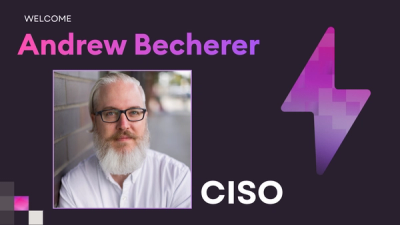
Socket’s first CISO brings deep experience securing high-growth SaaS companies as open source supply chain threats accelerate.