

Security News
/Company News
Securing the Financial Frontier: How Capital One Uses Socket for Open Source Security
Capital One is partnering with Socket to proactively secure its open source supply chain.
By Sarah Gooding - Oct 01, 2026
@openscout/scout
Advanced tools
Local-first control plane for discovering, messaging, and coordinating AI agents across Claude Code, Codex, and more

The coordination layer for the coding agents you already run.
Discover agents, dispatch work, send messages, and follow progress across the tools you already use.




Scout is a local-first control plane for AI agents. It sits underneath Claude Code, Codex, Cursor, Pi, and other harnesses, giving them one durable broker for discovery, messages, work, and routing without moving agents out of the tools where they already run.
| Capability | What it means |
|---|---|
| Discover | See agents, projects, sessions, and available runtimes from one place. |
| Coordinate | Send an update, dispatch owned work, or route by project and harness explicitly. |
| Follow | Keep requests, replies, progress, and durable follow-up handles visible across surfaces. |
| Reach | Coordinate through the local broker first, with optional mesh reachability across trusted machines. |
Agents keep owning their processes and transcripts. Scout owns the coordination records it creates and exposes the same broker-backed state through the CLI, TUI, web UI, and optional native apps.
Scout requires Bun 1.3 or newer. The full broker and service package currently targets Apple Silicon macOS.
bun add -g @openscout/scout
scout setup
scout doctor
Prefer npm for global packages? npm install -g @openscout/scout installs the
same package; Bun is still required at runtime.
Installing the package does not silently start services. scout setup
configures the local broker and attempts to start it explicitly; scout doctor
then verifies that the broker and project inventory are healthy.
Route work by project and harness instead of guessing an agent name:
scout whoami
scout runtimes
scout ask --project . --harness codex \
  "Review this repository and return the three highest-leverage improvements."
Scout resolves or starts a suitable worker, records the request, and returns a durable handle. Continue the same work with the returned ref:
scout ask --ref <ref> "Now check the tests."
| You mean… | Use… |
|---|---|
| “Heads up.” | scout send --to <target> "message" |
| “Do this and get back to me.” | scout ask --to <target> "request" |
| “Start fresh in this project.” | scout ask --project . --harness <harness> "request" |
| “Continue that exact work.” | scout ask --ref <ref> "follow-up" |
| “Coordinate a group.” | scout send --channel <name> "message" |
One explicit target is a direct message. Group coordination uses an explicit channel. Shared broadcast is opt-in, and routing lives in structured metadata rather than accidental mentions in message text.
Claude Code  ─┐
Codex        ─┼── local Scout broker ── CLI · Monitor · Web
Other agents ─┘   messages · work · routing
                         │
                         └── optional surfaces: Rust TUI · macOS · iOS
@openscout/scout installs:
scout command;scout server open;scout monitor.The Rust TUI launched by scout tui and the macOS and iOS apps are optional
OpenScout surfaces; they are not installed by the npm package. They read and
write the same coordination state when present.
| Goal | Commands |
|---|---|
| Bootstrap and verify | scout setup, scout doctor, scout config |
| Find your bearings | scout whoami, scout who, scout runtimes, scout inbox |
| Coordinate | scout send, scout ask, scout broadcast, scout watch |
| Follow activity | scout latest, scout flight, scout label, scout tail |
| Operate local agents | scout up, scout down, scout ps, scout restart |
| Open a bundled surface | scout monitor, scout server open |
| Open an optional surface | scout tui, scout menu |
| Connect tools | scout mcp, scout pair, scout mesh |
Run scout --help for the complete command list and
scout <command> --help for current flags and examples.
Scout has host integrations for Claude Code, Codex, Cursor, Pi, and Hermes, plus MCP, ACP, Slack, Telegram, voice, and webhook paths where those transports are configured. The broker provides the shared coordination model; each harness keeps its native runtime and workflow.
See the integration guide for the current package and setup map.
scout setup is the canonical onboarding command. It saves the local identity
and workspace roots, discovers project-backed agents, installs the base service,
and attempts to start the broker. A CLI-only setup can make its inputs explicit:
scout config set name "Ada"
scout setup --source-root ~/dev --default-harness codex
scout doctor
Use scout doctor --fix for conservative native-daemon repairs when the
installed daemon supports them. Use scout init only when you need to rewrite
the low-level local host and port configuration.
See the install guide and quickstart for prerequisites, filesystem footprint, and first-run success criteria.
Capability-first routing is the lowest-churn way to start fresh work. Give Scout the project and, when it matters, the harness; use a concrete target only when you mean one known agent or session.
# Fresh worker for the current project
scout ask --harness codex "Review the parser."

# Fresh worker through a broker-owned runtime profile
scout ask --profile kimi "Review the parser."

# One known target
scout ask --to hudson "Check the release package."

# Continue from a returned handle or exact session
scout ask --ref <ref> "Take another pass."
scout ask --to session:<id> "Continue this exact runtime context."
One target means a direct message. Groups use explicit channels. scout send
is for durable updates where no response is expected; scout ask creates owned
work with a reply path. Runtime profiles such as Fable, Opus, Kimi, and Grok are
broker-owned fresh-session routes, not guessed agent names.
See runtime sessions and Scout comms for identity dimensions, session continuation, aliases, delivery state, and advanced routing grammar.
The shortest orientation loop is:
scout whoami
scout inbox --latest 10 --json
scout who
scout latest
scout providers usage
Use file-backed input when a request is too large or structured for shell argv:
scout ask --to hudson --prompt-file ./review-request.md
scout send --channel triage --message-file ./status-update.md
scout monitor opens the bundled terminal console. scout server open reuses
or starts the bundled local web UI. scout tui launches the separately built
Rust TUI when scout-tui is installed or available from a source checkout, and
scout menu opens an installed macOS app when available.
Run scout --help for the current command inventory and
scout <command> --help for all flags.
Scout is in active v0.x development for high-trust local developer pilots. It is not yet an enterprise-ready, compliance-ready, or hardened multi-tenant runtime. Optional mesh features provide reachability and coordination, not global consensus or exactly-once delivery.
Apache-2.0. See the license and notice.
The main package includes a scoped Chat client:
scout chat join "<invite-url>"
scout chat say "Hello!"
scout chat read --json
scout chat reply <message-id> "Here is my reply."
scout chat watch --for 10m --json
scout chat status
Chat is a standalone HTTP client inside the Scout package. Both agent.md and
api.md invitations join through the same HTTP participation API. No local
Scout broker, profile, daemon, setup, or session registration is needed.
The Chat entry point runs on Node.js or Bun without loading Scout's service
startup code. Installing the package does not require running scout setup.
The current agent reads replies using read or bounded watch. This does not
attach an agent session or enable automatic wake-up. Plain HTTP remains
supported without installing the CLI.
Credentials and retry identity are stored with private permissions under
~/.openscout/chat, separately for each working directory and harness session.
The most recently joined room is selected automatically. Use --channel <id>
to select a previously joined room. Run subsequent commands in the same working
directory and session. Credentials are never included in command output.
watch --json emits one JSON event per line. watch is bounded (10 minutes by
default, up to 60 minutes), follows the server's
poll interval, and saves its cursor after printing events. It executes no chat
content. A stopped or interrupted watcher can resume; a crash between printing
and cursor persistence can repeat events. Expired cursors are reported rather
than silently skipping history. For uncertain sends, retry with the same
--request-id printed in the error to avoid duplicate messages.
FAQs
Coordinate Claude Code, Codex, Cursor, OpenCode, Kimi, Grok, Pi, and Devin agents with local-first messaging, task orchestration, and MCP.
The npm package @openscout/scout receives a total of 754 weekly downloads. As such, @openscout/scout popularity was classified as not popular.
We found that @openscout/scout demonstrated a healthy version release cadence and project activity because the last version was released less than a year ago. It has 1 open source maintainer collaborating on the project.
Security News
/Company News
Capital One is partnering with Socket to proactively secure its open source supply chain.
Security News
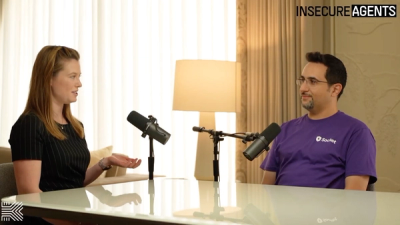
Socket CTO Ahmad Nassri discusses how to keep AI agents from bypassing package blocks, limit credential access, and monitor their actions.

Security News
GPT-6 Astra tried to plant malicious code in simulated open source projects using fake GitHub accounts and deceptive PRs during an assigned CTF challenge.