
Company News
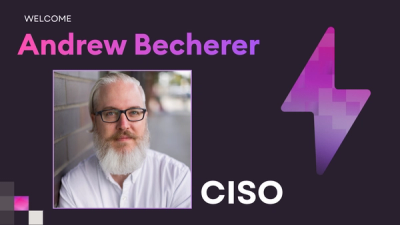
Andrew Becherer Joins Socket as Chief Information Security Officer
Socket’s first CISO brings deep experience securing high-growth SaaS companies as open source supply chain threats accelerate.
By Sarah Gooding - Jun 11, 2026
@polygraph/mcp
Advanced tools
A Model Context Protocol server for coordinating cross-repository changes via Polygraph

A Model Context Protocol server for coordinating cross-repository changes via Polygraph.




Getting Started · Tools · Authentication · Learn More
Polygraph MCP enables AI coding agents to orchestrate synchronized changes across multiple repositories. It connects to Polygraph to manage sessions where a parent agent can delegate work to child agents in dependent repos, push branches, create linked pull requests, and monitor CI — all through a standard MCP interface.
The recommended way to use Polygraph with Claude Code is via the Nx AI Agent Skills plugin, which includes Polygraph skills, subagents, and the MCP server pre-configured. Add this to your project's .claude/settings.json:
{
  "enabledPlugins": {
    "polygraph@nx-claude-plugins": true
  },
  "extraKnownMarketplaces": {
    "nx-claude-plugins": {
      "source": {
        "source": "github",
        "repo": "nrwl/nx-ai-agents-config"
      }
    }
  }
}
If you just need the MCP server without the full plugin, add it to your .mcp.json:
{
  "mcpServers": {
    "polygraph": {
      "command": "npx",
      "args": ["-y", "@polygraph/mcp@latest"]
    }
  }
}
For Cursor, GitHub Copilot, Gemini, and other AI coding assistants, see Nx AI Agent Skills for Polygraph skills and configuration tailored to each platform.
Polygraph MCP exposes authentication and workflow tools for managing cross-repository changes:
| Tool | Description |
|---|---|
whoami | Show current auth status and selected organization |
login | Authenticate with either a token or the default CLI login flow |
logout | Clear locally stored Polygraph credentials |
list_accounts | List organizations available to the current user |
select_account | Select the organization to operate on |
| Tool | Description |
|---|---|
list_repos | Discover available repos and their dependency relationships |
start_session | Initialize a new Polygraph session |
show_session | Retrieve session details, status, and linked PRs |
list_sessions | List existing Polygraph sessions |
add_repo | Add specific repository refs directly to a running session |
link_reference | Link an external reference to a session |
update_session | Update the session title and/or description timeline |
archive_session | Archive a session |
| Tool | Description |
|---|---|
spawn_agent | Delegate tasks to child agents in other repositories |
show_agent | Monitor status and output of delegated tasks |
stop_agent | Cancel an in-progress delegated task |
| Tool | Description |
|---|---|
push_branch | Push a local branch to its remote |
create_pr | Create draft PRs with session metadata linking |
mark_pr_ready | Transition PRs from draft to open |
associate_pr | Link an existing PR to the session |
| Tool | Description |
|---|---|
get_ci_logs | Retrieve logs for GitHub Actions CI jobs |
Polygraph MCP exposes repositories and recent sessions as MCP resources, which compatible clients (e.g. Claude Code) surface as @-mention completions.
| URI | Content |
|---|---|
polygraph://repos/<repo-id> | Repository metadata as JSON |
polygraph://sessions/<session-id> | Session details (status, description timeline, PRs) as JSON |
Only sessions created within the last 30 days are registered (server-side filter via --since and --limit=100 on the underlying polygraph session list call).
Polygraph MCP resolves credentials from the following sources (in priority order):
NX_CLOUD_AUTH_TOKEN or NX_CLOUD_ACCESS_TOKENnx-cloud.env — Project-level env filenx.json — Project-level Nx configuration~/.nxcloud.ini — User-level configuration (or XDG config path)login accepts an optional token. When a token is provided it uses headless login; otherwise it runs polygraph auth login --json and relies on the CLI's default auth flow.
FAQs
A Model Context Protocol server for coordinating cross-repository changes via Polygraph
The npm package @polygraph/mcp receives a total of 535 weekly downloads. As such, @polygraph/mcp popularity was classified as not popular.
We found that @polygraph/mcp demonstrated a healthy version release cadence and project activity because the last version was released less than a year ago. It has 4 open source maintainers collaborating on the project.
Did you know?

Socket for GitHub automatically highlights issues in each pull request and monitors the health of all your open source dependencies. Discover the contents of your packages and block harmful activity before you install or update your dependencies.
Company News
Socket’s first CISO brings deep experience securing high-growth SaaS companies as open source supply chain threats accelerate.
Company News
Replit is integrating Socket Firewall into its AI-powered development experience to help protect builders from malicious open source packages.

Security News
npm confirmed a tooling bug incorrectly marked several one-character packages as security holders and said it was working on a rollback.