

Security News
/Company News
Securing the Financial Frontier: How Capital One Uses Socket for Open Source Security
Capital One is partnering with Socket to proactively secure its open source supply chain.
By Sarah Gooding - Oct 01, 2026
@pythoughts/hermes-ui
Advanced tools
Self-hosted AI chat dashboard for Hermes Agent — multi-model UI with multi-platform integration

A desktop app, local runtime, and web console for Hermes Agent — chat with agents, manage models and profiles, connect platform channels, automate jobs, and run coding agents, all on your own machine.



Quick Start · Features · Configuration · Docker · Development

Hermes UI is a self-hosted control plane for Hermes Agent. It runs agent conversations with streaming responses and tool traces, and gives you one dashboard for profiles, providers, models, credentials, memory, skills, plugins, automation, and logs. It ships three ways — a native desktop app, an npm CLI, and a Docker image — and keeps all data local.
[!NOTE] Everything stays on your machine. Hermes Agent data lives in
~/.hermes, and UI state (sessions, auth, uploads) lives in~/.hermes-uiunlessHERMES_UI_HOMEis set.
| Area | What Hermes UI does |
|---|---|
| Agent chat | Streaming Hermes Agent conversations with tool traces, file upload/download, and persistent local sessions. |
| Local control plane | Manage profiles, providers, models, credentials, memory, skills, plugins, logs, and runtime settings from one dashboard. |
| Automation | Configure platform channels, cron jobs, Kanban tasks, group-chat rooms, and MCP servers around the same profiles. |
| Workspace tools | File browser, web terminal, voice input/output, coding-agent runners, device discovery, and performance views. |
| Distribution | Desktop app for Windows/macOS/Linux, an npm CLI package, and a Docker image. |
Download the latest installer from GitHub Releases. Builds are published for macOS, Windows, and Linux. The desktop app bundles the UI runtime and starts the local server automatically.
After first launch it installs managed command shims:
| Command | Description |
|---|---|
hermes-ui | Open the Hermes UI desktop app |
hermes-ui cli ... | Run the bundled Hermes Agent CLI |
hermes-ui web ... | Run the bundled hermes-ui command |
hermes-ui-mcp | Run the managed UI MCP bridge |
npm install -g @pythoughts/hermes-ui
hermes-ui start
Then open http://localhost:8648.
[!IMPORTANT] Requires Node.js >= 23.
Single-container deployment with an integrated Hermes Agent:
# Use the pre-built image (recommended)
UI_IMAGE=pythoughtslabs/hermes-ui docker compose up -d

# Or build from source
docker compose up -d --build

docker compose logs -f hermes-ui
Then open http://localhost:6060. Persistent data is stored in ./hermes_data; the auth token is written to ./hermes_data/hermes-ui/.token and printed to the container logs on first run. See docs/docker.md for details.
Real-time streaming over Socket.IO, multi-session management, and a local SQLite session store separate from Hermes' read-only history. Markdown rendering with syntax highlighting, expandable tool-call details, profile-scoped uploads, and path-based downloads across local, Docker, SSH, and Singularity backends. Sessions group by source (Telegram, Discord, Slack, …), pin live runs to the top, and are searchable with Ctrl+K.
Configure 8 platforms from one page — Telegram, Discord, Slack, WhatsApp, Matrix, Feishu (Lark), WeChat (QR login), and WeCom. Credentials write to ~/.hermes/.env and behavior settings to ~/.hermes/config.yaml, with per-platform configured/unconfigured detection.
Auto-discover models from the credential pool, fetch provider model lists, and manage preset or custom OpenAI-compatible providers (including OpenAI Codex and Nous Portal OAuth). Create, clone, import, export, and switch Hermes profiles, with account-bound access — super admins manage every profile; regular admins only see profiles assigned to them.
@mention routing, context compression, and SQLite persistence.Read assistant replies aloud and dictate turns from the chat input. Providers include browser Web Speech, built-in Edge TTS, OpenAI-compatible /audio/speech, custom endpoints, and MiMo (preset voices, voice design, and voice cloning). Provider keys are stored server-side and only masked status is returned to the browser.
[!WARNING] Custom/OpenAI-compatible and MiMo base URLs must be public
http/httpsendpoints — they cannot target localhost or private networks. External providers may keep processing a request after the browser or server aborts.
Token usage breakdowns, session counts, estimated cost and cache-hit tracking, model-usage distribution, and a 30-day trend. Filterable agent/server/error logs with structured parsing. LAN peer discovery, an MCP manager for the managed hermes-ui server, version-preview tooling, and performance views for super admins.
Token-based auth (auto-generated or set via AUTH_TOKEN) plus username/password login with account management.
[!CAUTION] Default bootstrap credentials are
admin/admin. You are prompted to change them after first login — do so before exposing the server.
CLI maintenance:
hermes-ui clear-login-locks            # clear persisted login IP locks
hermes-ui clear-login-locks --restart  # clear locks and restart the server
hermes-ui reset-default-login          # reset the super-admin login to admin / admin
Provider keys and agent settings are normally managed through Hermes profiles; the variables below are process-level overrides. The most common ones:
| Variable | Default | Description |
|---|---|---|
PORT | 8648 | UI listen port. |
BIND_HOST | 0.0.0.0 | Bind host. Set :: for IPv6. |
HERMES_UI_HOME | ~/.hermes-ui | Data home for auth token, credentials, logs, DB, and uploads. |
AUTH_TOKEN | auto-generated | Explicit bearer token. |
AUTH_JWT_SECRET | AUTH_TOKEN | JWT signing secret for username/password sessions. |
PROFILE | default | Startup/default Hermes profile. |
CORS_ORIGINS | same host only | Cross-origin allowlist for HTTP, Socket.IO, and WebSocket. |
LOG_LEVEL | info | Server log level. |
WORKSPACE_BASE | user home | Base directory for workspace browsing. |
HERMES_HOME | platform default | Hermes data home (%LOCALAPPDATA%\hermes on Windows, ~/.hermes elsewhere). |
| Variable | Default | Description |
|---|---|---|
PORT | 8648 | UI listen port. |
BIND_HOST | 0.0.0.0 | UI bind host. Set :: explicitly for IPv6. |
HERMES_UI_HOME | ~/.hermes-ui | UI data home for auth token, credentials, logs, DB, and default uploads. HERMES_UI_STATE_DIR is also supported as a compatibility alias. |
HERMES_UI_STATE_DIR | unset | Compatibility alias for HERMES_UI_HOME. |
HERMES_UI_DISABLE_MCP_AUTOINJECT | unset | Disable startup injection of the managed hermes-ui MCP server into Hermes profile configs. |
HERMES_UI_ALLOW_TRANSIENT_MCP_AUTOINJECT | unset | Allow managed MCP injection when HERMES_UI_HOME is under a temporary directory, such as Version Preview runtimes. |
UPLOAD_DIR | $HERMES_UI_HOME/upload | Upload root override. Files are stored below profile-scoped subdirectories. |
CORS_ORIGINS | same host only | Comma- or space-separated cross-origin allowlist for HTTP, Socket.IO, and WebSocket requests. Set * only when you intentionally need legacy wildcard CORS. |
AUTH_TOKEN | auto-generated | Explicit bearer token. If unset, UI creates one under HERMES_UI_HOME. |
AUTH_JWT_SECRET | AUTH_TOKEN | JWT signing secret override for username/password sessions. |
PROFILE | default | Startup/default Hermes profile. Runtime requests use the profile selected by the frontend and authorized for the current account. |
LOG_LEVEL | info | Server log level. |
BRIDGE_LOG_LEVEL | $LOG_LEVEL or info | Bridge log level. |
MAX_DOWNLOAD_SIZE | 200MB | Maximum file download size. |
MAX_EDIT_SIZE | 10MB | Maximum editable file size. |
WORKSPACE_BASE | current user's home directory | Base directory for workspace browsing. |
HERMES_HOME | platform default | Hermes data home. Windows uses %LOCALAPPDATA%\hermes; macOS/Linux uses ~/.hermes. |
HERMES_BIN | hermes | Custom Hermes CLI binary path. |
HERMES_AGENT_ROOT | auto-discovered | Hermes Agent source checkout containing run_agent.py. |
HERMES_AGENT_BRIDGE_PYTHON | auto-discovered | Python interpreter used to launch the agent bridge. |
HERMES_AGENT_BRIDGE_UV | auto-discovered | uv executable used to launch the agent bridge when available. |
UV | auto-discovered | Fallback uv executable path. |
PYTHON | auto-discovered | Fallback Python executable for the agent bridge. |
HERMES_AGENT_BRIDGE_ENDPOINT | platform default | Agent bridge broker endpoint. Windows defaults to tcp://127.0.0.1:18765; macOS/Linux defaults to ipc:///tmp/hermes-agent-bridge.sock. |
HERMES_AGENT_BRIDGE_TIMEOUT_MS | 120000 | Timeout for Node requests to the bridge broker. |
HERMES_AGENT_BRIDGE_CONNECT_RETRY_MS | 5000 | Short retry window for connecting to the bridge socket. |
HERMES_AGENT_BRIDGE_STARTUP_TIMEOUT_MS | 120000 | Timeout while waiting for the Python bridge to become ready. |
HERMES_AGENT_BRIDGE_STOP_ON_SHUTDOWN | enabled | Stop the bridge broker during UI shutdown and restart. Set 0, false, no, or off to keep the bridge across restarts. |
HERMES_AGENT_BRIDGE_AUTO_RESTART | enabled | Auto-restart the bridge broker after unexpected exit. Set 0, false, no, or off to disable. |
HERMES_AGENT_BRIDGE_RESTART_DELAY_MS | 1000 | Base delay for bridge auto-restart backoff. |
HERMES_AGENT_BRIDGE_PLATFORM | cli | Platform identity passed to Hermes Agent. |
HERMES_AGENT_BRIDGE_WORKER_TRANSPORT | platform default | Profile worker transport. Set tcp for loopback TCP or ipc/unix for Unix domain sockets; defaults to Windows TCP and macOS/Linux IPC. |
HERMES_AGENT_BRIDGE_WORKER_PORT_BASE | 18780 | Base port for TCP worker endpoints. |
HERMES_BRIDGE_PROVIDER | profile/default | Provider override for bridge runs. |
HERMES_BRIDGE_TOOLSETS | profile/default | Toolset override for bridge runs. |
HERMES_BRIDGE_MAX_TURNS | profile/default | Maximum turn override for bridge runs. |
HERMES_BRIDGE_SUPPRESS_PLATFORM_HINT | cli | Controls bridge platform hint suppression passed to Hermes Agent. |
HERMES_OPENROUTER_APP_REFERER | https://github.com/Pythoughts-labs/hermes-ui | OpenRouter attribution referer sent by bridge runs. |
HERMES_OPENROUTER_APP_TITLE | Hermes UI | OpenRouter attribution title sent by bridge runs. |
HERMES_OPENROUTER_APP_CATEGORIES | cli-agent,personal-agent | OpenRouter attribution categories sent by bridge runs. |
HERMES_UI_MANAGED_GATEWAY | enabled | Controls UI-managed Hermes gateway process handling. Set 0, false, no, or off to use hermes gateway start instead. |
HERMES_UI_DISABLE_GATEWAY_AUTOSTART | unset | Skip startup gateway checks/autostart. Set 1, true, yes, or on for dashboard-only deployments where another service owns Hermes gateway lifecycle. |
HERMES_UI_DISABLE_SKILL_INJECTION | unset | Skip startup bundled skill injection. Set 1, true, yes, or on when bundled skills are managed outside Hermes UI. |
HERMES_UI_STOP_GATEWAYS_ON_SHUTDOWN | enabled in production | Controls whether UI shutdown also stops managed gateway processes. Set 0 or false to detach them. |
HERMES_GATEWAY_URL / GATEWAY_URL | unset | Explicit Hermes gateway upstream URL for proxy routes. |
GATEWAY_HOST | 127.0.0.1 | Default Hermes gateway upstream host for proxy routes. |
GATEWAY_PORT | 8642 | Default Hermes gateway upstream port for proxy routes. |
HERMES_UI_PREVIEW_REPO | package repository | GitHub repository used by Version Preview. |
HERMES_UI_PREVIEW_AGENT_BRIDGE_TRANSPORT | platform default | Version Preview broker transport. |
HERMES_UI_PREVIEW_AGENT_BRIDGE_ENDPOINT | isolated preview endpoint | Directly overrides the Version Preview broker endpoint. |
HERMES_UI_BACKEND_PORT | 8648 | Backend port used by the Vite dev proxy. |
HERMES_UI_FRONTEND_PORT | 8649 | Frontend Vite dev server port. |
| Command | Description |
|---|---|
hermes-ui start | Start in background (daemon mode) |
hermes-ui start --port 9000 | Start on a custom port |
hermes-ui stop | Stop the background process |
hermes-ui restart | Restart the background process (stops the bridge by default) |
hermes-ui status | Check if running |
hermes-ui update | Update to the latest version and restart |
hermes-ui -v | Show the version number |
hermes-ui -h | Show help |
[!TIP]
restart,update, andupgradestop the Agent Bridge broker by default so restarted servers don't reuse stale Python bridge processes. SetHERMES_AGENT_BRIDGE_STOP_ON_SHUTDOWN=0to keep the bridge alive across restarts.
Browser → BFF (Koa, :8648) → Socket.IO /chat-run
                ↓
        Hermes agent bridge → Hermes Agent runtime
                ↓
           Hermes CLI / profiles
           profile config.yaml    (channel/provider behavior)
           profile auth.json      (credential pool)
           Tencent iLink API      (WeChat QR login)
The frontend is built for multi-agent extensibility — all Hermes-specific code is namespaced under hermes/ directories (API, components, views, stores), so new agent integrations can sit alongside it. The BFF layer handles Socket.IO chat streaming, the agent bridge, profile-aware uploads and multi-backend downloads, session CRUD, account- and profile-scoped management, config and credential management, WeChat QR login, model discovery, skills/memory/plugins, TTS/STT, coding-agent proxies, MCP/runtime management, log reading, and static serving.
Tech stack: Vue 3 · TypeScript · Vite · Naive UI · Pinia · Vue Router · vue-i18n · SCSS · markdown-it · highlight.js · Koa 2 · node-pty.
git clone https://github.com/Pythoughts-labs/hermes-ui.git
cd hermes-ui
npm install
npm run dev
npm run build   # outputs to dist/
npm test        # run the test suite
See DEVELOPMENT.md for the full development guide.
FAQs
Self-hosted AI chat dashboard for Hermes Agent — multi-model UI with multi-platform integration
The npm package @pythoughts/hermes-ui receives a total of 8 weekly downloads. As such, @pythoughts/hermes-ui popularity was classified as not popular.
We found that @pythoughts/hermes-ui demonstrated a healthy version release cadence and project activity because the last version was released less than a year ago. It has 1 open source maintainer collaborating on the project.
Security News
/Company News
Capital One is partnering with Socket to proactively secure its open source supply chain.
Security News
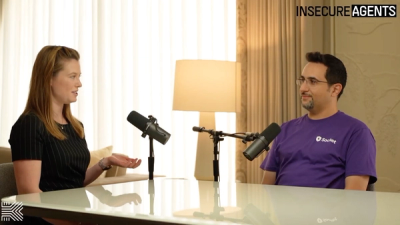
Socket CTO Ahmad Nassri discusses how to keep AI agents from bypassing package blocks, limit credential access, and monitor their actions.

Security News
GPT-6 Astra tried to plant malicious code in simulated open source projects using fake GitHub accounts and deceptive PRs during an assigned CTF challenge.