

Security News
Happy Birthday, Shai-Hulud
It has been one year since Shai-Hulud made its first appearance on npm.
By Sarah Gooding - Sep 18, 2026
@rnaga/wp-next-rte
Advanced tools
For guides, concepts, and examples, the documentation site is the best starting point.
WP-Next is a TypeScript-first toolkit for building WordPress-powered Next.js applications — with a visual drag-and-drop editor, a modern React admin dashboard, and first-class AI support built in from day one.
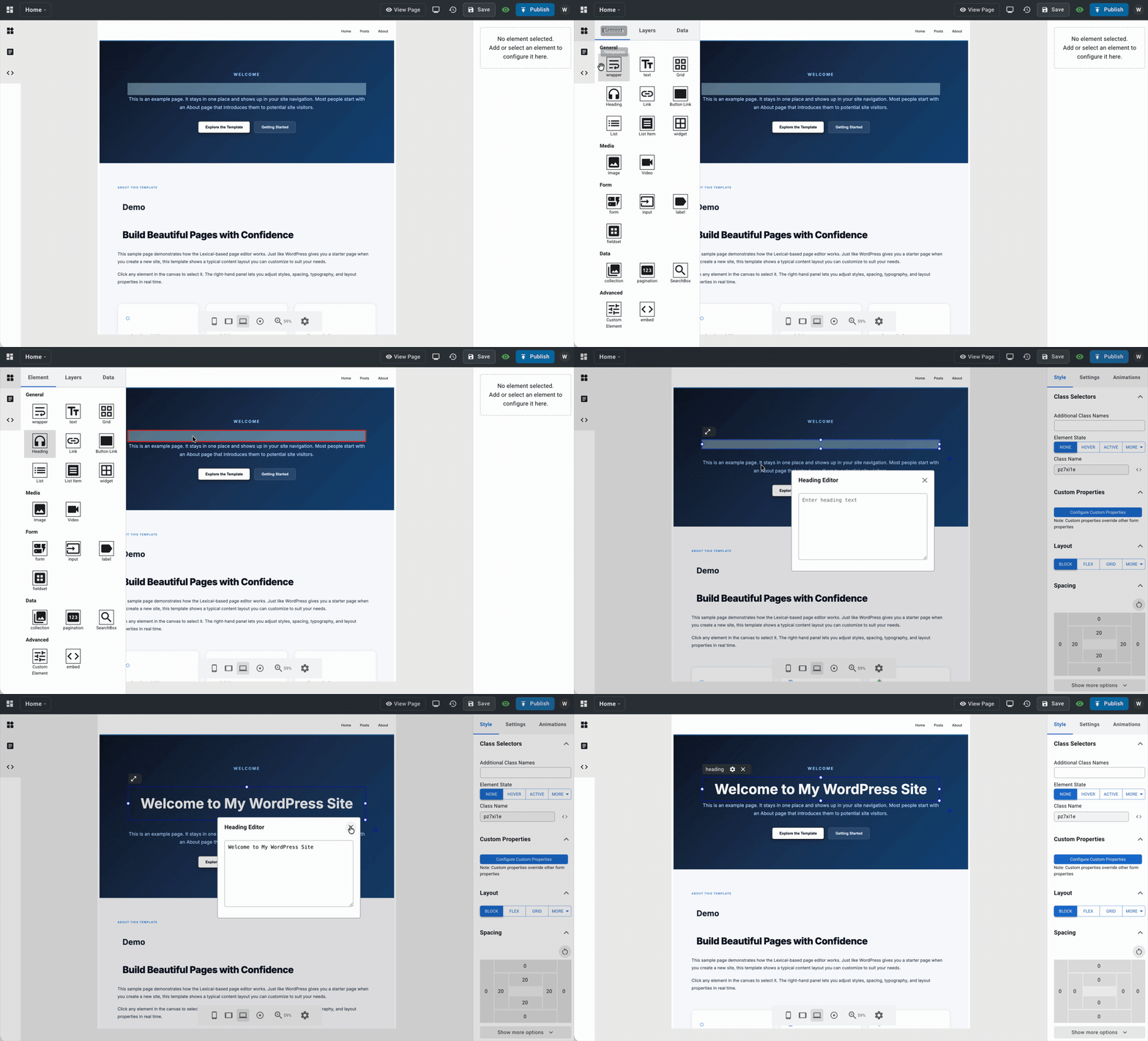
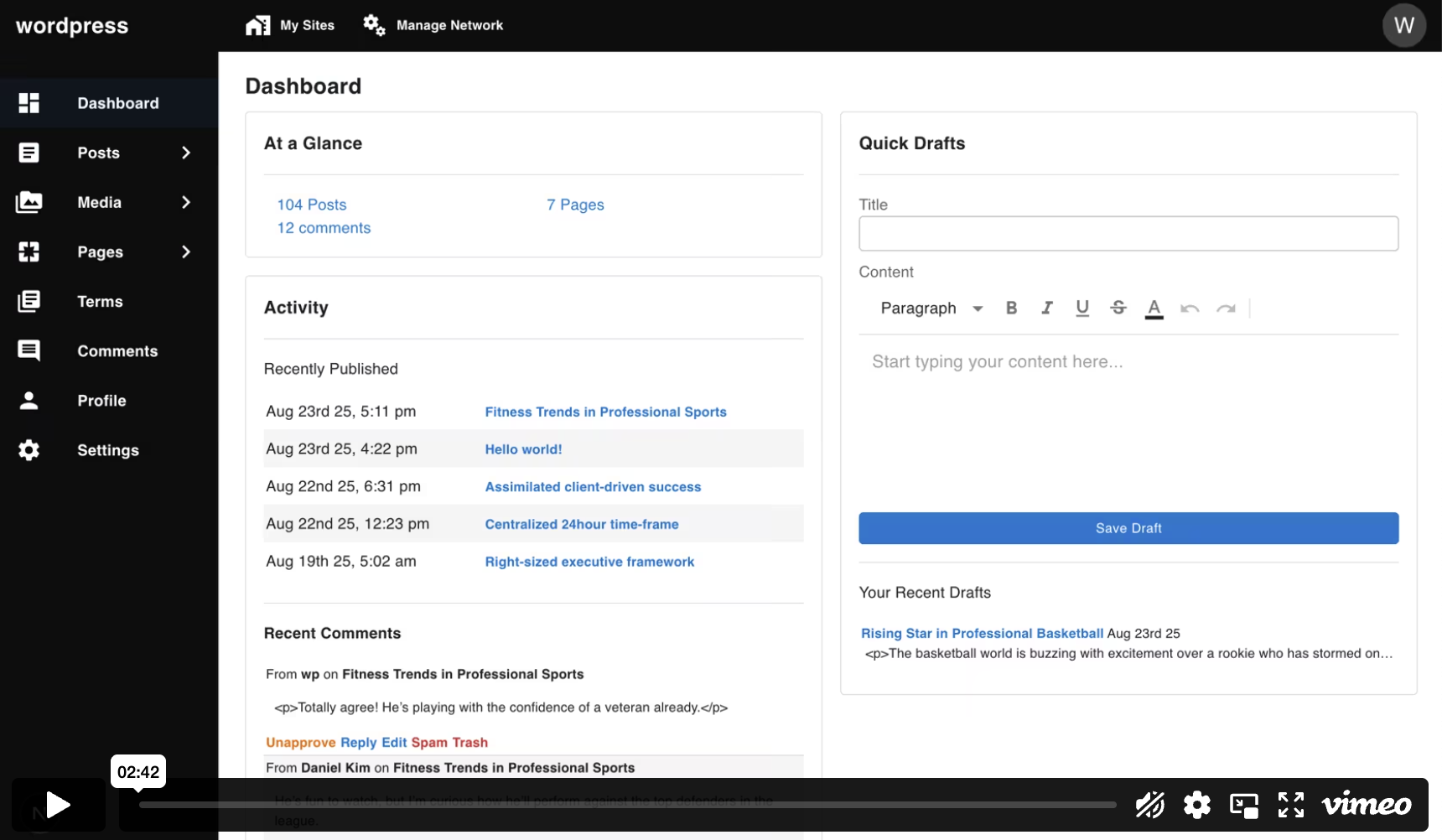
WP-Next ships as two products you can use together or independently:
Use both as one stack, or start with Admin alone.
Run a ready-made WP-Next Editor example using Docker. This is the recommended demo because it includes the editor and the admin dashboard in one setup:
docker run --rm --init -it --name wp-next-editor-example -p 3000:3000 \
-v wp-next-editor_public:/app/editor/public \
-v wp-next-editor_db:/var/lib/mysql \
rnagat/wp-next-editor-example:latest
Log in with:
Username: wp
Password: wp
To stop the container:
docker stop wp-next-editor-example
Both products require a running WordPress database. If you don't already have WordPress installed, see the WP-Node installation guide.
Choose the setup that matches what you want to build:
Use this if you want the full WP-Next experience. This installs both packages, with WP-Next Admin included as part of the editor setup.
npx @rnaga/wp-next-cli -- initEditor
See the Editor Installation guide for the full setup walkthrough.
Run this only if you want to start up WP-Next Admin without the visual editor:
npx @rnaga/wp-next-cli -- initAdmin
See the Admin Getting Started guide for the full setup walkthrough.
WP-Next Editor is a visual, drag-and-drop website builder for building public-facing WordPress sites directly connected to your WordPress database. Templates and pages are stored as structured Lexical JSON in the WordPress database — making them version-controllable, programmatically manipulable, and AI-ready.
@media query at render time.WP-Next Editor ships with a built-in Agent Skill (/wp-next-editor-template) that lets you build and modify templates using natural-language prompts. All templates are stored as Lexical JSON, so AI agents can read, write, and transform them directly.
Agent Skills is an open standard supported by Claude Code, OpenAI Codex, GitHub Copilot, Cursor, Gemini CLI, VS Code, and more. Install the skill once and use it with whichever coding agent you prefer.
The skill supports four modes:
| Mode | What it does |
|---|---|
create | Scaffold a new template from a natural-language description |
update | Modify an existing template based on a prompt |
convert | Convert HTML/CSS into a Lexical JSON template |
help | Describe available nodes, styles, and patterns |
Install the skill with:
npx @rnaga/wp-next-cli -- editor agentSkills add
Example prompt:
/wp-next-editor-template create src/templates/home.json "A hero section with a full-width background image, centered headline, subtitle, and a CTA button"
See Using AI for installation details and more examples.
WP-Next Admin is a React-based Admin Dashboard that serves as a modern alternative to the traditional WordPress Admin Dashboard. It can be used on its own, and it is also the admin layer that ships with WP-Next Editor.
Out of the box, it includes:
In multisite mode, it also supports:
WP-Next Admin supports custom pages and a hook system (filters and actions) inspired by WordPress hooks but built for TypeScript and Node.js. Frontend hooks extend the Admin UI in the browser; backend hooks handle server-side concerns such as authentication, media uploads, and integrations.
See Hooks and Custom Admin Pages in the documentation.
MIT
FAQs
Rich Text Editor components for WP Next
We found that @rnaga/wp-next-rte demonstrated a healthy version release cadence and project activity because the last version was released less than a year ago. It has 1 open source maintainer collaborating on the project.
Security News
It has been one year since Shai-Hulud made its first appearance on npm.

Research
/Security News
Operators behind PolinRider used a compromised GitHub account to plant malware in four development versions of a Packagist package with 700,000+ downloads.

Security News
GitHub Actions now supports cache-mode, a least-privilege control on the Actions cache aimed at the cache poisoning technique behind recent compromises.