

Security News
/Company News
Securing the Financial Frontier: How Capital One Uses Socket for Open Source Security
Capital One is partnering with Socket to proactively secure its open source supply chain.
By Sarah Gooding - Oct 01, 2026
@smartmemory/compose
Advanced tools
Structured AI dev pipeline — goal-to-product orchestration with gates, iteration loops, and feature lifecycle management.
AI-powered product lifecycle orchestrator. Compose takes a product idea from intent to shipped code through structured, agent-driven pipelines with human gates at every critical decision point.
Compose coordinates multiple AI agents (Claude, Codex) through YAML-defined workflows powered by Stratum, enforcing postconditions, retrying on failure, and producing auditable execution traces.
Compose is a CLI that orchestrates AI agents through multi-step workflows defined in .stratum.yaml pipeline specs. Each step dispatches a prompt to an agent (Claude or Codex), collects the result, validates postconditions, and advances to the next step. Human gates pause the pipeline for approve/revise/kill decisions. If postconditions fail, Compose runs a fix pass with a different agent and retries.

compose new "REST API for todo lists"
  -> questionnaire (interactive)
  -> research (claude)
  -> brainstorm (claude)
  -> [human gate] approve/revise/kill
  -> roadmap (claude)
  -> [human gate]
  -> scaffold (claude)
  -> done: feature folders + ROADMAP.md ready

compose build FEAT-1
  -> explore & design (claude)
  -> [human gate]
  -> blueprint (claude)
  -> verification (claude)
  -> plan (claude)
  -> [human gate]
  -> decompose + parallel execute (claude, worktree isolation)
  -> parallel review (claude lenses: diff-quality, contract, security, framework)
  -> codex review (codex) + fix loop
  -> coverage sweep (claude) + fix loop
  -> docs update (claude)
  -> ship (claude)
  -> [human gate]
  -> done: feature implemented, reviewed, tested, documented
stratum-mcp on PATH (pip install stratum)codex CLI (npm i -g @openai/codex or brew install codex), authenticated via codex login (ChatGPT OAuth) or OPENAI_API_KEY. Optional: install the Claude Code plugin for interactive slash commands: /plugin marketplace add openai/codex-plugin-cc then /plugin install codex@openai-codex.git clone https://github.com/regression-io/compose.git
cd compose
npm install
compose init)Run from inside your project directory:
cd /path/to/your/project
npx compose init
This:
.compose/ directory with compose.json config.compose/data/ for vision statecompose-mcp in .mcp.jsonROADMAP.md from template (if absent)pipelines/Flags:
--no-stratum -- disable Stratum integration--no-lifecycle -- disable lifecycle trackingcompose setup)Installs the /compose skill globally and registers stratum-mcp:
npx compose setup
This:
/compose skill to ~/.claude/skills/compose/stratum-mcp with Claude Code (if available)To use compose as a global command:
ln -s /path/to/compose/bin/compose.js ~/bin/compose
chmod +x ~/bin/compose
compose install runs both init and setup in sequence.
compose newKickoff a new product. Runs the full kickoff pipeline: research, brainstorm, roadmap, and scaffold.
compose new "Structured log analyzer CLI for JSON-lines files"
compose new "REST API for managing team todo lists" --auto
compose new "OAuth2 provider library" --ask
Arguments:
--auto -- skip the questionnaire entirely--ask -- re-run the questionnaire (uses previous answers as defaults)Auto-initializes the project if .compose/ doesn't exist. Reads existing context from README.md, package.json, pyproject.toml, Cargo.toml, and any prior project-analysis.md from compose import.
compose importScan an existing project and generate a structured analysis at docs/discovery/project-analysis.md.
cd existing-project
compose import
Walks the file tree (max depth 4, ignoring node_modules, .git, etc.), reads key files (README.md, package.json, config files, top-level source files), and dispatches Claude to produce:
The generated analysis is automatically consumed by compose new and compose build as context.
compose featureAdd a single feature to the project with a folder structure, seed design doc, and ROADMAP entry.
compose feature LOG-1 "CLI tool for parsing JSON-lines log files"
compose feature AUTH-2 "Add OAuth2 login flow with PKCE"
Creates:
docs/features/<CODE>/design.md -- seed design doc with status, date, intentROADMAP.md with the feature code and PLANNED statuscompose buildRun a feature through the headless build lifecycle. This is the main execution command.
compose build FEAT-1
compose build --abort        # abort the active build
compose build FEAT-1 --abort # abort a specific feature's build
Loads pipelines/build.stratum.yaml, starts a Stratum flow, and dispatches each step to the appropriate agent. Tracks active build state in .compose/data/active-build.json for resume/abort support. Only one build can be active at a time.
compose pipelineView and edit the build pipeline spec (pipelines/build.stratum.yaml).
compose pipeline show
compose pipeline set <step> --agent codex
compose pipeline set <step> --mode gate
compose pipeline set <step> --mode review
compose pipeline set <step> --retries 5
compose pipeline add --id lint --after execute --agent claude --intent "Run linter"
compose pipeline remove <step>
compose pipeline enable <step> [step...]
compose pipeline disable <step> [step...]
See Pipeline CLI for full details.
compose initProject-local initialization. Creates .compose/, detects agents, registers MCP server, scaffolds ROADMAP and pipeline specs.
compose init
compose init --no-stratum
compose init --no-lifecycle
compose setupGlobal skill and MCP registration. Installs the /compose skill and Stratum skill to all detected agents.
compose setup
compose startStart the Compose app (supervisor with web UI, terminal, and API server).
compose start
COMPOSE_TARGET=/path/to/project compose start
compose start opens a browser-based cockpit at http://localhost:3001. The layout is organized around three zoom levels: Graph (macro), Tree (meso), and Detail (micro).
┌──────────────────────────────────────────────────────────────┐
│ Header │ [Graph | Tree | Docs | Gates | Pipeline | Sessions] │
├─────────┬──────────────────────────┬─────────────────────────┤
│         │                          │                         │
│ Sidebar │       MAIN AREA          │    CONTEXT PANEL        │
│ (~200px)│  (graph / tree / docs)   │   (resizable, ~420px)   │
│         │                          │                         │
├─────────┴──────────────────────────┴─────────────────────────┤
│ OPS STRIP  (active builds · pending gates · errors)          │
├──────────────────────────────────────────────────────────────┤
│ AGENT BAR  (collapsed | expanded | maximized)                │
├──────────────────────────────────────────────────────────────┤
│ GATE NOTIFICATION BAR  (hidden when no pending gates)        │
└──────────────────────────────────────────────────────────────┘
| Zone | Component | Description |
|---|---|---|
| Header | ViewTabs | Tab switcher for Graph, Tree, Docs, Gates, Pipeline, Sessions. Font/theme controls. |
| Sidebar | AttentionQueueSidebar | Build status, attention queue (blocked/gate items), search, group filters by feature code prefix. |
| Main Area | driven by active tab | Graph (fcose layout with compound grouping), Tree (search + filters), Docs (file browser + preview), and ops views. |
| Context Panel | ContextPanel | Resizable right panel with tabbed detail: Overview, Pipeline dots, Sessions, Errors, Files. Project summary when nothing selected. |
| Ops Strip | OpsStrip | Persistent 36px bar with scrollable pills for active builds, pending gates (inline approve), and recent errors. Hidden in Docs view. |
| Agent Bar | AgentBar | Always-present bottom panel for the agent stream. Collapsed/expanded/maximized. |
| Gate Notification | GateNotificationBar | Carousel of pending gates with Approve/Revise/Kill. |
Uses cytoscape-fcose (force-directed with compound node support):
Tabbed detail surface (5 tabs: Overview, Pipeline, Sessions, Errors, Files). Resizable via drag handle (min 280px, max 60% viewport), persisted in localStorage. Shows project summary when nothing selected.
Persistent 36px bar with three entry types (blue build pills, amber gate pills with inline approve, red error pills). Completed builds flash green 2s. Hidden in Docs view.
Build status, attention queue (blocked + pending gates), search, and group filters (feature code prefix groups sorted by active count, click to toggle).
Three states: collapsed (~36px status line), expanded (message stream + chat), maximized (fills main area). Sending a message with a feature code auto-selects that feature.
Selection persists across view switches. Graph pans to selected node, Tree scrolls to selected row. "View in Graph" / "View in Tree" links in context panel. File click opens DocsView with back button.
localStorage key | Default |
|---|---|
compose:activeView | 'graph' |
compose:agentBarState | 'collapsed' |
compose:contextPanel | 'open' |
compose:contextWidthPx | 420 |
compose:fontSize | 13 |
compose:theme | system |
SafeModeBoundary wraps the full shell. Each zone has a PanelErrorBoundary — a crash in one zone does not take down the rest.
Defined in pipelines/new.stratum.yaml. Orchestrates product creation from intent to scaffolded feature folders.
| # | Step | Agent | What It Does |
|---|---|---|---|
| 1 | research | claude | Searches for prior art, existing tools, architectural patterns, risks. Writes to docs/discovery/research.md. Validated against criteria (>= 2 prior art entries, patterns, risks). |
| 2 | brainstorm | claude | Generates feature list with codes, user stories, 2-3 architecture options with trade-offs. Writes to docs/discovery/brainstorm.md. Validated (>= 3 features, user stories, architecture options). |
| 3 | review_gate | human | Gate: approve brainstorm, revise (loop back to brainstorm), or kill. Displays the brainstorm artifact for review. Timeout: 2 hours. |
| 4 | roadmap | claude | Structures brainstorm into phased ROADMAP.md with feature table. Validated (markdown table, phased features, PLANNED status). |
| 5 | roadmap_gate | human | Gate: approve roadmap, revise, or kill. Timeout: 1 hour. |
| 6 | scaffold | claude | Creates docs/features/<CODE>/design.md for each ROADMAP feature with seed content. |
ResearchResult: { priorArt, patterns, risks, summary }BrainstormResult: { features, userStories, archOptions, summary }RoadmapResult: { phases, features, summary, artifact }ScaffoldResult: { created, summary }The questionnaire can disable research. When skipped, the research step gets skip_if: "true" injected into the spec before planning.
Defined in pipelines/build.stratum.yaml. Executes a feature through the full development lifecycle.
| # | Step | Agent | What It Does |
|---|---|---|---|
| 1 | explore_design | claude | Explores codebase, writes design doc to docs/features/{code}/design.md |
| 2 | scope | claude | Scope the feature, identify boundaries |
| 3 | design_gate | human | Approve design, revise (loop to explore_design), or kill |
| 4 | prd | claude | Write PRD. Skipped by default -- enable via compose pipeline enable prd |
| 5 | architecture | claude | Architecture doc with competing proposals. Skipped by default |
| 6 | blueprint | claude | Implementation blueprint with file:line references. Retries: 3 |
| 7 | verification | claude | Verify all blueprint references against actual code. on_fail: blueprint loops back if stale |
| 8 | plan_gate | human | Approve plan, revise (loop to plan), or kill |
| 9 | decompose | claude | Decompose plan into independent subtasks with files_owned/files_read |
| 10 | execute | claude | Parallel dispatch: TDD implementation in isolated git worktrees per subtask |
| 11 | review | claude (sub-flow) | Parallel multi-lens review: triage → 2-4 specialized lenses → merge/dedup. Retries: 5 |
| 12 | codex_review | codex (sub-flow) | Independent cross-model review after Claude lenses + fixes. Retries: 3 |
| 13 | coverage | claude (sub-flow) | Run tests, fix failures, re-run. Retries: 15 |
| 14 | report | claude | Post-implementation report. Skipped by default |
| 15 | docs | claude | Update CHANGELOG, ROADMAP, README, CLAUDE.md, and public docs |
| 16 | ship | claude | Run tests, run build, verify docs, stage, commit, push |
| 17 | ship_gate | human | Final approval |
parallel_review (STRAT-REV): Multi-lens review with three steps:
.compose/prior_dirty_lenses.json for selective re-review.LensFinding[] with severity, file, line, confidence. Confidence gates and false-positive exclusion lists reduce noise.review_check (fallback): Single-step codex review. Returns { clean, summary, findings }. Retries until clean == true (max 5). Cross-agent fix: claude fixes, codex re-reviews. Used by codex_review step.
coverage_check: Single-step test runner. Returns { passing, summary, failures }. Retries until passing == true (max 15). Fix pass dispatched on failure.
PhaseResult: { phase, artifact, outcome, summary } -- outcome is one of complete, skipped, failedReviewResult: { clean, summary, findings }TestResult: { passing, summary, failures }LensFinding: { lens, file, line, severity, finding, confidence } -- per-finding from a review lensLensTask: { id, lens_name, lens_focus, confidence_gate, exclusions } -- triage output for lens dispatchLensResult: { clean, findings[] } -- single lens outputTriageResult: { tasks[] } -- triage step outputMergedReviewResult: { clean, summary, findings[], lenses_run[], auto_fixes[], asks[] } -- merged review outputTaskGraph: { tasks[] } -- decompose output for parallel dispatchThe verification step has on_fail: blueprint -- when retries are exhausted without valid references, the pipeline routes back to the blueprint step for a rewrite.
Compose dispatches work to AI agents through a connector abstraction. All connectors implement the same async generator interface yielding typed message envelopes.
{ type: 'system',    subtype: 'init' | 'complete', agent: string, model?: string }
{ type: 'assistant', content: string }
{ type: 'tool_use',  tool: string, input: object }
{ type: 'tool_use_summary', summary: string }
{ type: 'tool_progress', tool: string, elapsed: number }
{ type: 'result',    content: string }
{ type: 'error',     message: string }
Wraps @anthropic-ai/claude-agent-sdk's query() function. Default model: claude-sonnet-4-6 (override via CLAUDE_MODEL env var). Runs in acceptEdits permission mode with full claude_code tool access.
Key behaviors:
CLAUDECODE env var to allow spawning nested Claude Code sessionsinterrupt() to abort the active queryinjectSchema() for structured outputSpawns the official OpenAI codex CLI (codex exec --json --skip-git-repo-check --sandbox read-only), locked to OpenAI Codex models. Install via npm i -g @openai/codex (or brew install codex). Auth via codex login (ChatGPT OAuth) or OPENAI_API_KEY env var. Reasoning effort is passed via -c model_reasoning_effort=<effort> when the model ID carries a /low|medium|high|xhigh suffix.
Supported models: gpt-5.4, gpt-5.2-codex, gpt-5.1-codex-max, gpt-5.1-codex, gpt-5.1-codex-mini (with /low, /medium, /high, /xhigh effort suffixes). Default: gpt-5.4 (override via CODEX_MODEL env var).
Model-agnostic base for any non-Anthropic agent running through the OpenCode SDK. Manages a singleton opencode serve subprocess (one per process, shared across instances). Creates sessions, sends prompts, and streams SSE events.
Abstract base with run(), interrupt(), and isRunning. Subclasses must implement run() as an async generator. Also exports injectSchema(prompt, schema) which appends JSON Schema instructions to prompts.
The build runner maps agent names to connector factories:
claude -> ClaudeSDKConnector
codex  -> CodexConnector
The connector factory is injectable for testing via opts.connectorFactory.
Interactive pre-flight for compose new. Runs automatically on first invocation, then only with --ask. Skip entirely with --auto.
Answers are saved to .compose/questionnaire.json. On subsequent runs:
--ask: saved answers are loaded silently to enrich the intent--ask: saved answers appear as defaults (press Enter to keep)The review agent choice modifies the pipeline:
review_gate to --mode reviewreview_gate stepThe questionnaire output is an enriched intent string combining:
Gates pause the pipeline for human decisions. Three outcomes:
| Key | Outcome | Effect |
|---|---|---|
a | approve | Proceed to on_approve step |
r | revise | Loop back to on_revise step |
k | kill | Terminate the flow |
If the user types anything other than a/r/k, it's collected as a note/question. The user can ask questions or provide feedback before making their decision. Notes are included in the rationale sent to Stratum.
Gate: review_gate
  [a]pprove -> roadmap
  [r]evise  -> brainstorm
  [k]ill    -> (terminate)
  Or type a question/comment to discuss before deciding.

> What about error handling for edge cases?
  (noted -- enter a/r/k when ready to decide)
> The feature list looks comprehensive
  (noted -- enter a/r/k when ready to decide)
> a
  Notes collected: 2
  Additional rationale (or Enter to use notes):
A rationale is always required. If notes were collected during conversation mode, they serve as the rationale. Otherwise, the user is prompted explicitly.
functions:
  design_gate:
    mode: gate
    timeout: 3600   # seconds

steps:
  - id: design_gate
    function: design_gate
    on_approve: plan        # proceed to this step
    on_revise: explore_design  # loop back
    on_kill: null           # null = terminate flow
Before gate prompts in the new pipeline, the artifact produced by the prior step is displayed so the user can make an informed decision. For short documents (<= 80 lines), the full content is shown; for longer ones, the first 60 lines plus a truncation notice.
Agent-as-validator: after a step writes its artifact, a separate lightweight agent call reads the artifact and checks it against criteria defined in the pipeline spec.
validate on a step:
- id: brainstorm
  validate:
    artifact: docs/discovery/brainstorm.md
    criteria:
      - "Contains at least 3 features with short codes"
      - "Contains user stories in 'As a...' format"
      - "Contains at least 2 architecture options"
{ valid: boolean, issues: string[] }.valid is false, a fix agent (claude) is dispatched to fix all issues, then the pipeline continues.Criteria are human-readable strings. The validator agent interprets them and returns a boolean judgment per criterion. This means validation is semantic, not syntactic -- "Contains at least 3 features" is checked by an agent reading the document, not by a regex.
compose pipeline provides full control over pipelines/build.stratum.yaml.
showPretty-prints the pipeline with color-coded step types:
Also shows sub-flow details and contracts.
setModify step properties:
# Change which agent executes a step
compose pipeline set execute --agent codex

# Convert a step to a human gate
compose pipeline set review --mode gate

# Convert a step to a codex review sub-flow
compose pipeline set review --mode review
# Creates a review_check sub-flow with codex agent, ReviewResult contract,
# ensure "result.clean == True", retries 10

# Convert back to a regular agent step
compose pipeline set review --mode agent

# Set retry count
compose pipeline set blueprint --retries 5
addInsert a new step after an existing one:
compose pipeline add --id lint --after execute --agent claude --intent "Run linter and fix issues"
Creates a step with default PhaseResult output contract, 2 retries, and depends_on: [<after>]. Rewires the next step's dependencies.
removeRemove a step and rewire dependencies:
compose pipeline remove prd
Steps that depended on the removed step inherit its dependencies. Gate references (on_approve, on_revise, on_fail) are also rewired.
enable / disablecompose pipeline enable prd architecture report # remove skip_if
compose pipeline disable prd # set skip_if: "true"
When a step's postconditions fail (ensure_failed or schema_failed), Compose runs a two-phase recovery:
A fix agent is dispatched with the violations:
Fix step "review" -- postconditions failed:
- result.clean == True
Fix every issue. Do not skip any.
For codex steps, the fix pass goes to claude (cross-agent fix). For claude steps, the fix is same-agent but with a distinct prompt focused on fixing.
After the fix pass, the original step is retried with a retry prompt that includes both the original intent and the violations:
RETRY -- Previous attempt failed postconditions:
- result.clean == True
Fix these issues and try again.
[original step prompt]
Each step has a retries count (set in the pipeline spec). The review sub-flow defaults to 10 retries; coverage defaults to 15. When retries are exhausted, on_fail routing kicks in (if configured), or the step fails.
Steps can specify on_fail: <step-id> to route to a different step when retries are exhausted. The verification step uses on_fail: blueprint to loop back for a blueprint rewrite.
During agent execution, Compose renders a live progress display to stderr with two modes:
Collapsed (default): Shows the last 5 tool events, a status line with elapsed time and tool count, and a key hints bar. Redraws in-place every 5 seconds (heartbeat).
  ● explore ─ ● scope ─ ◉ blueprint ─ ○ plan ─ ○ execute ─ ○ review ─ ○ codex
[3/17] blueprint...
    ↳ Read: lib/build.js
    ↳ Grep: pattern match in server/
    ↳ Read: docs/features/FEAT-1/design.md
    ↳ Edit: src/App.jsx
    ↳ Bash: npm test
  blueprint · 45s · 5 calls
  keys: t=toggle  s=skip  r=retry  Ctrl+C=abort
Expanded: Shows all tool events as they arrive, plus elapsed time heartbeat every 5 seconds.
| Key | Action |
|---|---|
t | Toggle between collapsed and expanded view |
s | Skip the current step (interrupts agent, moves to next) |
r | Retry the current step (interrupts agent, re-runs same step) |
Ctrl+C | Abort the build |
The pipeline bar shows all build steps with status indicators:
● (green) — completed steps◉ (cyan, bold) — current active step○ (dim) — pending stepsAdapts to terminal width with a sliding window for narrow terminals.
When the review step returns violations, they're rendered as a formatted table with severity coloring (must-fix=red, should-fix=yellow, nit=gray).
Gate prompts render as a boxed panel showing the artifact path, phase transition, and color-coded action options instead of raw readline text.
Enable verbose event logging with COMPOSE_DEBUG=1.
The result normalizer (lib/result-normalizer.js) bridges the gap between streaming agent text and structured step results.
When a step has output_fields, the normalizer:
{ clean: "boolean", findings: "array" }) to JSON SchemainjectSchema()After the agent completes, the normalizer tries three extraction strategies in order:
```json ... ```{ and its matching }, parse the substringIf all strategies fail, a warning is logged and a fallback { summary: "..." } is returned (first 200 chars of output). The pipeline does not crash.
AgentError -- thrown when the agent yields an error eventResultParseError -- thrown when JSON extraction fails (includes raw text for debugging)The VisionWriter (lib/vision-writer.js) maintains .compose/data/vision-state.json with atomic read-modify-write operations (POSIX rename).
lifecycle.currentPhase is updatedSupports both feature:CODE (seed convention) and lifecycle.featureCode (lifecycle-manager convention) for feature item lookup.
planned -> in_progress -> complete
planned -> in_progress -> killed
.compose/compose.jsonProject-level configuration. Created by compose init.
{
  "version": 2,
  "capabilities": {
    "stratum": true,
    "lifecycle": true
  },
  "agents": {
    "claude": { "detected": true, "skillInstalled": true },
    "codex": { "detected": true, "skillInstalled": true },
    "gemini": { "detected": false }
  },
  "paths": {
    "docs": "docs",
    "features": "docs/features",
    "journal": "docs/journal"
  }
}
.compose/questionnaire.jsonSaved questionnaire answers (enriched intent, project type, language, scope, research preference, notes, review agent choice).
.compose/data/vision-state.jsonVision tracker state: items, connections, gates. Managed by VisionWriter. Atomic writes via temp file + rename.
.compose/data/active-build.jsonActive build state for resume/abort:
{
  "featureCode": "FEAT-1",
  "flowId": "uuid",
  "startedAt": "2026-03-11T...",
  "currentStepId": "blueprint",
  "specPath": "pipelines/build.stratum.yaml"
}
pipelines/build.stratum.yamlThe build pipeline spec. Editable via compose pipeline or by hand. See The Build Pipeline.
pipelines/new.stratum.yamlThe kickoff pipeline spec. See The Kickoff Pipeline.
.mcp.jsonMCP server registration. compose init adds:
{
  "mcpServers": {
    "compose": {
      "command": "node",
      "args": ["<compose-root>/server/compose-mcp.js"]
    }
  }
}
ROADMAP.mdScaffolded from templates/ROADMAP.md with project name, date, and placeholder phases. Updated by compose feature and the build pipeline.
Compose exposes project state as MCP tools via server/compose-mcp.js (stdio transport). Registered in .mcp.json by compose init. Available tools:
| Tool | Description |
|---|---|
get_vision_items | Query items by phase, status, type, keyword |
get_item_detail | Full item detail with connections |
get_phase_summary | Status/type distribution per phase |
get_blocked_items | Items blocked by non-complete dependencies |
get_current_session | Active session context (tool count, items touched) |
bind_session | Bind agent session to a lifecycle feature |
get_feature_lifecycle | Feature lifecycle state, phase history, artifacts |
kill_feature | Kill a feature with reason |
complete_feature | Mark feature complete (ship phase only) |
assess_feature_artifacts | Quality signals for feature artifacts |
scaffold_feature | Create feature folder with template stubs |
approve_gate | Resolve a pending gate (approved/revised/killed) |
get_pending_gates | List pending gates |
agent_run | Run a prompt against an AI agent (claude or codex) with optional JSON schema |
start_iteration_loop | Start an iteration loop on a feature |
report_iteration_result | Report iteration outcome (clean/dirty/max_reached) |
abort_iteration_loop | Abort an active iteration loop |
Compose ships with five pipeline specs in pipelines/:
| Spec | Flow | Purpose |
|---|---|---|
new.stratum.yaml | new | Product kickoff: research, brainstorm, roadmap, scaffold |
build.stratum.yaml | build | Feature lifecycle: design through ship |
review-fix.stratum.yaml | review_fix | Two-phase loop: implement then review/fix until clean |
coverage-sweep.stratum.yaml | coverage_sweep | Test loop: run tests, fix failures until passing |
compose_feature.stratum.yaml | compose_feature | Legacy function-based lifecycle spec |
Specs use Stratum IR v0.3 format (backward-compatible superset of v0.2). All existing v0.2 specs run unchanged. Specs that use v0.3 features declare ir_version: "0.3" at the top level.
v0.2 primitives (all retained):
result.clean == True, file_exists(path))$.input.x, $.steps.prev.output.y)v0.3 additions (STRAT-PAR, STRAT-REV):
decompose step type: the agent emits a TaskGraph — an array of tasks, each with files_owned (write set), files_read (read set), and depends_on (dependency list). Used to break a sequential step into independent subtasks before parallel execution.parallel_dispatch step type: consumes a TaskGraph and coordinates concurrent agent runs. Fields: source (JSON pointer to task array, e.g. $.steps.decompose.output.tasks), max_concurrent (concurrency cap, default 3), isolation (worktree for write isolation, branch, or none for read-only tasks), merge (sequential_apply | manual), require (all | any | integer N), and intent_template (per-task prompt template with {field} interpolation).no_file_conflicts ensure: validates that no two independent tasks share files_owned entries.isolation: none: allows read-only parallel tasks (e.g. review lenses) to run without git worktree overhead.mkdir my-cli-tool && cd my-cli-tool
compose new "CLI tool that converts CSV files to JSON with filtering and validation"
# Answer questionnaire questions
# Approve brainstorm at gate
# Approve roadmap at gate
# Feature folders scaffolded
compose build CSV-1 # build the first feature
cd existing-project
compose import                           # scan and analyze
compose feature AUTH-1 "JWT auth middleware with refresh tokens"
compose build AUTH-1
compose init
compose pipeline show                    # see default pipeline
compose pipeline enable prd architecture # enable optional phases
compose pipeline set review --agent codex --retries 5
compose pipeline add --id lint --after execute --agent claude --intent "Run ESLint and fix issues"
compose build FEAT-1
compose new "Internal admin dashboard for existing API" --ask
# At "Research prior art?" question, answer: n
compose new "microservice template" --ask
# At "Who should review?" question, choose: Codex (automated review)
compose build --abort
compose pipeline show
Output:
  Pipeline: build (17 steps)

   1. explore_design  agent  agent: claude [2 ensures] (retries: 2)
   2. scope           agent  agent: claude (retries: 2)
   3. design_gate     gate   human gate (timeout: 3600s)
   4. prd             skip   PRD skipped by default
   5. architecture    skip   Architecture skipped by default
   6. blueprint       agent  agent: claude [2 ensures] (retries: 3)
   7. verification    agent  agent: claude [1 ensures] (retries: 2) -> on_fail: blueprint
   8. plan_gate       gate   human gate (timeout: 3600s)
   9. decompose       agent  agent: claude [2 ensures] (retries: 2)
  10. execute         par    parallel_dispatch (worktree isolation)
  11. review          flow   parallel_review: triage → lenses → merge (retries: 5)
  12. codex_review    flow   review_check: review (agent: codex, retries: 3)
  13. coverage        flow   coverage_check: run_tests (agent: claude, retries: 15)
  14. report          skip   Report skipped by default
  15. docs            agent  agent: claude (retries: 2)
  16. ship            agent  agent: claude (retries: 2)
  17. ship_gate       gate   human gate (timeout: 1800s)
| Variable | Default | Purpose |
|---|---|---|
CLAUDE_MODEL | claude-sonnet-4-6 | Default model for ClaudeSDKConnector |
CODEX_MODEL | gpt-5.4 | Default model for CodexConnector |
COMPOSE_DEBUG | (unset) | Enable verbose event logging to stderr |
COMPOSE_TARGET | (unset) | Override project root for compose start |
COMPOSE_SERVER_DISPATCH | unset | Set to 1 to route parallel_dispatch steps through Stratum's server-side executor. Covers isolation: "none" unconditionally, and isolation: "worktree" steps that declare capture_diff: true (Compose consumes diffs from poll response and merges them client-side). When the step also declares defer_advance: true, Compose reports merge_status back via stratum_parallel_advance — client-side merge conflicts surface as {status: 'complete', output: {merge_status: 'conflict'}} and Compose sets buildStatus='failed' (non-zero CI exit). Worktree steps without defer_advance use the legacy throw-on-conflict path. |
COMPOSE_SERVER_DISPATCH_POLL_MS | 500 | Poll interval (ms) against stratum_parallel_poll. Lower = faster task-transition event propagation; higher = less MCP load. |
FAQs
Structured AI dev pipeline: your agent writes the code, Compose makes it prove it. Gated design decisions, enforced postconditions, and independent review from goal to shipped code.
The npm package @smartmemory/compose receives a total of 1,020 weekly downloads. As such, @smartmemory/compose popularity was classified as popular.
We found that @smartmemory/compose demonstrated a healthy version release cadence and project activity because the last version was released less than a year ago. It has 1 open source maintainer collaborating on the project.
Security News
/Company News
Capital One is partnering with Socket to proactively secure its open source supply chain.
Security News
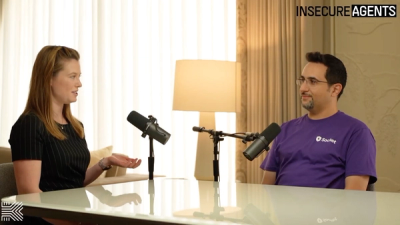
Socket CTO Ahmad Nassri discusses how to keep AI agents from bypassing package blocks, limit credential access, and monitor their actions.

Security News
GPT-6 Astra tried to plant malicious code in simulated open source projects using fake GitHub accounts and deceptive PRs during an assigned CTF challenge.