
Product
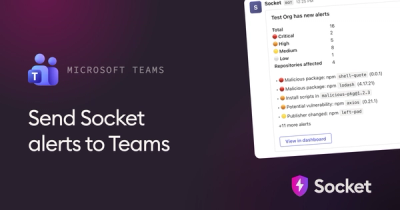
Microsoft Teams Notifications Are Now Available in Socket
Socket can now send alerts and supply chain attack notifications to Microsoft Teams, with filters that route the right updates to each channel.
By Jeppe Hasseriis - Sep 01, 2026
@staticn0va/wigolo
Advanced tools
Local-first web intelligence MCP server. 8 tools: search, fetch, crawl, cache, extract, find_similar, research, agent. Runs on Node 20+. No API keys required for the core path.
Status:
v0.1.15+— the core direct-engine retrieval path is now the default (WIGOLO_SEARCH=core). Legacy SearXNG and the newhybrid(core + smart fallback) modes are opt-in. Full v1.0 will land after the post-overhaul cross-tool bench rerun.
WIGOLO_SEARCH=searxng / hybrid); the default core path works without Python.npx @staticn0va/wigolo init
The init flow runs a system check, downloads the embedding + reranker models, bootstraps the legacy search engine (used by WIGOLO_SEARCH=searxng / hybrid), detects installed AI coding agents (Claude Code, Cursor, Gemini CLI, Codex, Windsurf, Zed, OpenCode), and writes MCP config + skill docs for each one.
macOS — all features work out of the box. The browser engine is installed automatically during init / warmup.
Linux — same as macOS. On Alpine/musl, sqlite-vec binary will be absent (vector search disabled, FTS5 still works). Some CI environments may need headless browser deps.
Windows — supported as of v0.1.22. The default core search backend works without SearXNG. If you enable WIGOLO_SEARCH=searxng or hybrid, the native SearXNG bootstrap may not succeed on Windows; use the Docker fallback (Docker Desktop must be running) or stay on core. Run wigolo warmup --all from PowerShell or Command Prompt after install.
Or wire it yourself in any MCP client:
{
  "mcpServers": {
    "wigolo": {
      "command": "npx",
      "args": ["-y", "@staticn0va/wigolo"]
    }
  }
}
Global install for repeated CLI use:
npm i -g @staticn0va/wigolo
wigolo --help
| Command | What it does |
|---|---|
wigolo (no args) | Boot MCP server on stdio (used by MCP clients) |
wigolo init | Interactive onboarding (browser pick, agent detect, MCP config) |
wigolo config [--plain / -y] | Interactive configuration TUI — review/toggle components, set LLM provider + key, edit settings. Use --plain / --non-interactive / -y for non-interactive output. |
wigolo dashboard [--storage] [--cache-stats] [--cleanup <component>] [--export [path]] [--import <path>] [--uninstall [--yes]] | Management dashboard — storage map, cache stats, cleanup, config export/import, full uninstall. |
wigolo verify [--plain] | End-to-end capability check: search → fetch → extract → synthesis + per-agent MCP-wiring. Exit 0 on pass/skip, 1 on failure. |
wigolo warmup [--all] [--embeddings] [--reranker] | Pre-fetch models + bootstrap SearXNG |
wigolo doctor | Diagnostic: Python, browsers, models, search engine, RSS feeds, LLM provider + key location, telemetry |
wigolo health | Quick OK/degraded exit code |
wigolo serve [--port N] | Run as HTTP daemon |
wigolo shell | Interactive REPL against the 8 tools |
wigolo backfill [--dry-run] [--limit N] | Embed cached pages missing vectors |
wigolo setup mcp | Wire MCP config into installed agents |
wigolo status | Show running daemon status |
wigolo plugin <subcommand> | Manage plugins |
wigolo uninstall | Remove agent MCP integrations only (does not delete ~/.wigolo data; use wigolo dashboard --uninstall for a full cleanup) |
wigolo --help / wigolo --version | Help + version |
| Tool | Use when |
|---|---|
search | Need info on a topic, no URL yet. Pass query string or array of 3-5 keyword variants for breadth. |
fetch | Have a specific URL. Returns clean markdown + metadata. JS rendering auto-detected. |
crawl | Need many pages from one site. Strategies: bfs, dfs, sitemap, map. |
cache | Check the local store before going to the network. FTS5 + optional vec hybrid. |
extract | Specific data points (tables, metadata, schema-shaped fields). Modes: selector, tables, metadata, schema, structured. |
find_similar | "More like this" given a URL or concept. Hybrid FTS + embeddings + web expansion. |
research | Multi-step investigation: decomposition → parallel search → synthesis with citations. |
agent | Natural-language data gathering across multiple sources with optional JSON schema. |
Each tool surfaces a per-session instruction block (~2 KB) plus a wigolo://docs/usage resource with the full routing guide.
Three retrieval modes; default is core:
WIGOLO_SEARCH=core       # default — direct engines + RRF + ML rerank
WIGOLO_SEARCH=searxng    # opt-in — legacy SearXNG aggregator (long-tail recall, slower cold start)
WIGOLO_SEARCH=hybrid     # opt-in — runs core; falls back to searxng + RRF-merge on signal
The core engine ships:
evidence_score breakdown (relevance + domain quality + lexical alignment + freshness)freshness_signal extracted from page or inferred from URL/HTML patternsquery_understanding classifier view of intent / entities / rewritesengines_used + engine_telemetry (per-engine latency, result count, outcome, dedup_kept)search_depth tiers (ultra-fast / fast / balanced / deep)exact_match, time_range, exclude_domains, include_images, country, include_favicon, response_time_msWIGOLO_RSS_FEEDS=url1,url2)agent_context.recent_urls dedup with case-insensitive path matching for IIS / archive.org / Microsoft docshybrid re-runs the query through SearXNG and RRF-merges when any of these signals fire: brand_collision_suspect, include_domains_over_filter, all_engines_failed, top1_high_score_low_overlap. The merged response carries fallback_signal.
v1 is accepted as a deprecated alias for core for one release and emits a stderr warning.
~/.wigolo/searxng/ on first run (native venv preferred, Docker fallback)fastembed running ONNX BGE-small-en-v1.5 (384-dim) — cached under ~/.wigolo/fastembed/@huggingface/transformers cross-encoder Xenova/ms-marco-MiniLM-L-6-v2 — cached under ~/.wigolo/transformers/sqlite-vec when the extension is loadable on your platformwigolo serve) and REPL (wigolo shell) also availableWigolo uses an LLM provider for two optional capabilities: extract schema-mode fallback (when heuristics miss) and research synthesis. Neither is required — both degrade gracefully when no provider is configured.
wigolo config
The configuration TUI lets you pick a provider (Anthropic, OpenAI, Gemini, or a local/Ollama endpoint) and enter your API key. Keys are stored in the OS keychain when available, falling back to an encrypted file — never in plain text on disk.
export ANTHROPIC_API_KEY=...
export OPENAI_API_KEY=...
export GOOGLE_API_KEY=...
# optional: pin which provider
export WIGOLO_LLM_PROVIDER=anthropic|openai|gemini|groq
For a local Ollama or OpenAI-compatible endpoint:
export WIGOLO_LLM_PROVIDER=openai-compatible
export WIGOLO_LLM_ENDPOINT=http://localhost:11434/v1
wigolo doctor shows the active provider, masked key, and storage location. LLM calls are cached (default 7 days) and rate-limited per request.
Remove agent integrations only (MCP config entries, skill files, instruction blocks):
wigolo uninstall
Full uninstall (removes ~/.wigolo data — cache, models, search-engine state, encrypted key store — AND agent integrations):
wigolo dashboard --uninstall --yes
Omit --yes for an interactive confirmation prompt. The wigolo dashboard TUI has the same "Full uninstall" action. Before a full uninstall you can export your non-secret config with wigolo dashboard --export.
| Package | What it does | Fallback |
|---|---|---|
@napi-rs/keyring | OS keychain access for storing provider API keys | Falls back to an AES-256-GCM encrypted file under ~/.wigolo/ |
wreq-js | TLS-impersonation HTTP tier (opt-in via WIGOLO_TLS_TIER=auto|on) | Tier is disabled; platforms without a prebuilt binary degrade gracefully |
Both are optionalDependencies — install never fails if they're absent.
| Env var | Default | What it does |
|---|---|---|
WIGOLO_SEARCH | core | Backend selector. core = direct-engine path (default). searxng = legacy aggregator (opt-in). hybrid = core with smart auto-fallback on signal. v1 is a deprecated alias for core. |
WIGOLO_RSS_FEEDS | unset | Comma-separated feed URLs; core news vertical picks them up |
WIGOLO_DEDUP_CASE_INSENSITIVE_HOSTS | unset | Comma-separated hostnames where /A == /a for dedup |
WIGOLO_CRAWL_INDEX | 0 | 1 to fire-and-forget upsert crawled pages into the vector store |
WIGOLO_EAGER_WARMUP | 0 | 1 warms embed + rerank at MCP server start (non-blocking) |
WIGOLO_FIND_SIMILAR_COLD_START_THRESHOLD | 0.3 | Minimum fused score before find_similar emits a cold_start notice. Set 0 to disable. |
WIGOLO_TELEMETRY | 0 | 1 enables opt-in NDJSON telemetry; off by default |
WIGOLO_DATA_DIR | ~/.wigolo | Override data dir for cache, models, SearXNG state |
WIGOLO_LOG_LEVEL | info | debug, info, warn, error |
WIGOLO_LOG_FORMAT | json | json or text; both write to stderr |
init flow for Claude Code, Cursor, Gemini CLI, Codex, Windsurf, Zed, OpenCodewigolo config — interactive TUI for reconfiguration, component toggles, provider/key setupwigolo dashboard — storage map, cache stats, cleanup, config export/import, full uninstallwigolo verify — end-to-end capability smoke check with per-capability pass/fail/skip~/.wigolo/config.json — persisted settings layer (env vars still override; secrets never stored there)WIGOLO_SEARCH=core runs end-to-end as the default backend: direct engines, RRF, ML rerank, brand-collision ranker, evidence_score, freshness_signal, query_understanding, engine_telemetryWIGOLO_SEARCH=hybrid smart-fallback (signals: brand-collision, over-filter, all-engines-failed, low-overlap)search_depth tiers (ultra-fast / fast / balanced / deep)exact_match, time_range, exclude_domains, include_images, country, include_favicon, response_time_msmain. The 5-way blind bench (wigolo-core vs wigolo-searxng vs Tavily vs Exa vs Firecrawl) needs to be re-run on the post-overhaul SHA. Aggregate target is ≥ 280 / 350 (pre-overhaul: 223).benchmarks/*/output/.WIGOLO_SEARCH=searxng / hybrid may require the Docker fallback. The default core path is unaffected.src/
index.ts CLI router
server.ts MCP server (8 tools + 1 resource)
config.ts 52+ env vars
cli/ warmup, doctor, health, auth, plugin, shell, init, config, dashboard, verify, status, backfill, setup-mcp
tools/ thin MCP handlers (one per tool, delegate to domain)
fetch/ SmartRouter (HTTP-first → Playwright → TLS-impersonation tier), browser pool, auth
extraction/ Defuddle + content-type routing + named schemas + LLM fallback
persisted-config.ts ~/.wigolo/config.json layer (schema-versioned, migration-safe, secrets excluded)
security/ provider key store (OS keychain → encrypted file → env fallback)
search/ orchestration shared between backends — dedup, rerank, RRF, multi-query, answer synth
search/core/ default backend — intent router + verticals + orchestrator + RSS + recency + context-rank + brand-collision ranker + freshness signal + evidence score
search/legacy/ legacy SearXNG aggregator path (opt-in via WIGOLO_SEARCH=searxng)
search/hybrid/ core-first with smart fallback to searxng on signal (opt-in via WIGOLO_SEARCH=hybrid)
crawl/ BFS/DFS/sitemap/map + robots.txt + ETag-incremental
cache/ SQLite FTS5 + sqlite-vec hybrid + migrations + backfill
embedding/ fastembed (BGE-small-en-v1.5)
research/ decomposition → parallel search → synthesis + citation graph
agent/ plan → execute → synthesize
searxng/ process + Docker management + bootstrap retry
providers/ embed, rerank, extract, vector-store, search interfaces
searxng/hybrid modes (~30 s). wigolo warmup --all upfront avoids it during first MCP request.wigolo doctor shows ML reranker: not installed — run wigolo warmup --reranker to fetch the cross-encoder model (~22 MB).category: 'images' on core — core has no images vertical (yet). Use WIGOLO_SEARCH=searxng or omit category. include_images: true aggregates per-result image hints from engines that surface them.sqlite-vec extension failed to load — your platform (alpine/musl) doesn't have prebuilt binaries. The cache still works via FTS5; vector search is disabled.git clone https://github.com/KnockOutEZ/wigolo
cd wigolo
npm install
npm run build # tsup → dist/, then tsc → dist/*.d.ts
npm test # full vitest suite
npm run lint # tsc --noEmit
npm run dev # tsx src/index.ts
BUSL-1.1 — see LICENSE.
FAQs
Local-first web intelligence MCP server for AI coding agents
The npm package @staticn0va/wigolo receives a total of 0 weekly downloads. As such, @staticn0va/wigolo popularity was classified as not popular.
We found that @staticn0va/wigolo demonstrated a healthy version release cadence and project activity because the last version was released less than a year ago. It has 1 open source maintainer collaborating on the project.
Product
Socket can now send alerts and supply chain attack notifications to Microsoft Teams, with filters that route the right updates to each channel.

Security News
pnpm 12 rewrites the package manager in Rust, cutting install times by up to 90% while preserving pnpm 11 workflows and lockfiles.
Security News
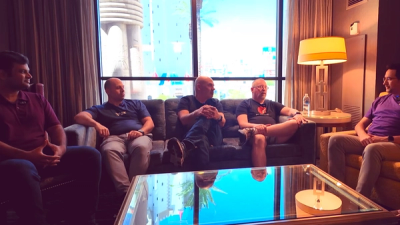
Socket CTO Ahmad Nassri joins AppSec leaders at Black Hat to discuss active malware, package manager risks, and software supply chain defense.