
Company News
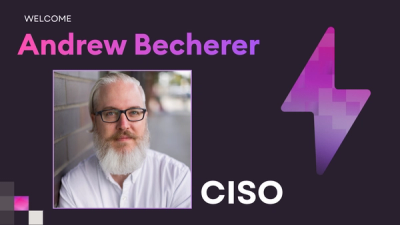
Andrew Becherer Joins Socket as Chief Information Security Officer
Socket’s first CISO brings deep experience securing high-growth SaaS companies as open source supply chain threats accelerate.
By Sarah Gooding - Jun 11, 2026
@tienne/gestalt
Advanced tools
TypeScript AI Development Harness - Gestalt psychology-driven requirement clarification

Gestalt — AI Development Harness
Turn vague requirements into structured, executable plans — right inside Claude Code.


Gestalt is an MCP (Model Context Protocol) server that runs inside Claude Code. It conducts a structured requirement interview, generates a validated Spec — a JSON document capturing your goal, constraints, and acceptance criteria — and transforms that Spec into a dependency-aware execution plan.
Claude Code acts as the LLM throughout. Gestalt manages state, validates results, and advances the pipeline. No API key required.
Requires Node.js >= 20.0.0. Use
nvm install 22 && nvm use 22if needed.
Install the plugin once, then use it in any Claude Code session.
From a terminal (outside a session):
claude plugin install gestalt@gestalt
Inside a Claude Code session:
/plugin marketplace add tienne/gestalt
/plugin install gestalt@gestalt
Then run the pipeline:
/interview "user authentication system"
/spec
/execute
Full MCP Reference — all tools, parameters, and examples
Vague requirements are the primary cause of implementation drift. When the goal isn't precise, Claude fills gaps with assumptions — and those assumptions diverge from intent as the project grows.
Gestalt addresses this before any code is written. It runs a structured interview guided by five Gestalt psychology principles to raise requirement resolution to a measurable threshold (≥ 0.8). The result is a Spec: a validated JSON document that drives every subsequent step.
| Principle | Role |
|---|---|
| Closure | Finds what's missing; surfaces implicit requirements |
| Proximity | Groups related features and tasks by domain |
| Similarity | Identifies repeating patterns across requirements |
| Figure-Ground | Separates MVP (figure) from nice-to-have (ground) |
| Continuity | Validates dependency chains; detects contradictions |
Gestalt runs as an MCP server. Claude Code acts as the LLM: Gestalt returns prompts and context, and Claude Code does the reasoning. The server makes no API calls.
Note: The Execute stage always runs in Passthrough mode, regardless of whether an API key is configured. Execute carries out real file edits and code execution through Claude Code's tools (Bash, Edit, etc.), so Claude Code must be the LLM that drives it — this is by design, not a missing feature.
You (in Claude Code)
       │
       ▼  /interview "topic"
  Gestalt MCP Server
  (returns context + prompts)
       │
       ▼
  Claude Code executes the prompts
  (generates questions, scores, plans)
       │
       ▼
  Gestalt MCP Server
  (validates, stores state, advances)
       │
       ▼  repeat until resolution ≥ 0.8
  Final Spec → Execution Plan
Bundles the MCP server, slash-command skills, Gestalt agents, and project context — pre-configured in a single install.
From a terminal:
claude plugin install gestalt@gestalt
Inside a Claude Code session:
/plugin marketplace add tienne/gestalt
/plugin install gestalt@gestalt
What you get:
| Item | Details |
|---|---|
| MCP Tools | ges_interview, ges_generate_spec, ges_execute, ges_create_agent, ges_agent, ges_status, ges_code_graph, ges_graph_visualize, ges_benchmark, ges_generate_kb, ges_search, ges_sync |
| Slash Commands | /interview, /spec, /execute, /agent |
| Agents | 5 pipeline agents + 9 Role agents + 3 Review agents |
| CLAUDE.md | Project context and MCP usage guide auto-injected |
Add this to your settings.json (or claude_desktop_config.json) and restart:
{
  "mcpServers": {
    "gestalt": {
      "command": "npx",
      "args": ["-y", "@tienne/gestalt"]
    }
  }
}
MCP tools are available immediately after restart. Slash commands require the plugin or manual skills setup.
claude mcp add gestalt -- npx -y @tienne/gestalt
Or add directly to ~/.claude/settings.json:
{
  "mcpServers": {
    "gestalt": {
      "command": "npx",
      "args": ["-y", "@tienne/gestalt"]
    }
  }
}
codex mcp add gestalt -- npx -y @tienne/gestalt serve
Then add "client": "codex" to your project's gestalt.json so the active session context is written to AGENTS.md (which Codex reads automatically):
{
  "$schema": "./node_modules/@tienne/gestalt/schemas/gestalt.schema.json",
  "client": "codex"
}
Or set GESTALT_CLIENT=codex as an environment variable.
All 12 MCP tools (ges_interview, ges_generate_spec, ges_execute, etc.) are available immediately. Slash commands and the Claude Code Task panel are not available in Codex — the pipeline runs entirely through MCP tool calls.
gemini mcp add gestalt -- npx -y @tienne/gestalt serve
Or add directly to ~/.gemini/settings.json:
{
  "mcpServers": {
    "gestalt": {
      "command": "npx",
      "args": ["-y", "@tienne/gestalt", "serve"]
    }
  }
}
Then add "client": "codex" to your project's gestalt.json — Gemini CLI reads AGENTS.md for persistent context, same as Codex:
{
  "$schema": "./node_modules/@tienne/gestalt/schemas/gestalt.schema.json",
  "client": "codex"
}
Use the /mcp command inside a Gemini CLI session to verify the server is connected.
Start with any topic. A rough sentence is enough.
/interview "I want to build a checkout flow with Stripe"
Gestalt conducts a multi-round interview. Each round targets a specific resolution dimension:
The interview continues until the resolution score reaches ≥ 0.8:
Round 1 → resolution: 0.28  (lots of unknowns)
Round 4 → resolution: 0.55  (getting clearer)
Round 8 → resolution: 0.81  ✓ ready for Spec
When rounds exceed 5, Gestalt signals that compression is available. Use the compress action to summarize earlier rounds and keep the context window lean:
1. respond returns needsCompression: true + compressionContext
2. ges_interview({ action: "compress", sessionId }) → compressionContext
3. Caller generates summary → submits it → stored in session
The compressed summary is automatically injected into all subsequent rounds.
From a completed interview:
/spec
From text (no interview required):
ges_generate_spec({ text: "Build a checkout flow with Stripe" })
With a built-in template:
| Template ID | Description |
|---|---|
rest-api | REST API with auth, CRUD, and OpenAPI |
react-dashboard | React dashboard with charts, filters, and responsive layout |
cli-tool | CLI with subcommands, config file, and distribution |
ges_generate_spec({ text: "API with JWT authentication", template: "rest-api" })
The generated Spec includes:
goal                → Clear, precise project objective
constraints         → Technical and business constraints
acceptanceCriteria  → Measurable, verifiable success conditions
ontologySchema      → Entity-relationship model
gestaltAnalysis     → Key findings per Gestalt principle
Transform the Spec into a dependency-aware execution plan and run it:
/execute
Execute always runs in Passthrough mode — Claude Code performs the actual file edits and code execution through its tools (Bash, Edit, etc.). Configuring an API key does not switch Execute to a self-contained LLM mode; there is no such mode by design.
Planning applies four Gestalt principles in a fixed sequence:
| Step | Principle | What it does |
|---|---|---|
| 1 | Figure-Ground | Classifies acceptance criteria as critical vs. supplementary |
| 2 | Closure | Decomposes ACs into atomic tasks, including implicit ones |
| 3 | Proximity | Groups related tasks by domain |
| 4 | Continuity | Validates the dependency DAG — no cycles, topological order confirmed |
Execution runs tasks in topological order. After each task, drift detection checks alignment with the Spec:
The plan_complete response includes parallelGroups: string[][]. Tasks with no mutual dependencies are placed in the same group and can run concurrently:
"parallelGroups": [
  ["setup-db", "setup-env"],
  ["create-schema"],
  ["seed-data", "run-tests"]
]
ges_execute({ action: "resume", sessionId: "<id>" })
Returns ResumeContext: completed task IDs, next task, and progressPercent. The ges_status response also includes resumeContext automatically for any active session.
When a codebase already exists, audit it against the Spec before running new tasks:
# Step 1: request audit context
ges_execute({ action: "audit", sessionId: "<id>" })
# → returns auditContext (systemPrompt, auditPrompt)

# Step 2: submit codebase snapshot + audit result
ges_execute({
  action: "audit",
  sessionId: "<id>",
  codebaseSnapshot: "...",
  auditResult: {
    implementedACs: [0, 2],
    partialACs: [1],
    missingACs: [3],
    gapAnalysis: "..."
  }
})
Decompose a complex task into sub-tasks dynamically during execution:
ges_execute({
  action: "spawn",
  sessionId: "<id>",
  parentTaskId: "task-3",
  subTasks: [
    { title: "Write DB schema", description: "..." },
    { title: "Run migration", description: "...", dependsOn: ["spawned-<id>"] }
  ]
})
The /execute slash command displays live execution status in the Claude Code Task panel — completed/total tasks, current task name, failed count, and parallel group progress. Updated automatically at each planning step, task completion, and evaluation stage.
Execution triggers a two-stage evaluation automatically:
| Stage | Method | On failure |
|---|---|---|
| 1 | Structural — runs lint → build → test | Short-circuits; Stage 2 is skipped |
| 2 | Contextual — LLM validates each AC and goal alignment | Enters the Evolution Loop |
Success condition: score ≥ 0.85 AND goalAlignment ≥ 0.80
When evaluation fails, the Evolution Loop engages. Three recovery flows are available:
Flow A — Structural Fix (when lint/build/test fails)
evolve_fix → submit fix tasks → re-evaluate
Flow B — Contextual Evolution (when AC score is too low)
evolve → patch Spec (ACs/constraints) → re-execute impacted tasks → re-evaluate
Spec patch scope: ACs and constraints are freely editable; ontology can be extended; goal is immutable.
Flow C — Lateral Thinking (when stagnation is detected)
Gestalt rotates through lateral thinking personas rather than terminating:
| Stagnation Pattern | Persona | Strategy |
|---|---|---|
| Hard cap hit | Multistability | View from a different angle |
| Oscillating scores | Simplicity | Strip down and converge |
| No progress (no drift) | Reification | Fill in what's missing |
| Diminishing returns | Invariance | Replicate what worked |
When all four personas are exhausted, the session ends with Human Escalation — a structured list of actionable suggestions for manual resolution.
Termination conditions:
| Condition | Trigger |
|---|---|
success | score ≥ 0.85 AND goalAlignment ≥ 0.80 |
stagnation | 2 consecutive rounds with delta < 0.05 |
oscillation | 2 consecutive score reversals |
hard_cap | 3 structural + 3 contextual failures |
caller | Manual termination |
human_escalation | All 4 lateral personas exhausted |
When evolution finishes, code review starts automatically:
review_start → agents submit perspectives → consensus → auto-fix
See Agents for the full list of built-in reviewers.
Use any agent directly, outside the pipeline:
# List all available agents
/agent

# Run a specific agent on any task
/agent architect "review the module boundaries in this codebase"
/agent security-reviewer "check this authentication code for vulnerabilities"
/agent technical-writer "write a README for this module"
Nine built-in role agents provide multi-perspective review:
| Agent | Domain |
|---|---|
architect | System design, scalability |
frontend-developer | UI, React, accessibility |
backend-developer | API, database, server |
devops-engineer | CI/CD, infrastructure, monitoring |
qa-engineer | Testing, quality, automation |
designer | UX/UI, design systems |
product-planner | Roadmap, user stories, metrics |
researcher | Analysis, data, benchmarks |
technical-writer | Documentation, API docs, guides, README |
Three built-in review agents run focused code analysis:
| Agent | Focus |
|---|---|
security-reviewer | Injection, XSS, auth vulnerabilities, secrets |
performance-reviewer | Memory leaks, N+1 queries, bundle size, async |
quality-reviewer | Readability, SOLID, error handling, DRY |
Generate a custom Role Agent from interview results:
# Step 1: get agent creation context
ges_create_agent({ action: "start", sessionId: "<id>" })
# → returns agentContext (systemPrompt, creationPrompt, schema)

# Step 2: submit the generated AGENT.md content
ges_create_agent({ action: "submit", sessionId: "<id>", agentContent: "..." })
# → creates agents/{name}/AGENT.md
Run Gestalt without Claude Code. Requires ANTHROPIC_API_KEY.
# Start an interactive interview
npx @tienne/gestalt interview "my topic"

# Generate a Spec from a completed session
npx @tienne/gestalt spec <session-id>

# List all sessions
npx @tienne/gestalt status

# Generate gestalt.json config
npx @tienne/gestalt setup

# Start the MCP server manually
npx @tienne/gestalt serve
Every spec and execution result is automatically recorded in .gestalt/memory.json at your repo root.
{
  "specHistory": [
    { "specId": "...", "goal": "Build a user auth system", "sourceType": "text" }
  ],
  "executionHistory": [],
  "architectureDecisions": []
}
Commit it. .gestalt/memory.json is plain JSON. Teammates inherit all prior decisions on git pull.
Context injection. Prior goals and architecture decisions are automatically injected into the next spec prompt.
User profile. Personal preferences are stored in ~/.gestalt/profile.json and are never committed.
Generate a gestalt.json with IDE autocomplete support:
npx @tienne/gestalt setup
{
  "$schema": "./node_modules/@tienne/gestalt/schemas/gestalt.schema.json",
  "llm": {
    "model": "claude-sonnet-4-20250514"
  },
  "interview": {
    "resolutionThreshold": 0.8,
    "maxRounds": 10
  },
  "execute": {
    "driftThreshold": 0.3,
    "successThreshold": 0.85,
    "goalAlignmentThreshold": 0.80
  },
  "client": "claude-code"
}
Config priority (highest → lowest): code overrides → shell env vars → .env → gestalt.json → built-in defaults
The client field controls where Gestalt writes the active session context during execution:
| Value | Context file | When to use |
|---|---|---|
"claude-code" (default) | .claude/rules/gestalt-active.md | Claude Code (CLI, Desktop, Plugin) |
"codex" | AGENTS.md (managed section) | OpenAI Codex CLI, Google Gemini CLI |
"both" | Both locations | Shared repos used by multiple agents |
"codex" is the right value for both Codex CLI and Gemini CLI — both read AGENTS.md for persistent project context.
Route LLM calls by task complexity across three tiers:
| Tier | Purpose | Example models |
|---|---|---|
| frugal | Lightweight tasks — scoring, classification, short responses | llama3.2, claude-haiku |
| standard | General tasks — interviews, spec generation, execution | claude-sonnet-4-20250514 |
| frontier | High-complexity reasoning — architecture, code review, evolution | claude-opus-4-20250514 |
Mix providers freely. This example uses Anthropic for standard/frontier and a local Ollama model for frugal tasks:
{
  "$schema": "./node_modules/@tienne/gestalt/schemas/gestalt.schema.json",
  "llm": {
    "model": "claude-sonnet-4-20250514",
    "frugal": {
      "provider": "openai",
      "baseURL": "http://localhost:11434/v1",
      "apiKey": "ollama",
      "model": "llama3.2"
    },
    "standard": {
      "provider": "anthropic",
      "model": "claude-sonnet-4-20250514"
    },
    "frontier": {
      "provider": "anthropic",
      "model": "claude-opus-4-20250514"
    }
  }
}
If no tiers are configured, all tiers fall back to the top-level llm.model with the Anthropic adapter — fully backward-compatible.
| Variable | Config path | Default | Description |
|---|---|---|---|
ANTHROPIC_API_KEY | llm.apiKey | "" | Required only for CLI direct mode |
GESTALT_MODEL | llm.model | claude-sonnet-4-20250514 | LLM model |
GESTALT_RESOLUTION_THRESHOLD | interview.resolutionThreshold | 0.8 | Interview completion threshold |
GESTALT_MAX_ROUNDS | interview.maxRounds | 10 | Max interview rounds |
GESTALT_DRIFT_THRESHOLD | execute.driftThreshold | 0.3 | Task drift detection threshold |
GESTALT_EVOLVE_SUCCESS_THRESHOLD | execute.successThreshold | 0.85 | Evolution success score |
GESTALT_EVOLVE_GOAL_ALIGNMENT_THRESHOLD | execute.goalAlignmentThreshold | 0.80 | Goal alignment threshold |
GESTALT_DB_PATH | dbPath | ~/.gestalt/events.db | SQLite event store path |
GESTALT_SKILLS_DIR | skillsDir | skills | Custom skills directory |
GESTALT_AGENTS_DIR | agentsDir | agents | Custom agents directory |
GESTALT_LOG_LEVEL | logLevel | info | Log level (debug/info/warn/error) |
GESTALT_CLIENT | client | claude-code | MCP client type (claude-code/codex/both) |
GESTALT_LLM_FRUGAL_PROVIDER | llm.frugal.provider | anthropic | Frugal tier provider |
GESTALT_LLM_FRUGAL_API_KEY | llm.frugal.apiKey | "" | Frugal tier API key |
GESTALT_LLM_FRUGAL_BASE_URL | llm.frugal.baseURL | "" | Frugal tier base URL (e.g. Ollama) |
GESTALT_LLM_FRUGAL_MODEL | llm.frugal.model | — | Frugal tier model |
GESTALT_LLM_STANDARD_PROVIDER | llm.standard.provider | anthropic | Standard tier provider |
GESTALT_LLM_STANDARD_API_KEY | llm.standard.apiKey | "" | Standard tier API key |
GESTALT_LLM_STANDARD_BASE_URL | llm.standard.baseURL | "" | Standard tier base URL |
GESTALT_LLM_STANDARD_MODEL | llm.standard.model | — | Standard tier model |
GESTALT_LLM_FRONTIER_PROVIDER | llm.frontier.provider | anthropic | Frontier tier provider |
GESTALT_LLM_FRONTIER_API_KEY | llm.frontier.apiKey | "" | Frontier tier API key |
GESTALT_LLM_FRONTIER_BASE_URL | llm.frontier.baseURL | "" | Frontier tier base URL |
GESTALT_LLM_FRONTIER_MODEL | llm.frontier.model | — | Frontier tier model |
Claude Code (you)
     │
     ▼  MCP / stdio transport
┌──────────────────────────────────┐
│        Gestalt MCP Server        │
│                                  │
│  Interview Engine                │
│  ├─ GestaltPrincipleSelector     │
│  ├─ ResolutionScorer             │
│  ├─ SessionManager               │
│  └─ ContextCompressor            │
│                                  │
│  Spec Generator                  │
│  ├─ PassthroughSpecGenerator     │
│  └─ SpecTemplateRegistry         │
│                                  │
│  Execute Engine                  │
│  ├─ DAG Validator                │
│  ├─ ParallelGroupsCalculator     │
│  ├─ DriftDetector                │
│  ├─ EvaluationEngine             │
│  ├─ AuditEngine                  │
│  └─ ExecuteSessionManager        │
│                                  │
│  Resilience Engine               │
│  ├─ StagnationDetector           │
│  ├─ LateralThinkingPersonas      │
│  └─ HumanEscalation              │
│                                  │
│  Agent System                    │
│  ├─ RoleAgentRegistry            │
│  ├─ RoleMatchEngine              │
│  └─ RoleConsensusEngine          │
│                                  │
│  EventStore (SQLite WAL)         │
└──────────────────────────────────┘
Further reading:
MIT © tienne
FAQs
TypeScript AI Development Harness - Gestalt psychology-driven requirement clarification
The npm package @tienne/gestalt receives a total of 1,562 weekly downloads. As such, @tienne/gestalt popularity was classified as popular.
We found that @tienne/gestalt demonstrated a healthy version release cadence and project activity because the last version was released less than a year ago. It has 1 open source maintainer collaborating on the project.
Did you know?

Socket for GitHub automatically highlights issues in each pull request and monitors the health of all your open source dependencies. Discover the contents of your packages and block harmful activity before you install or update your dependencies.
Company News
Socket’s first CISO brings deep experience securing high-growth SaaS companies as open source supply chain threats accelerate.
Company News
Replit is integrating Socket Firewall into its AI-powered development experience to help protect builders from malicious open source packages.

Security News
npm confirmed a tooling bug incorrectly marked several one-character packages as security holders and said it was working on a rollback.