Research
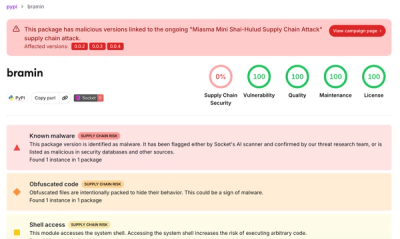
Shai-Hulud Descends to Hades: Miasma Worm Campaign Spreads with New PyPI Wave
Socket found 37 malicious PyPI wheels that abuse Python startup hooks to launch a Bun-powered credential stealer tied to Mini Shai-Hulud/Miasma.
@turf/line-segment
Advanced tools
Creates a FeatureCollection of 2-vertex LineString segments from a (Multi)LineString or (Multi)Polygon.
geojson GeoJSON GeoJSON Polygon or LineStringvar polygon = turf.polygon([[[-50, 5], [-40, -10], [-50, -10], [-40, 5], [-50, 5]]]);
var segments = turf.lineSegment(polygon);
//addToMap
var addToMap = [polygon, segments]
Returns FeatureCollection<LineString> 2-vertex line segments
This module is part of the Turfjs project, an open source module collection dedicated to geographic algorithms. It is maintained in the Turfjs/turf repository, where you can create PRs and issues.
Install this single module individually:
$ npm install @turf/line-segment
Or install the all-encompassing @turf/turf module that includes all modules as functions:
$ npm install @turf/turf
FAQs
Creates line segments from a GeoJSON feature.
The npm package @turf/line-segment receives a total of 1,406,443 weekly downloads. As such, @turf/line-segment popularity was classified as popular.
We found that @turf/line-segment demonstrated a healthy version release cadence and project activity because the last version was released less than a year ago. It has 9 open source maintainers collaborating on the project.
Did you know?

Socket for GitHub automatically highlights issues in each pull request and monitors the health of all your open source dependencies. Discover the contents of your packages and block harmful activity before you install or update your dependencies.

Research
Socket found 37 malicious PyPI wheels that abuse Python startup hooks to launch a Bun-powered credential stealer tied to Mini Shai-Hulud/Miasma.

Security News
RubyGems and Bundler 4.0.13 introduced an opt-in cooldown feature that delays newly published gems during dependency resolution.

Security News
pnpm 11.5 now recognizes npm staged publish approvals in release metadata, preventing those releases from being mistaken for lower-trust package publishes.