
Company News
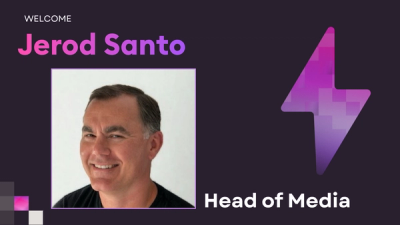
Jerod Santo Joins Socket as Head of Media
Allow myself to introduce... myself.
By Jerod Santo - Sep 14, 2026
@type-atlas/atlascii
Advanced tools
ASCII components for code intelligence: locations, navigation targets, call hierarchies, outlines, diagnostics, and source frames as plain text.
ASCII components for code intelligence.
Renders the shapes a language server produces — locations, navigation targets, call hierarchies, outlines, diagnostics, source frames — as plain text meant to be read by an agent from a transcript.
Pure functions. Data in, string out. No colour, no terminal, no framework, no
document layer. Every component takes the protocol's own values — an LSP
Range, a severity number — and does the formatting itself, so a caller never
formats anything before calling.
That constraint is the whole design. A component that took "12:7-12:18"
instead of a Range would be asking its caller to do the library's job, and
would leave every consumer with its own copy of the zero-based-to-one-based
conversion. Here that conversion exists once, in range.ts.
source-offset.ts   position ↔ offset arithmetic. No strings at all.
range.ts           positions and ranges as text. One conversion point.
                   ↑ everything below builds on these

code-frame.ts      source excerpt with a gutter and span carets
locations.ts       located rows grouped by file (ripgrep --heading -n)
targets.ts         navigation targets (❯ file:line:col)
calls.ts           call hierarchy, one file, indented callables
symbols.ts         document outline, ctags kinds, depth nesting
workspace-symbols.ts   symbol search hits with containers
diagnostics.ts     compiler-style problems

divider.ts         section rule, centred or right-anchored text
summary.ts         right-aligned label column, singular/plural
time.ts            durations that stop being milliseconds past a second
The layout primitives are adapted from Vitest's reporters — divider,
padSummaryTitle, formatTime, the code frame's gutter and caret arithmetic,
the ❯ frame, and the rule that a row never prints a zero state. Vitest solves
the same problem this does: dense, scannable, colour-optional text about code,
read quickly by someone who did not write it.
The transplanted source is kept at
packages/core/src/markdoc/format/vitest-reference/ with an extraction log.
Early. The components here are in use by Type Atlas, an MCP server for TypeScript code intelligence, which is where each one was shaped against real agent-facing output rather than designed in advance.
Not yet extracted from that project: the diff body (-/+ unified lines),
state glyphs, count lines, stack frames, breadcrumbs, tree rows, and an
indented-block writer.
FAQs
ASCII components for code intelligence: locations, navigation targets, call hierarchies, outlines, diagnostics, and source frames as plain text.
The npm package @type-atlas/atlascii receives a total of 23 weekly downloads. As such, @type-atlas/atlascii popularity was classified as not popular.
We found that @type-atlas/atlascii demonstrated a healthy version release cadence and project activity because the last version was released less than a year ago. It has 1 open source maintainer collaborating on the project.
Company News
Allow myself to introduce... myself.

Research
/Security News
A Twitch browser extension on Chrome and Firefox forwards users’ live OAuth session tokens through proxies controlled by a Russian bot service.

Security News
Anthropic found biased reasoning and recklessness drove Claude Mythos 5 to publish malware on PyPI and compromise a security vendor.