

Security News
/Company News
Securing the Financial Frontier: How Capital One Uses Socket for Open Source Security
Capital One is partnering with Socket to proactively secure its open source supply chain.
By Sarah Gooding - Oct 01, 2026
@usefillo/cli
Advanced tools
fillo — create and publish Fillo forms from your terminal. Auth once, then your coding agent does the rest.
npx @usefillo/cli init --email you@company.com # start a workspace and email its link
npx @usefillo/cli login                         # connect an existing account in the browser
npx @usefillo/cli push form.json --handle hello --stage # stage for dashboard review
npx @usefillo/cli@latest skill install           # install the project Agent Skill
Commands: init, login, logout, whoami, push <file|->, list, agent, and
skill install. Run npx @usefillo/cli --help for flags. The canonical skill is
one portable SKILL.md bundle: Codex, Cursor, GitHub Copilot agent surfaces, and
Gemini CLI share .agents/skills, while Claude Code uses .claude/skills. See
fillo.so/agents for provider-specific setup. The API
commands target
https://fillo.so by default (set FILLO_API to override).
After fillo login, use --stage to create or replace a code draft without
taking the published form offline:
npx @usefillo/cli push form.json --handle customer-onboarding --stage
With a stable handle, --draft remains a compatibility alias for --stage.
The legacy fillo push form.json --draft form without a handle still creates a
new one-off draft, so it cannot take an existing live form offline. A plain
authenticated push still publishes directly, so use it only when immediate
publication is intentional.
The CLI also reads one JSON schema from stdin. This is useful for agents and CI that already hold the canonical schema and should not leave another file behind:
generate-form-schema | npx @usefillo/cli push - --handle customer-onboarding --stage
For non-interactive server or CI staging, create a least-privilege token in Fillo's Settings > Developers page and store it in the environment. The token can stage schemas, but cannot publish forms or read responses.
FILLO_SYNC_TOKEN="$YOUR_CI_SECRET" \
  npx @usefillo/cli push form.json --handle customer-onboarding --stage
A server can also call the stage-only endpoint directly:
POST /api/v1/forms/sync
Authorization: Bearer fsync_…
Content-Type: application/json

{"id":"customer-onboarding","schema":{"version":1,"title":"Onboarding","pages":[{"id":"main","blocks":[{"id":"email","kind":"email","label":"Email","required":true}]}],"settings":{}}}
Send the bearer alone and omit key from the body. Combining both credential
types is rejected as ambiguous_sync_credentials.
Store FILLO_SYNC_TOKEN in the platform's secret manager. Do not commit it,
pass it as a command-line flag, or print it in logs. Tokens have no scheduled
expiry by default, but stop working if their creator loses manager access or
account/workspace deletion begins. Revoke and rotate them from the Developers
page.
The browser handoff supplies a run ID and short-lived progress token. Coding
agents use fillo agent event to keep that onboarding session in sync. Report
--form-id as soon as a form exists so Fillo can resume on the correct form,
watch for its first response, and open the right dashboard page.
npx @usefillo/cli agent event \
  --run "RUN_ID_FROM_HANDOFF" --token "PROGRESS_TOKEN_FROM_HANDOFF" \
  --status needs_action --message "Publish the synced form" \
  --action publish_required \
  --form-id "FORM_ID_FROM_SYNC" --form-status draft
--action accepts claim_required, storage_required, or
publish_required. --form-status accepts draft or published. --app-url
is optional and accepts only an HTTP(S) localhost or loopback URL; Fillo stores
only its origin. Saving a preview workspace to an account stays in Fillo and is
not reported through agent progress events. Never print, save, or commit the
progress token.
An existing-account handoff asks the agent to run the handoff-specific
fillo login --api … --run … --token … command from the copied prompt,
followed by fillo agent connect --account. The user explicitly chooses and
approves the workspace in Fillo. A general or older CLI login cannot attach
that handoff. The CLI keeps its account identity and token private and returns
only the workspace name and public pk_ key to the agent. Existing-account
handoffs stage schema changes through the authenticated CLI; the pk_ key
remains for registered code-form resolution in browser code. Published form
reads and responses work by form id independently.
MIT licensed.
FAQs
Create and publish Fillo forms, and install the Fillo Agent Skill.
The npm package @usefillo/cli receives a total of 910 weekly downloads. As such, @usefillo/cli popularity was classified as not popular.
We found that @usefillo/cli demonstrated a healthy version release cadence and project activity because the last version was released less than a year ago. It has 1 open source maintainer collaborating on the project.
Security News
/Company News
Capital One is partnering with Socket to proactively secure its open source supply chain.
Security News
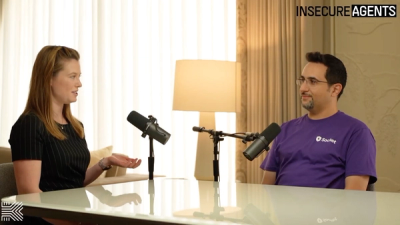
Socket CTO Ahmad Nassri discusses how to keep AI agents from bypassing package blocks, limit credential access, and monitor their actions.

Security News
GPT-6 Astra tried to plant malicious code in simulated open source projects using fake GitHub accounts and deceptive PRs during an assigned CTF challenge.