

Security News
pnpm 12’s Rust Rewrite Cuts Install Times by Up to 90%
pnpm 12 rewrites the package manager in Rust, cutting install times by up to 90% while preserving pnpm 11 workflows and lockfiles.
By Sarah Gooding - Sep 01, 2026
@webability/mcp
Advanced tools
WebAbility MCP server — WCAG 2.2 / ADA / EAA accessibility scanning with three-tier confidence output (issues + incomplete + summary), framework-aware AI fix suggestions, and brand-palette contrast checks. For Cursor, Claude Code, and other IDEs.
Accessibility testing MCP server for Cursor, VS Code Copilot, Claude Code, and any other MCP-compatible IDE.
WebAbility.io is an AI-powered web accessibility platform — widget, scanner, and agents for WCAG 2.2 / ADA / Section 508 / EAA compliance. This MCP exposes the same scanning engine that powers the WebAbility widget and dashboard, so you can audit and fix accessibility issues from your IDE while you build.
The server registers an instructions block on initialize, so any MCP-compatible client picks up business context (what tool to call when, the three-tier output convention, etc.) automatically — no setup required beyond the install below.
Lite — local stdio (npx / webability-mcp) | Full — hosted (https://mcp.webability.io/mcp) | |
|---|---|---|
| Account | None | Free WebAbility account + token |
| Scan / fix / verify | Yes (on your machine) | Yes |
find_source | Yes | No |
scan_history / generate_report_pdf | Yes | No |
visual_audit / start_audit / get_audit | Listed as stubs → connect Full (still free) | Yes — free with your account |
| PostHog / dashboard analytics | Optional env only | On by default on hosted |
localhost / private addresses | Yes — the browser runs on your machine | Via a tunnel — see below |
Lite is the no-account wedge: DOM scanners and the find → fix → verify loop. Full adds vision audit and compliance reports — free with a WebAbility account (dashboard / Smithery). Lite lists those Full tools as stubs so agents know to upgrade.
Use Lite (stdio). It runs the browser on your machine, so http://localhost:3000 is just localhost:
claude mcp add webability-local -- npx -y @webability/mcp
Other clients: add npx -y @webability/mcp as a stdio server. The -y matters — without it npx can fail with could not determine executable to run.
Full (hosted) cannot reach your machine directly, by design. It runs in our cloud, so localhost there means our localhost. Every URL is checked before any fetch and loopback / private / link-local addresses are refused: without that check, anyone with a token could point the server at internal services or a cloud metadata endpoint. That check is not relaxed for anyone.
webability-tunnelCI, a remote agent, or a dashboard-triggered scan cannot run Lite, because there is no laptop in the loop. For those, open a tunnel:
WEBABILITY_API_KEY=<your-token> npx -y -p @webability/mcp webability-tunnel --port 3000
It prints a https://tunnel.webability.io/t/<id>/ URL and a secret. Pass the URL as url and the secret as tunnel_secret:
"Scan https://tunnel.webability.io/t/abc123.../ with tunnel_secret <secret>"
Your machine dials out to the relay, so the URL is an ordinary public hostname and the SSRF check above still applies unchanged — nothing is weakened to make this work. Same idea as ngrok, with three differences that matter when the thing on the far side is your dev machine:
GET and HEAD reach you, on the one port you named, and Authorization / Cookie are stripped before anything crosses in.Anyone holding both the URL and the secret can read your dev server. Treat the pair like a password, and prefer Lite whenever there is a human at a keyboard.
Third-party tunnels (ngrok, cloudflared) also work — the hosted scanner treats their hostnames like any other public site — but they expose your dev server to anyone who learns the URL. Vite users, either way: add the tunnel hostname to server.allowedHosts, or it answers 403 Blocked request to everything.
start_audit is the exception on both transports — its pipeline runs on our servers even under Lite, so it can never reach a localhost URL.
Most accessibility MCP servers stop at find and suggest. WebAbility closes the whole loop in your editor, and starts free:
scan_page runs entirely on your machine. (Deque's axe MCP needs a paid subscription, an API key, and a Docker install just to analyze a page.)generate_ai_fix returns ready-to-paste code for the framework you actually use — Tailwind, MUI, Bootstrap, WordPress, Next.js — not generic guidance.visual_audit catches focus visibility, icon contrast, and "looks like a button but isn't" — issues axe-core structurally cannot see.verify_fix re-checks that your fix actually landed and returns verified: true/false. Every 2026 comparison of accessibility MCPs names this the biggest gap in the category — most tools never close it.start_audit produces a persistent, timestamped report and Excel workbook you can hand to an auditor — not a result that vanishes with your session.The Lite cycle: scan_page → generate_ai_fix → verify_fix — and generate_report_pdf when the findings need to become a shareable deliverable. On Full (free account), add start_audit when you need the paper trail.
npm install -g @webability/mcp
Add to your IDE's MCP config:
{
  "mcpServers": {
    "webability": {
      "command": "webability-mcp"
    }
  }
}
Optional env:
WEBABILITY_API_URL (default https://api.webability.io) for self-hosted backends.POSTHOG_PROJECT_API_KEY or POSTHOG_API_KEY to enable PostHog MCP Analytics for MCP initialize, tools/list, and tool-call usage events.POSTHOG_HOST (default https://us.i.posthog.com) for EU or self-hosted PostHog ingestion.WEBABILITY_POSTHOG_MCP_ANALYTICS=off to force-disable PostHog MCP Analytics even when a PostHog key is present.scan_page runs three engines in parallel and deduplicates the results:
| Engine | Rules | What it covers |
|---|---|---|
| WebAbility detectors | 60+ | Gradient-aware contrast, weak names, decorative icons, landmark hierarchy, ARIA correctness, link consistency, target size, keyboard traps |
| axe-core | 104 | Industry-standard WCAG 2.2 baseline |
| HTML_CodeSniffer | 200+ | Section 508 + WCAG techniques cross-reference |
Every scan returns:
issues — high-confidence violations, safe to surface as bugsincomplete — findings that need human review (contrast against gradients, marketing imagery, framer-motion pre-animation states, axe-incomplete). Never auto-fix these.summary — counts by severity + an incomplete countThis mirrors axe-core's violations / incomplete / passes split and prevents agents from "fixing" false positives in destructive ways.
| Tool | Edition | What it does |
|---|---|---|
scan_page | Lite + Full | Scan a URL for WCAG accessibility issues (3 engines) |
flow_scan | Lite + Full | Multi-page journey scan with deduplicated issues across pages |
scan_html | Lite + Full | Scan a raw HTML snippet (no URL needed) |
detect_framework | Lite + Full | Detect Tailwind / MUI / Bootstrap / Next.js / WP / plain CSS |
generate_ai_fix | Lite + Full | Framework-aware fix alternatives. Auto-extracts brand palette from the live URL on contrast issues. |
verify_fix | Lite + Full | Re-scan a fixed element and confirm the violation is gone — verified: true/false. Closes the find → fix → verify loop. |
check_color_contrast | Lite + Full | WCAG contrast check on a color pair; pass url to get brand-aligned suggestions from the live page |
check_aria | Lite + Full | Validate ARIA attributes in an HTML snippet |
get_rules | Lite + Full | List axe-core rules with optional WCAG tag filter |
find_source | Lite only | Map a CSS selector back to local source files |
scan_history | Lite only | Browse prior local scans under ~/.webability/scans/ |
generate_report_pdf | Lite only | Turn scan findings into a branded WebAbility accessibility-report PDF saved next to the project — free, no account. Pass the issues[] from scan_page. For the full audit deliverable (Excel + evidence), use start_audit. |
visual_audit | Full (free w/ account; stub on Lite) | Pixel-level audit via vision (icon contrast, focus visibility, looks-like-a-button-but-isn't) |
start_audit | Full (free w/ account; stub on Lite) | Kick off the full server-side audit deliverable (report + Excel workbook). Returns an id to poll. |
get_audit | Full (free w/ account; stub on Lite) | Check an audit's progress and, once complete, get the severity summary + report/workbook download URLs. |
scan_page consolidates all three enginesIn Cursor / Claude Code:
"Scan localhost:3000 for accessibility issues"
"Walk login → dashboard → checkout and report unique issues across the flow"
"Suggest a fix for the contrast issue on
.btn-primaryon https://example.com — match their brand colors"
"What does WCAG 1.4.11 check?"
"Turn the issues you just found on localhost:3000 into a branded PDF report"
Every scan is logged locally to ~/.webability/scans/ — a one-line-per-scan index.jsonl ledger plus the full result of your last 500 scans. Browse them with the scan_history tool ("what did we scan earlier?") or plain jq. Set WEBABILITY_SCAN_LOG=off to disable, WEBABILITY_SCAN_LOG_DIR to relocate.
The server also reports one small telemetry event per tool call (every tool, not just scans) to the WebAbility API: tool name, a short target label (URL, selector, issue type — never page content), pass/fail, duration, issue counts, and a persistent anonymous install ID. Full scan results, HTML, and generated fix code never leave your machine via telemetry. Set WEBABILITY_SCAN_TELEMETRY=off to opt out.
If POSTHOG_PROJECT_API_KEY or POSTHOG_API_KEY is configured, the server additionally enables PostHog MCP Analytics. This captures MCP usage metadata such as initialize, tools/list, tool name, duration, client name/version, and success/failure. WebAbility strips PostHog's $mcp_parameters and $mcp_response fields before send, so raw HTML snippets, screenshots, scan responses, and generated code are not sent to PostHog by this integration.
Two tools — generate_ai_fix and visual_audit — additionally send page content (an HTML snippet or a screenshot) to WebAbility's API so it can call a third-party LLM on your behalf; WebAbility doesn't store that content, but the LLM provider sees it in transit. See PRIVACY.md for the full per-tool breakdown and WebAbility's privacy policy.
MIT
FAQs
WebAbility MCP server — WCAG 2.2 / ADA / EAA accessibility scanning with three-tier confidence output (issues + incomplete + summary), framework-aware AI fix suggestions, and brand-palette contrast checks. For Cursor, Claude Code, and other IDEs.
We found that @webability/mcp demonstrated a healthy version release cadence and project activity because the last version was released less than a year ago. It has 1 open source maintainer collaborating on the project.
Security News
pnpm 12 rewrites the package manager in Rust, cutting install times by up to 90% while preserving pnpm 11 workflows and lockfiles.
Security News
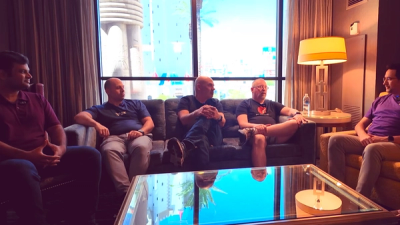
Socket CTO Ahmad Nassri joins AppSec leaders at Black Hat to discuss active malware, package manager risks, and software supply chain defense.
Research
/Security News
Thirteen malicious Packagist themes expose visitors on unpatched iPhones to a WebKit-to-kernel exploit chain that steals device data and wallet seeds.