@webhook-platform/node
Official Node.js SDK for Hookflow.
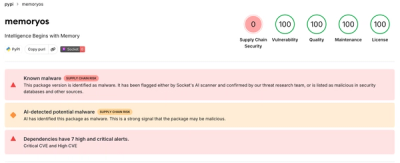
Zero runtime dependencies. This SDK talks to the API using Node's built-in
node:https module — no third-party HTTP client, no transitive dependency
tree to audit. npm ls --prod on this package prints nothing.
Scope
This SDK covers the send + verify surface of the API: Events, Endpoints,
Subscriptions, Deliveries, Incoming Sources, Incoming Events, and webhook
signature verification — 7 of the platform's 35 API controllers. It
does not wrap Transformations, Rules, Workflows, Schemas, DLQ, Analytics,
Usage, Alerts, Incidents, PII rules, Audit Log, Tunnels, API keys, Members,
or Projects. Those are dashboard/API-only today; use the Generic
Requests escape hatch below to call them directly if you
need them before the SDK grows to cover them.
Installation
npm install @webhook-platform/node
Quick Start
import { Hookflow } from '@webhook-platform/node';
const client = new Hookflow({
apiKey: process.env.HOOKFLOW_API_KEY,
baseUrl: 'http://localhost:8080',
});
const event = await client.events.send({
type: 'order.completed',
data: {
orderId: 'ord_12345',
amount: 99.99,
currency: 'USD',
},
});
console.log(`Event created: ${event.eventId}`);
console.log(`Deliveries created: ${event.deliveriesCreated}`);
API Reference
Events
const event = await client.events.send(
{ type: 'order.completed', data: { orderId: '123' } },
'unique-idempotency-key'
);
Endpoints
const endpoint = await client.endpoints.create(projectId, {
url: 'https://api.example.com/webhooks',
description: 'Production webhooks',
enabled: true,
});
const page = await client.endpoints.list(projectId, { page: 0, size: 20 });
for (const endpoint of page.content) {
console.log(endpoint.url);
}
await client.endpoints.update(projectId, endpointId, {
enabled: false,
});
await client.endpoints.delete(projectId, endpointId);
const updated = await client.endpoints.rotateSecret(projectId, endpointId);
console.log(`New secret: ${updated.secret}`);
const result = await client.endpoints.test(projectId, endpointId);
console.log(`Test ${result.success ? 'passed' : 'failed'}: ${result.latencyMs}ms`);
console.log(`${result.httpStatusCode} — ${result.message}`);
Subscriptions
const subscription = await client.subscriptions.create(projectId, {
endpointId: endpoint.id,
eventType: 'order.completed',
enabled: true,
});
const subscriptions = await client.subscriptions.list(projectId);
await client.subscriptions.update(projectId, subscriptionId, {
eventType: 'order.shipped',
enabled: true,
});
await client.subscriptions.delete(projectId, subscriptionId);
Deliveries
const deliveries = await client.deliveries.list(projectId, {
status: 'FAILED',
page: 0,
size: 20,
});
console.log(`Total failed: ${deliveries.totalElements}`);
const attempts = await client.deliveries.getAttempts(deliveryId);
for (const attempt of attempts) {
console.log(`Attempt ${attempt.attemptNumber}: ${attempt.httpStatusCode} (${attempt.durationMs}ms)`);
}
await client.deliveries.replay(deliveryId);
Incoming Webhooks
Receive, validate, and forward webhooks from third-party providers (Stripe, GitHub, Twilio, etc.).
Incoming Sources
const source = await client.incomingSources.create(projectId, {
name: 'Stripe Webhooks',
slug: 'stripe',
providerType: 'STRIPE',
verificationMode: 'HMAC_GENERIC',
hmacSecret: 'whsec_...',
hmacHeaderName: 'Stripe-Signature',
});
console.log(`Ingress URL: ${source.ingressUrl}`);
const sources = await client.incomingSources.list(projectId);
await client.incomingSources.update(projectId, sourceId, {
name: 'Stripe Production',
rateLimitPerSecond: 100,
});
await client.incomingSources.delete(projectId, sourceId);
Incoming Destinations
const dest = await client.incomingSources.createDestination(projectId, sourceId, {
url: 'https://your-api.com/webhooks/stripe',
enabled: true,
maxAttempts: 5,
timeoutSeconds: 30,
});
const dests = await client.incomingSources.listDestinations(projectId, sourceId);
await client.incomingSources.updateDestination(projectId, sourceId, destId, {
enabled: false,
});
await client.incomingSources.deleteDestination(projectId, sourceId, destId);
Incoming Events
const events = await client.incomingEvents.list(projectId, {
sourceId: source.id,
page: 0,
size: 20,
});
const event = await client.incomingEvents.get(projectId, eventId);
const attempts = await client.incomingEvents.getAttempts(projectId, eventId);
const result = await client.incomingEvents.replay(projectId, eventId);
console.log(`Replayed to ${result.destinationsCount} destinations`);
Webhook Signature Verification
Verify incoming webhooks in your endpoint:
import { verifySignature, constructEvent } from '@webhook-platform/node';
app.post('/webhooks', (req, res) => {
const payload = req.body;
const signature = req.headers['x-signature'];
const secret = process.env.WEBHOOK_SECRET;
try {
verifySignature(payload, signature, secret);
const event = constructEvent(payload, req.headers, secret);
console.log(`Delivery ${event.deliveryId} of event ${event.eventId}:`, event.data);
handleOrderCompleted(event.data);
res.status(200).send('OK');
} catch (err) {
console.error('Webhook verification failed:', err.message);
res.status(400).send('Invalid signature');
}
});
What lands on your endpoint
Hookflow PUTs the event's payload on the wire, not an envelope. This:
await client.events.send({ type: 'order.completed', data: { orderId: 'ord_1' } });
arrives at your endpoint as the data object alone —
POST /webhooks HTTP/1.1
Content-Type: application/json
X-Signature: t=1738000000000,v1=<hex hmac-sha256>
X-Timestamp: 1738000000000
X-Event-Id: 6f0e…
X-Delivery-Id: 91ab…
X-Sequence-Number: 0
Idempotency-Key: 6f0e…-<endpoint-id>

{"orderId":"ord_1"}
So constructEvent fills eventId, deliveryId and timestamp from the
headers and data from the body, but type is empty: the event type is
not on the wire for a default subscription. Route on the payload, on the
endpoint you registered, or set the subscription's payloadTemplate to wrap
the event so type becomes part of the body.
The signature is computed over `${timestamp}.${rawBody}` with HMAC-SHA256
and the endpoint secret, and the server rejects timestamps more than 300
seconds old — verify against the raw body bytes, before any JSON parse and
re-serialize.
Express.js Example
import express from 'express';
import { constructEvent } from '@webhook-platform/node';
const app = express();
app.post('/webhooks', express.raw({ type: 'application/json' }), (req, res) => {
const event = constructEvent(
req.body.toString(),
req.headers,
process.env.WEBHOOK_SECRET
);
res.sendStatus(200);
});
Error Handling
import {
HookflowError,
RateLimitError,
AuthenticationError,
ValidationError
} from '@webhook-platform/node';
try {
await client.events.send({ type: 'test', data: {} });
} catch (err) {
if (err instanceof RateLimitError) {
console.log(`Rate limited. Retry after ${err.retryAfter}ms`);
await sleep(err.retryAfter);
} else if (err instanceof AuthenticationError) {
console.error('Invalid API key');
} else if (err instanceof ValidationError) {
console.error('Validation failed:', err.fieldErrors);
} else if (err instanceof HookflowError) {
console.error(`Error ${err.status}: ${err.message}`);
}
}
Error Response Format
All API errors return a consistent JSON body:
{
  "error": "error_code",
  "message": "Human-readable description",
  "status": 400,
  "fieldErrors": { "field": "reason" }
}
error — machine-readable error code (snake_case), always presentmessage — human-readable description, always presentstatus — HTTP status code (integer), always presentfieldErrors — field-level validation details (only present for validation_error)
Error Codes Reference
| 400 | validation_error | ValidationError | Invalid request parameters; see fieldErrors |
| 400 | invalid_request | HookflowError | Malformed or semantically invalid request |
| 401 | unauthorized | AuthenticationError | Missing or invalid API key / expired token |
| 403 | forbidden | HookflowError | Insufficient permissions for the action |
| 404 | not_found | NotFoundError | Requested resource does not exist |
| 413 | payload_too_large | HookflowError | Request body exceeds maximum allowed size |
| 422 | unprocessable_entity | HookflowError | Valid syntax but violates business rules |
| 429 | rate_limit_exceeded | RateLimitError | Too many requests; check X-RateLimit-* headers |
| 500 | internal_error | HookflowError | Unexpected server error |
Generic Requests
As the API expands, you can call any endpoint directly without waiting for SDK updates:
const schemas = await client.get<any[]>('/api/v1/projects/proj_123/schemas');
const result = await client.post('/api/v1/some/new/endpoint', { key: 'value' }, 'idempotency-key');
await client.put('/api/v1/projects/proj_123/settings', { timezone: 'UTC' });
await client.patch('/api/v1/projects/proj_123/settings', { timezone: 'UTC' });
await client.delete('/api/v1/projects/proj_123/tags/old-tag');
const data = await client.request<any>('OPTIONS', '/api/v1/some/path');
All generic methods use the same authentication, error handling, and rate-limit logic as the built-in methods.
Configuration
const client = new Hookflow({
apiKey: process.env.HOOKFLOW_API_KEY,
baseUrl: 'https://api.example.com',
timeout: 30000,
});
Timeouts and retries
timeout is a per-request socket timeout; hitting it rejects with
HookflowError (code: 'timeout', status: 0). A connection-level failure
rejects the same way with code: 'network_error'.
The client does not retry. One SDK call is exactly one HTTP request — no
backoff, no idempotent replay. That is deliberate: events.send accepts an
Idempotency-Key, so a retry policy belongs to the caller who knows whether
reissuing the request is safe. What is retried is the delivery itself, by the
platform, on the subscription's retryDelays ladder.
Authentication
Every request the client makes carries X-API-Key: <your key> — the project
API key, created in the dashboard or via
POST /api/v1/projects/{projectId}/api-keys. The SDK never sends a bearer
token and has no login surface: JWT-authenticated endpoints (auth, projects,
organizations, members, API keys) are not part of it. Bootstrapping a project
and a key is a one-time step you do with the dashboard, the CLI, or plain
HTTP.
TypeScript Support
This SDK is written in TypeScript and includes full type definitions:
import type {
  Event,
  EventResponse,
  Endpoint,
  Delivery,
  DeliveryStatus
} from '@webhook-platform/node';
Development
Running Tests
Local (requires Node.js 16+):
npm install
npm test
Docker:
docker run --rm -v $(pwd):/app -w /app node:20-alpine sh -c "npm install && npm test"
Live-API smoke check
npm test stubs the transport, so it cannot see a renamed field. To drive the
SDK against a real instance:
make up
npm run smoke:live
It registers a throwaway org, walks endpoint → subscription → event →
deliveries → attempts → incoming, checks each error envelope, and verifies a
signature the running server itself produced. It is a script, not a test —
jest.config.js roots at src/, so npm test never collects it and still
passes with no backend.
Building
npm run build
License
MIT